For a long time, pursuing a creative career in the Philippines often came with a familiar expectation: find an agency, join a publication, work for a production company, or wait for someone established to give you a break.
Social media has not eliminated those traditional paths, but it has opened another one.

Today, Filipino photographers, artists, video creators, educators, beauty enthusiasts, food lovers, gamers, and other specialists can build audiences around interests that once seemed too specific to become careers.
A smartphone, a recognizable point of view, and a community willing to keep coming back can eventually become the foundation for brand partnerships, freelance work, affiliate income, products, events, or even a full-fledged business.
It is part of a much bigger shift in how Filipinos think about creative work.
There is no longer one path into a creative career
A recent Preview feature on Filipino creatives illustrates how different those paths can be.
Stylist Liz Uy, for example, began as an editorial assistant doing the unglamorous work behind fashion shoots before eventually building Stylized Studios. Photographer BJ Pascual expanded beyond photography into publishing and content creation, developing a personal brand that now extends well beyond the images he shoots.

Preview has also highlighted younger multidisciplinary creatives such as Lorenz Namalata, whose work moves between casting, production, creative direction, design, and talent management in Manila and New York. His career reflects a reality familiar to many creatives today: sometimes the job is not one title but a combination of skills that gradually becomes a career of its own.
That flexibility is becoming increasingly important online.
A creator does not necessarily need to become a household name. Someone making videos about affordable skincare, home cooking, photography, personal finance, motherhood, gaming, books, or provincial travel can build a much smaller but highly interested community.
And for many creators, that community is more valuable than simply chasing the largest possible follower count.
Niche communities can become businesses
The economics surrounding creative work in the Philippines are getting harder to dismiss.
According to the Philippine Statistics Authority, the country’s broader creative economy grew by 6.9% to ₱2.12 trillion in 2025, equivalent to 7.6% of Philippine GDP. Creative industries employed about 8.71 million Filipinos, or 17.8% of total employment.
Creative industries supported about 8.71 million jobs during the year. These figures cover a much wider group of industries than social media creators alone, but they show how significant creative work has become to the economy.
Online platforms are seeing a similar professionalization.
TikTok Shop Philippines said the number of active creators participating on its commerce platform doubled year on year ahead of its 2026 Creator Awards, reflecting growing participation in content-driven commerce.
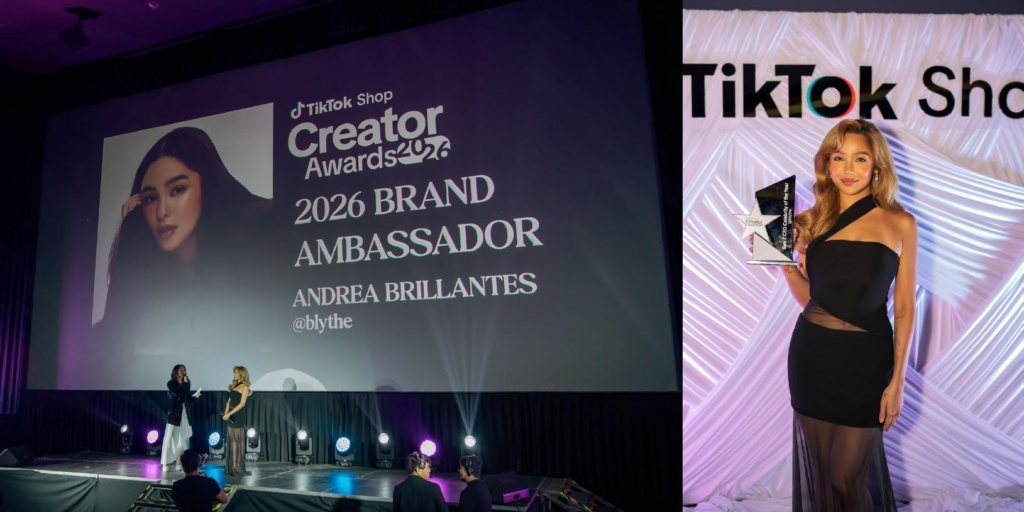
Its honorees were not limited to celebrities. They included former educator and live-selling creator Miss Dioza, beauty creator Lierge Perey, and other personalities who have turned specialized audiences into commercial opportunities.
Some creators are also moving from recommending products to building their own.
Perey, for instance, has expanded into entrepreneurship through a contact lens brand, while other creators recognized by TikTok combine content with beauty, wellness, podcasts, livestreaming, and retail businesses.
It is an important distinction. A personal brand does not have to exist simply to attract sponsorships. It can become the marketing engine for something the creator owns.
For some, content is becoming a new route to income
The opportunity is also beginning to reach beyond creators who already have large followings.
In March, TikTok Shop’s Live to Shine program brought together aspiring creators from different parts of the Philippines for training in content creation, product storytelling, audience engagement, and livestream selling.
Stories like hers show why the creator economy is particularly interesting in the Philippines.
The barrier between being a consumer and becoming a creator is relatively low. Someone can begin with the device already in their pocket, experiment while studying or working another job, and discover whether an audience exists before committing to it full-time.
That does not make success easy. It simply makes trying possible.
Creators still need skills that are familiar to any small-business owner: understanding an audience, negotiating rates, managing clients, tracking income, learning new tools, producing consistently, and figuring out which opportunities are actually worth taking.
Going viral is not the same as building a career
The more difficult part comes after people begin paying attention.
Platform algorithms change. Trends disappear. Brand campaigns can be inconsistent. Academic research examining creator earnings across major platforms has also found highly concentrated income, with a relatively small group of top creators capturing a disproportionate share of earnings.
That is why creators looking for longevity increasingly have reason to build beyond a single source of income.
A sponsored post may provide immediate revenue, but a stronger creator business might eventually combine several streams: brand partnerships, affiliate commissions, advertising, freelance services, livestream commerce, subscriptions, workshops, merchandise, digital products, or a company of their own.
The audience becomes the starting point, rather than the finished product.
Success can look smaller and still be sustainable
Perhaps the biggest change is that creators can increasingly decide what a successful creative career looks like for themselves.
Not everyone needs millions of followers, a billboard on EDSA, or celebrity recognition.
A photographer may simply want enough clients to work independently. A food creator may want regular partnerships with neighborhood restaurants. A designer might build a community that consistently buys prints or merchandise. Someone sharing expertise online may eventually turn that knowledge into consulting, classes, or a small business.
That is where the idea of building a career “on your own terms” becomes more meaningful.
The internet has made visibility easier to access, but the creators most likely to build something lasting may not necessarily be those who attract the most attention. They may be the ones who understand who their audience is, what value they provide, and how to turn that relationship into work that remains meaningful even after the algorithm moves on.
The spotlight is still valuable. But for a growing number of Filipino creators, the real achievement is what they build beyond it.