Filipino creators are transforming edutainment into one of the most engaging forms of content on TikTok and YouTube.
A few seconds are often enough to make someone stop scrolling.
It could be a surprising animal fact, a medicine myth explained in plain Filipino, a forgotten story from Philippine history, or a study tip delivered with the energy of a friend rather than a teacher.
This mix of information and entertainment, often called edutainment, is becoming one of the most noticeable forms of Filipino content on TikTok and YouTube.
Creators are proving that educational videos do not need to feel like formal lessons. With strong personalities, quick editing, humor, storytelling, and recognizable catchphrases, even complicated subjects can become part of everyday entertainment.
Learning has adapted to the feed
Social media creators have only a few seconds to earn attention.

IMAGE CREDIT: Laaans (FB)
Instead of opening with a long introduction, they begin with a question, surprising claim, visual demonstration, or familiar line that gives viewers a reason to stay.
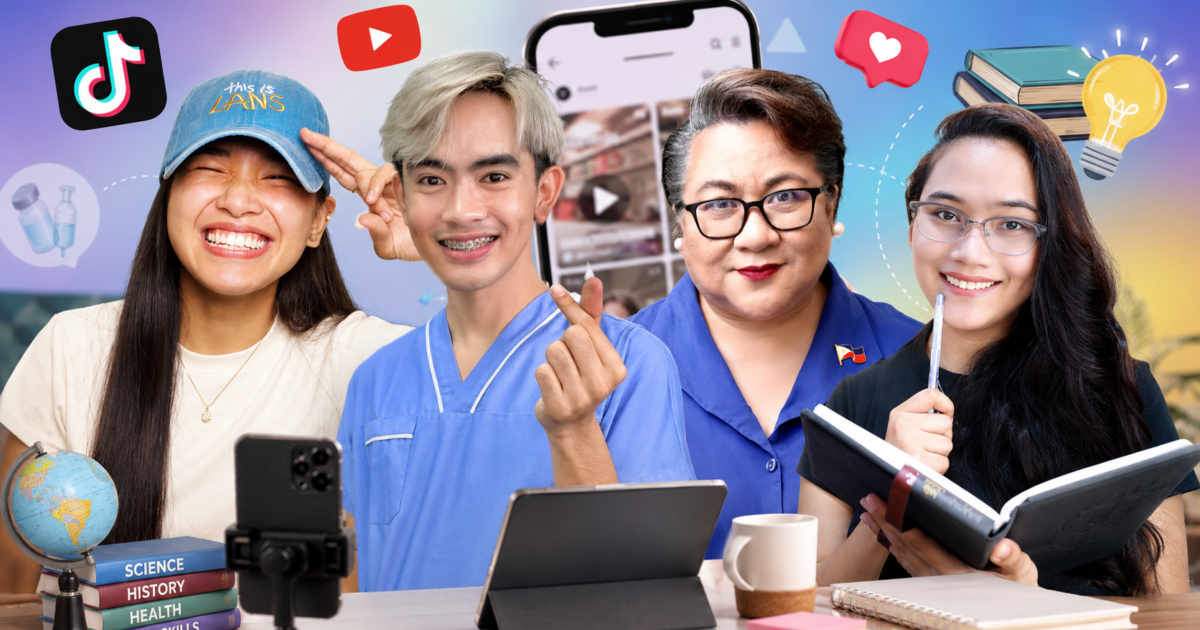
Louise Anne Nagal, better known as Laaans, is one example. Her cheerful “This is Laaansss” opening introduces short videos about animals, science, and curious everyday facts. The appeal comes not only from the information, but from the way she delivers it: light, energetic, and easy to understand.
A GMA Public Affairs feature on Filipino educ-creators similarly shows how creators are building audiences by making useful information feel positive and entertaining rather than intimidating.
Different creators are finding their own classrooms
Filipino edutainment is not limited to science trivia.
Pharmacist Arshie Larga uses relatable videos to explain medicine safety, correct health myths, and answer questions people may hesitate to ask inside a pharmacy. His accessible approach in English and Filipino has helped him reach millions while turning professional knowledge into practical public information.
History creator Mona Magno-Veluz, known as Mighty Magulang, takes a different route. Her short videos bring Philippine history, genealogy, national figures, and civic issues into a format designed for modern feeds. Instead of presenting history as a list of dates, she connects it to family stories and current conversations.
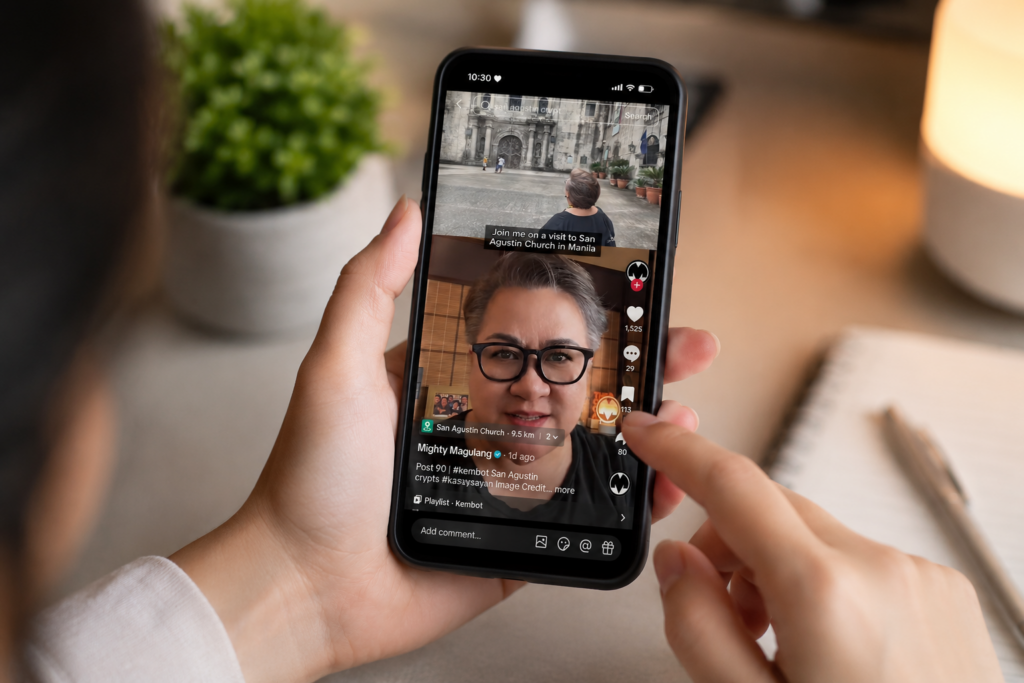
IMAGE CREDIT: Mighty Magulang
Other creators focus on skills people can use immediately. Lyqa Maravilla shares lessons on studying, communication, careers, and personal development, while Kara David uses her storytelling background to explore Filipino language, culture, and local life.
Their subjects may be different, but the approach is similar: explain something clearly, give it personality, and respect the audience’s time.
Personality makes lessons easier to remember
Viewers may click because of the topic, but they often return because of the creator.
A recognizable voice, catchphrase, sense of humor, or visual style creates familiarity. Some creators sound like encouraging teachers. Others feel like an older sibling, a funny classmate, or a knowledgeable friend answering a question over coffee.
That relationship matters because educational content competes with dance challenges, celebrity news, comedy, beauty videos, and countless other distractions.
Creators who understand this do not simply shorten a classroom lecture. They rebuild the lesson for the platform through captions, demonstrations, reactions, jokes, and examples drawn from ordinary Filipino life.
The audience becomes part of the content
Edutainment also grows through interaction.
Comment sections are filled with follow-up questions, personal stories, corrections, and requests for future topics. A pharmacist may answer a question about mixing medicines. A history creator may explain a person mentioned by a viewer. A language creator may turn a common grammar mistake into the next episode.
This makes learning feel less one-sided.
Audiences help decide what gets explained next, while creators learn which topics are confusing, useful, or likely to start a bigger conversation.
Short videos can also lead viewers toward longer content. A one-minute introduction on TikTok may continue as a detailed YouTube video, podcast episode, livestream, article, or reading recommendation.
Entertainment still needs accuracy
The growth of edutainment also brings responsibility.
Confident delivery and polished editing can make incorrect information appear trustworthy. Health, finance, law, history, and science can lose important context when reduced to a few seconds.
IMAGE CREDIT: Freepik
Creators who present themselves as educators need to verify claims, use credible references, separate fact from opinion, and correct mistakes openly. Viewers also need to remember that a short video may be a starting point, not the complete answer.
This is especially important as people increasingly type questions directly into TikTok or YouTube and trust the first convincing explanation they see.
Why edutainment is likely to stay
Edutainment will not replace teachers, books, documentaries, or formal training.
Its strength is accessibility. It brings knowledge into spaces where people are already spending time and makes unfamiliar topics feel less difficult to approach.
For Filipino creators, it also opens room for more voices. Pharmacists, historians, teachers, journalists, scientists, financial educators, and naturally curious storytellers can reach people far beyond a classroom or workplace.
Laaans is one recognizable face in this movement, but the bigger story is how many creators are finding their own way to make audiences pause, laugh, ask questions, and learn something before scrolling again.
The lesson may be brief, but the curiosity it creates can last much longer.