How much did you spend on digital services and subscription to various app this month?
Maybe it was your Netflix subscription, or Spotify Premium.
Perhaps you paid for extra cloud storage, a Canva plan, an app subscription, an online game or another digital service you use so regularly that the monthly charge barely registers anymore.
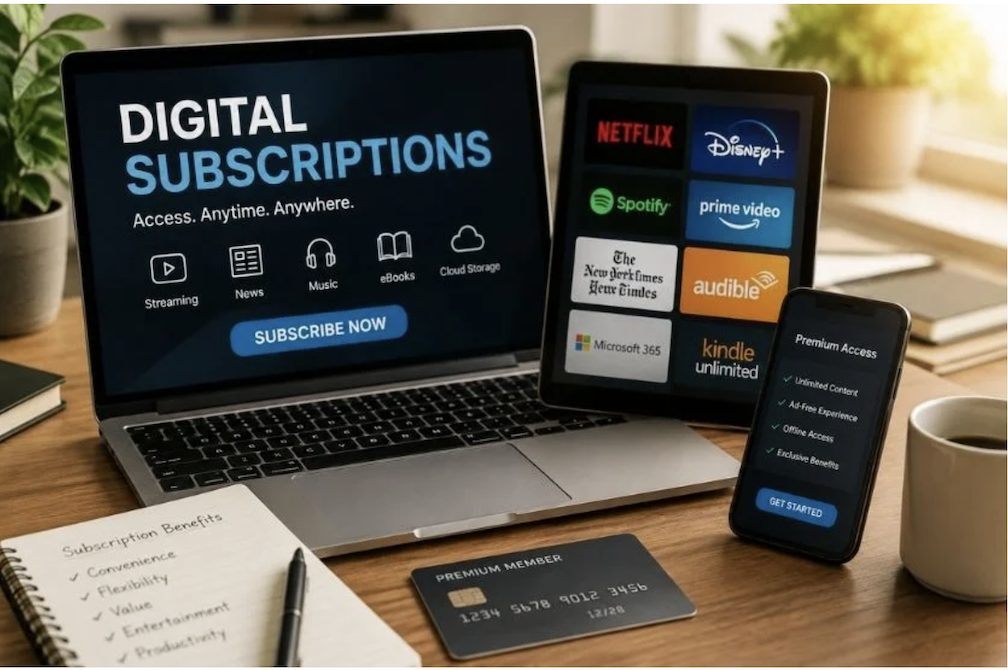
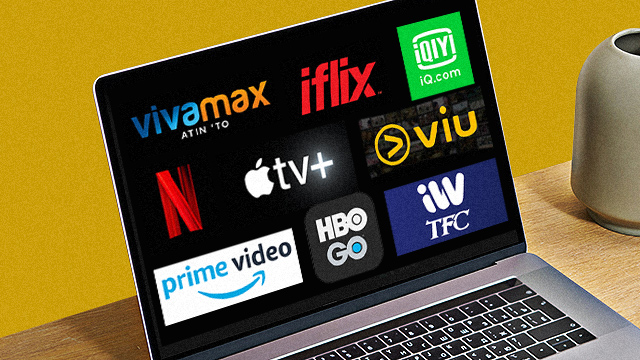
Companies offering digital subscriptions: Companies you may already be paying every month
Individually, these payments may not seem significant.
Collectively, however, Filipinos’ appetite for digital services has become a multibillion-peso source of government revenue.
The Bureau of Internal Revenue (BIR) collected ₱17.5 billion in taxes from foreign digital service providers during the first six months of 2026. The amount is more than three times the ₱6.6 billion collected during the same period in the initial year of the digital VAT program.
And that figure already represents roughly three-fourths of the government’s full-year target of ₱23.1 billion.
So, where is the money coming from?
The answer is sitting inside the apps and platforms many Filipinos use every day.
The government began collecting a 12% value-added tax on digital services consumed in the Philippines on June 2, 2025, following the implementation of Republic Act No. 12023, which expanded VAT coverage to digital services.
The BIR’s regulations apply the tax to digital services consumed in the Philippines, including those provided by nonresident digital service providers.
That includes services purchased by individual consumers as well as transactions between businesses and digital service providers.
IMAGE CREDIT: InternetRetailing
The distinction is important because digital spending is no longer limited to entertainment.
A Filipino consumer might pay for a streaming subscription, while a small business could be paying for cloud storage, online advertising, software, design tools or other digital services.
The result is a digital economy where both everyday consumers and businesses contribute to the tax base.
Netflix, Spotify now part of the tax conversation
The BIR has registered major global platforms including Meta, Google Asia, Netflix, Disney, Canva, Spotify, LinkedIn, Microsoft, OpenAI and Valve, according to the report.
For consumers, this means that the tax framework now reaches many of the services that have become part of everyday digital life.
Think about how different a Filipino household’s monthly expenses look today compared with a decade ago.
There may be a traditional cable bill, but there could also be Netflix. Instead of buying physical software, someone may have a Canva or Microsoft subscription. A business that once purchased software outright may now pay monthly for cloud-based tools.
Even entertainment has increasingly shifted from physical products to recurring digital payments.
The subscription economy is getting bigger
The rise in collections says something about more than tax compliance.
It also provides a glimpse into how Filipinos are spending.

Top tips to manage your subscriptions like a pro (and save money)
A ₱200 or ₱500 subscription may seem insignificant compared with rent, groceries or transportation. But multiply that by millions of users paying for different platforms every month, and the scale becomes enormous.
Then add businesses.
A small online seller might pay for advertising. A freelancer could subscribe to productivity or design software. A startup might rely on cloud computing. A content creator could use several platforms for editing, storage and distribution.
Digital services have quietly become part of the operating costs of modern Filipino life.
The ₱17.5 billion figure is therefore not simply a tax story.
It is also a snapshot of how deeply digital services have entered the Philippine economy.
Consumers are not the only ones paying
One interesting detail from the BIR’s figures is that business-to-consumer transactions were slightly larger contributors than business-to-business transactions, although both accounted for substantial collections.

IMAGE CREDIT: Freepik
BIR Commissioner Charlito Martin R. Mendoza described the growth as broad-based, reflecting increasing digital activity among both individual consumers and businesses.
That makes sense when you consider how much of the Philippine economy now operates online.
Consumers order food through apps, stream shows, subscribe to music platforms and purchase digital products.
Meanwhile, businesses advertise on social media, use online productivity tools, communicate through digital platforms and increasingly rely on software-as-a-service products.
The line between “digital lifestyle” and “digital business” has become increasingly blurry.
Why did collections jump so much?
The dramatic increase does not necessarily mean Filipinos suddenly started spending three times more on subscriptions.
The BIR attributed the growth partly to improved compliance and better capture of digital transactions.
That distinction matters.
The digital VAT system is still relatively new. The first-half 2026 collection represents a more mature stage of implementation compared with the initial period of the program.
The BIR has said that the expansion in collections is an encouraging sign that implementation is gaining traction and that more digital transactions are being properly captured.
In other words, the government is becoming better at collecting taxes from an economy that has increasingly moved online.
Why does the government tax foreign digital services?
For years, there was an obvious difference between buying something from a local business and purchasing a digital service from an international platform.
A Filipino consumer could walk into a local store and pay VAT on a purchase, while digital services supplied from overseas operated under a different framework.
RA No. 12023 was designed in part to address that gap.
The BIR’s Revenue Regulations No. 3-2025 state that digital services supplied by nonresident providers are subject to 12% VAT when consumed in the Philippines. The rules also establish registration and compliance requirements for nonresident digital service providers.
The broader objective is to make the tax treatment of digital services more consistent regardless of whether the provider has a physical presence in the country.
Does this mean subscriptions became more expensive?
Potentially, yes.

12 subscriptions that are no longer worth paying for in 2026
The 12% VAT is a consumption tax, meaning it can affect the final amount paid by consumers depending on how the provider structures and displays its prices.
For someone with one subscription, the difference may not feel dramatic.
But the modern Filipino consumer may have several.
A streaming service here. Music there. Cloud storage. An app subscription. Maybe an online game.
Suddenly, a handful of small monthly payments become a meaningful part of a household’s recurring expenses.
And that is where the tax story meets personal finance.
The ₱17.5 billion question: How much are we spending online?
Perhaps the most interesting takeaway from the numbers is not actually the tax itself.
It is what the tax reveals about Filipino consumption.
Digital spending has become so widespread that the government collected ₱17.5 billion from foreign digital service providers in only six months.
That means the conversation around financial wellness may also need to include subscriptions and recurring digital payments.
A ₱299 monthly subscription may not seem like something worth tracking.
But five subscriptions can already mean nearly ₱1,500 a month. Over a year, that becomes ₱18,000.
The problem is that subscriptions are often designed to feel painless.
You do not physically hand over cash every month. The payment happens automatically, sometimes through a card or digital wallet.
Before you know it, you’re paying for services you may no longer use regularly.
The digital economy is also a tax economy
The government’s growing digital VAT collections show just how far the Philippines’ digital transformation has gone.
Tax Administrations and Control of The Digital Economy
Streaming, online advertising, cloud software, gaming, productivity tools and other digital services are no longer niche products used only by tech enthusiasts.
They are everyday expenses.
And when millions of Filipinos participate in that economy, those transactions eventually become part of the country’s tax system.
For the government, that means a new and growing source of revenue.
For consumers, it is a reminder that the digital economy is not separate from everyday financial life.
Every time you tap “Subscribe,” renew a plan or purchase a digital service, you are participating in a much larger ecosystem.
Maybe it’s time to audit your subscriptions
Auditing the auditors: enhancing audit oversight
The next time your bank or e-wallet statement arrives, take a closer look.
Do you still use every subscription you’re paying for?
Are there apps you subscribed to for a single project and forgot about?
Do you really need three streaming platforms at the same time?
Are you paying for cloud storage that you barely use?
You do not have to cancel everything.
But knowing where your money goes is increasingly important in a world where spending can happen with one tap and renew automatically every month.
Because while the government is getting better at tracking digital spending, consumers can do the same thing for themselves.
From streaming to taxes: Digital habits are adding up
The ₱17.5 billion collected by the BIR is more than an impressive tax figure.
It is a reflection of how Filipinos now live, work and spend.
We stream instead of renting movies. We subscribe instead of buying software outright. We advertise online instead of relying entirely on traditional media. We use apps for entertainment, work, communication and even running small businesses.
The country’s tax system is catching up with that reality.
And as digital services become even more embedded in everyday life, the numbers will likely tell an increasingly interesting story about Filipino consumers.
For now, the lesson is surprisingly simple:
Your ₱299 subscription may feel small. Millions of ₱299 subscriptions are anything but.