“Cash or cashless?” is usually a question customers answer for themselves.
Maybe you choose GCash because you do not have enough bills in your wallet. Maybe you still prefer cash because it feels simpler. Maybe you select cash on delivery and decide whether to hand over bills or scan a QR code only when the rider arrives.
But on the other side of that transaction is someone who may make dozens of stops in a day.
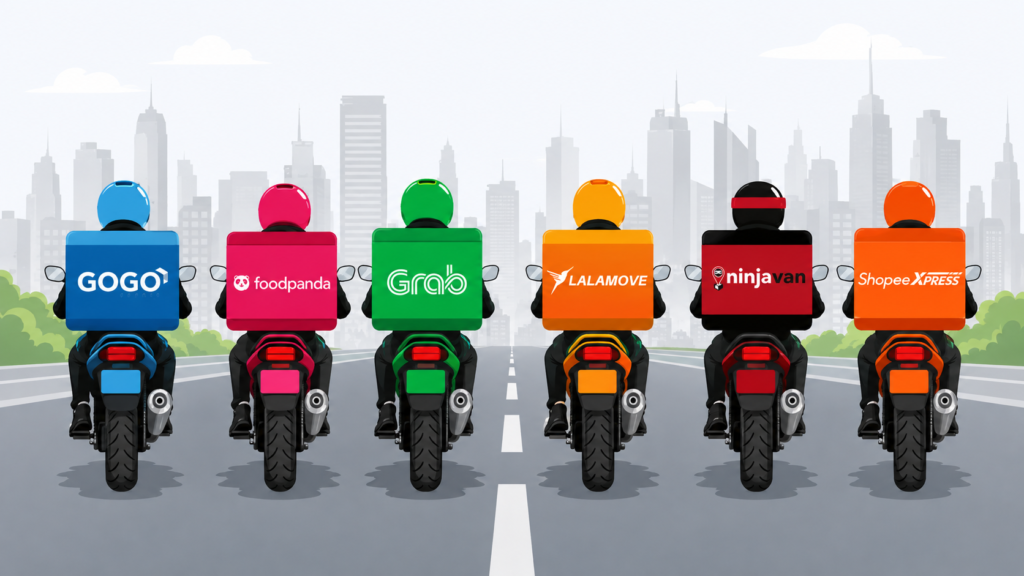
For delivery riders, the difference between cash and cashless can mean looking for change, carrying money around for hours, waiting for a payment confirmation or simply being able to hand over an order and move on to the next address.
So what payment method actually makes their day easier?
The answer, based on informal conversations with food and parcel delivery riders in Metro Manila, is not as simple as cash versus cashless.
Editor’s note: The rider comments in this story came from informal conversations conducted by the writer with food and parcel delivery riders encountered during personal deliveries in Metro Manila. Their names, platform affiliations and other identifying details have been withheld for privacy. These conversations are not a survey and should not be taken as representative of all delivery riders.
For some riders, paid orders mean one less thing to think about
One food delivery rider said he generally prefers cashless transactions, especially when the order is expensive.
“Mas gusto ko cashless, lalo na kung medyo mahal yung order. Pag cash kasi kailangan mong isipin kung may sapat kang pera pang-abono at kung may panukli ka pagdating sa customer. Pag cashless, pickup at deliver na lang.”
The appeal is straightforward: fewer things can go wrong during the handoff.
There is no need to ask whether the customer has a smaller bill. No mental arithmetic over change. No digging through a wallet or pouch while another delivery may already be waiting.
Another food delivery rider pointed to something even simpler: time.
“Mas mabilis talaga pag paid na. Pagdating ko, ibigay ko na lang yung food. Sa cash minsan ₱500 or ₱1,000 yung pera tapos maliit lang order. Ako pa maghahanap ng barya. Nakakadagdag sa oras bawat delivery.”
One customer taking an extra minute may not sound like much.
But when the same thing happens repeatedly across a long shift, those minutes add up.
Cash still has one advantage: it is already in your hand
Cashless does not automatically make every part of a rider’s day easier.
Another food delivery rider said he likes avoiding the usual problem of finding change, but would not necessarily want every transaction to be digital.
“Okay sakin cashless kasi wala nang sukli-sukli. Pero ayoko rin puro cashless buong araw. Yung cash na nakukuha ko minsan yun na ginagamit ko pang-gas, pagkain, saka ibang gastos habang bumibiyahe. Pag nasa wallet lahat, kailangan ko pa ilipat or i-cash out.”
That distinction is easy to miss when you are the customer.
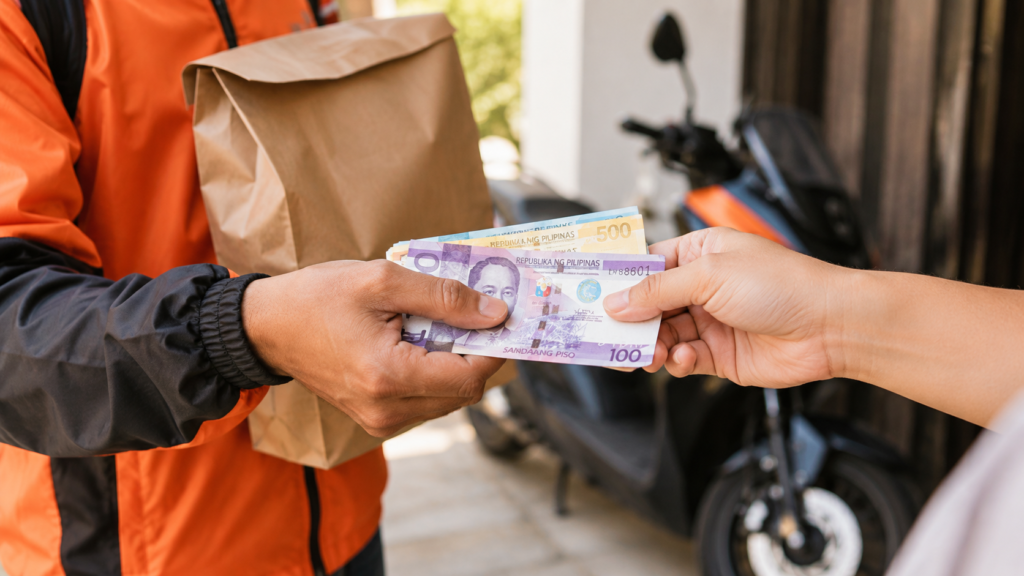
For someone working on the road, physical cash can become spending money immediately. It can pay for the next meal, fuel or another expense during the shift without first moving money out of a digital balance.
That extra step exists on at least some delivery platforms. Grab, for example, says delivery partners can track earnings through its driver app and offers cash-out or transfers of those earnings to a bank account.
So while digital payment can remove friction at the doorstep, cash can sometimes remove friction later in the day.
For parcel riders, carrying less COD money can be a relief
The equation can look slightly different for parcel riders moving through long routes and collecting payment after payment.
One parcel delivery rider said QR becomes particularly attractive when COD amounts get larger.
“Pag maliit lang COD okay lang cash. Pero kung maraming parcel at malalaki yung amounts, mas okay sakin QR. Ayoko rin magdala ng malaking cash buong araw. At least pag digital, wala kang iisipin na pera sa bag mo habang umiikot.”
Cash on delivery is also becoming less literally about cash.
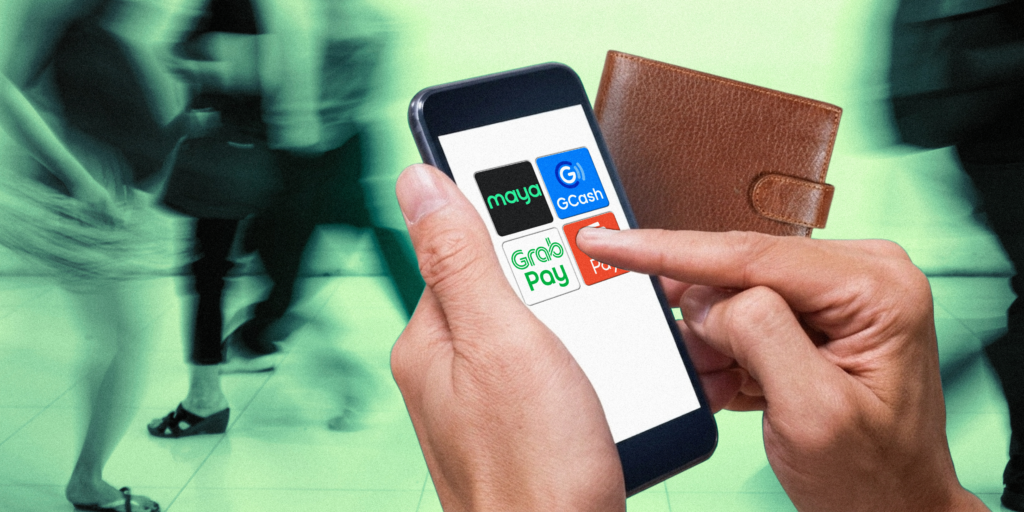
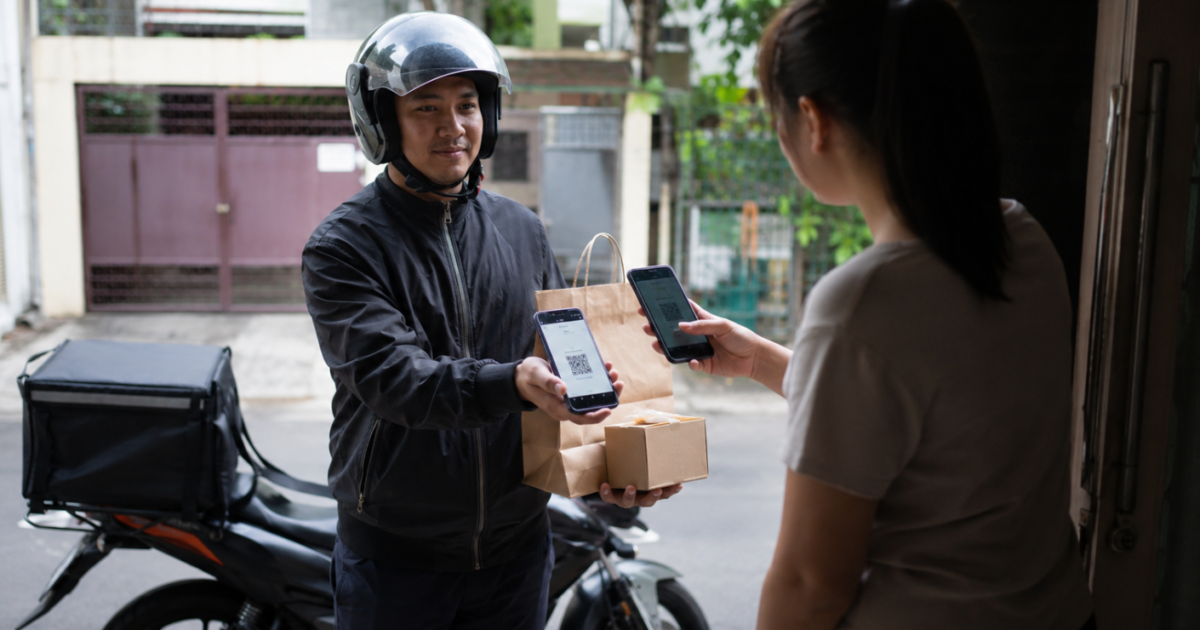
Shopee currently lists a cashless option for COD deliveries in which customers can scan an SPX rider’s QR Ph code and pay using GCash or supported banks and e-wallets.
In other words, a customer can still choose to pay when the parcel reaches the doorstep without a peso bill changing hands.
For a rider making many COD stops, that can mean less physical money to keep track of throughout the route.
But QR can simply replace one kind of waiting with another
Digital payment solves the problem of finding change only when the technology cooperates.
One food delivery rider described liking QR payments until weak mobile signal gets involved.
“Okay yung QR basta mabilis yung internet. Ang problema kapag nag-scan na si customer tapos loading pa sa side niya or hindi pa confirmed sa phone ko. Hindi ko naman puwedeng basta ibigay yung order dahil screenshot lang yung pinapakita. Minsan mas mabilis pa cash kung mahina signal.”
That concern is not merely hypothetical.
Foodpanda’s current terms for its QR payment system say a QR transaction is considered successful only after payment confirmation is shown through the required payment process. Its terms also account for transactions that cannot be completed because of network or technical problems, in which case another payment method may be needed.
Anyone who has stared at a spinning payment screen outside a condominium lobby or gate probably knows the feeling.
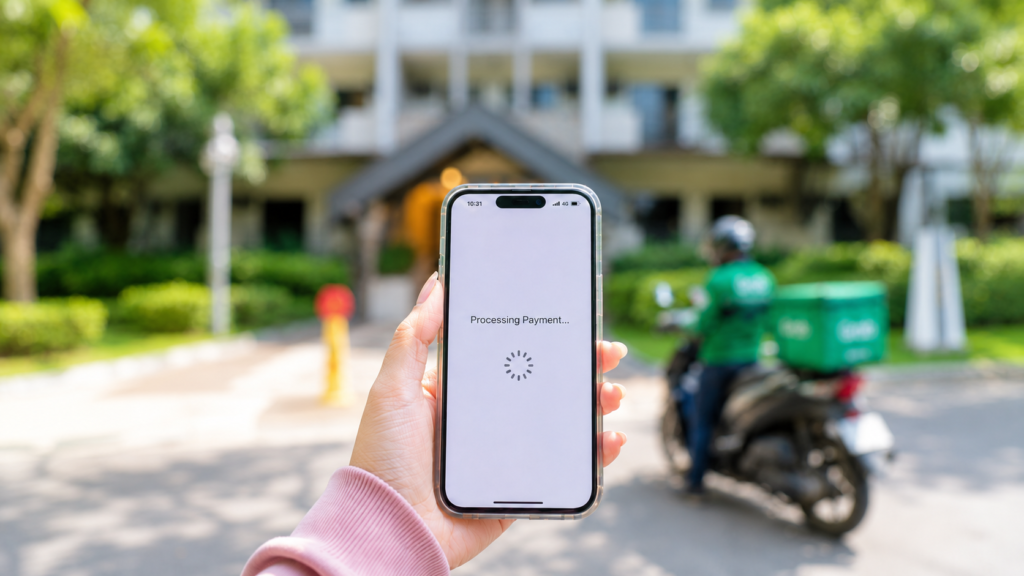
The rider cannot simply assume the transaction went through. The customer may be refreshing an app. The rider may be checking for confirmation. Meanwhile, the next delivery is still waiting.
Cashless has removed the search for coins, but in that moment it has replaced it with a search for signal.
There is another very ordinary source of delay: opening the payment app only after the rider is already standing outside.
Finding the app, logging in, waiting for an OTP or realizing that the wallet needs to be topped up can turn what should have been a quick scan into several more minutes at the door.
Sometimes riders care less about how you pay than whether you are ready
One parcel delivery rider put the issue more simply.
“Honestly okay lang sakin cash or QR. Ang hassle lang yung COD tapos wala palang exact amount, o saka pa maghahanap ng pera pag nandun na ako. Kung cash, sana ready na. Kung QR naman, scan agad para makaalis din.”
That may be the more useful answer to the cash-versus-cashless question.
A rider may prefer one method over another, but the payment method itself is only one part of the delivery.
There is also the customer who does not answer the phone. The person who begins looking for cash only after opening the door. The customer who asks the rider to wait while someone else sends money to their e-wallet.
When deliveries are measured one stop at a time, preparedness can matter as much as the payment method.
Then there is the small question of the tip
Cash also creates a familiar kind of informal tipping.
If an order costs ₱480 and the customer hands over ₱500, “keep the change” takes only a few seconds.
Digital tipping tends to require a more deliberate action. Depending on the service, a customer may need to add a tip through the app or make a separate transfer.
Neither automatically means riders receive more or less. But the mechanics are different: cash can turn leftover change into a tip almost accidentally, while digital tipping usually asks the customer to make the choice intentionally.
The easiest payment might simply be the one you prepare for
There probably will not be a universal winner between cash and cashless.
For one rider, a prepaid order means a faster handoff.
For another, the cash collected along the route is useful for fuel and food.
A parcel rider may appreciate carrying less COD money. Another may happily accept either method as long as the customer does not keep them waiting.
So perhaps the most useful question is not whether delivery riders prefer cash, GCash or QR.
It is whether we can make the method we already chose a little easier for the person standing outside.
If you are paying cash, prepare the amount and, when possible, have smaller bills or exact change ready.
If you are paying by QR, open your banking or wallet app before the rider arrives and make sure you have enough balance and a usable connection.
And whatever method you choose, answer the call or message when the rider is already nearby.
Because after your food or parcel reaches your door, there is a good chance someone else is already waiting for that same rider to arrive at theirs.