Zero Balance Billing can mean leaving a government hospital without paying for your hospitalization, medicines or laboratory tests.
But that does not mean every visit to every public hospital automatically ends with a ₱0 bill.
The key details are where you were treated, whether you were formally admitted, what type of accommodation you used and whether the services you received are covered by the program.
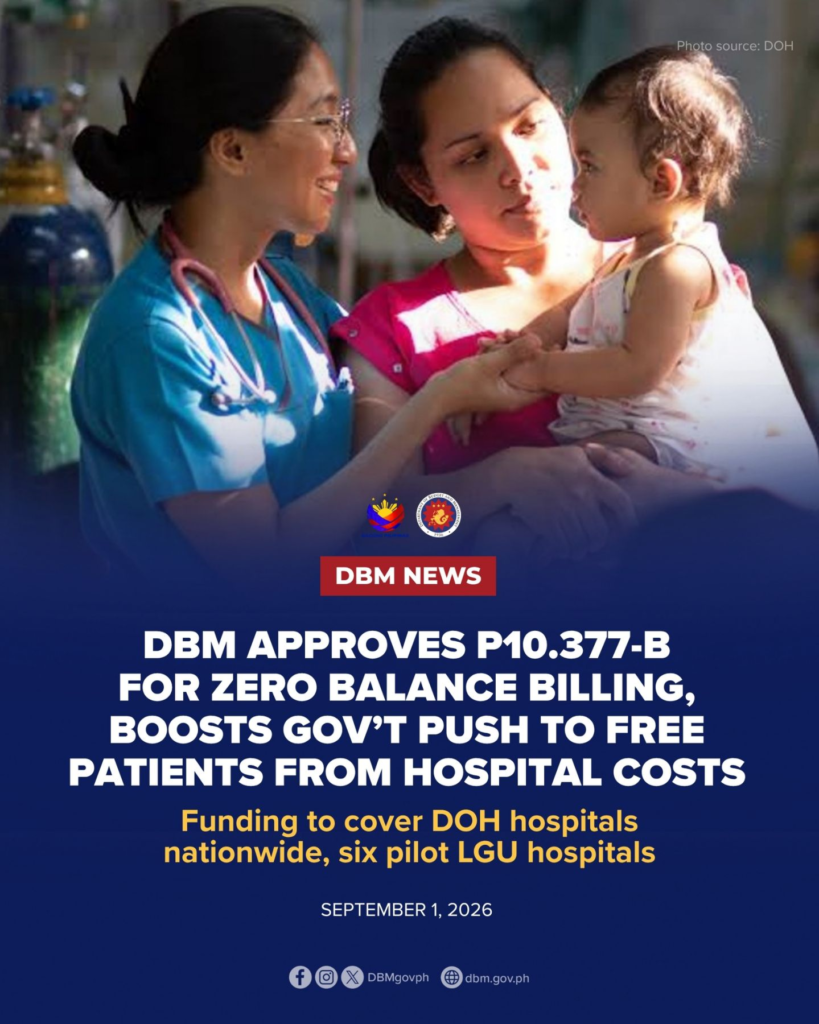
The policy is getting another major funding boost. On September 1, the Department of Budget and Management approved ₱10.377 billion for Zero Balance Billing, including ₱9.377 billion for Department of Health hospitals nationwide and another ₱1 billion for six pilot local government hospitals.
For patients and their families, though, the more important question is much simpler:
When should your hospital bill actually be zero?
It isn‘t how much you earn, but where you are admitted
The core Zero Balance Billing policy applies to patients admitted under basic or ward accommodation in DOH hospitals.
In practical terms, that means you are staying in the hospital’s regular shared ward rather than choosing a private room or upgraded accommodation.
PhilHealth currently defines basic or ward accommodation as a bed in a shared room with at least three occupants, regular meals, at least fan ventilation and a shared toilet and bath.
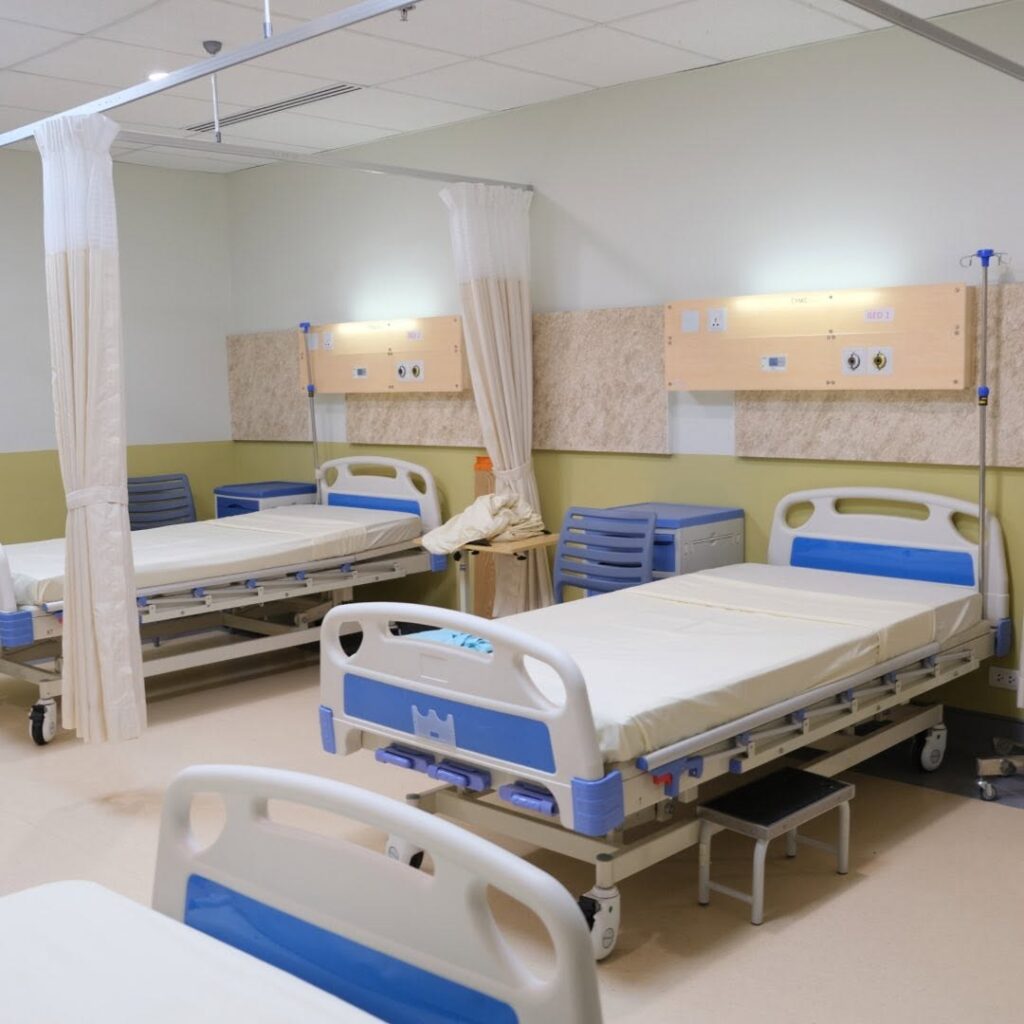
IMAGE CREDIT: Premier Medical Center Zamboanga
That distinction matters.
If you choose a private room, special room or another accommodation upgrade, you should not assume that everything connected with the admission will still be free. Charges associated with upgraded accommodation or additional services can fall outside the no-balance-billing protection.
For the DOH rollout, government statements have consistently described patients admitted in basic or ward accommodation as the group covered by Zero Balance Billing.
So what exactly is supposed to be covered?
A ₱0 hospital bill is not supposed to mean that only the bed itself is free.
Covered hospitalization costs can include room and board, medicines, laboratory tests, diagnostic procedures and professional fees, depending on the services required for the patient’s covered condition.
PhilHealth’s case-rate rules similarly provide that covered inpatient costs can include professional fees, room and board, diagnostic imaging, laboratory tests, medicines, devices, supplies and other hospital services.
DOH hospitals implementing the program have also explicitly described medicines and laboratory expenses as part of Zero Balance Billing.
So if a family hears “zero balance” but is still being asked to pay separately for every blood test, medicine and routine hospital service, it is reasonable to ask the hospital which charges are covered and why a particular item is not.
What if the hospital tells you to buy medicine outside?
This is one of the most frustrating situations for families: the prescription may theoretically be covered, but the hospital pharmacy does not have the medicine in stock.
PhilHealth’s longstanding No Balance Billing rules say participating hospitals should ensure the availability of prescribed drugs, medicines, supplies and required laboratory and diagnostic services for covered cases, and that patients under the policy should not be sent outside the hospital to purchase them during confinement.

In practice, medicine shortages can still happen.
If you are asked to buy something outside while a patient is admitted under basic accommodation, do not assume immediately that the expense is automatically yours. Ask the ward, pharmacy, billing section or medical social service office whether the medicine should be provided under ZBB and what procedure applies when hospital stocks are unavailable.
If you do have to purchase something urgently, keep the prescription, official receipt and any hospital instruction related to the purchase. Those documents can matter when asking the hospital whether assistance or reimbursement is available.
An ER visit is a little more complicated
Walking into the emergency room does not automatically mean you have been admitted under Zero Balance Billing.
The important distinction is between an ER consultation and a formal inpatient admission.
If you arrive through the ER and the doctor subsequently admits you into basic or ward accommodation, the resulting covered hospitalization can fall under the no-balance-billing rules.
But if you are examined, treated and sent home from the ER without ever being formally admitted, you should not automatically expect the hospital’s inpatient Zero Balance Billing policy to apply to that encounter.
PhilHealth made this distinction particularly clear in a new policy published on September 3 covering certain inpatient stays shorter than 24 hours: ER consultations and other encounters where the patient was not formally admitted as an inpatient remain governed by the applicable emergency or outpatient benefit rules instead. That circular takes effect 15 days after publication.
So the useful question to ask is not simply, “Did we enter through the ER?”
It is: “Was the patient formally admitted?”
No need to stay 24 hours just to have an admission
A common assumption is that PhilHealth only recognizes hospitalization after the patient has stayed for at least 24 hours.
That is changing.
PhilHealth’s newly issued rules provide coverage for medically necessary inpatient admissions lasting less than 24 hours in certain circumstances, including patients who need serious inpatient treatment before being transferred to another facility or who die during confinement. Existing no-balance-billing rules continue to apply to eligible admissions.
Again, the important word is admitted.
Simply spending several hours inside the emergency department is not necessarily the same thing as being formally admitted as an inpatient.
Government hospitals not automatically part of same program
This is another important distinction.
The nationwide rollout covers DOH hospitals, but a hospital being publicly owned does not automatically mean it is operated by the DOH.
The DOH currently lists dozens of hospitals under its network nationwide.
In Metro Manila, the latest DBM funding release specifically names Amang Rodriguez Memorial Medical Center, Dr. Jose Fabella Memorial Hospital, East Avenue Medical Center, Jose R. Reyes Memorial Medical Center, National Center for Mental Health, National Children’s Hospital, Philippine Orthopedic Center, Quirino Memorial Medical Center, Research Institute for Tropical Medicine, Rizal Medical Center, San Lazaro Hospital and Tondo Medical Center.
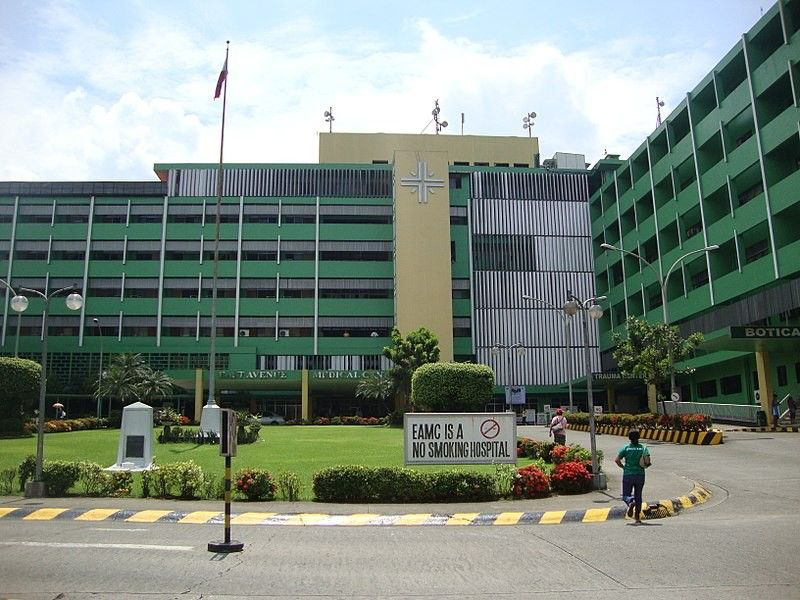
IMAGE CREDIT: East Avenue Medical Center
The government is also expanding the program to LGU-run hospitals.
The September funding release allocates ₱1 billion for six pilot LGU hospitals in Benguet, Batangas, Laguna, Quezon, Aklan and Sarangani. The DBM announcement identifies the provinces but does not provide the names of all six hospitals.
Philippine General Hospital is another special case. It is not a DOH-run hospital, but the DBM separately released funding in August that included ₱800 million specifically for ZBB at PGH.
The takeaway: before assuming that any city, provincial or public hospital offers the same ZBB arrangement, ask whether that particular facility participates.
What if you have missed PhilHealth contributions?
For self-paying PhilHealth members, unpaid contributions do not automatically erase access to benefits.
Under PhilHealth’s latest rules, members with missed or incomplete contributions may still use their benefits, although self-paying members remain responsible for unpaid premiums and applicable interest.
The Universal Health Care Act itself provides immediate eligibility for PhilHealth benefits and states that failure to pay premiums should not prevent members from accessing program benefits.
If a patient cannot afford contributions, PhilHealth’s current rules also provide for financial-capacity assessment through social workers so that qualified patients can potentially be classified as financially incapable.
And no, you should not need to find a politician first
For years, hospitalization often sent families on another exhausting journey: looking for guarantee letters or asking elected officials for financial assistance.
Under Zero Balance Billing at DOH hospitals, the DOH says that should no longer be necessary for patients receiving covered treatment under basic accommodation.
Health officials have explicitly said that DOH hospitals do not require political guarantee letters for ZBB patients and that families should be able to seek care directly from the hospital rather than first approaching an elected official.
That does not mean guarantee letters have disappeared from every part of the healthcare system. They may still arise in arrangements involving private hospitals or other forms of assistance.
But for a patient properly covered by ZBB in a DOH hospital ward, getting a politician’s signature should not be the step that determines whether treatment continues.
₱0 bill has conditions, so ask before upgrading or paying
The easiest way to think about Zero Balance Billing is this:
Being inside a government hospital does not, by itself, make everything free.
But if you are in a participating hospital, formally admitted under basic or ward accommodation and receiving services covered under the program, the policy is specifically designed to prevent your family from being left with the remaining hospital bill.
Before agreeing to a private-room upgrade, buying medicine outside or paying a charge you thought was covered, ask the hospital’s billing section, PhilHealth desk or medical social service office what changed and why.
Because when the conditions for Zero Balance Billing are met, ₱0 is not supposed to mean “pay first and look for assistance later.”
It is supposed to mean the covered bill has already been taken care of.