
Daily walking does not require a membership, complicated equipment or a carefully planned hour at the gym.
You can do it on the way to work, around your subdivision, inside a shopping mall or during a short break between errands. And increasingly, that simplicity is looking less like a compromise and more like the point.
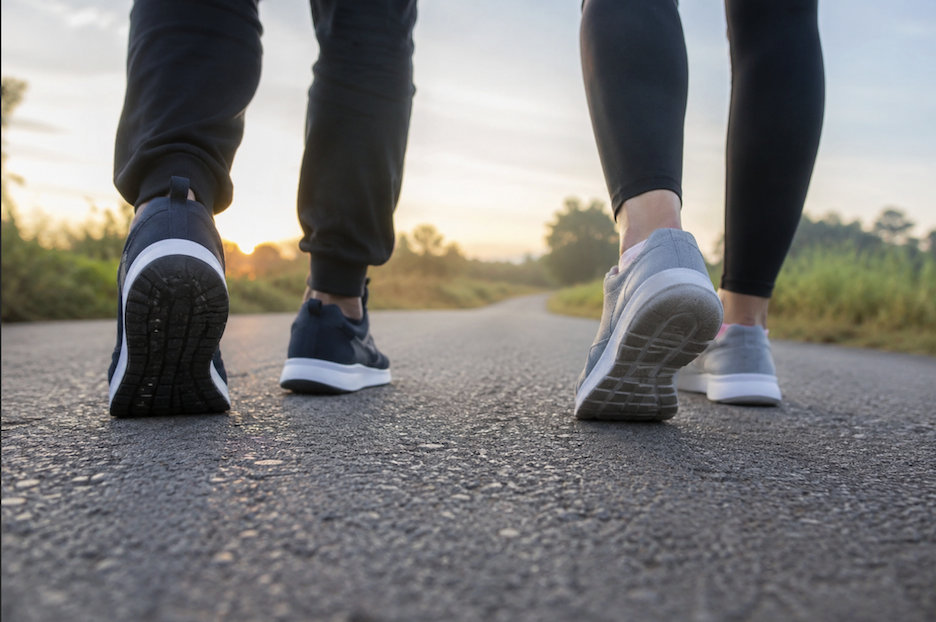
IMAGE CREDIT: Liz Martin
Recent fitness data suggests people are embracing forms of movement that can fit more easily into everyday life. In its 2025 Year in Sport report, Strava said walking became the second most-recorded activity on its platform, while more than half of its users recorded multiple types of activity rather than sticking to a single sport.
At the same time, ClassPass reported that bookings for low-impact training increased by more than 100% in 2025, while Pilates remained its most-booked workout globally for a third consecutive year.
It does not mean people have suddenly stopped running, lifting weights or doing high-intensity workouts.
Instead, it points toward a broader idea of fitness: the best exercise routine may be the one you can realistically keep doing.
Walking counts as exercise
Walking can sometimes feel too ordinary to count as a workout, particularly in a fitness culture filled with calorie trackers, gym programs and increasingly difficult challenges.
But physical activity does not need to leave you exhausted to provide health benefits.
The World Health Organization recommends adults get 150 to 300 minutes of moderate-intensity aerobic activity each week, alongside muscle-strengthening activity on at least two days.
Brisk walking can contribute toward that target.
WHO also stresses that all movement counts, including activity done for transportation, recreation, work and everyday tasks. Regular physical activity is associated with benefits for cardiovascular health, diabetes prevention, mental health, sleep and overall well-being.
That makes walking particularly useful for people who find the idea of immediately starting a formal workout program intimidating.
A 10-minute walk after lunch, another on the commute home and a longer walk in the evening can all add movement to the day without requiring a dedicated gym session.
You do not necessarily need 10,000 steps
Smartwatches and fitness apps have helped turn 10,000 steps a day into one of the most familiar fitness goals.
But it is not a magic threshold.
A major systematic review and meta-analysis published in The Lancet Public Health in 2025 found meaningful health associations at lower step counts.
Researchers analyzing data from dozens of studies found that around 7,000 daily steps was associated with lower risks across several health outcomes compared with 2,000 steps per day. The researchers also noted that benefits were visible even at more modest step counts and generally increased as people moved more.
The takeaway is not that everyone should immediately chase exactly 7,000 steps either.
For someone currently averaging 3,000 steps, consistently moving toward 4,000 or 5,000 may be a more realistic starting point than treating 10,000 as an all-or-nothing target.
Mall walking makes particular sense in the Philippines
Walking outdoors sounds simple until Philippine weather enters the equation.
Heat, humidity, heavy rain, uneven sidewalks and roads that are not always pedestrian-friendly can make outdoor walking difficult depending on where you live.
That helps explain the practical appeal of mall walking.

IMAGE CREDIT: Bloomberg
A mall offers a relatively predictable environment: flat surfaces, air-conditioning, toilets, places to rest and protection from rain. Walking several floors while window-shopping can quietly turn an ordinary afternoon into a fairly substantial amount of movement.
It may not have the scenery of a park or hiking trail, but accessibility matters when the goal is consistency.
The National Nutrition Council has similarly encouraged Filipinos to find movement in ordinary routines, noting that even walking in small spaces, taking active breaks and incorporating activity into the day can help reduce sedentary behavior.
Low-impact does not mean no effort
The same principle helps explain the popularity of Pilates and other low-impact workouts.
Low-impact describes how much force is placed on the joints. It does not necessarily mean a session is easy.
Pilates, for example, can challenge strength, balance, mobility and muscular control without relying heavily on jumping or repetitive pounding.
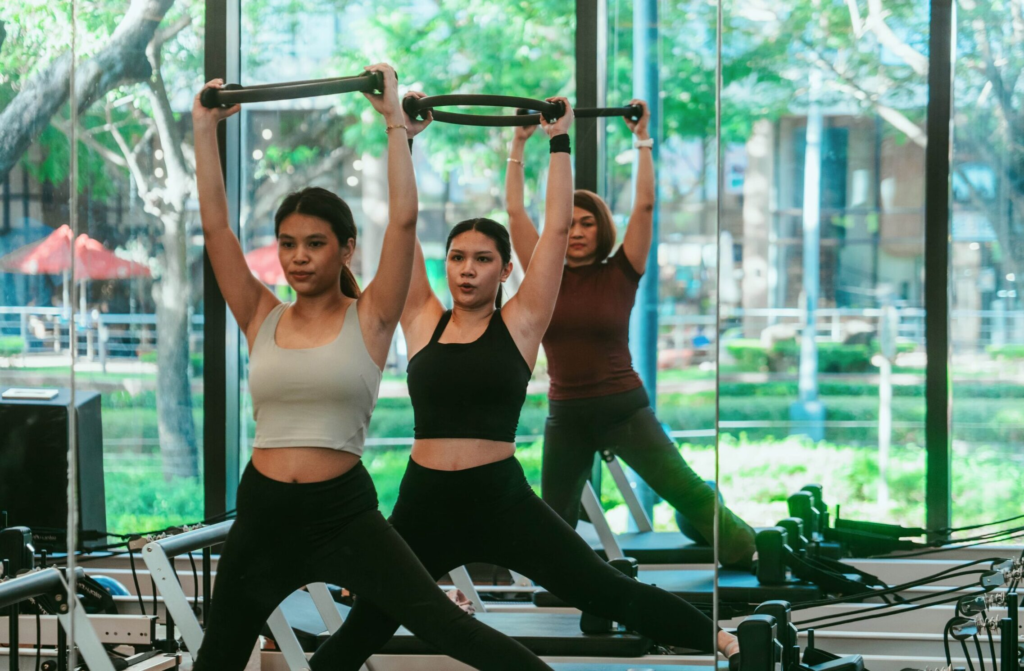
IMAGE CREDIT: Jal Yoga
That makes lower-impact options attractive to beginners, older adults and people who simply prefer exercise that does not leave them feeling destroyed afterward.
There is also a practical advantage to choosing something enjoyable and convenient.
Research on exercise adherence has repeatedly identified factors such as cost, inconvenient schedules, location and intimidating gym environments as barriers to maintaining physical activity.
Removing even some of those barriers can make showing up easier.
Walking should not be the only thing you do
There is one important caveat.
Walking is excellent aerobic activity, but a complete fitness routine ideally includes more than steps alone.
WHO recommends muscle-strengthening activities involving major muscle groups at least twice a week. That could mean weights, resistance bands, Pilates, bodyweight exercises such as squats and push-ups, or another appropriate strength routine.
So the choice does not have to be walking versus the gym.
It could be walking most days, doing a short strength session twice a week and occasionally joining a Pilates class. Someone else might prefer running, cycling or playing basketball.
The useful shift is moving away from the assumption that exercise only counts when it is difficult, expensive or exhausting.
For many people, fitness may become much easier to maintain once movement is allowed to be ordinary.
And sometimes, the routine that changes your health is simply the one you are still doing six months from now.