Social media has a way of turning ordinary food combinations into overnight health trends.
One week, everyone is talking about a new high-protein breakfast. The next, a particular drink is supposedly the secret to weight loss. Now, it’ i’s the humble combination of kimchi and eggs that’s getting the internet’s attention.
COMPOSITE IMAGE: PeoplePlacesPlates
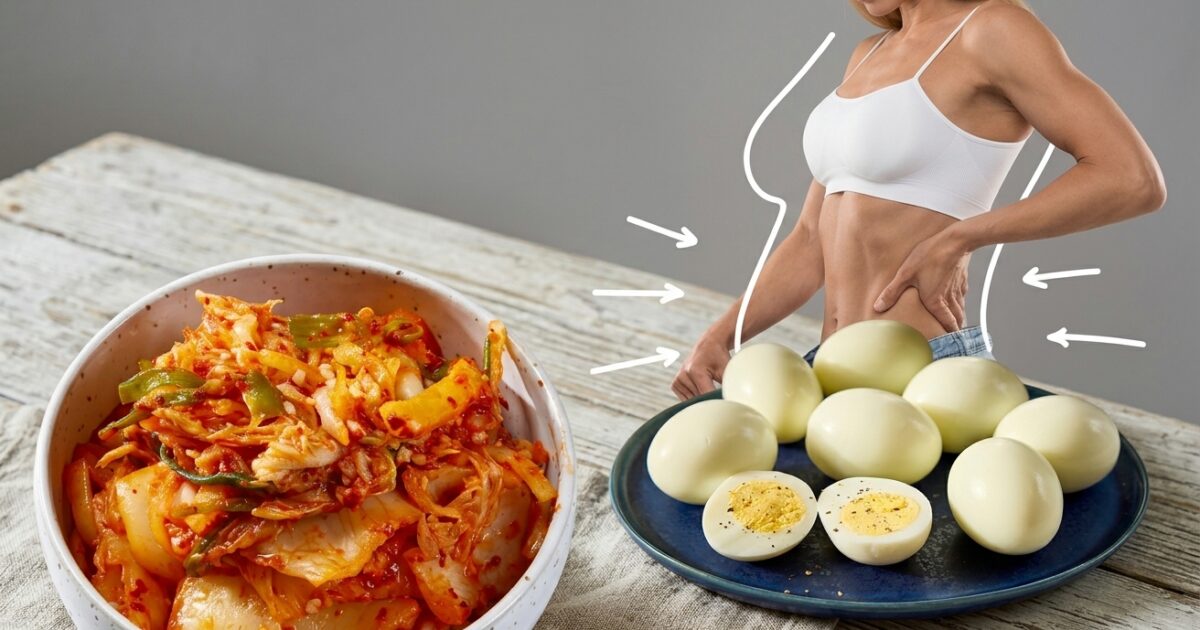
The trend gained traction after a Threads user shared a photo of her breakfast consisting of kimchi and eggs, saying the combination had become her go-to morning meal because it helped her stay full for longer. Other social media users soon began sharing their own experiences with the pairing.
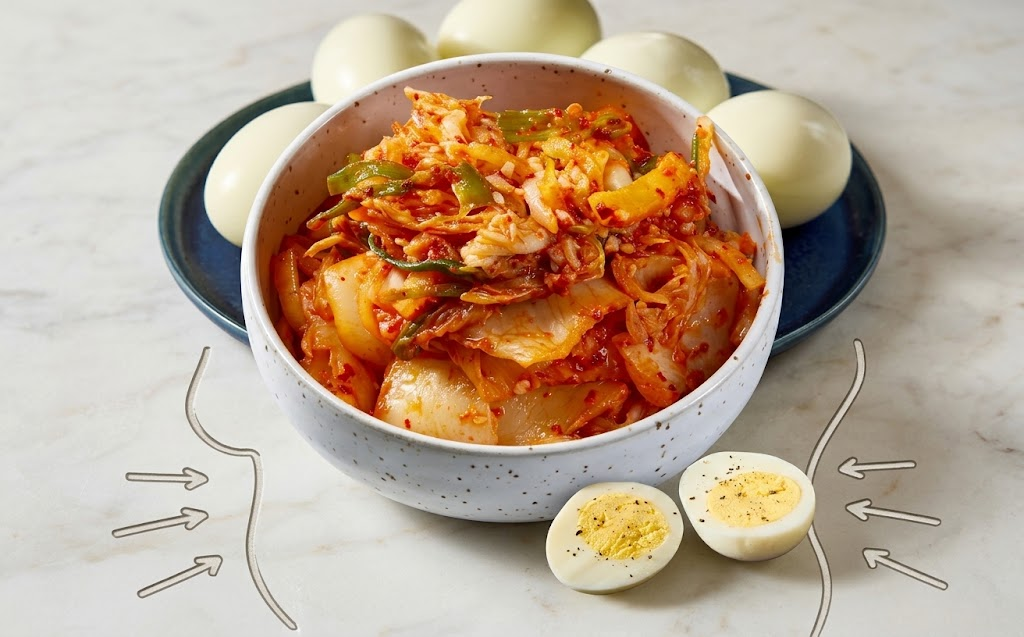
It is easy to see why the combination caught on. Eggs are affordable, easy to prepare and naturally high in protein, while kimchi adds flavor without requiring a complicated recipe.
But does eating the two actually make you lose weight?
The short answer is: it can be part of a weight-loss-friendly meal, but it is not a magic diet.
Why kimchi and eggs make a filling combination
According to registered nutritionist-dietitian Loverne Panganiban Lazo, the kimchi and egg combination can support weight loss because it can provide a “highly satiating, low-calorie meal.”

Loverne Panganiban Lazo, Registered Nutritionist-Dietitian
There are good nutritional reasons for that.
Eggs provide high-quality protein, containing all the essential amino acids the body needs. Lazo also pointed out that eggs provide vitamin B12, iron and other essential minerals.
Kimchi, meanwhile, is a fermented food that can provide probiotics. Lazo highlighted its probiotic content as one of its main benefits, particularly in relation to gut health and digestion.
Put them together and you get something that is relatively simple but can be satisfying, especially for breakfast.
But the eggs aren’t a weight-loss shortcut
Registered nutritionist-dietitian Rya Sanchez also noted that eggs can be part of a balanced diet and have little impact on blood cholesterol for most healthy individuals.
:max_bytes(150000):strip_icc()/Eggs_002_preview-8d532a48790b4a5190e513de08678e7f.jpg)
IMAGE CREDIT: Southern Living
So, how many eggs can you actually eat?
Sanchez said there is “no strict arbitrary daily limit on egg intake” when eggs are consumed as part of a well-balanced diet. She explained that blood LDL, or “bad” cholesterol, is more strongly influenced by overall saturated fat intake and diet quality than by dietary cholesterol from eggs alone.
That does not mean everyone should suddenly start eating eggs by the dozen.
The bigger point is that eggs do not need to be treated as the enemy when building a balanced diet. What matters is the overall pattern of what you eat.
The problem with calling it a “diet”
This is where the viral trend needs a reality check.
Eating kimchi and eggs as one meal is very different from eating only kimchi and eggs in an attempt to lose weight.

IMAGE CREDIT: Harvard Health
Sanchez warned that relying solely on the combination can become an unsustainable fad diet, particularly if it means completely eliminating carbohydrates. She noted that doing so can increase the risk of fatigue and nutrient deficiencies over time.
Lazo similarly emphasized that while kimchi and eggs can be nutritious, the combination alone does not provide everything the body needs.
“If you consume kimchi and eggs without other food groups, you may face significant nutritional and macronutrient gaps,” Lazo said, noting that the body also needs carbohydrates, healthy fats, vitamins and minerals.
In other words, a nutritious food combination does not automatically become a complete diet.
You don’t have to give up on rice
For Filipinos, this part may be particularly important.
A lot of online weight-loss content makes carbohydrates sound like something that must be completely eliminated. Rice, in particular, often gets blamed whenever people talk about losing weight.
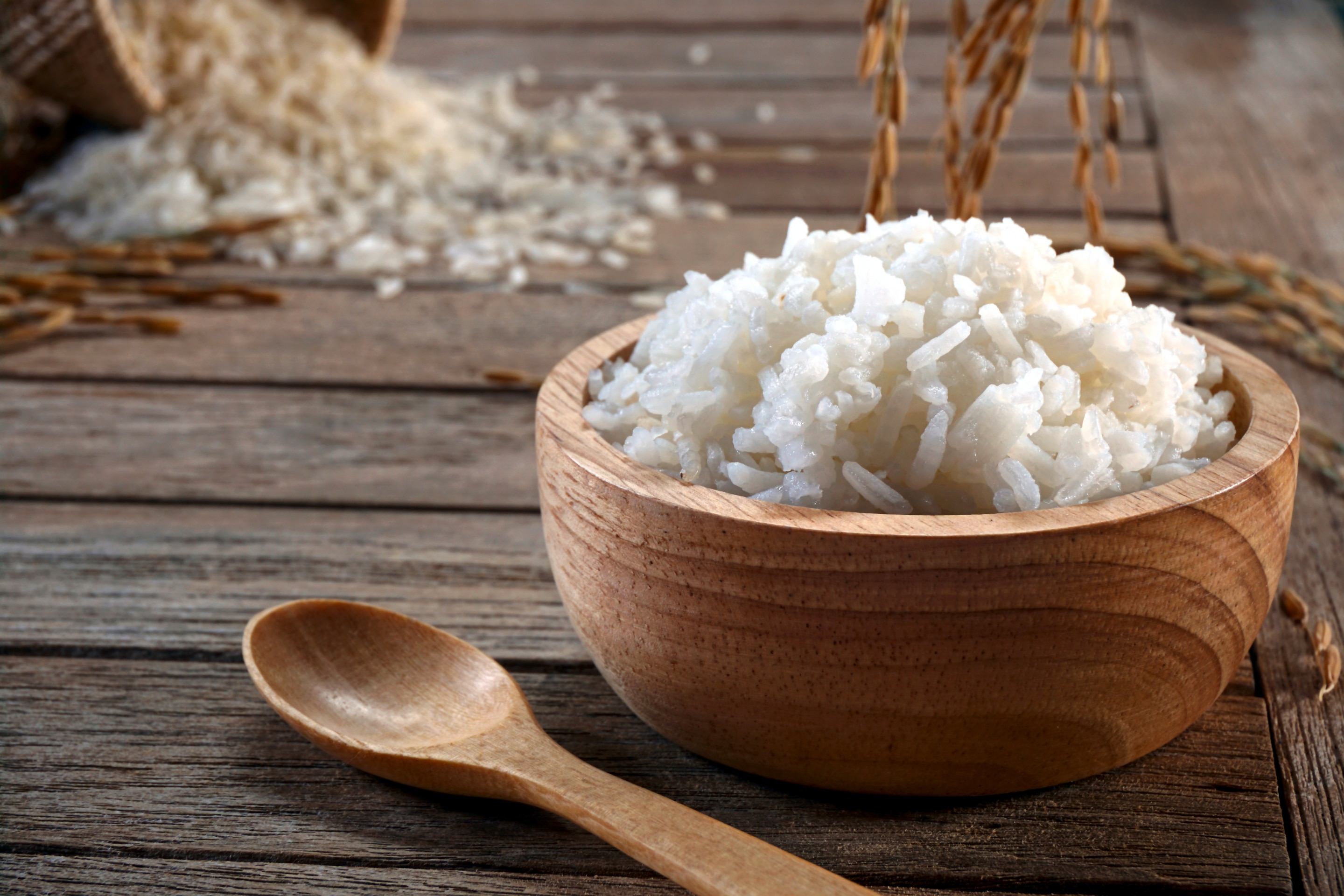
IMAGE CREDIT: Knorr
But sustainable eating does not necessarily require saying goodbye to rice forever.
Sanchez recommended combining complex carbohydrates with protein, healthy fats and fiber instead of simply focusing on carb-free meals. Some of her suggested combinations include brown or red rice with grilled chicken breast and vegetables such as kangkong or cabbage, as well as steamed kamote paired with pan-seared tokwa and cucumber slices.
The idea is less about finding one “perfect” food and more about creating meals that keep you nourished and satisfied.
What you can add to your kimchi and eggs
If you enjoy the viral combination, there is no reason to throw it out.
Instead, think of kimchi and eggs as one component of a meal.
You could pair them with a source of complex carbohydrates, vegetables or healthy fats. The result can be more filling and nutritionally diverse than simply eating the two foods repeatedly.
Lazo also suggested diversifying protein sources throughout the week by rotating foods such as lentils, beans, chicken, lean beef and fish. She recommended varying fermented foods as well, including options such as radish kimchi.
That variety matters because no single food can provide every nutrient your body needs.
Other easy meals that can keep you full
If the appeal of the kimchi and egg trend is that it is quick, filling and easy to prepare, there are plenty of other combinations that follow the same principle.
For a snack, Sanchez recommended whole-wheat toast topped with mashed avocado and boiled egg, which combines protein, healthy fats and fiber.
Lazo also suggested options such as avocado with whole-grain toast and mixed greens, Greek yogurt with chia seeds and mixed berries, and edamame with quinoa, roasted eggplant and red peppers.
These combinations may not be as dramatic as a viral “secret diet,” but that is precisely the point.
Healthy eating does not have to be complicated.
Why viral diets are so tempting
The appeal of food trends is understandable.
When someone posts a photo saying that a simple meal helped them lose weight or stay full, it can make healthy eating appear incredibly easy. There is something satisfying about believing that one food combination might solve a problem that has otherwise felt difficult.

IMAGE CREDIT: The Independent
But weight management is rarely that simple.
Your overall food intake, activity, habits, sleep, preferences and individual circumstances can all influence your health and weight. A meal that works well for one person may not be the right fit for another.
That is why nutrition advice should focus less on finding the next viral hack and more on building eating habits that can actually be maintained.
Kimchi and eggs can stay on the menu
The good news for anyone who genuinely enjoys the combination is that you do not have to give it up.
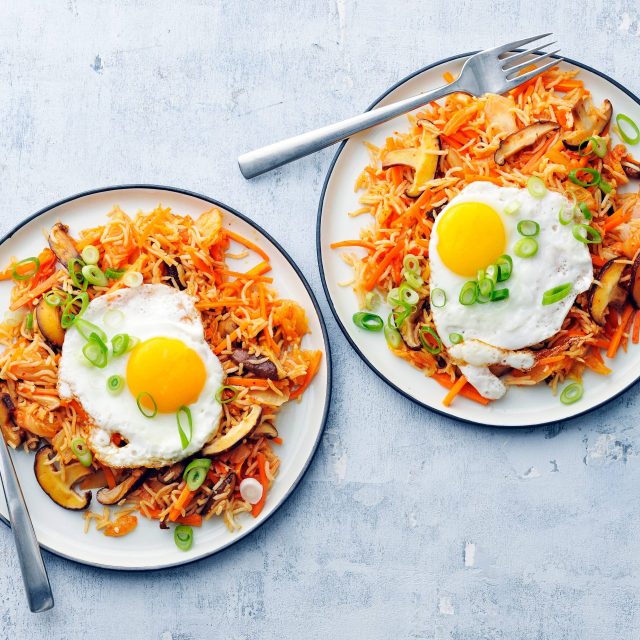
IMAGE CREDITL Savoryonline
Kimchi and eggs can absolutely be part of a balanced eating pattern. Eggs provide protein and several important nutrients, while kimchi can add flavor and fermented-food benefits to a meal. Nutritionists cited by PhilSTAR Life agree that the pairing can be satisfying and relatively low in calories.
The catch is simple: don’t mistake one good meal for an entire diet.
Instead of asking whether kimchi and eggs can magically make you lose weight, a better question might be: How can I build a meal around foods that keep me satisfied while still giving my body the nutrients it needs?
That shift may not sound as exciting as a viral diet hack, but it is much more realistic.
The real secret isn’t on one food
The internet will probably continue producing new diet trends.
There will always be another food combination promising faster results, another “what I eat in a day” video and another viral breakfast that supposedly changed someone’s life.
Kimchi and eggs happen to be having their moment right now.
And while the combination can be a nutritious and satisfying meal, the experts’ message is clear: it is not a magical fix. Sustainable weight management requires more than eliminating food groups or repeatedly eating the same two ingredients.
So if you love kimchi and eggs, enjoy them.
Add vegetables. Include appropriate carbohydrates. Rotate your protein sources. Make room for healthy fats. And most importantly, think about your overall eating pattern rather than chasing every new food trend that appears on your feed.
Because when it comes to eating well, the goal isn’t to find the one meal that changes everything. It’s to build a way of eating that you can actually live with.