When typhoons, floods and other disasters disrupt communities, food relief has to solve an immediate problem: people need something safe to eat even when electricity, clean water and cooking facilities are limited.
That practicality helps explain why relief packs have traditionally leaned heavily on rice, canned meat, sardines, noodles, and other products that can survive long periods in storage.
But surviving a disaster does not make nutrition, taste or variety less important.
IMAGE CREDIT: The Straits Times
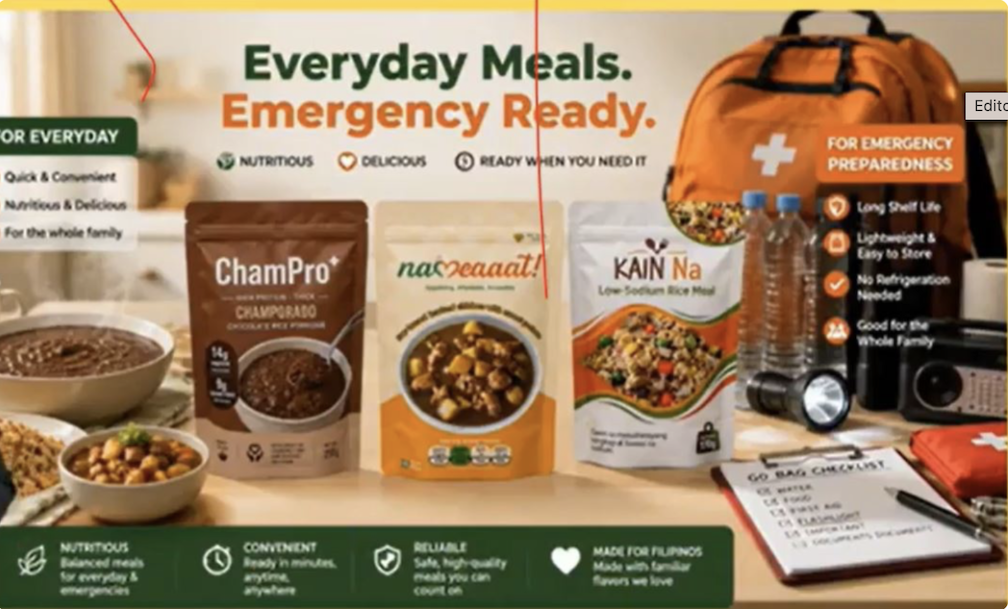
The Department of Science and Technology-Food and Nutrition Research Institute (DOST-FNRI) is now developing another generation of emergency food designed to balance those needs, including chocolate porridge with added protein, reduced-sodium meals inspired by adobo and fortified alternatives that can be prepared within minutes.
The agency showcased several of the food technologies, positioning them as potential answers to some of the less visible problems with eating during an emergency: nutritional gaps, limited variety, unfamiliar flavors and food fatigue.
The question is no longer simply how to make relief food last.
It is how to make it something people can rely on nutritionally and actually want to eat when everything else around them has been disrupted.
Why disaster food is different from everyday food
Building an emergency meal comes with constraints that most home cooks never have to consider.
Food may need to spend months inside a warehouse before it is used. It must survive transportation to affected communities, sometimes over damaged roads or into areas without refrigeration.
Once it arrives, the people receiving it may have no stove, electricity or reliable supply of clean water.
The Department of Social Welfare and Development says its ready-to-eat food is intended for displaced families during the first 48 hours after a disaster, particularly when organized cooking and cooking facilities are limited or unavailable.
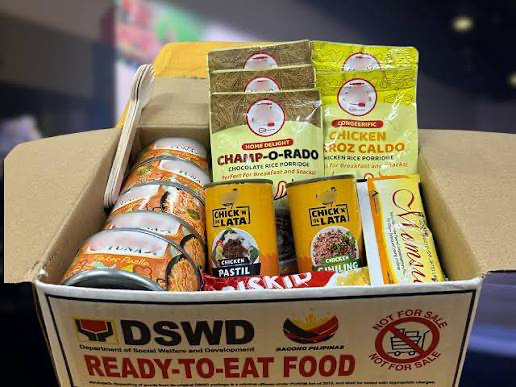
IMAGE CREDIT: DSWD Eastern Visayas
That makes shelf life and convenience essential.
International disaster-preparedness guidance similarly recommends storing nonperishable foods that require little or no refrigeration, cooking or water.
But designing everything around convenience can create another challenge.
People affected by disasters may depend on relief food for days or weeks. Eating similar canned or packaged products repeatedly can mean limited variety, while some products may not provide the combination of protein, fiber, vitamins and minerals normally obtained from a more varied diet.
DSWD guidelines already require disaster food provisions to meet recommended energy and nutrient intake standards and to be culturally acceptable to recipients.
DOST-FNRI’s newer products take that idea further.
Chocolate porridge with more protein
One of the products under DOST-FNRI’s Ready for Everyday and Emergency Situations-Quality Meal, or Res-Q Meals, is called ChamPro+.
It is a chocolate porridge made from rice and cocoa combined with dairy and plant-based proteins.
According to DOST-FNRI, one serving contains 14 grams of protein, making it higher in protein than similar products currently on the market.
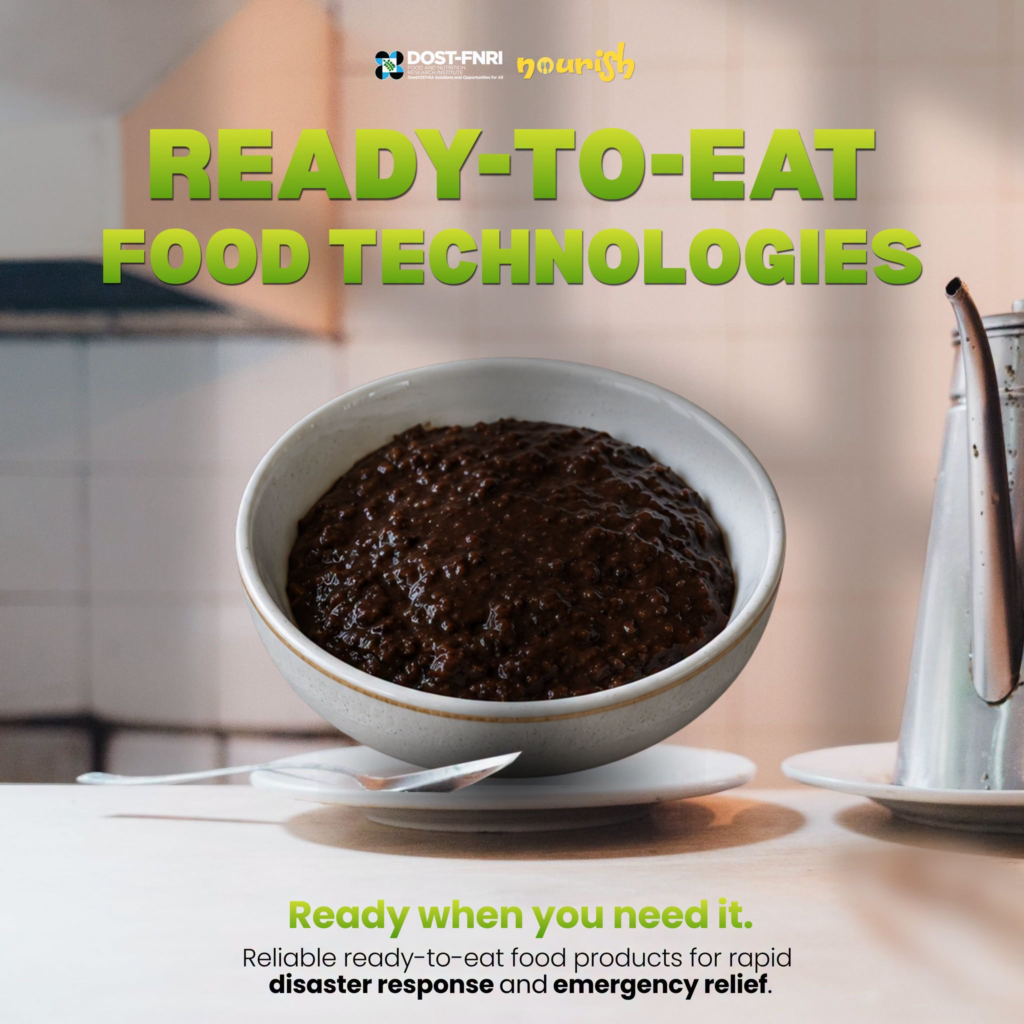
IMAGE CREDIT: DOST-FNRI
Protein is particularly useful in an emergency meal because it can help people stay full for longer periods. When food supplies are limited or distributions are delayed, satiety becomes more than a dietary preference.
The choice of chocolate porridge also addresses another part of emergency eating that is easy to overlook: familiarity.
Instead of asking people to adjust to an unfamiliar nutrition product during an already stressful situation, food developers can build nutrients into flavors and formats people recognize.
The same thinking appears in another Res-Q Meal called Nameaaat.
Adobo, but designed for an emergency pouch
Nameaaat is made with chicken, sweet potato and a reduced-sodium soy-based sauce intended to recreate the familiar flavor of adobo.
Each serving provides 10 grams of protein and one gram of dietary fiber, but one of its more notable features is its sodium content.
DOST-FNRI puts it at 101 milligrams of sodium, compared with as much as 495 milligrams in some commercially available canned meat and fish products cited by the agency.
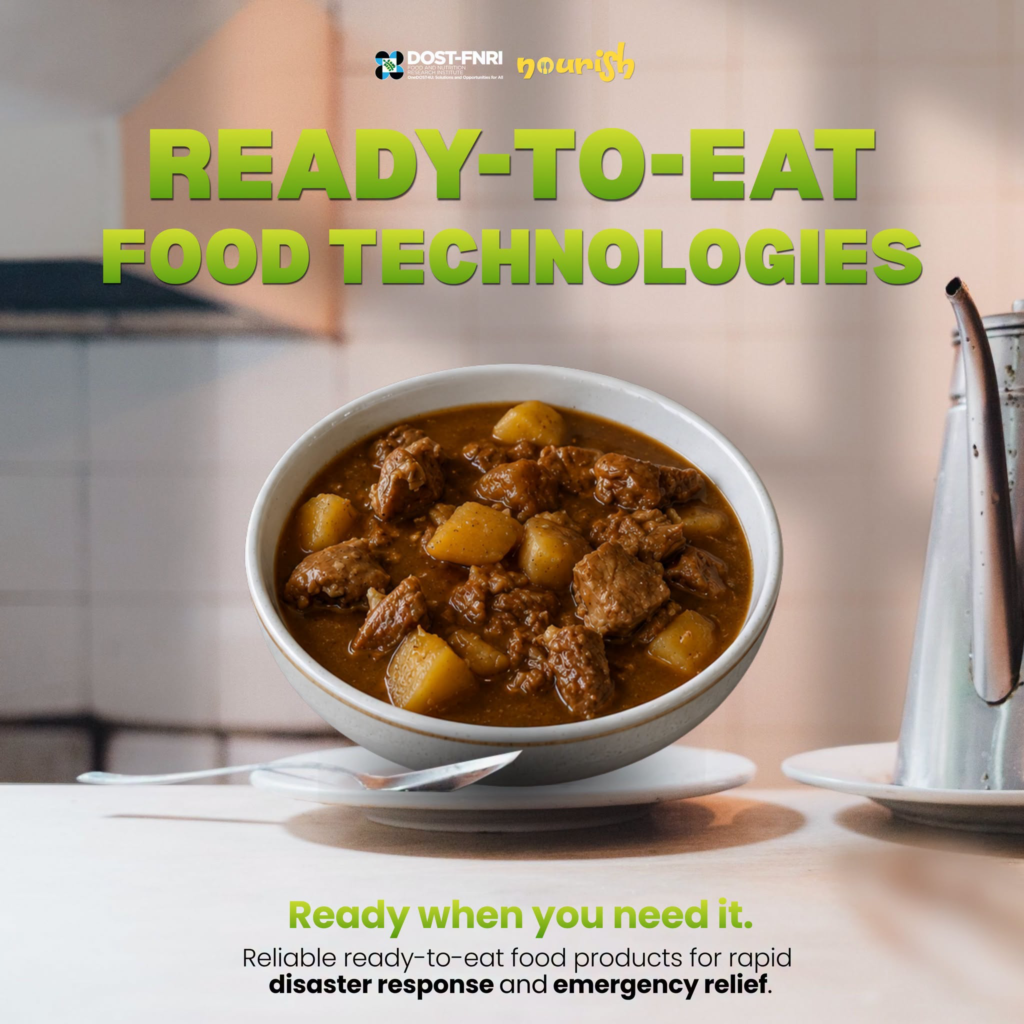
IMAGE CREDIT: DOST-FNRI
That difference matters because shelf-stable food does not have to mean abandoning long-term health considerations.
Another product, KAIN Na!, combines rice, chicken, mixed vegetables and a reduced-sodium soy-based sauce in a ready-to-eat pouch.
The approach is simple: take the convenience associated with canned and packaged relief food, then try to make the meal more nutritionally complete and closer to something Filipinos would normally recognize as lunch or dinner.
Emergency food can also be designed for children
Disasters do not affect everyone nutritionally in the same way.
Children, older adults, pregnant women and people with particular health conditions can have different needs, making a one-size-fits-all relief pack difficult.
Among DOST-FNRI’s latest products is Enerbisc, a milk biscuit developed specifically with children in mind.
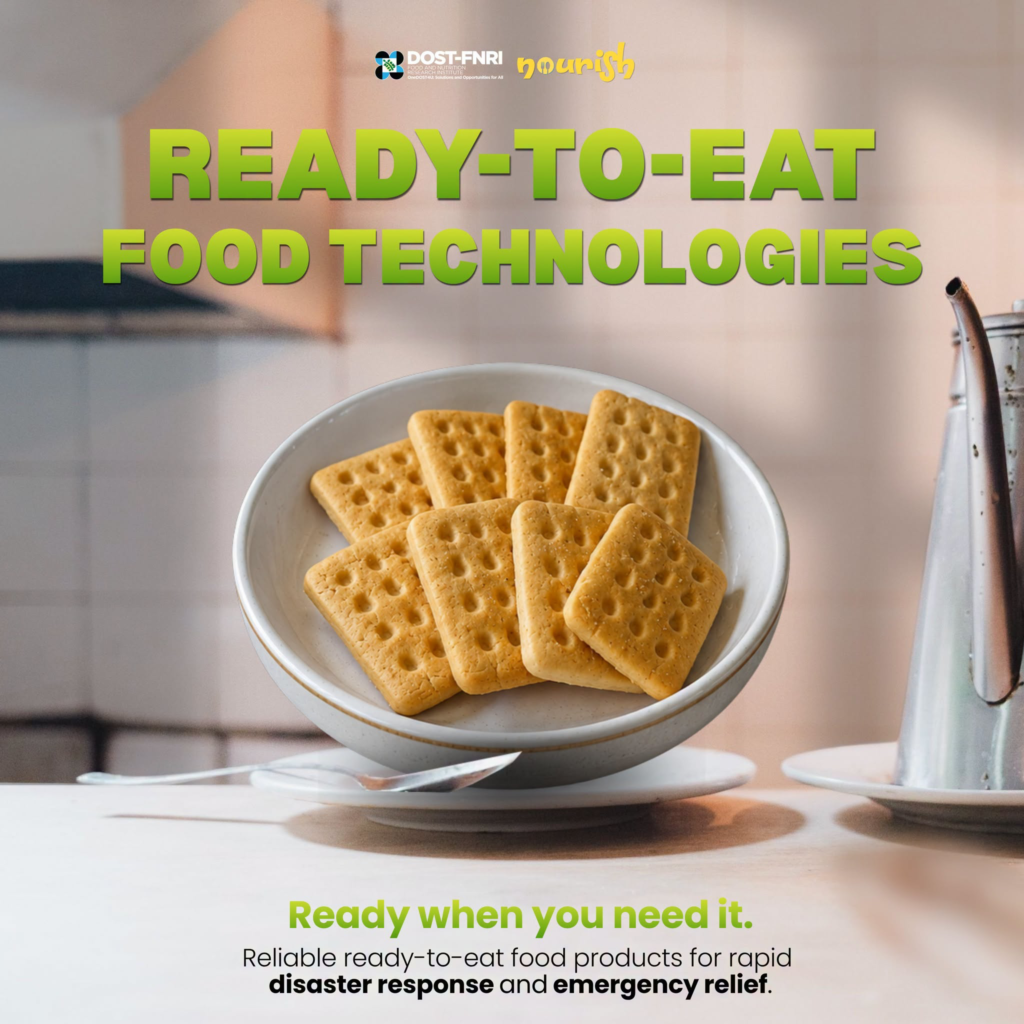
IMAGE CREDIT: DOST-FNRI
One serving can provide up to 25 percent of the recommended energy intake for children aged six to nine, based on the Philippine Dietary Reference Intakes cited by the agency.
DOST-FNRI has been working on this problem for years.
Its broader food technology portfolio includes fortified rice, complementary foods, ready-to-eat products and nutrient-enhanced foods that can be adopted by manufacturers, government agencies and organizations involved in feeding programs.
Earlier technologies have included iron-fortified rice, rice-mongo blends, vegetable mixes and shelf-stable Filipino dishes such as laing.
In other words, the latest Res-Q Meals are part of a much longer effort to make convenience and nutrition coexist.
Not everything has to come in a can
DOST-FNRI is also exploring foods that still require preparation but are designed around the realities of disrupted communities.
Oricea is an extruded, iron-fortified instant rice kernel that can be prepared in about five to seven minutes by adding water.
A 30-gram serving provides 8 percent of the recommended iron intake for children aged six to nine, according to the agency.
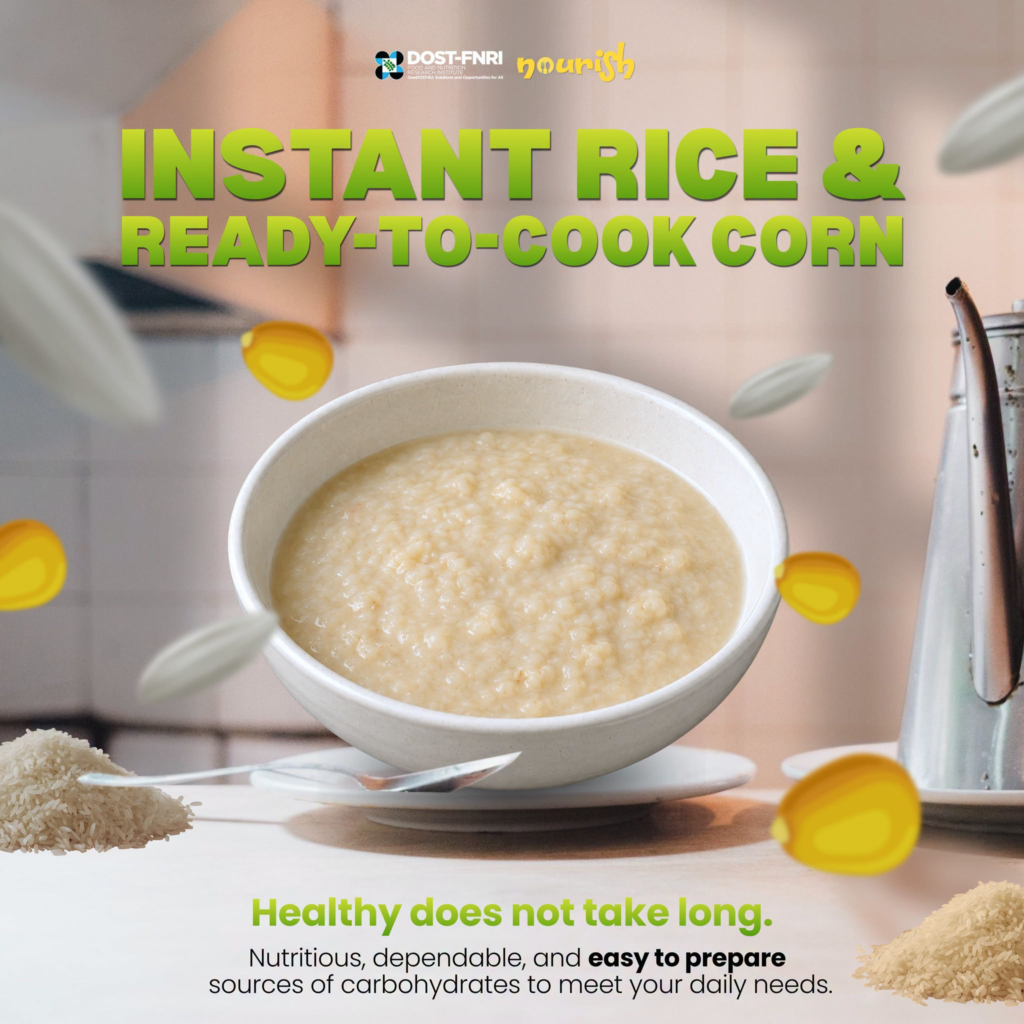
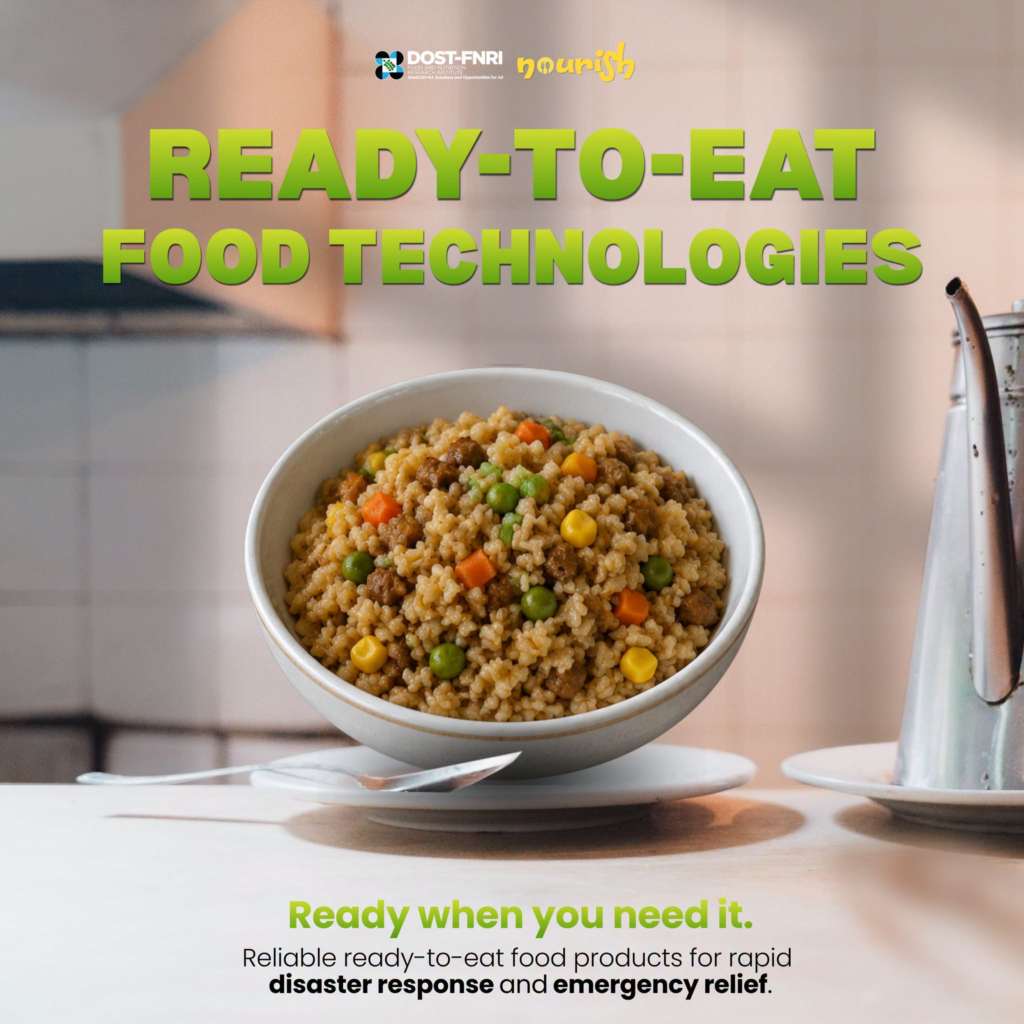
Another product, Maizea, is made primarily from white corn but shaped like rice. It cooks in around three minutes and can remain shelf-stable for 12 months.
These products occupy a space between traditional relief goods and normal home cooking.
They require some water and preparation, meaning they may not be ideal in the first hours after a disaster. But as electricity, water access and community kitchens begin returning, they could expand the types of meals available to displaced families.
Relief food should do more than stop hunger
There is a practical reason canned goods have become almost synonymous with Philippine relief operations.
They are durable, familiar, easy to transport and can be distributed quickly at enormous scale.
That will not disappear simply because better food technologies are being developed.
The more useful shift is expanding what can sit beside those cans.
DSWD itself has acknowledged the need for variety. Its disaster-response guidelines allow alternate family food packs during prolonged relief operations specifically to relieve displaced people from the monotony of repeatedly consuming the same food.
That small detail points to a larger principle.
Food during a disaster is still food.
It provides calories, but it can also provide protein and micronutrients. It can accommodate children and other vulnerable groups. It can taste familiar. It can offer a little variety during an experience in which people have already lost much of their normal routine.
For a country that repeatedly prepares for typhoons, flooding and displacement, improving emergency food may not attract the same attention as rescue equipment or evacuation centers.
But when families are eating from relief packs day after day, what is inside them becomes part of disaster resilience too.