For many Filipinos, being tired has become so routine that it is often treated as part of everyday life. Long work hours, night shifts, long commutes, school demands, late-night screen time, and the pressure to stay productive can all push sleep further down the priority list.
What may feel like an ordinary case of “kulang sa tulog” can become a pattern that affects both physical and mental well-being.

IMAGE CREDIT: Causes and Treatment of Sleep Disorders
MentalHealthPH’s discussion on Filipino sleep problems highlights how sleep is shaped not only by individual habits, but also by work environments, socioeconomic conditions, and stressful surroundings.
Its 2021 feature, “Woke Up Like This: about the Filipino experience of sleep problems,” notes that sleep deprivation has been associated with negative health outcomes and that poor sleep and mental health problems can reinforce each other.
When being tired becomes part of the routine
The Filipino experience of exhaustion does not always come from one late night.
For some, it is the result of repeatedly sacrificing rest to accommodate work, school, family responsibilities, commuting, or other daily demands.
IMAGE CREDIT: Have I got a sleep disorder? – 150 Harley Street ENT
MentalHealthPH points to Filipino workers in industries such as BPO and factory work as communities particularly affected by disrupted sleep. Night-shift workers, for example, have to adjust their natural body clocks to schedules that may conflict with their usual sleep patterns.
This can create a cycle where tiredness becomes something people simply learn to manage rather than a signal that their bodies need more rest.
The workday doesn’t always end when work ends
For workers on shifting schedules, sleep can be especially difficult to protect.
MentalHealthPH cites research linking night-shift work among Filipino women factory workers with mental health symptoms and notes that workers facing poorer working conditions may also experience reduced sleep hours and poorer sleep quality.

IMAGE CREDIT: What is an HR system? | Workday SG
BPO and call-center workers face a similar challenge. Their schedules may require them to remain awake during hours when their bodies naturally expect to sleep. MentalHealthPH’s article describes how repeatedly disrupting the circadian rhythm can contribute to cumulative sleep debt, sleep deprivation, burnout, stress, and insomnia.
For some employees, then, the problem is not simply choosing to sleep earlier. Their working conditions determine when they can sleep in the first place.
Screens give us another reason to stay awake
Even after work or school is over, the day may not really feel finished.
Phones provide entertainment, social connection, news, messaging, and another way to unwind, making it easy for bedtime to become “just five more minutes” until midnight turns into 1 a.m. or later.
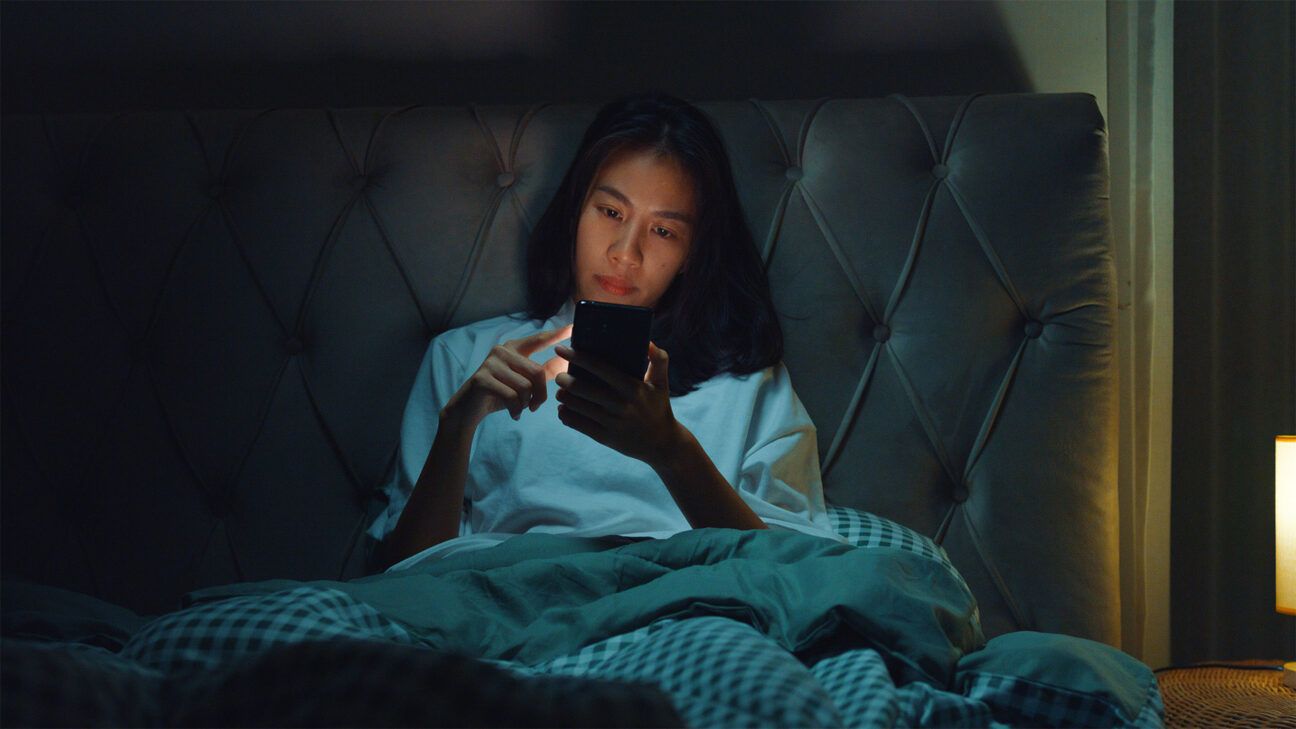
IMAGE CREDIT: 1 Hour of Screen Time at Bedtime Raises Insomnia Risk by 59%
MentalHealthPH’s more recent article on sleep deprivation specifically identifies longer working hours, night shifts, and using gadgets late at night as modern contributors to inadequate sleep. It also notes that chronic sleep deprivation can affect both physical and mental health.
Its earlier sleep feature likewise recommends removing or powering off devices near the sleeping area, noting that blue light can delay natural melatonin production and reduce sleepiness.
The issue, however, is bigger than simply telling people to put their phones away. For many, screens are also where work, school, social relationships, and relaxation now happen.
Long commutes can take away from rest
For Filipinos who spend significant time traveling between home, school, and work, commuting can also eat into the hours available for sleep and recovery.

IMAGE CREDIT: Manila’s commutes from hell – a photo essay | Philippines | The Guardian
A person who leaves home before sunrise and returns in the evening has fewer hours to divide among meals, household responsibilities, personal time, and rest. When sleep is already competing with a packed schedule, staying up late may become the only time available for entertainment or simply being alone.
This helps explain why “I barely slept” can become a familiar part of everyday conversation. The exhaustion is not necessarily caused by one bad decision at bedtime. It can be the cumulative result of how the entire day is structured.
Sleep and mental health are closely connected
Sleep is not simply about feeling refreshed the next morning. MentalHealthPH explains that sleep plays an important role in emotional regulation, cognitive function, memory, and stress management.
Sleep deprivation can contribute to irritability, mood changes, heightened stress responses, and impaired decision-making.
The relationship also works in the other direction. Mental health difficulties can disrupt sleep, while poor sleep can worsen existing mental health concerns, creating a cycle that can be difficult to break.
This means that constantly feeling exhausted should not automatically be dismissed as laziness, poor time management, or simply part of being a busy Filipino.
Rest should not be treated as a reward
MentalHealthPH’s sleep guidance emphasizes the importance of sleep hygiene, including establishing a consistent sleep routine, limiting caffeine later in the day, keeping devices away from the sleeping space, and avoiding bringing work into the place where one sleeps.
But the organization also recognizes that these recommendations can be difficult to follow when people are dealing with demanding work schedules, limited living spaces, financial pressures, and other circumstances beyond individual control.
That distinction matters. Better sleep is not only an individual responsibility. Workplaces, families, schools, and communities also influence whether people have a realistic opportunity to rest.
Maybe “always tired” shouldn’t be normal
Being tired after a long day is normal but being chronically exhausted should not be.
The Filipino sleep problem is not simply about people staying up too late. It is about a culture and environment where productivity can take priority over recovery, where night shifts disrupt natural sleep patterns, where long days leave little personal time, and where screens keep the day going even after everything else has stopped.
The first step may be as simple as taking exhaustion seriously. Instead of asking why someone is always tired, perhaps we should also ask what is taking away their opportunity to rest.
As MentalHealthPH puts it, better individual understanding of the importance of rest and sleep can help promote more humane practices over time.