For many Filipino families, conversations about children’s internet use can quickly become a discussion about screen time.
How long have you been on your phone?
What are you watching?
Who are you talking to?
But as young people spend more of their lives online, digital safety can no longer be reduced to simply counting hours on a screen.
TikTok’s new #ThinkTwice Family Guide in the Philippines takes a different approach. Instead of putting parents in the role of digital police, the guide encourages families to build trust, communicate openly, and help teenagers develop the confidence to make safer decisions online.
The guide was officially launched on August 11 during TikTok’s #ThinkTwice Troop Townhall, held in celebration of International Youth Day.
Developed with Child Rights Coalition-Asia, Child Rights Network, and Plan International Pilipinas, the resource contains conversation starters, reflection activities, digital safety tips, and information about TikTok’s safety and privacy features.
Digital safety starts beyond technology
For TikTok Public Policy Head for the Philippines Yves Gonzales, creating safer online spaces cannot be left to technology alone.

“The strongest safeguards we can give our young people are built through trust, open conversations, digital literacy, and partnerships with organizations that understand the realities that young people face every day,” Gonzales said during his opening remarks.
He emphasized that online safety is a shared responsibility involving families, educators, policymakers, civil society, the technology industry, and young people themselves.
That approach is at the heart of the new Family Guide, which is designed to help parents and teenagers have more practical conversations about their digital lives.
“We hope it serves as a practical reminder that online safety is not just about setting boundaries,” Gonzales said. “It is also about building understanding, resilience, and confidence so that young people can make the most of the opportunities that the digital world offers.”
The internet is already part of everyday life
The challenge for parents is that the online world is no longer separate from children’s everyday experiences.

Young people use digital platforms to communicate with friends, discover interests, learn, create content, and participate in communities. That means simply telling teenagers to stay offline may not address the realities they face.
During the town hall, Undersecretary Angelo M. Tapales of the Council for the Welfare of Children stressed that parents need to rethink what digital parenting looks like.
“Digital parenting is not about knowing every application or monitoring every click. They are not security guards or police of digital spaces,” Tapales said.
Instead, he encouraged parents to become trusted guides who can help young people navigate online spaces safely.
“Rather, it’s about building trust, maintaining open communication and creating an environment where children feel safe to ask questions, seek guidance, and report concerns,” he added.
Parents don’t have to become technology experts
One of the most relatable challenges for parents is keeping up with the platforms their children use.

New applications, online trends, slang, games, and social media features can appear faster than adults can learn them. But parents don’t necessarily need to know everything.
What matters is being willing to understand the digital spaces their children already inhabit.
Tapales summed it up during the discussion: “We have to relate to you where you are, in whatever place you are, and speak your language.”
That can mean asking teenagers what they enjoy watching online, understanding the platforms they use, or simply showing enough interest that conversations don’t feel like interrogations.
Veteran television host, educator, and parent creator Kuya Kim Atienza similarly emphasized the importance of meeting young people where they are and learning their language.
For parents, that may mean becoming more familiar with social media not to monitor every activity, but to better understand the environment their children are navigating.
Young people need a voice in digital safety
The #ThinkTwice town hall also put teenagers at the center of the discussion.

Teen advocates Bea Vicente and Jhasper Galleza of Plan International Pilipinas, along with Charles Dwayne Sicad of the Council for the Welfare of Children, shared their perspectives on the opportunities and challenges young people encounter online.
Their participation reinforces a point made by Tapales: children and teenagers shouldn’t simply be treated as people who need protection.
“Children and young people are not merely recipients of protection. You are active participants in creating safer digital spaces,” he said. “Your voices matter, and they should continue to inform our policies, programs, and initiatives that shape our digital experiences.”
Giving young people a voice can make digital safety conversations more realistic because they understand online communities and experiences in ways adults may not always see.
What should parents actually do?
For families wondering where to begin, developmental and behavioral pediatrician Dr. Francis Dimalanta offered a simple framework during the town hall.

IMAGE CREDIT: Digital Literacy: What Parents Need To Know
His TEEN acronym emphasizes putting teens first, establishing daily routines, supporting emotional regulation, and being present in the moment. He also encouraged parents to create opportunities to naturally spark conversations.
The idea is to make digital safety part of everyday family communication rather than something discussed only after a problem occurs. A teenager who knows they can talk to a parent about an uncomfortable message, cyberbullying, inappropriate content, or something confusing they encountered online may be more likely to ask for help when they need it.
The risks are real
The need for these conversations is underscored by the scale of young people’s internet use.
Tapales cited data indicating that 95% of Filipino children aged 12 to 17 are online, while also referencing a study in which 80% of children surveyed had been subjected to online sexual abuse.
These figures highlight why digital safety cannot simply mean encouraging responsible screen time. There are serious risks that young people may encounter online, including harassment, exploitation, abuse, and other harmful experiences.
That is why education, prevention, reporting mechanisms, and trusted adults all need to work together.
A reporting mechanism for children and families
Tapales also highlighted the government’s Makabata Helpline 1383, which he described as a central reporting mechanism for children’s concerns.
The helpline operates 24/7 and can receive reports and concerns involving children, including reports of bullying and violence. “We take everybody’s report seriously,” Tapales said, emphasizing that the service is confidential and anonymous.
The message was clear: children and parents should know where they can turn when something goes wrong.
Technology can be part of the solution
The #ThinkTwice Family Guide complements TikTok’s existing safety and privacy tools for teenagers.
TikTok says teen accounts have more than 50 safety features and settings, including private accounts, content restrictions, and daily screen-time limits. But the town hall made an important distinction: tools and settings are only one part of digital safety.
Technology can provide safeguards, but families still need communication and young people still need the skills to recognize and respond to risks.
Gonzales acknowledged this during his opening remarks, noting that innovation is only one part of the solution. The stronger foundation, he said, rests on trust, open conversations, digital literacy, and partnerships.
The goal isn’t to keep young people offline
Perhaps the most important takeaway from the launch is that digital safety should not mean removing teenagers from the internet entirely.
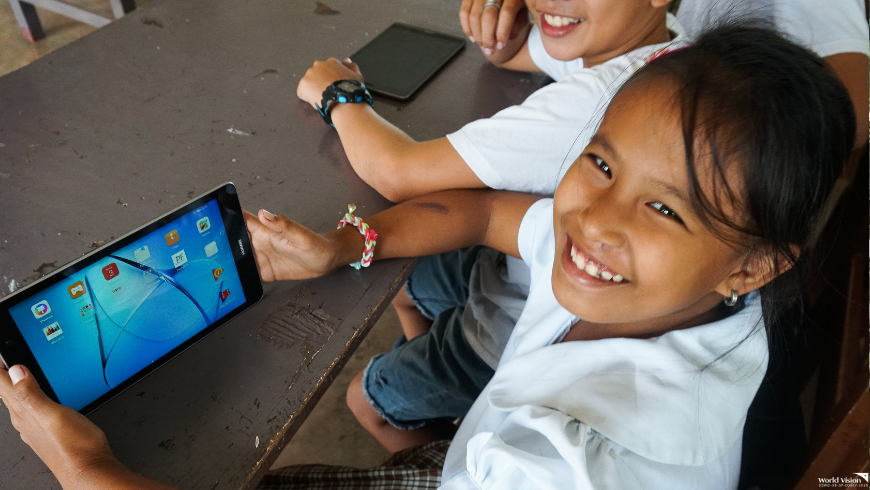
IMAGE CREDIT: World Vision Philippines
Young people are already using digital spaces to learn, connect, create, and participate. The challenge is helping them do so safely.
As Tapales put it, the responsibility is not only to protect children from harm, but also to make sure that safety does not prevent them from exploring the opportunities available online.
“Our children may be digital natives, but that doesn’t mean they have to navigate the digital world alone,” he said. That line may be the simplest way to understand the philosophy behind the #ThinkTwice Family Guide.
From monitoring to guiding
The conversation around children’s internet use is changing.
Instead of asking only how much time teenagers spend online, parents may also need to ask what they are experiencing, whom they interact with, what they encounter, and whether they feel comfortable asking for help.
The #ThinkTwice Family Guide offers Filipino families a starting point for having those conversations.
It doesn’t replace parental guidance, technology safeguards, education, or government action. Rather, it brings these pieces together around one important idea: young people are safer online when they know they are not navigating the digital world alone.
For Filipino families, that may begin with something surprisingly simple.
Not another rule, and definitely not another restriction. Just a conversation.