Deep within the climate-controlled vaults of global data centers, a monumental architectural shift is underway. As artificial intelligence evolves past simple chatbot exchanges into autonomous reasoning and real-world agentic decision-making, the silicon powering these digital minds is facing an insatiable demand for raw computing muscle.
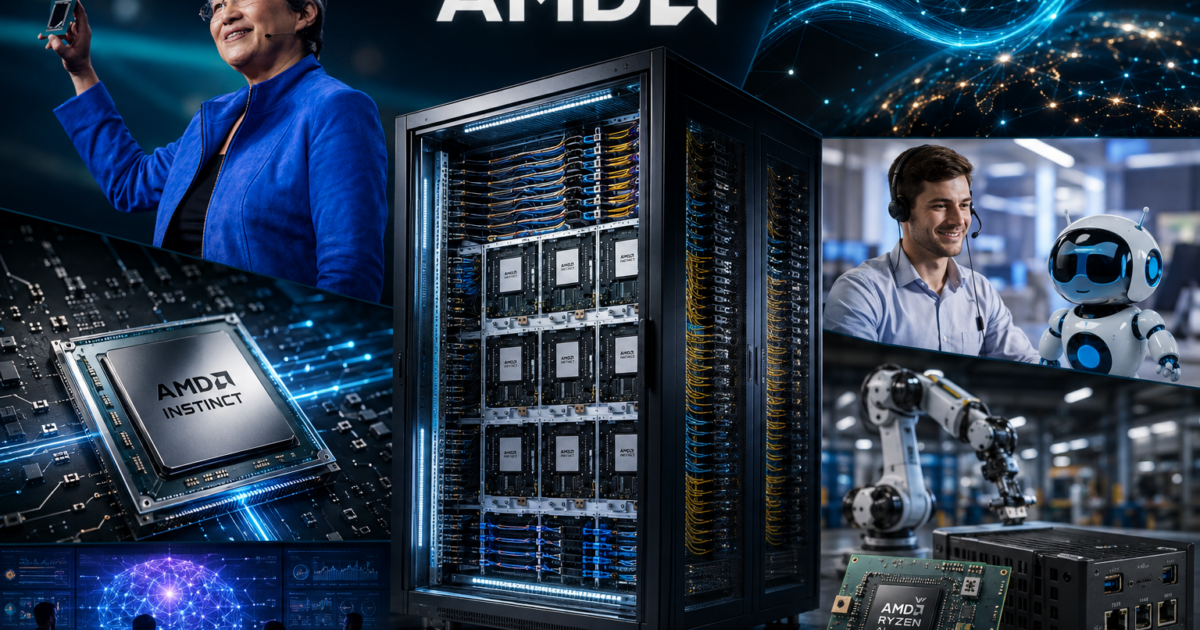
At its “Advancing AI 2026” event in San Francisco, semiconductor pioneer AMD answered the call by unveiling AMD Helios, an absolute behemoth of an AI rack designed to drive processing workloads at a gigawatt scale.
Far from a routine hardware refresh, AMD Helios is a purpose-built computing monolith engineered specifically for frontier-level intelligence.
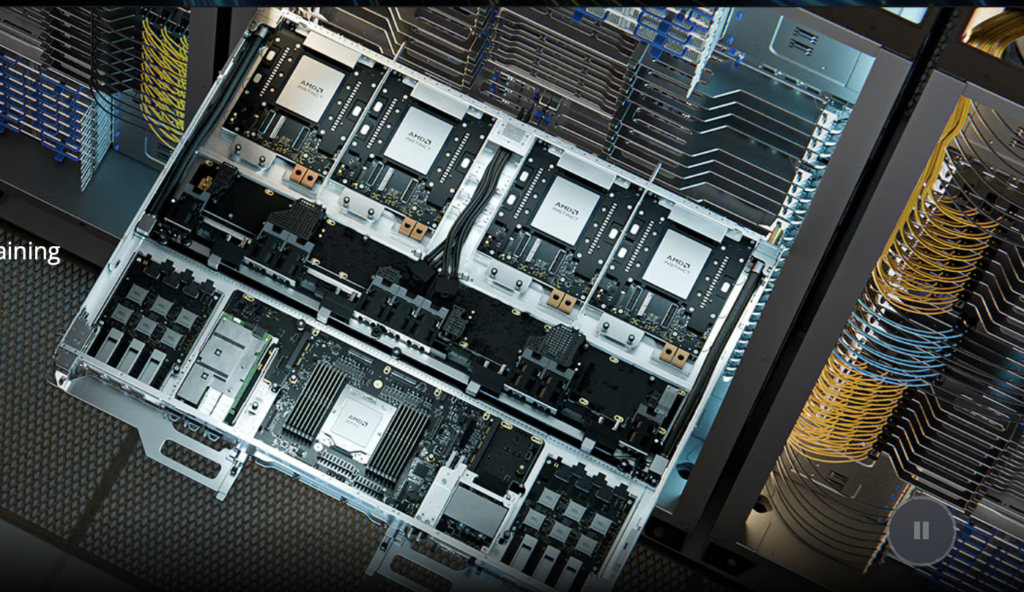
IMAGE CREDIT: AMD
Beneath its sleek casing, each integrated rack harmonizes 72 AMD Instinct MI455X GPUs for heavy acceleration, 18 6th-Gen AMD EPYC “Venice” CPUs for core orchestration, and specialized AMD Pensando networking hardware to facilitate seamless scale-up and scale-out communications — all bound together by the AMD ROCm open software stack.
The result of this dense integration is a staggering boost in efficiency, with the chipset maker claiming Helios delivers up to 30% more inference tokens per dollar than its chief market competitors, dramatically lowering the financial barrier for continuous, enterprise-grade AI execution.
Industry giants lock in next-gen Silicon
Industry titans are already lining up to secure their piece of the hardware.
Strategic partner Anthropic announced a multiyear agreement to deploy up to two gigawatts of Instinct MI455X GPUs inside Helios racks while using its Claude model to accelerate the chipset maker’s software development.
OpenAI is simultaneously co-optimizing its GPT-class workloads on Helios through the Triton framework ahead of planned late 2026 deployments, while Meta has initiated extensive lab testing on the system to ready its infrastructure for future high-density scaling.
From cloud infrastructure to edge robotics

IMAGE CREDIT: AMD
The company’s vision extends well past server farms and cloud infrastructure into physical environments where AI must interact directly with the physical world.
To meet the needs of smart manufacturing and edge computing, the tech giant also introduced its Ryzen AI Embedded X100 processors alongside its Kria AI SOM and Robotics Developer Platform.
By equipping everything from dense data centers to industrial robotics, the chipset maker is anchoring its open silicon ecosystem at the heart of an artificial intelligence market projected to reach US$2 trillion by 2030, sending a clear message from San Francisco that the future of autonomous intelligence is ultimately forged in hardware.