Most Filipinos will probably never hear of AMD Helios. They won’t see it in electronics stores, and it certainly won’t be sitting on an office desk or inside a home computer.
Yet the technology could quietly shape many of the digital services people use every day.
When a bank chatbot answers almost instantly, a translation app converts conversations in real time, or an AI assistant summarizes a lengthy document in seconds, it’s easy to forget what’s happening behind the scenes. Those experiences don’t happen on a smartphone alone. They’re powered by massive data centers filled with specialized hardware built for artificial intelligence.
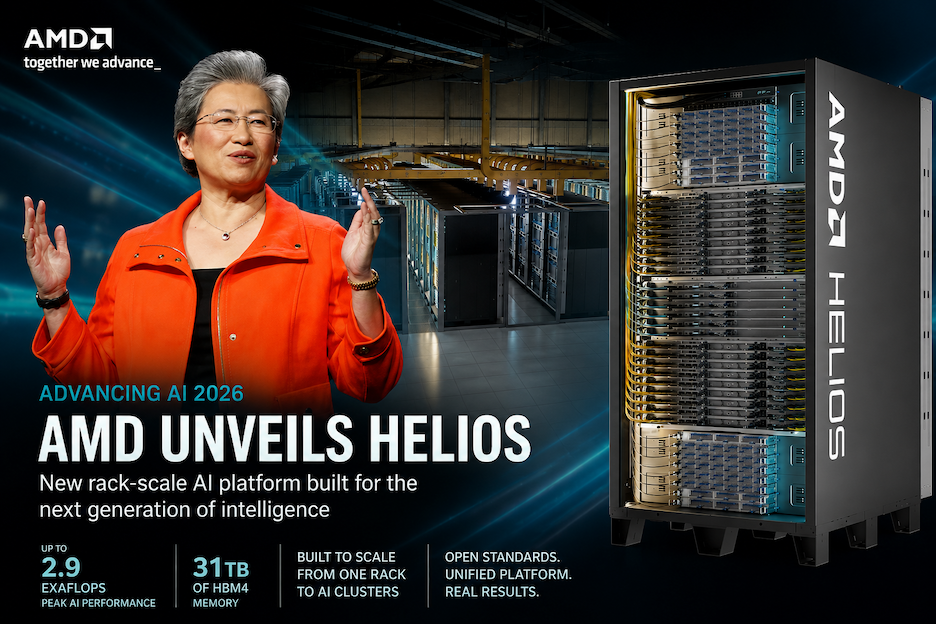
That was the focus of AMD’s Advancing AI 2026 event, where the company introduced AMD Helios, a new AI platform designed to help cloud providers, researchers, and large enterprises run increasingly sophisticated AI systems.
The technology consumers will never see
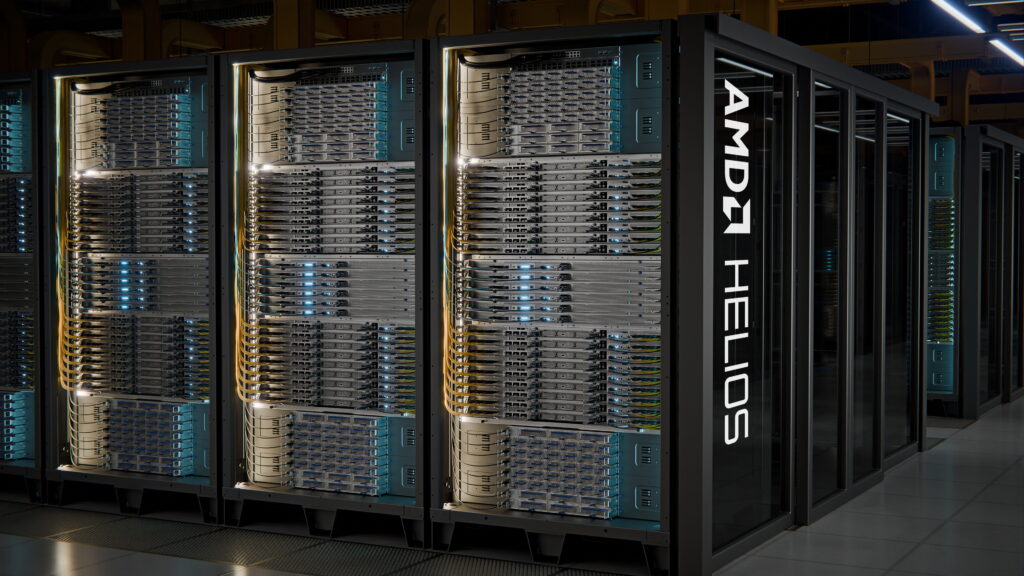
IMAGE CREDIT: AMD
Unlike AMD’s Ryzen processors or Radeon graphics cards, Helios isn’t a product ordinary consumers can buy.
It’s designed for data centers — the facilities that keep AI services running around the clock.
Think of it as the heavy machinery behind today’s AI boom. The more capable these systems become, the faster AI applications can process requests, analyze information, and serve millions of users at the same time.
That may sound far removed from everyday life, but the impact could eventually be felt much closer to home.
For Filipinos, stronger AI infrastructure could mean faster customer support from banks, more accurate fraud detection, smoother online government transactions, quicker medical analysis, and AI-powered tools that respond with less delay.
As more organizations in the Philippines adopt artificial intelligence, the technology powering those services becomes just as important as the applications people interact with.
One platform instead of separate pieces
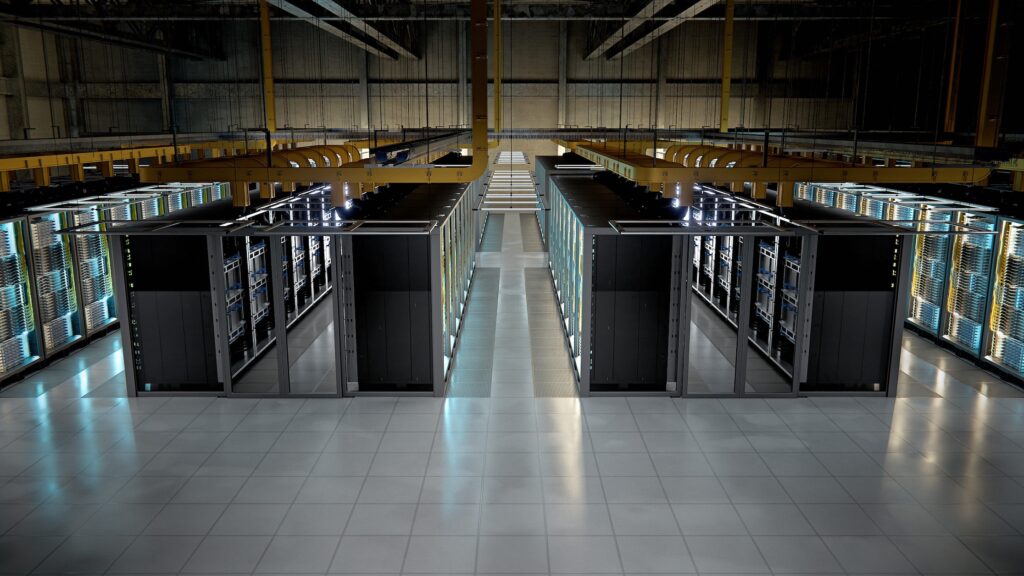
IMAGE CREDIT: AMD
AMD‘s latest announcement isn’t simply about launching another graphics processor.
Helios brings together several of the company’s newest technologies — including AMD Instinct MI455X GPUs, sixth-generation AMD EPYC processors, Pensando networking, and ROCm software— into a single platform designed to work as one integrated system.
The goal is to make it easier for organizations to expand their AI capabilities without having to stitch together different technologies themselves.
A company could start with a single rack and add more computing power over time as demand increases.
“Frontier AI infrastructure is evolving rapidly, and customers need platforms that can deliver exceptional performance while scaling efficiently as workloads grow,” said Vamsi Boppana, AMD’s senior vice president for AI.
Why this matters beyond the tech industry
Artificial intelligence has an enormous appetite for computing power.
Every time AI generates an image, recommends a product, reviews a medical scan, or detects a potentially fraudulent banking transaction, it performs billions of calculations in just a few moments.
The faster that infrastructure becomes, the faster — and potentially less expensive — those AI services become as well.
AMD said a single Helios rack can deliver up to 2.9 exaflops of peak AI performance, supported by 31 terabytes of high-bandwidth memory.
Those figures won’t mean much to most people, but they point to a much bigger story: the race to build AI is increasingly becoming a race to build the infrastructure that makes AI possible.
Why Filipinos could eventually benefit

IMAGE CREDIT: Freepik
The immediate customers for Helios are global cloud providers, research institutions, and major technology companies — not everyday consumers.
Still, the ripple effects could eventually reach the Philippines.
Banks are investing more heavily in AI to strengthen fraud detection and improve customer service. Hospitals are exploring AI-assisted diagnostics. Schools are beginning to experiment with AI-powered learning platforms. Even government agencies are testing conversational AI to make public services easier to access.
All of these initiatives rely on computing infrastructure capable of handling increasingly complex AI workloads.
For Philippine startups and software developers, more powerful global AI infrastructure could also make advanced computing available through the cloud, allowing them to build smarter applications without investing millions in specialized hardware.
The next phase of the AI race
For years, attention has focused on the AI tools people interact with directly—chatbots, image generators, and virtual assistants.
The bigger competition is now happening behind the scenes.
Technology companies are racing to build the infrastructure that can support increasingly powerful AI models while keeping them fast, reliable, and energy-efficient.
AMD’s Helios is part of that broader shift.
Most Filipinos may never know its name, but as artificial intelligence becomes more deeply woven into banking, education, healthcare, government services, and everyday digital experiences, the machines hidden inside distant data centers could have a bigger influence on daily life than most people ever realize.