On a rainy Monday in the Philippines, there is a familiar question that can spread almost as quickly as the weather itself: “Walang pasok ba?”
Last September 8, “walang pasok Sept 8” emerged among the Philippines’ active Google searches, reflecting a familiar Filipino habit whenever dark clouds gather, roads begin to flood, or a weather advisory starts circulating online.
The search is not always simply about wanting a day off. It is often about certainty.
Do students still need to leave home? Should parents prepare for another school day? Will the commute be safe? Does the office have a work-from-home arrangement? Has the local government already announced anything?
The questions were particularly relevant as the southwest monsoon, or Habagat, continued to affect Luzon and Visayas. PAGASA warned of monsoon rains and possible flash floods or landslides in several areas, while other parts of Luzon and Western Visayas were forecast to experience scattered rains and thunderstorms.
“Walang pasok” is more than a search term
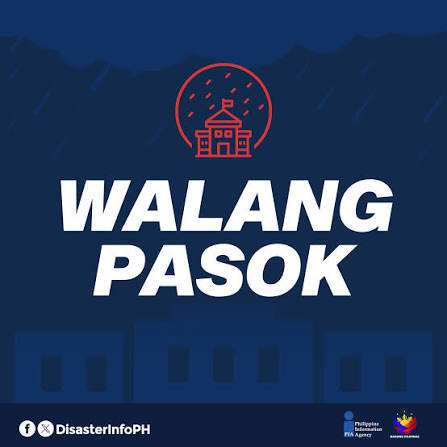
IMAGE CREDIT: PIA
For Filipinos, “walang pasok” has become almost a language of its own.
It is the phrase students look for before checking whether they should get dressed for school. It is what parents search while monitoring the weather. It is what employees quietly hope to see when the commute already looks difficult.
And because announcements can vary by city, municipality, province, school, and type of institution, the search often becomes a race for information.
On September 7, for example, several local governments announced class suspensions because of Habagat and heavy rain. In Bulacan, Calumpit and Paombong suspended classes at all levels, while several municipalities in Pampanga and Pangasinan also announced suspensions or shifts to alternative learning modes.
The announcements can also change during the day. Valenzuela City and Laguna, for instance, announced afternoon class suspensions on September 7 after rainfall conditions worsened.
That uncertainty helps explain why people keep checking.
The search is not necessarily asking, “Do I get a free day?”
It is asking, “What is happening where I am?”
Filipinos have learned to live around the weather

Weather is not an occasional disruption in the Philippines. It is part of everyday planning.
A heavy downpour can change a morning commute. A flooded road can turn a 30-minute journey into several hours. A storm can affect classes, public transportation, work schedules, flights, deliveries and family routines.
For commuters especially, rain is not just about getting wet.
Flooding and heavy rain can mean longer queues, traffic congestion and disrupted public transportation. These problems are already familiar parts of the rainy-season commute in many urban areas.
That is why a weather forecast can quickly become a logistics forecast.
Filipinos do not only ask whether it will rain. They ask whether the roads will be passable, whether the trains will be crowded, whether their usual route will flood and whether they should leave earlier.
Sometimes, the most important weather update is not the temperature.
It is whether there is somewhere they still need to go.
From school suspensions to work-from-home
The “walang pasok” mindset has also expanded beyond students.
The workplace has increasingly had to account for weather disruptions, particularly as remote and hybrid work became more familiar to Filipino workers.
In August, the House of Representatives shifted to a work-from-home arrangement amid heavy rains from the southwest monsoon.
New guidance has also given private-sector employers clearer room to suspend work during weather disturbances. Labor Advisory No. 14, Series of 2026 allows employers to exercise management prerogative in suspending work during weather disturbances, subject to the applicable rules.
The result is a subtle change in how Filipinos think about bad weather.
Before, the question was often whether classes would be suspended.
Now, the question can be broader: “Kailangan ko pa bang pumasok?”
That can mean school, office, fieldwork, errands or even a long commute across several cities.
The group chat is part of the weather system now
There is also something distinctly modern about the way Filipinos deal with “walang pasok.”
The official announcement may come from a local government unit, school or government agency, but the information often travels through Facebook posts, Messenger group chats, family chats and social media feeds.
One person sees an announcement and sends it to everyone else.
Someone asks whether it applies to private schools.
Another checks if the suspension is for the whole day or only afternoon classes.
Someone else asks if work is included.
Then somebody inevitably says, “Wait lang, wala pang official announcement.”
The speed of social media has made weather information more accessible, but it has also created a need to verify what is circulating. Authorities have previously warned the public about fake class suspension announcements, underscoring why official government and school channels remain important.
In other words, Filipinos have developed a kind of informal weather network.
PAGASA provides the forecast. Local governments make announcements. Schools communicate with students and parents. And group chats make sure almost everyone hears about it within minutes.
“Walang pasok” is really about safety
There is an easy tendency to treat class suspensions as something students celebrate.
And, yes, the memes are inevitable.
But behind the excitement is a serious reason why these announcements exist.
DepEd’s disaster guidelines provide mechanisms for automatic suspension or cancellation of classes under certain typhoon, rainfall and flood conditions, reflecting the reality that getting students and school personnel home safely can matter more than maintaining a normal school day.
That becomes especially important when weather conditions can deteriorate quickly.
On September 7, PAGASA’s forecast included possible flash floods and landslides in several areas affected by the southwest monsoon.
So when Filipinos search “walang pasok,” they are often trying to answer a much bigger question: Is it still safe to follow the normal routine today?
We have become very good at adjusting
Perhaps the most Filipino thing about “walang pasok” is how quickly people adapt once an announcement comes.
The school uniform stays on the chair.
The alarm gets turned off.
The commute gets cancelled.
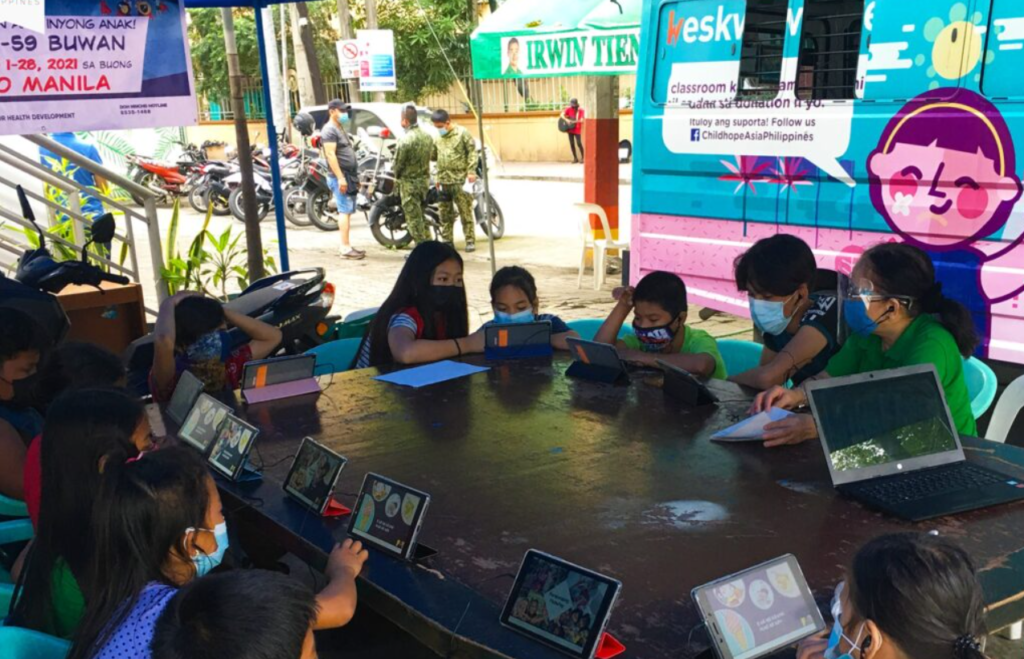
A student opens a laptop instead of walking to school.
An employee checks whether they can work remotely.
A parent rearranges the day’s errands.
And somewhere online, someone posts the inevitable screenshot: “Walang pasok!”
It may look like a small part of Filipino internet culture, but it reflects something deeper about how people navigate uncertainty.
The Philippines is a country where weather can interrupt plans with very little notice. Over time, people have learned to build flexibility into everyday life.
The habit of checking “walang pasok” is one expression of that flexibility.
The question behind the search
Perhaps that is why the phrase continues to return whenever the rain gets stronger.
“Walang pasok” is not just about cancelled classes. It is about mobility, safety, work, family routines and the ability to adjust when conditions change.
It is also a reminder of how technology has changed the way Filipinos experience weather. A storm or monsoon may begin in the sky, but the first sign that it has entered everyday life can be a notification on a phone.
And when thousands of people suddenly search the same three words, they are not necessarily looking for an excuse to stay home.
They are looking for a signal that tells them how to move through the day.
Sometimes, “walang pasok?” is really another way of asking: “Okay ba tayo today?”