Most people glance at the total amount on their electricity bill and move on. Very few stop to ask what the smaller charges actually mean — or why some households end up paying more than others for costs they have no control over.
One of those charges is system loss, and it has recently found itself back in the spotlight after President Ferdinand Marcos Jr. raised the issue during his fifth State of the Nation Address.
For Partners for Affordable and Reliable Energy (PARE), the discussion goes beyond removing a single line item from electricity bills. The consumer advocacy group believes it also raises a broader question: Should Filipinos be paying different amounts for the same type of power loss simply because they are served by different electricity providers?
A difference many consumers never notice
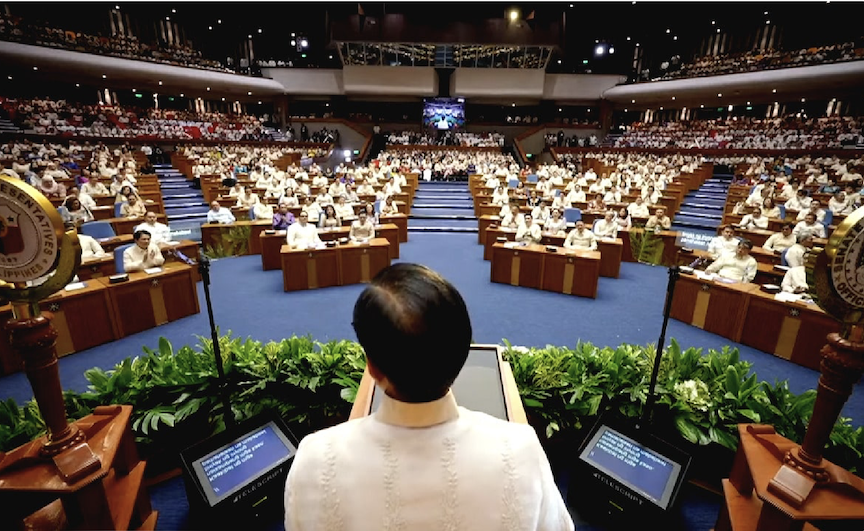
IMAGE CREDIT: RTVM
System loss refers to electricity that disappears before it reaches homes and businesses. Some losses are unavoidable, occurring naturally as electricity travels through power lines. Others result from aging infrastructure, technical inefficiencies, or illegal connections.
Those losses are partially recovered through consumers’ monthly bills.
What concerns PARE is that the amount utilities are allowed to recover differs depending on the type of distributor.
Private distribution utilities are generally allowed to recover up to 5.5% in system losses from customers. Electric cooperatives, however, are permitted to recover as much as 12.25%.
According to PARE Chief Advocate Officer Nic Satur Jr., that difference has real consequences for millions of consumers, particularly those living outside the country’s major urban centers.
“The President hit the nail on the head during the SONA — we should not pay for losses we did not create,” Satur said in a press release. “But the current system allows electric cooperatives to pass on inefficiencies that consumers have no control over. Consumers connected to electric cooperatives are paying for double, triple, or even six times the inefficiencies shouldered by consumers served by private utilities. That is fundamentally unfair.”
Satur added that the issue goes beyond the monthly cost of electricity. In his view, reducing system losses also means reducing unnecessary waste across the power network. When less electricity is lost during distribution, less energy needs to be generated to deliver the same amount of power to homes and businesses, making better use of existing resources.
Why provincial consumers pay more
IMAGE CREDIT: PARE
The issue is particularly relevant because electric cooperatives supply power to much of the country outside Metro Manila and other highly urbanized areas.
PARE estimates that around 70 million Filipinos receive electricity through these cooperatives.
In practical terms, Satur said, that means many provincial households are allowed to shoulder significantly higher recoverable system losses than consumers served by private utilities.
He argues that this creates two different standards for essentially the same service.
“If a 5.5% recoverable system loss is considered reasonable for one group of consumers, it’s worth asking why another group is expected to absorb more than twice that amount,” he said.
Looking beyond the monthly bill
IMAGE CREDIT: PARE
For Satur, the conversation is ultimately about improving the efficiency of the country’s power distribution system.
He pointed to data indicating that many electric cooperatives continue to record actual system losses of around 11% to 12%, with some reporting substantially higher levels.
Reducing those losses, he said, would benefit consumers while encouraging continued investment in more efficient electricity networks.
Satur added that improving distribution efficiency is also about strengthening the country’s energy infrastructure over the long term. Investments in modern equipment, upgraded power lines and better monitoring systems, he said, can help reduce technical losses while making the electricity network more reliable and resilient. When less electricity is wasted in transmission and distribution, less electricity has to be generated to deliver the same amount of power to consumers, allowing existing energy resources to be used more efficiently.
“Filipino consumers already pay electricity rates that rank among the highest in Asia. We are entitled to nothing less than the international efficiency standard of 5 percent in return,” Satur emphasized. “You cannot charge world-class prices while expecting consumers to absorb excessive system losses.”
He also explained that affordable and reliable electricity is an important foundation for sustainable communities. In his view, a more efficient power distribution system not only helps ease the burden on consumers but also supports businesses, schools, hospitals and other essential services that depend on stable and reasonably priced electricity.
One standard for everyone?
As discussions on electricity prices continue, PARE is urging lawmakers to consider adopting a single recoverable system loss cap of 5% for all distribution utilities and electric cooperatives.
Satur believes a uniform benchmark would place greater emphasis on improving operational efficiency while ensuring consumers are treated more consistently, regardless of where they live.
Whether that proposal gains support remains uncertain.
What is becoming clearer, however, is that a charge many consumers rarely notice has become part of a much larger conversation — not only about electricity prices, but also about energy efficiency, the modernization of the country’s power distribution system, and how those costs and benefits are shared across the country.