While the game showcases drew much of the attention at the Philippine GameDev Expo (PGDX) 2026, the event’s workshops highlighted another story unfolding behind the scenes: the industry’s growing focus on developing talent, refining technical skills, and preparing local studios for long-term growth.
Compared with last year’s edition, PGDX 2026 featured a broader lineup of workshops led by professionals from the gaming and technology sectors. The sessions offered practical insights into game development, design, business strategy, and emerging technologies, reflecting the industry’s expanding ambitions.
Held in the meeting rooms of the SMX Convention Center, the workshops covered topics ranging from concept art and UI/UX design to project pitching and other key aspects of game development, giving aspiring developers and industry professionals opportunities to learn directly from experienced practitioners.
This year, here are standout workshops that we’ve gained insight throughout the three-day event:
Workshop #1: Supporting the growth of PH game development industry
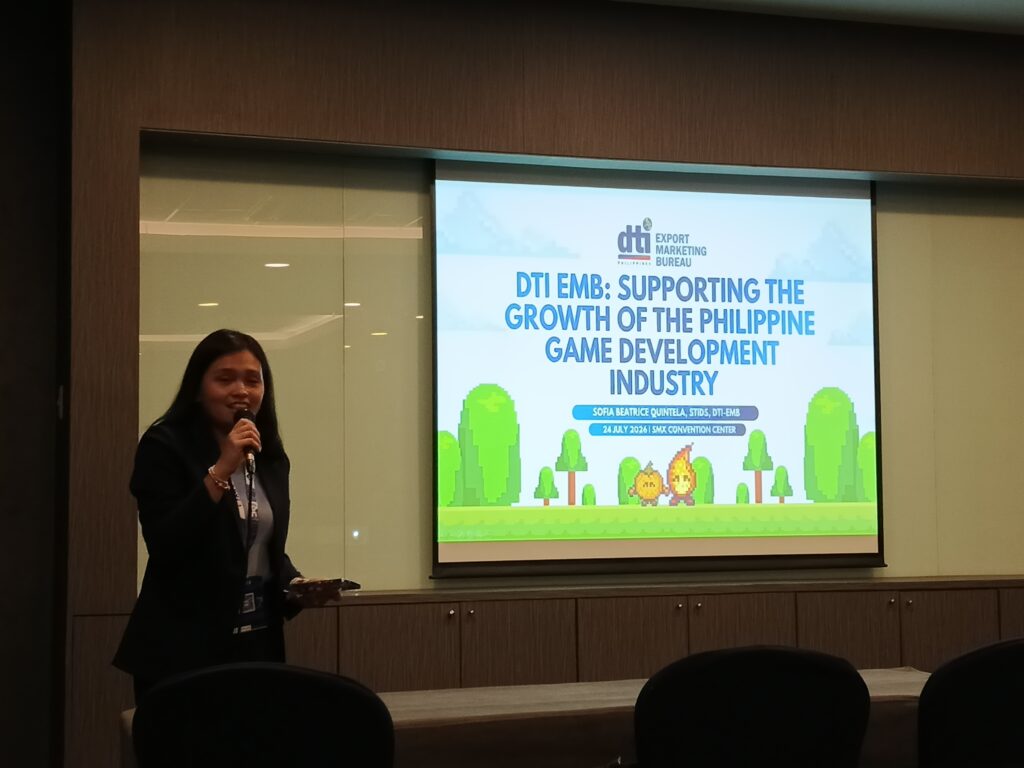
Sofia Beatrice Quintela from DTI-EMB (IMAGE CREDIT: Neo Magtira)
Presented by Sofia Beatrice Quintela from DTI-EMB, this workshop discusses about the game development sector in the Philippine IT-BPM industry and its export readiness for global markets.
The Philippine IT-BPM industry is a major contributor to export revenues, quality employment, and digital transformation. There are various sectors shaping the industry, and one of them is game development, with 7,220 FTEs (full-time employees) employed and around $100 million and more revenues generated.
Key segments of the Philippine gaming industry include game development services, co-development or co-production, and original game development.
The workshop also tackles the export readiness of the Philippines’ various game studios. Attendees are able to join a survey to identify their strengths and weaknesses when it comes to exporting their games into international markets, as well as given advices on how to effectively do market research.
Workshop #2: Nail that pitch
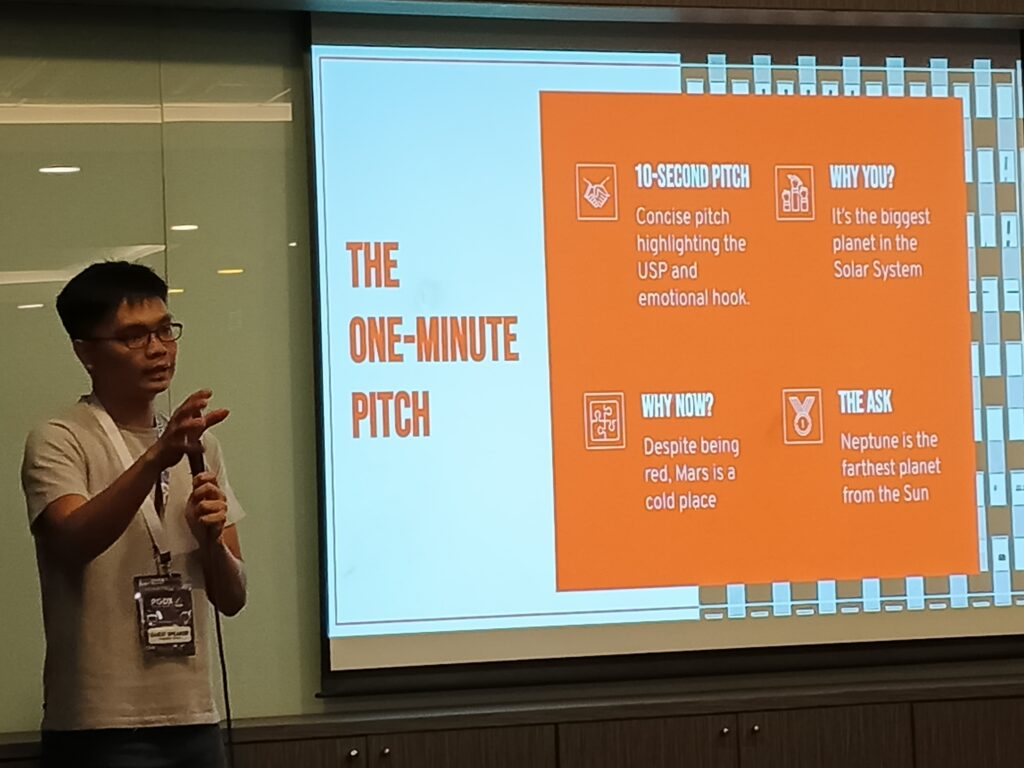
Jet Tanyag, Co-Founder and CEO of Ludo Launchpad Software, Inc. (IMAGE CREDIT: Neo Magtira)
Presented by Jet Tanyag, Co-Founder and CEO of Ludo Launchpad Software, Inc., this workshop provides attendees tips and advices on how to pitch their game project effectively.
Workshop attendees participated in an activity to practice and conduct their one-minute pitch about their respective game project, and given tips on how to avoid common pitfalls and problems when it comes to pitching game projects.
Additionally, Jet offers Ludo Launchpad’s rigorous 14-week program which covers topics beyond pitching a game project, such as customer research, revenue and business models, product development, community engagement, and so on.
Workshop #3: UI/UX design for casual games
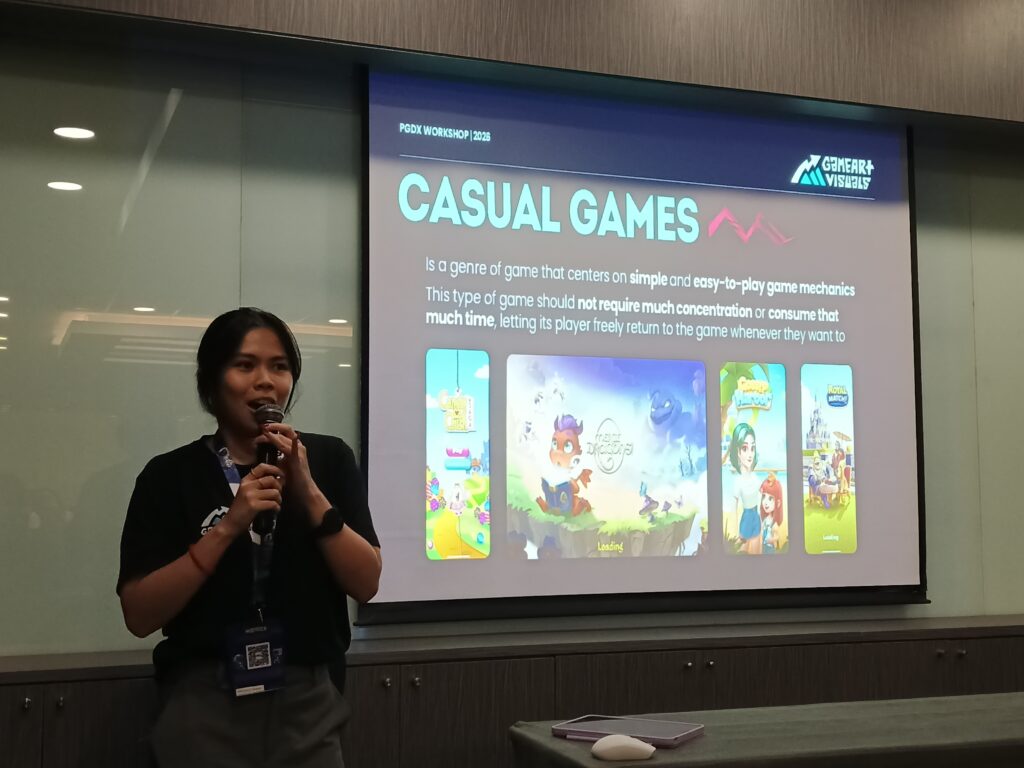
Irene Tabanera, Game Artist of Game Art Visuals (IMAGE CREDIT: Neo Magtira)
Presented by Irene Tabanera, Game Artist of Game Art Visuals, this workshop focuses on designing user interfaces and experiences for mobile casual games.
It discusses about casual games and how to design them to tailor for a wider casual audience. In designing UI/UX, the speaker provided steps and phases on the process.
Research and development are the key foundations in UI/UX design, requiring game designers to generate ideas and conceptualize them through GDD (game design document) and prototypes or wireframes. Afterwards, assets can be created based on the previously-made concepts, and apply design principles to their game design.
The workshop also provides a live demonstration on how UI/UX design for casual games is done.
Workshop #4: The time I created a game I now need to sell
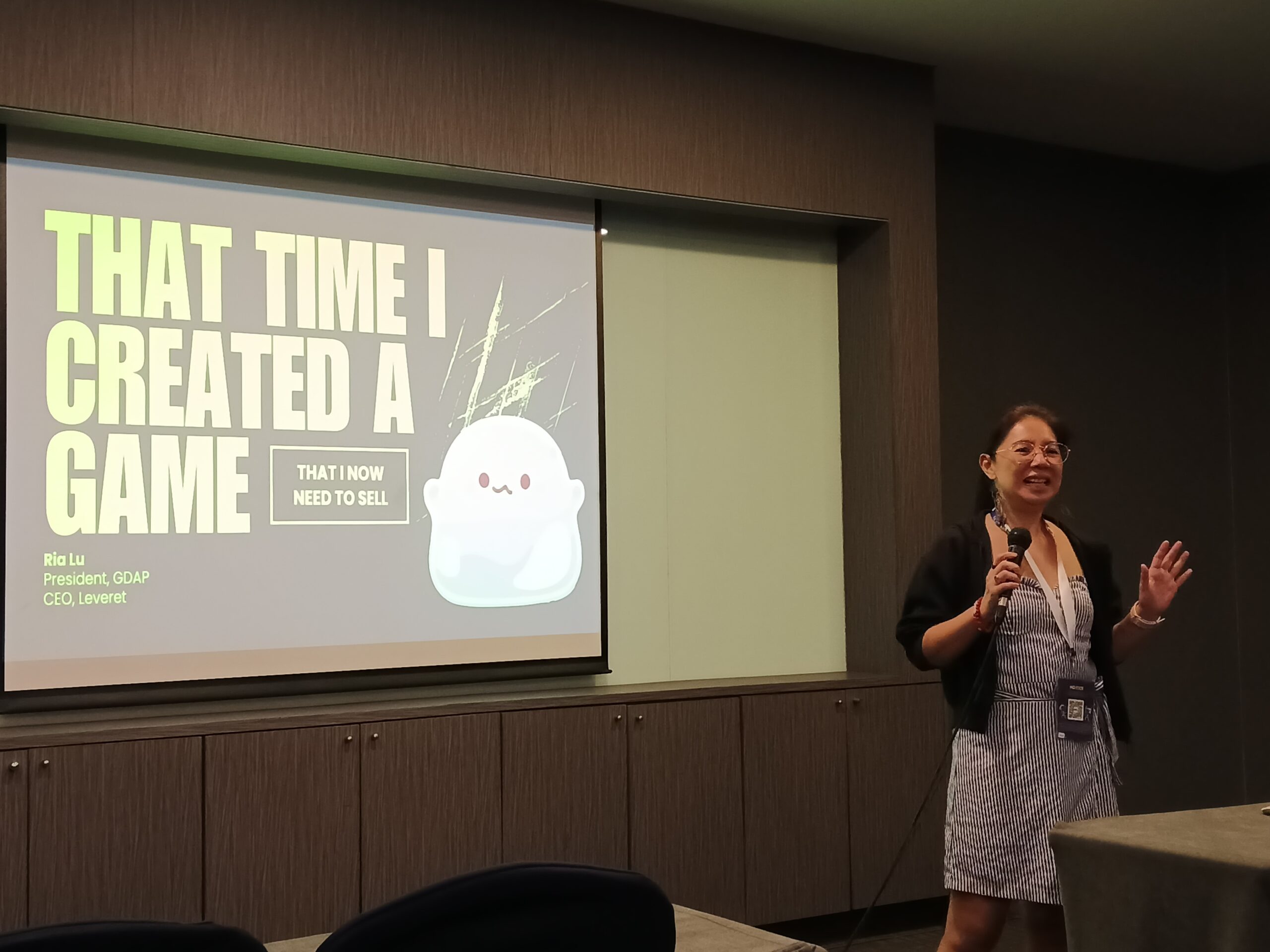
Ria Lu, CEO of Leveret (IMAGE CREDIT: Neo Magtira)
Presented by Ria Lu, CEO of Leveret and one of the co-founders of the Game Developers Association of the Philippines, this workshop is more on the background on how the Philippine game industry and ecosystem came to be, as well as how to finance a commercial game project.
With over 18 years in the industry, Ria shared her experiences to the audience, from her humble beginnings in the early 2000s at Anino Games to her successes in the later years through GDAP in 2007, which continues to grow as many game services companies and independent game companies are established.
The workshop then discussed about the Philippine Game Ecosystem, which includes both the games services companies (full-time and specialized) as well as indie game companies and their various business models. It also discusses about setting finances in developing a commercial game and setting sales expectations, even providing a template and sample sheet for attendees to use.
Workshop #5: Project Anito – Open-source game engine
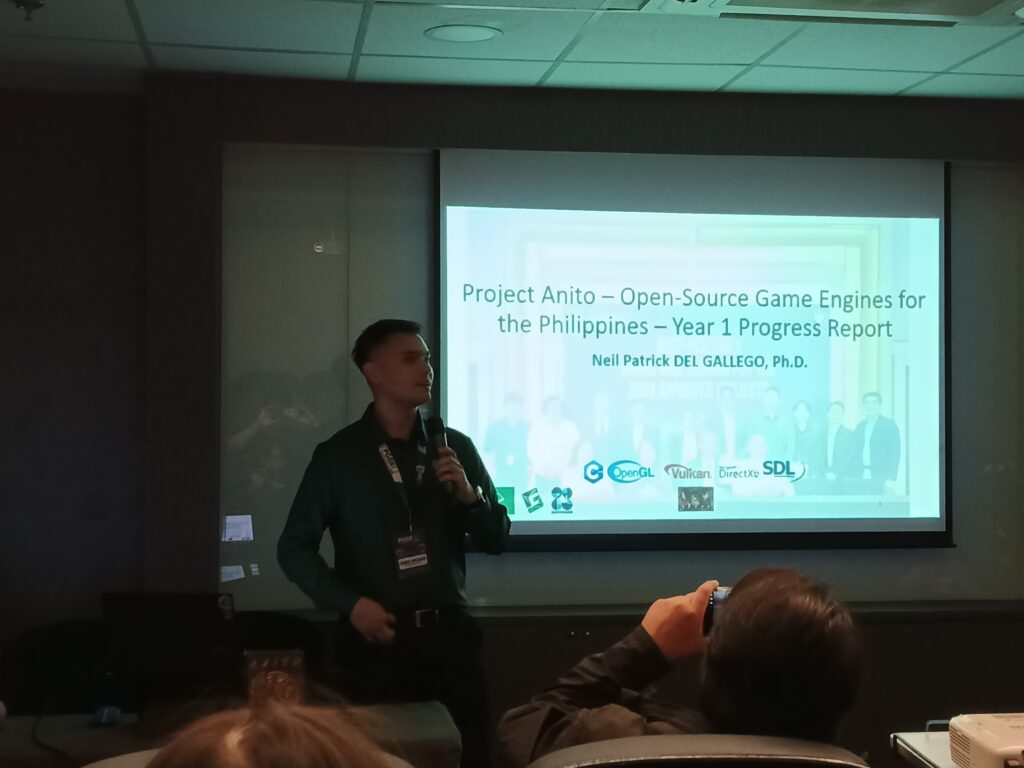
Neil Patrick Del Gallego, Ph.D., Associate Professor at DLSU (IMAGE CREDIT: Neo Magtira)
Presented by Neil Patrick Del Gallego, Ph.D., Associate Professor at DLSU, this workshop discusses about “Project Anito,” a Philippine open-source game engine made by DLSU Game Labs in partnership with DOST-PCIEERD.
Project Anito aims to provide a framework for the Philippine gaming industry in assisting them how to embrace in-house game development. Its proponents will be spearheading the development of tools used in game development, such as game libraries, framework, 3D editor, or game engines.
The game engine aims to implement niche technologies and make them more accessible to even newbies, including ray tracing, cross-hatching, image-to-3D model scanning, and advanced simulated physics.
The game engine aims to be scalable across different platforms, and will make use of both open-source tools such as Cocos2D, Vulkan and SDL, and proprietary tools like Microsoft’s DirectX.
Project Anito aims to target its rollout by 2031, with at least two Philippine studios using the engine. So far, they also aim to implement the features that allow for actual game production sometime around next year.
An industry entering a new stage of growth
The workshops at PGDX 2026 paint a clear picture of an industry entering a new stage of growth. Making games is more than just a hobby at this point – the ecosystem must continue to build sustainable studios, reaching global markets, refining player experiences, securing funding, and investing in the latest trends and technologies.
The Philippine game development industry continues to grow each passing time. Government agencies are exploring ways to support export readiness, experienced founders are openly sharing hard-earned lessons, educators and researchers building tools for future developers, and industry veterans mentoring aspiring creators.
Events like PGDX serve not only as venue to showcase games, but to also help developers, new and old, newbie or veteran, learn and gain new insights and lessons, exchanging ideas, and preparing them for the challenges ahead.