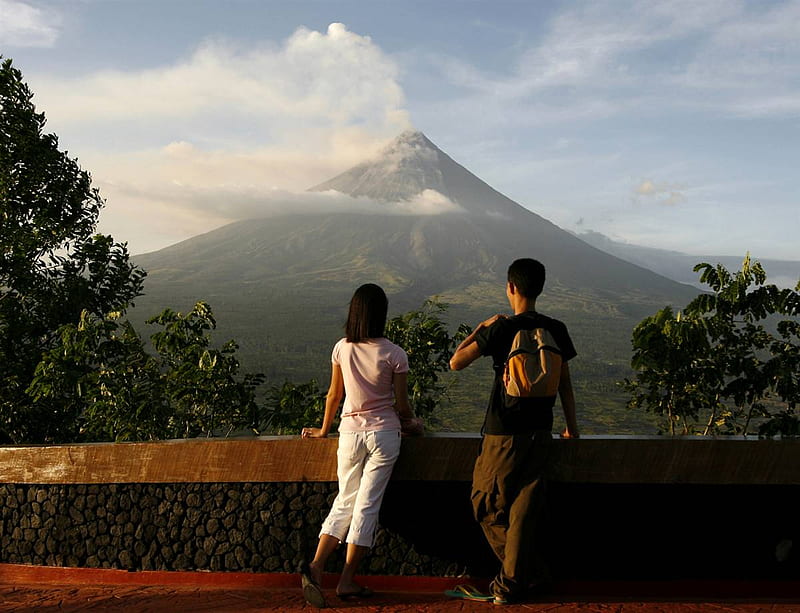
Volcanoes make for some of the most dramatic travel photos.
A sunrise above a crater. A mountain rising above a sea of clouds. Black-sand landscapes, lava fields and viewpoints that make an ordinary holiday feel like an adventure.
But when a volcano actually erupts, the same landscape can quickly become a very different kind of travel story.

Indonesia’s ‘Ring of Fire’: Key facts about the world’s most volcanic nation | Reuters
The recent eruption of Mount Anak Krakatau in Indonesia is a reminder of that reality. The activity disrupted flights across the region, with volcanic ash affecting several Indonesian airports and forcing airlines to cancel or adjust services. By September 7, authorities had kept several airports closed as they assessed ash conditions and aviation safety.
For Filipino travelers who enjoy volcano tourism, the lesson is not necessarily to avoid volcanic destinations altogether.
It is to understand what you are actually booking.
Volcano tourism is not inherently unsafe
Volcanoes are among the reasons Indonesia, Japan, the Philippines, Iceland and other destinations attract adventurous travelers in the first place.
People hike volcanic mountains, visit geothermal areas, explore calderas and photograph volcanic landscapes. In many places, tourism continues safely even when a volcano is active because authorities establish monitoring systems, alert levels and restricted areas.
The important distinction is between visiting a volcanic destination and entering a restricted volcanic zone.
Indonesia, for example, has numerous active volcanoes and maintains monitoring and warning systems for volcanic activity. Its tourism authorities advise travelers affected by eruptions to follow information from official agencies, including the country’s volcanology and disaster-management authorities, and to pay attention to prohibited radii, evacuation routes and designated safe areas.
That means the question should not simply be, “Is there a volcano here?”
It should be, “What is the volcano’s current status, and where am I in relation to it?”
Check the volcano before checking the itinerary
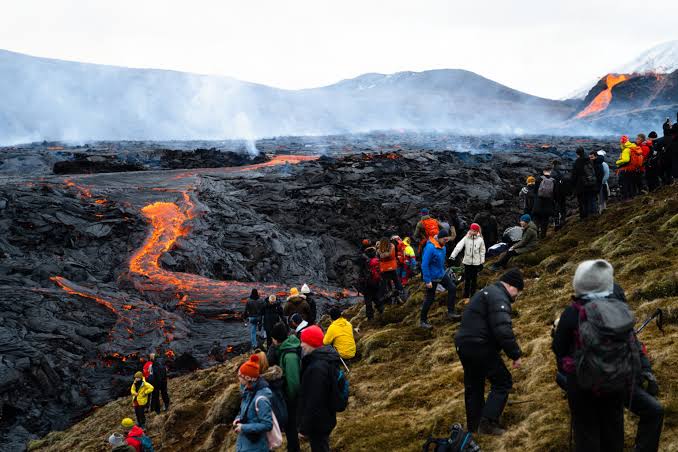
IMAGE CREDIT: National Geographic
When booking a trip near a volcano, travelers often begin with the usual questions.
Where is the hotel? How much are flights? What tours are available?
There is another question worth adding: What is the volcano doing right now?
Volcanic alert levels can change, and exclusion zones can expand when conditions worsen. The UK’s current Indonesia travel guidance, for example, lists specific no-travel zones around several volcanoes, including Mount Lewotobi Laki-Laki, Mount Sinabung, Mount Marapi and Mount Semeru.
This is why a tour package advertised months ago should not automatically be treated as safe simply because other travelers completed it previously.
Volcano tourism requires checking current information close to the date of travel.
For Filipinos, that means looking beyond TikTok itineraries and travel vlogs before heading out.
Flight still affected even if you’re nowhere near a volcano
One of the biggest misconceptions about volcanic travel is that the danger only exists close to the mountain.
Volcanic ash can travel considerable distances and create serious problems for aviation.
The recent Anak Krakatau eruption demonstrated that dramatically. Ash clouds reached high altitudes and disrupted operations at multiple Indonesian airports. By September 7, hundreds of thousands of travelers had been affected by cancellations and delays.
Even Bali was affected by the disruption, with Ngurah Rai International Airport cancelling or adjusting a number of flights following increased volcanic activity.
That matters for Filipino travelers because Indonesia is a major regional destination with connecting flights through hubs such as Jakarta, Singapore and Kuala Lumpur.
You might be planning a holiday in Bali, for example, while the volcanic activity is happening somewhere else.
The volcano does not have to be next to your hotel to affect your itinerary.
Check the airline, not just your booking confirmation
A confirmed flight does not always mean the flight will operate normally.
When volcanic activity increases, airlines can change schedules based on aviation authorities’ assessments, ash-cloud forecasts and airport conditions.
AirAsia, for example, issued a September 7 update warning that the continuing Anak Krakatau eruption was producing volcanic ash clouds that could affect regional airspace.
Jetstar also advised travelers to monitor flight status before going to the airport and offered flexibility for some passengers travelling to or from Bali during the disruption.
For travelers, the practical lesson is simple: check the airline’s official travel advisory shortly before departure, even if you checked everything when you booked.
And if you have connecting flights, check each segment.
Don’t ignore travel insurance
Volcanic activity is exactly the kind of situation that can expose the limits of a travel insurance policy.
Trip cancellation, delays, missed connections, accommodation costs and evacuation can all have different coverage conditions.
Travelers should therefore read the policy before purchasing rather than assuming that “travel insurance” automatically covers every disruption.
This becomes especially important if an official advisory recommends avoiding an area. Some travel authorities warn that insurance coverage can be affected when travelers knowingly travel against official advice. The UK’s current Indonesia guidance explicitly warns that insurance may be invalidated in certain circumstances when travelers ignore official travel warnings.
For an adventure trip, the insurance policy deserves almost as much attention as the itinerary.
Respect exclusion zones, even when the view is perfect
Social media can make risky places look deceptively accessible.
A viewpoint may look peaceful in a photograph. A trail may appear open in an old hiking video. A crater may seem close enough for the perfect selfie.
But volcanic landscapes can change quickly.
Authorities establish exclusion zones because of hazards that may not be obvious to visitors, including ash, falling rocks, volcanic gases, lava, lahars and sudden changes in activity.
The safest rule is also the least exciting one: if authorities say you cannot enter an area, don’t enter it for the photo.
A spectacular vacation memory is not worth ignoring a safety perimeter.
Pack for ash, not just the beach
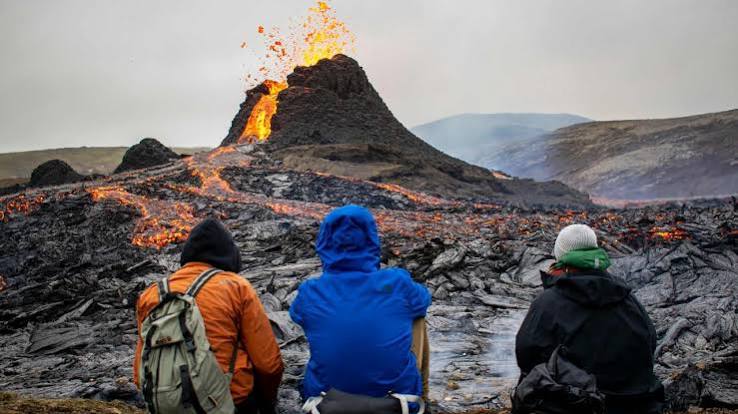
IMAGE CREDIT: Kids News
Travelers heading somewhere with active or potentially active volcanoes should also think beyond the usual vacation packing list.
A properly fitted mask can be useful if volcanic ash is present, while protective eyewear can help reduce irritation. Long sleeves and trousers can also provide some protection from ash exposure.
Indonesia’s tourism authorities specifically advise people affected by eruptions to follow official instructions and use protective clothing, while local authorities provide information on safe areas and evacuation routes.
But packing alone is not a substitute for leaving an unsafe area.
If authorities issue an evacuation order, the priority is to move to the designated safe location rather than trying to wait out the eruption in a hotel or tourist area.
Build flexibility into the trip
Volcano tourism is one of those types of travel where having a rigid itinerary can backfire.
If the trip depends on one flight, one ferry, one mountain tour and one specific viewpoint, a disruption can unravel the entire vacation.
A little flexibility can make a big difference.
Leave buffer time between connecting flights. Avoid scheduling an important event immediately after arriving. Consider refundable or flexible bookings when possible. Keep emergency funds accessible. Have alternative transportation and accommodation options in mind.
And perhaps most importantly, accept that sometimes the correct travel decision is to postpone.
That is not a failed trip.
It is good travel planning.
The Philippines has its own volcano lesson
Filipinos do not have to look far to understand why volcanic safety matters.
The Philippines is also part of the Pacific Ring of Fire and has several active volcanoes, including Mayon, Taal, Kanlaon and Bulusan.
That means volcanic tourism is not a foreign concept for Filipino travelers. Many have grown up familiar with the idea of alert levels, ashfall advisories and restricted zones.
The same mindset should follow them overseas.
A volcano does not become predictable simply because it is part of a famous tourist destination.
Ask these questions before you book that flight
A volcano destination can still be an incredible trip. The goal is not to eliminate adventure, but to make sure the adventure is informed.
Before booking, check the volcano’s current alert level and any official exclusion zones. Look at recent travel advisories for the specific area rather than relying on general country-level information. Check your airline’s disruption policies and monitor your flight before leaving for the airport.
Check whether your travel insurance covers volcanic activity and what happens if you travel against an official warning.
And once you arrive, listen to local authorities and guides rather than assuming that what was safe yesterday is automatically safe today.
The recent Anak Krakatau eruption is a dramatic reminder that volcanic activity can affect much more than the immediate area around a crater. It can disrupt airports, roads, communities and entire travel plans.
For Filipino travelers, that does not mean crossing volcano destinations off the bucket list.
It simply means adding one more step before pressing ‘book now.‘
Check the volcano, check the advisory, check the flight, then go.