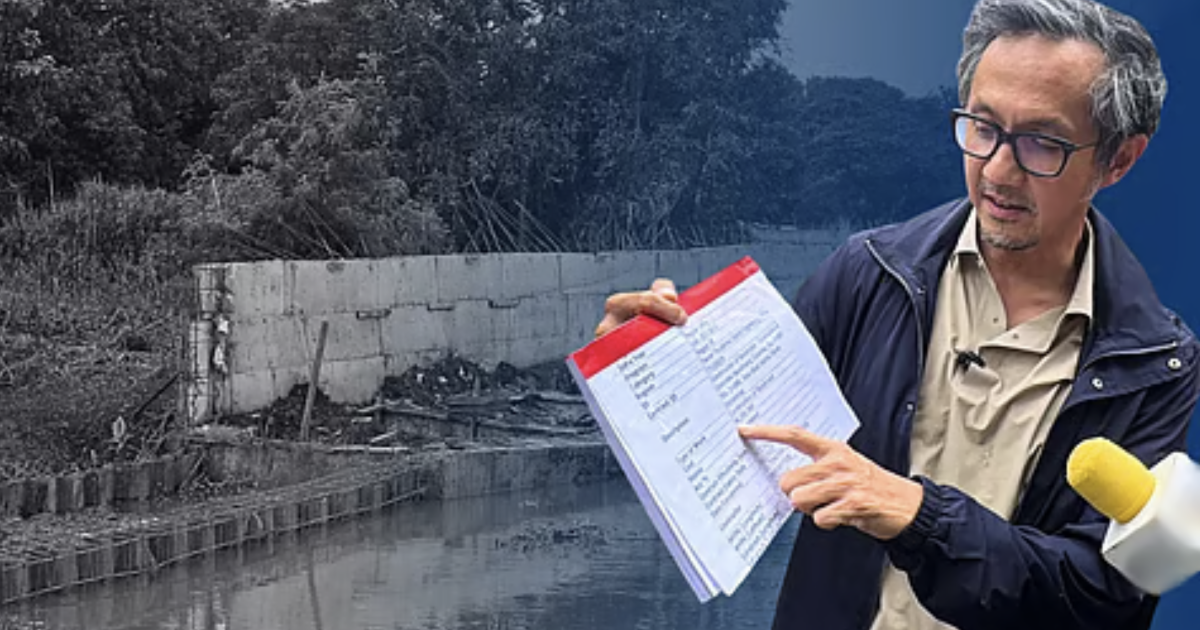
For many Filipinos, the name Vince Dizon may have recently become familiar for an uncomfortable reason: a flooded open manhole in Pampanga, a young man’s death and the immediate relief of two Department of Public Works and Highways (DPWH) officials.
On September 7, DPWH Secretary Vivencio “Vince” Dizon relieved Pampanga 3rd District Engineering Office OIC District Engineer Aser Mallari and OIC Assistant District Engineer Augustin Dagsaan Jr. following the death of 25-year-old Reiner Novero, who fell into a flooded open drainage canal along the Fil-Am Friendship Highway in Angeles City.
Dizon cited their alleged failure to comply with required road safety measures.
The incident quickly put Dizon back in the spotlight, but it is hardly the first time the DPWH chief has made headlines for demanding accountability.
Behind the latest controversy is a government official whose career has been closely tied to some of the country’s biggest infrastructure and transportation projects, and who now faces one of the most difficult public works jobs in the Philippines.
Who is Vince Dizon?
Dizon is an economist and veteran government official whose infrastructure career stretches across several administrations.
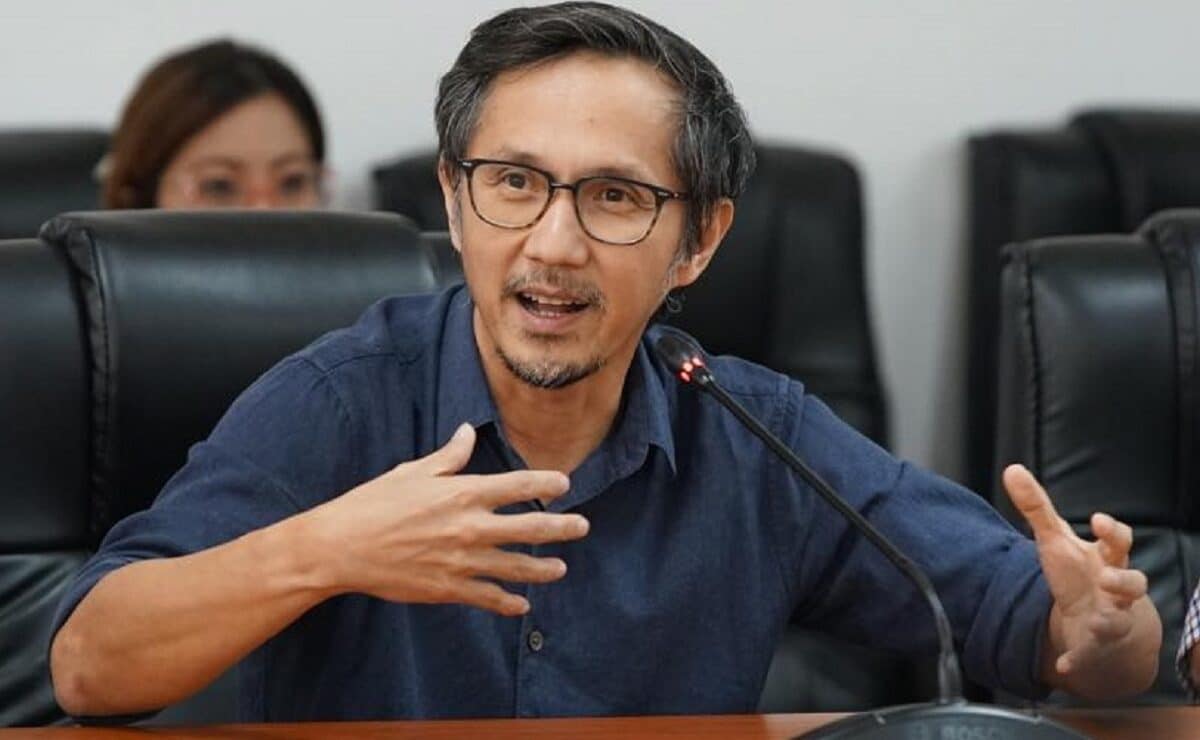
DPWH Secretary Vivencio “Vince” Dizon
Before becoming DPWH secretary, he served as president and CEO of the Bases Conversion and Development Authority (BCDA) and as presidential adviser for flagship programs and projects during the Duterte administration. In those roles, he was involved in the government’s “Build, Build, Build” infrastructure program, including projects connected to New Clark City.
His government career has also included work beyond infrastructure. According to the Philippine News Agency, Dizon served as a consultant to then-Senate Majority Leader Alan Peter Cayetano, as undersecretary for political affairs in the Office of the President and as chief of staff to former Senator Edgardo Angara. He also served as deputy chief implementer of the National Action Plan Against COVID-19 and as the government’s chief testing czar during the pandemic.
In February 2025, President Ferdinand Marcos Jr. appointed him transportation secretary, placing him in charge of a department overseeing major rail, airport, maritime and public transport projects.
His time at the DOTr, however, was relatively short.
In August 2025, Marcos appointed Dizon as DPWH secretary following Manuel Bonoan’s resignation amid the growing controversy over alleged anomalies in flood control projects. The President tasked him with conducting a broad organizational sweep of the department and ensuring public funds were used for infrastructure that genuinely protects and benefits Filipinos.
The DPWH job is bigger than roads
The title “Public Works secretary” can make the job sound straightforward: build roads, bridges and government facilities.
In reality, Dizon inherited an agency dealing with a much wider infrastructure problem.

Flood control has become one of the most politically sensitive parts of the DPWH portfolio following allegations involving ghost, incomplete, substandard and anomalous projects. Within weeks of taking office in 2025, Dizon filed corruption cases against DPWH personnel and private contractors over alleged irregularities in flood control projects.
But corruption is only one part of the challenge.
The Philippines also has aging drainage systems, flood-prone roads, unfinished infrastructure, traffic bottlenecks and roads that deteriorate quickly during heavy rains. In January 2026, the DPWH identified the repair of damaged roads and bridges, completion of unfinished projects and rehabilitation of defective flood control structures as among its priorities.
Dizon has increasingly emphasized that fixing these problems requires more than building another project. It requires better planning and coordination.
Why flooding has become one of his biggest battles
The scale of the flooding problem has made Dizon a regular presence on roads, drainage projects and flood-control sites.

An enraged Dizon curses engineers, then apologizes to the public
In August, he ordered the redesign of drainage inlets along major Metro Manila roads including Roxas Boulevard, EDSA, C-5, Taft Avenue, España, Quezon Avenue and Commonwealth. The goal was to widen undersized inlets so floodwater could move more quickly.
He has also acknowledged that many drainage systems along major roads date back decades and need major improvements. During a Palace briefing in August, Dizon said much of Metro Manila’s drainage infrastructure dates to the post-World War II period and that replacing it all cannot realistically happen within a single administration.
That is an important distinction.
Some infrastructure problems are highly visible and can be addressed through repairs or redesigns. Others are structural problems that have accumulated over decades.
For Dizon, the challenge is figuring out which problems require immediate intervention and which require long-term infrastructure planning.
From “Build, Build, Build” to fixing what already exists
Dizon’s career is closely associated with the Philippines’ infrastructure-building push under the Duterte administration.
As BCDA chief and presidential adviser, he was among the officials who promoted the continuation and acceleration of “Build, Build, Build.” Projects such as New Clark City and the Clark International Airport terminal became part of that infrastructure legacy.
His role at DPWH now requires a somewhat different mindset.
The question is no longer simply how much the government can build.
It is whether what has already been built works, whether unfinished projects can be completed, whether new projects solve the problems they are supposed to solve and whether public money is being spent properly.
That shift is visible in the DPWH’s 2026 priorities, which put emphasis on finishing “bitin” or incomplete roads and bridges and repairing defective flood-control infrastructure rather than simply adding more projects.
A secretary increasingly defined by accountability
The Pampanga incident fits into a pattern that has characterized Dizon’s leadership of the department.
In August, he relieved the maintenance chief of the Las Piñas-Muntinlupa District Engineering Office for what he described as unsatisfactory performance, lack of urgency and delayed response to calamities.
Earlier this year, three DPWH officials in Pampanga were relieved over allegations that they demanded commissions from government contracts, with Dizon ordering an investigation.
The message is increasingly clear: project officials are expected to be accountable not only for budgets and paperwork, but for what happens on the ground.
That expectation is particularly significant for infrastructure projects because mistakes are not always abstract.
A poorly maintained road can damage vehicles. A defective drainage system can flood a neighborhood. An improperly secured construction site can put pedestrians at risk.
The Pampanga tragedy made that connection painfully visible.
The difficult part comes after the headlines
Relieving officials can demonstrate accountability, but it does not by itself solve the country’s infrastructure problems.
Dizon’s bigger test is whether the DPWH can build systems that prevent failures from happening in the first place.
That means better project planning, stronger safety enforcement, coordination with local governments, faster completion of unfinished work and closer monitoring of contractors. It also means addressing infrastructure that is decades old while responding to problems that are happening right now.
The DPWH said in August that only 32% of its more than 17,000 proposed national projects for 2026 had been awarded, with Dizon attributing the delays partly to stricter measures adopted after the previous year’s flood-control scandal.
That creates another difficult balancing act.
The department needs stronger safeguards, but the public also wants roads, drainage systems, bridges and flood-control projects completed quickly.
Why Filipinos are watching Dizon
Vince Dizon is suddenly more visible because infrastructure has become impossible to ignore.
Every flooded road, unfinished project, damaged bridge, and questionable construction site is a reminder that public works are not just government line items. They directly affect how Filipinos get to work, whether communities flood, and how safely people move through their neighborhoods.
The open manhole tragedy in Pampanga is therefore more than another headline involving the DPWH. It is a test of what accountability means after something goes wrong.
Dizon has spent much of his career helping governments build infrastructure. His current challenge is arguably more complicated: proving that the infrastructure the government builds is safe, useful, properly maintained, and worth the public funds behind it.
For a country where roads, drainage, and flood control can determine whether an ordinary day goes smoothly or turns into a crisis, that is a job worth watching closely.