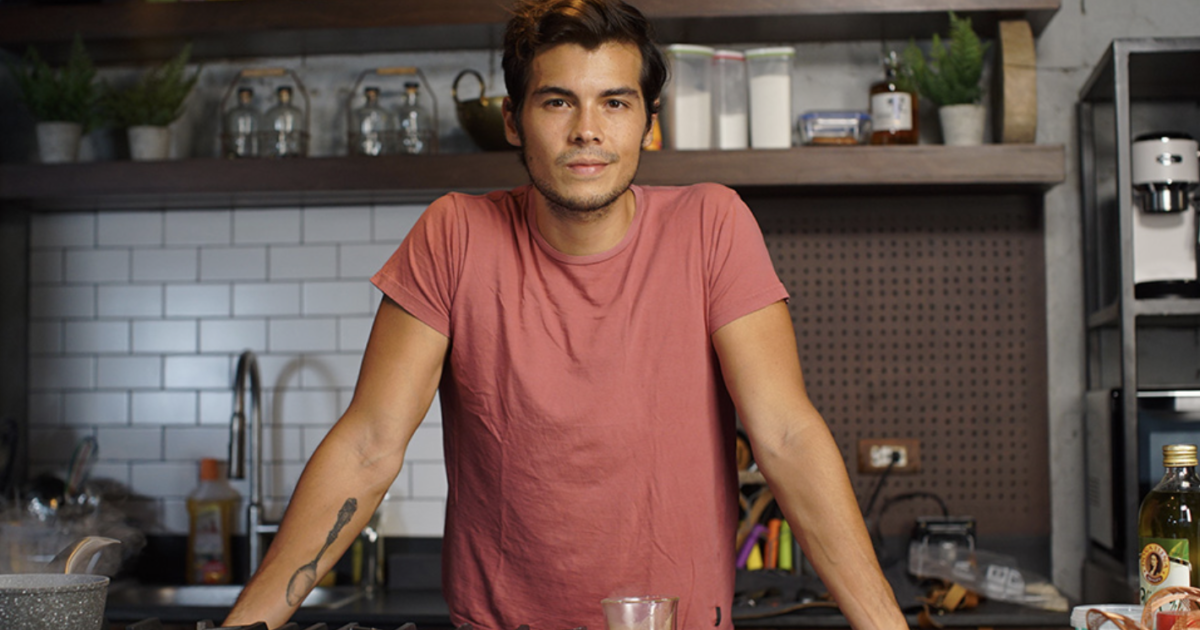
For years, Filipino food was often introduced to international audiences through a familiar handful of dishes: adobo, sinigang, lechon, lumpia and halo-halo. But as digital media changed how people discover food, a new generation of Filipino creators began telling a wider story, one that went beyond what was on the plate.
Among the most recognizable names in that shift is Erwan Heussaff.
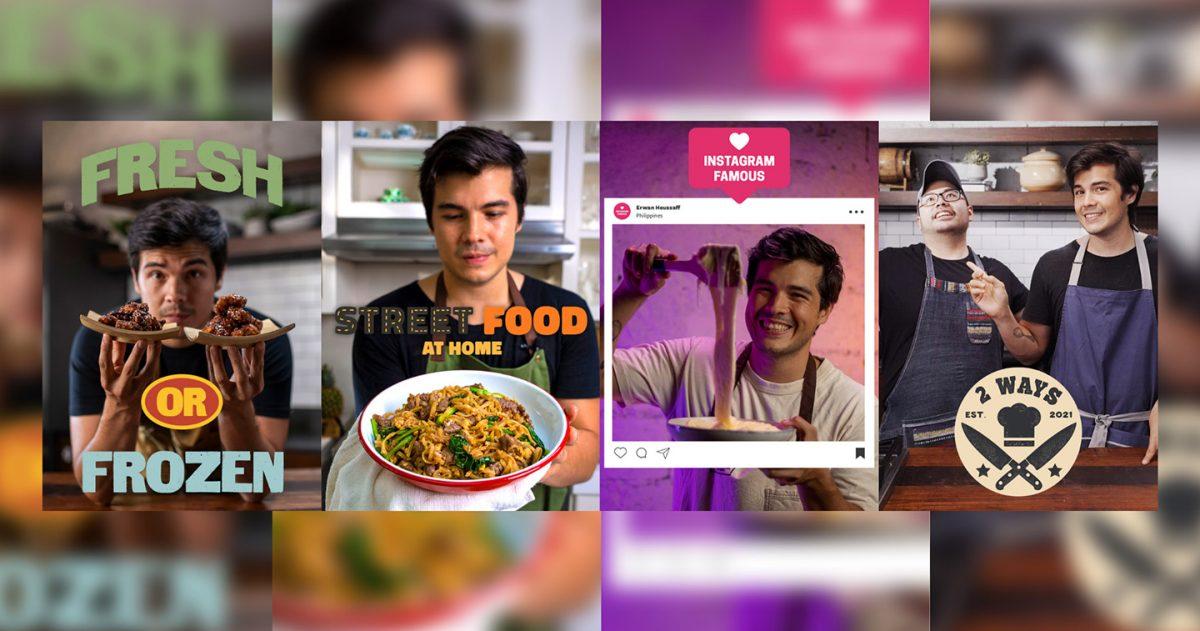
What began as The Fat Kid Inside, a food blog and later a YouTube channel, grew into a much larger digital media operation through The Fat Kid Inside Studios and FEATR.
Today, the platform produces food, travel and culture stories that reach audiences far beyond traditional food media. The company says its communities now exceed 6 million across social media, while Heussaff has an additional 6 million people across his personal accounts.
His work has helped make Filipino cuisine part of a broader digital conversation, not simply by teaching people how to cook Filipino dishes, but by showing where those dishes come from and who keeps them alive.
From food videos to cultural storytelling
Heussaff’s early content was rooted in recipes and cooking, but the work eventually evolved into documentary-style storytelling.
That evolution is particularly important because Filipino cuisine is not one uniform tradition. Its identity changes from region to region, shaped by geography, migration, agriculture, history and generations of home cooking.
In a 2024 GMA News interview, Heussaff explained his frustration with what he called the “monochromatic view” of Filipino food and culture. His response was to travel to places such as Basilan and Tawi-Tawi, looking for dishes and food traditions that rarely appeared in mainstream food content.
Instead of presenting regional dishes simply as exotic discoveries, his documentaries frequently place them within the lives of the people who make them.
That approach can be seen in FEATR’s recent work. An August 2026 episode took Heussaff to Ilocos to explore not only familiar food such as bagnet, longganisa and empanada, but also lesser-known flavors, local ingredients and the people working to preserve Ilocano food traditions.
The result is a different kind of food content. The dish becomes the entry point, while the larger story is about identity, memory and community.
Putting regional Pinoy food in front of global audiences
Digital platforms have made it possible for regional Filipino food stories to travel far beyond their original communities.
A video about Bulacan, for example, can introduce viewers to heritage dishes such as empanada de kaliskis, asado de carajay and hamonado Bulakenya while also connecting those foods to local history, crafts, and traditions. FEATR’s Bulacan documentary with Heussaff does exactly this, treating food as part of a larger cultural landscape.
IMAGE CREDIT: FEATR
The same storytelling approach appears in FEATR’s Davao coverage, where food becomes a way to explore agriculture, local businesses and regional identity. One episode highlighted dishes including balbacua and bagaybay alongside Malagos Farm and community-based agricultural initiatives.
This matters in a country where some of the most distinctive food traditions exist outside Metro Manila.
By bringing cameras to markets, farms, kitchens and provincial communities, Heussaff and the FEATR team give regional food a digital footprint. For Filipinos abroad, these stories can also become a way of reconnecting with places and traditions that may otherwise be experienced only through family memories.
When the internet became a stage for Filipino food
Heussaff’s influence also reflects a broader change in how food culture is consumed.
Before social media became a dominant source of food discovery, Filipino cuisine largely depended on restaurants, television programs, magazines and word of mouth to reach new audiences. Digital creators changed that equation by making food stories searchable, shareable and accessible anywhere.

IMAGE CREDIT: iTNews Asia
The Fat Kid Inside Studios describes itself as a digitally native production company that creates television-caliber content specifically for online audiences. The company traces its origins to the 2010 launch of The Fat Kid Inside as a written food blog before it evolved into a YouTube channel and eventually a full production operation.
FEATR now covers recipes, documentaries, travel shows, cooking competitions and cultural features. Its current programming includes stories about Filipino ingredients, regional dishes, farmers, restaurants and communities.
That shift helped demonstrate that Filipino food did not need to be simplified to become accessible to a global audience. Its complexity could instead become part of the appeal.
Recognition beyond the Philippines
The international food media world eventually took notice.
In 2023, Heussaff won the James Beard Foundation’s Broadcast Media Award for Social Media Account for his Instagram account. The category recognizes excellence in food-related social media content, placing his work alongside other influential food storytellers.
The recognition was significant not only because of the award itself, but because of what Heussaff used the platform to represent.
During his acceptance speech, he spoke about the importance of shining a light on the Philippines, its people and the food prepared in Filipino kitchens.
The award effectively placed Filipino food storytelling on an international food-media stage, while reinforcing an idea that had already been central to his work: Filipino cuisine has stories worth telling on their own terms.
The Erwan effect is bigger than one creator
Perhaps Heussaff’s most lasting contribution is not that people know his name. It is that his work helped normalize a different way of looking at Filipino food.

IMAGE CREDIT: FEATR
A regional ingredient can become the subject of a documentary. A small-town restaurant can become part of a national conversation. An heirloom cooking technique can be preserved through video. A farmer or home cook can become the expert whose knowledge drives the story.
That model has also influenced the broader Filipino digital food ecosystem, where creators increasingly use short-form videos, documentaries, travel content and social platforms to explore regional cuisine.
Even Heussaff’s role has changed. In a 2026 interview with Rolling Stone Philippines, he acknowledged that he is no longer necessarily the main voice of FEATR. Instead, the platform increasingly allows experts and communities to take the lead, with Heussaff sometimes appearing only briefly or contributing through voice-over.
That may be the clearest sign of how far the project has evolved.
What started with one creator making food videos has become a platform for many Filipino voices.
Filipino food, told on its own terms
The global conversation around Filipino food is no longer limited to whether adobo deserves a place on an international menu. It is increasingly about understanding the histories, ingredients, techniques and communities that make Philippine cuisine what it is.
Erwan Heussaff did not single-handedly put Filipino food on the global map. Filipino chefs, restaurateurs, farmers, home cooks, overseas workers and countless creators have all contributed to that movement.
But through years of digital storytelling, he helped make Filipino food easier to discover and, more importantly, harder to reduce to a single definition.
His biggest contribution may ultimately be the idea that Filipino food does not need to be reinvented to be interesting to the world.
Sometimes, it simply needs to be seen, heard and told well.