Say “K-beauty” and most beauty fans probably have an image in mind.
Glass skin. Cushion foundations. Lip tints. Elaborate skincare routines. Lightweight formulas and products that eventually became popular far beyond South Korea.
J-beauty has its own associations, too.
But what happens when someone says P-beauty?
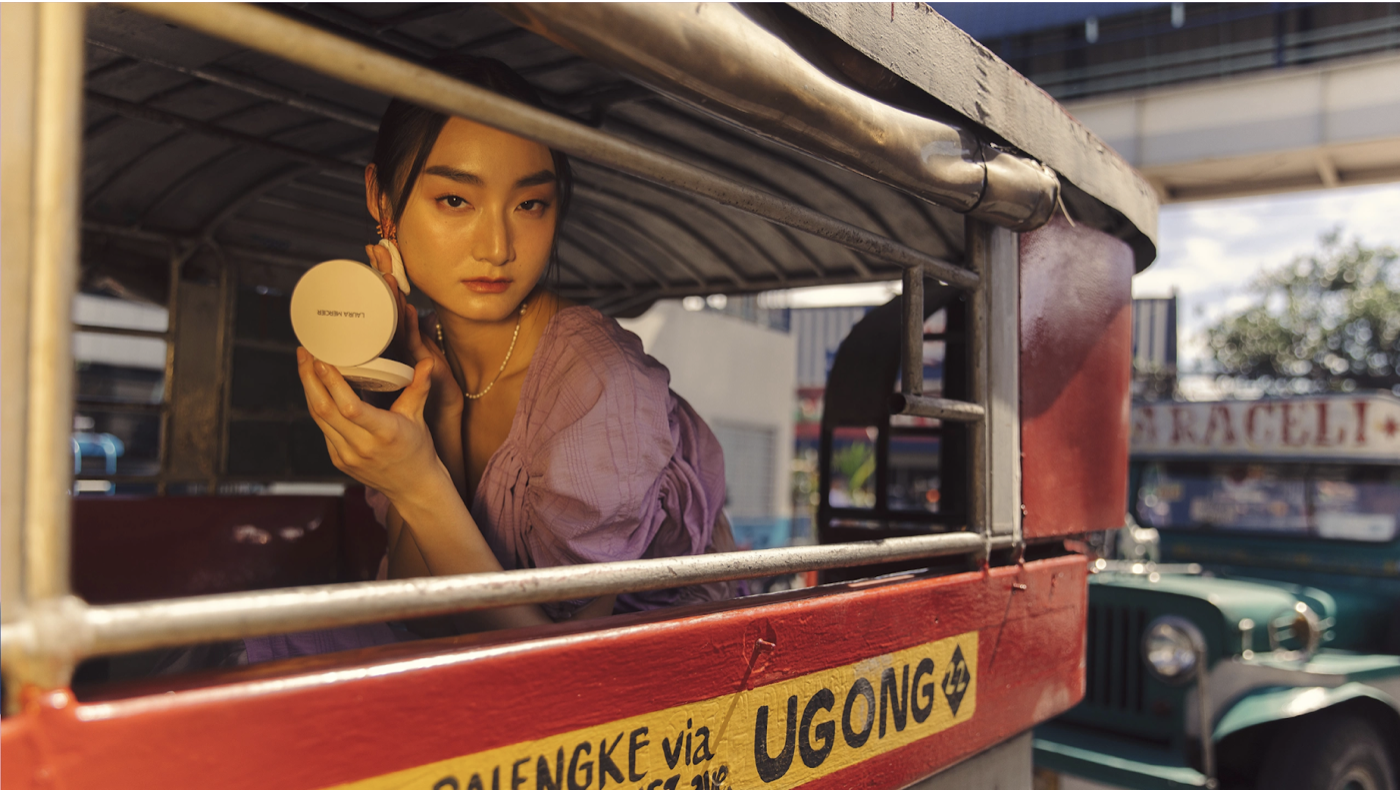
The term is suddenly appearing more often as Philippine beauty brands attract attention beyond the local market. Most recently, homegrown brand Careline teased what it calls its most innovative makeup launch yet, with the campaign around the product explicitly positioning Philippine beauty as a potential new force alongside its better-known Asian counterparts.
The idea is exciting.
But before we declare that P-beauty has arrived, there is a more interesting question to ask:
Is there actually something recognizable about Filipino beauty products that makes them distinctly Filipino?
Maybe P-beauty has been developing before we had a name for it
The Philippines does not lack homegrown beauty brands.
Ever Bilena and Careline have been familiar names for generations of consumers, while newer players such as BLK, Issy, Colourette, GRWM, Vice Cosmetics and Sunnies Face have helped create a local cosmetics market that looks dramatically different from what it did a decade ago.
International beauty industry publication The Business of Fashion has even started examining the emergence of “P-beauty,” pointing in particular to products designed around the country’s heat, humidity and demanding everyday conditions.
That may be one place to start looking for a Filipino beauty identity.
A foundation that looks beautiful inside an air-conditioned room is one thing. A foundation that survives a commute, humidity, sweat and a hot afternoon in Manila has a very different job.
Look around local beauty shelves and the language is familiar: oil control, long-wearing, lightweight, waterproof, sweatproof.
Happy Skin, for example, currently sells makeup specifically marketed to withstand heat and sweat, including its multi-use Cloud Flush, while Careline’s staples include an Oil Control Skin Tint.
Perhaps one part of P-beauty is simply this: makeup has to work harder here.
Then there is the question of Filipino skin
For years, Filipinos who did not fall somewhere around light beige could struggle to find complexion products that actually matched them.
That makes the increasing attention local brands give to undertones and deeper shades particularly significant.
Issy’s current complexion line, for instance, stretches across fair, medium, tan and deep shades while distinguishing neutral, warm, olive and golden undertones.
Colourette describes its First Base line as made for Filipino skin and explicitly promotes morena-friendly shades. The brand also describes itself as creating long-wearing, multi-use makeup for the Filipino lifestyle.
Individually, none of these ideas is uniquely Filipino. Inclusive shade ranges exist elsewhere. Long-wear makeup certainly wasn’t invented here.
But when the same priorities repeatedly appear across a growing local industry, they start to tell us something about the consumer those products were made for.
P-beauty might also mean making one product do more
There is another pattern that feels particularly suited to the way many Filipinos buy and use makeup: multifunctionality.
Lip products become cheek products. Concealers carry skincare ingredients. Foundations promise benefits beyond coverage. Blushes are designed for several parts of the face.
Colourette built one of its signature products, Colourtint, around use on the eyes, lips and cheeks. Happy Skin’s makeup catalogue is filled with similar hybrids, from skincare-powered makeup to multi-tasking concealers.
Part of this is a global beauty trend.
But it also makes practical sense in a market where value matters. If one ₱400 or ₱500 product can do the work of two or three, that proposition becomes especially compelling.
Accessibility has long been central to the local industry. Ever Bilena describes its own philosophy in simple terms: beauty should not “break the bank,” while still delivering quality.
Maybe P-beauty is not about luxury becoming more Filipino.
Maybe it is partly about making aspirational beauty accessible to more Filipinos.
But does that really make it P-beauty?
This is where the label becomes complicated.
Heat-resistant formulas are not exclusive to Philippine brands.
Multi-use makeup is everywhere.
Global brands are expanding their shade ranges. Korean brands can formulate products for tropical markets. A Filipino company can release something heavily influenced by a trend that began somewhere else.
Putting “made for Filipinos” on the packaging does not automatically create a new beauty movement.
K-beauty became globally recognizable because consumers eventually associated it with particular products, routines, aesthetics and innovations. The label communicated something beyond the country where the company was founded.
P-beauty still has to answer the same challenge.
If all the logos disappeared from a shelf of Philippine-made products, would there be something about them that tells us where they came from?
Maybe the answer, at least for now, is only beginning to emerge.
It may be found in foundations that understand olive and morena skin, makeup expected to survive Philippine weather, products designed to perform several jobs at once, and prices that acknowledge what an ordinary consumer can realistically spend.
It might also eventually become something we have not seen yet.
P-beauty does not need to become K-beauty with a different letter
Perhaps the biggest mistake would be trying too hard to find a Filipino equivalent of every Korean beauty phenomenon.
The Philippines has different weather, different complexions, different spending habits and different relationships with beauty.
Those differences are precisely where a more interesting identity could come from.
Careline may be calling attention to P-beauty now, but no single brand gets to decide whether P-beauty becomes a real category.
Consumers will.
If enough Filipino brands continue solving distinctly Filipino beauty problems, and if people eventually begin recognizing those products and ideas beyond our shores, we may one day hear “P-beauty” and immediately understand what it means.
For now, the more exciting possibility is that we are still figuring that out.