
Travel skincare essentials are easy to overlook when Filipinos are busy comparing flights, checking baggage limits, and preparing itineraries. But moving between the Philippines’ humid climate, a dry aircraft cabin, and a destination with completely different weather can quickly affect the skin.

A traveler may board a flight with an oily face, feel tight and dehydrated several hours later, and then arrive somewhere cold enough to cause flaking. Others land in another tropical destination and experience breakouts caused by heat, sweat, friction, and heavier skincare products.
The solution is not to pack an entire bathroom shelf. Dermatologist-backed guidance suggests that a simple and familiar routine is often more helpful than testing several new products while traveling.
Why long flights can leave skin feeling dry
Aircraft cabins have low humidity, which can make the skin feel tight, dull, or uncomfortable during and after a long flight.
A Watsons Philippines guide to keeping skin hydrated during flights recommends preparing for cabin dryness by drinking water, applying moisturizer, and getting enough rest during the journey.

However, travelers do not necessarily need to perform an elaborate skincare routine in their seats.
The American Academy of Dermatology’s travel skincare recommendations advise bringing the cleanser, moisturizer, and other products already used at home. This can reduce the possibility of irritation or an allergic reaction caused by unfamiliar formulas, including fragranced toiletries commonly provided by hotels.
Before boarding, travelers can gently cleanse their face and apply a suitable moisturizer. Those with dry skin may prefer a richer cream, while people with oily or acne-prone skin may feel more comfortable using a lightweight, non-comedogenic gel or lotion.
Lip balm and a small amount of petroleum jelly may also help protect areas that easily become dry, such as the lips and the skin around the nostrils.
Keep the in-flight routine simple
A long-haul flight may seem like an opportunity to try sheet masks, facial mists, serums, oils, and other travel-sized products. But applying too many unfamiliar formulas can increase the risk of redness, clogged pores, or irritation.
The Philippine Dermatological Society’s guide to a basic skincare routine identifies three main steps: cleansing, moisturizing, and protecting. It also emphasizes choosing products according to skin type and recognizing that using more skincare does not always lead to better results.

For most travelers, the same principle can apply while in the air.
Avoid repeatedly washing the face, especially with harsh soap. Frequent cleansing may remove the natural oils that help support the skin barrier. Instead, moisturize when the skin feels dry and avoid touching the face with unwashed hands.
Travelers wearing makeup may choose to remove it before sleeping on an overnight flight, but this should be done with a familiar and gentle product rather than whatever happens to be available at the airport.
Do not forget sunscreen beside the window
Sunscreen is not only for the beach or the moment a traveler reaches the destination.
According to the American Academy of Dermatology, ultraviolet rays can pass through car and airplane windows. Travelers seated beside a window may lower the shade when possible and apply broad-spectrum, water-resistant sunscreen with an SPF of at least 30 to exposed skin.
The Philippine Dermatological Society’s sun protection guidance similarly recommends broad-spectrum SPF 30 or higher, along with protective clothing and sunglasses. Sunscreen should generally be reapplied every two hours while outdoors and after swimming or heavy sweating.
For tropical destinations, a lightweight or water-based sunscreen may feel more comfortable. For cold or dry destinations, travelers may prefer a more moisturizing formula, provided it suits their skin type and does not cause irritation.
Adjust the texture, not the entire routine
The biggest skincare adjustment may happen after landing.
Someone arriving from Manila in a cold, low-humidity destination may need a richer moisturizer to reduce dryness. Ingredients such as humectants, occlusives, emollients, and ceramides can help attract water, reduce moisture loss, and support the skin barrier, according to Cleveland Clinic guidance on choosing a moisturizer for dry skin.
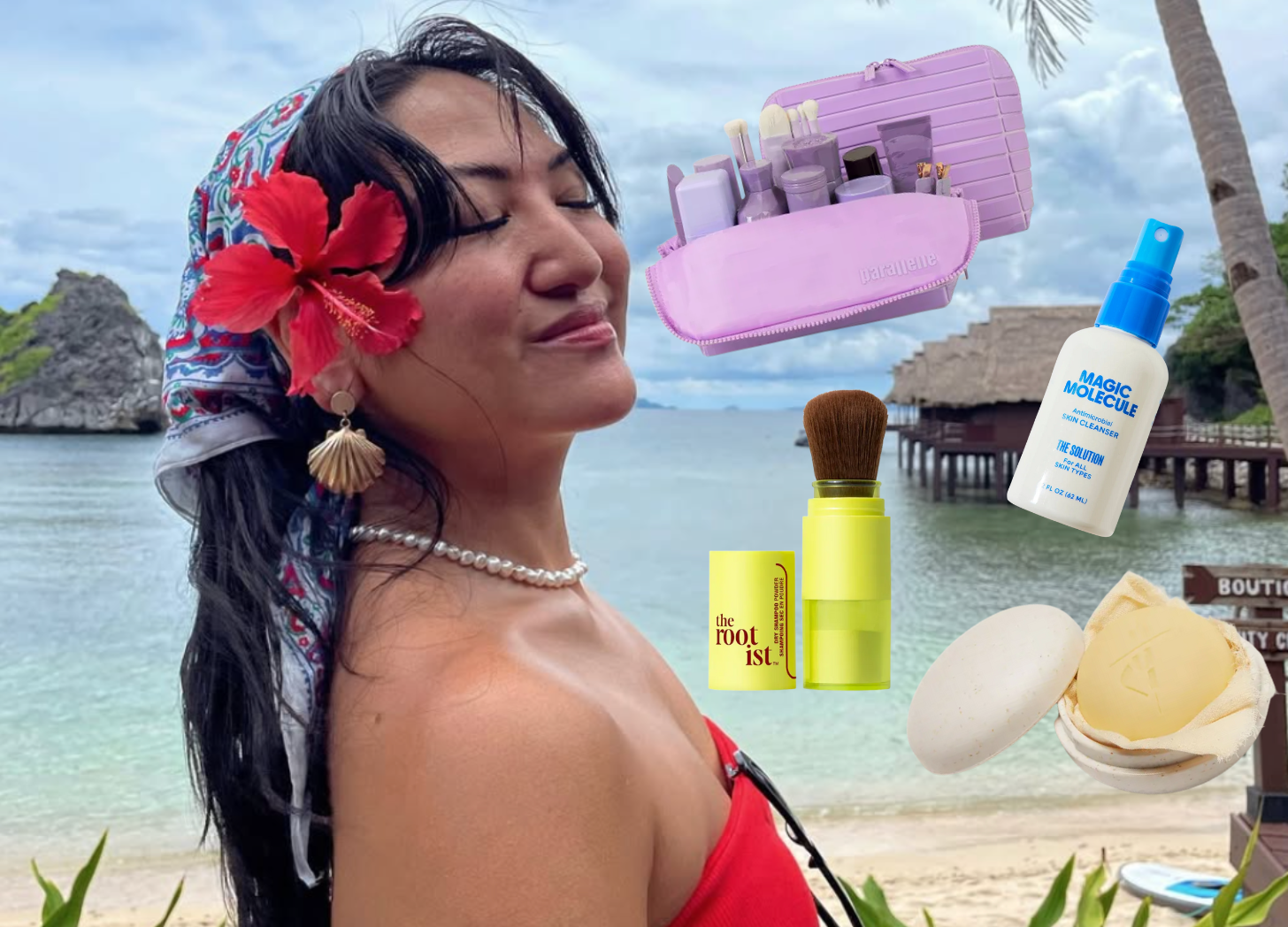
Travelers heading somewhere hotter or more humid may need to move in the opposite direction.
Heat, oil, bacteria, sweat, and friction can work together to clog pores and cause inflammation. Using lighter moisturizers or water-based sunscreens, wearing breathable clothing, and cleansing after prolonged sweating may help reduce these concerns, based on dermatologist advice for managing sweat-related breakouts.
This does not mean replacing every product in the routine. The cleanser and sunscreen can often stay the same, while the moisturizer’s texture is adjusted according to the destination.
Be cautious with strong active ingredients
Travel may not be the best time to begin using a new retinoid, exfoliating acid, facial peel, or strong acne treatment.
Active ingredients can sometimes cause dryness, peeling, or sensitivity, especially when combined with increased sun exposure, cold weather, or an already dehydrated skin barrier. Retinoids and exfoliating acids may also make the skin more sensitive to sunlight.
Those who already use prescription treatments should continue following their dermatologist’s instructions and bring enough medication for the trip. Products should remain in their original packaging when possible, particularly when traveling internationally.
A basic travel routine may include a gentle cleanser, moisturizer, broad-spectrum sunscreen, lip balm, and any prescribed treatment. Everything else can be considered optional.
Know when a reaction needs medical attention
Temporary oiliness or mild dryness may improve once the skin adjusts to the destination. Persistent swelling, blistering, severe itching, painful breakouts, or a spreading rash may require professional care.
Travelers should take note of when the symptoms began, which products they used, what activities they joined, and whether anyone traveling with them developed similar symptoms. These details can help a dermatologist determine whether the reaction may be related to a product, insect bite, infection, allergy, or environmental exposure.
The best travel skincare routine is not necessarily the most expensive or complicated. It is one that protects the skin barrier, suits the climate, and remains familiar enough to use consistently.
For traveling Filipinos, preparing for heat, humidity, dry cabin air, and sudden weather changes can make the difference between arriving ready to explore and spending the first days of a trip managing preventable irritation.