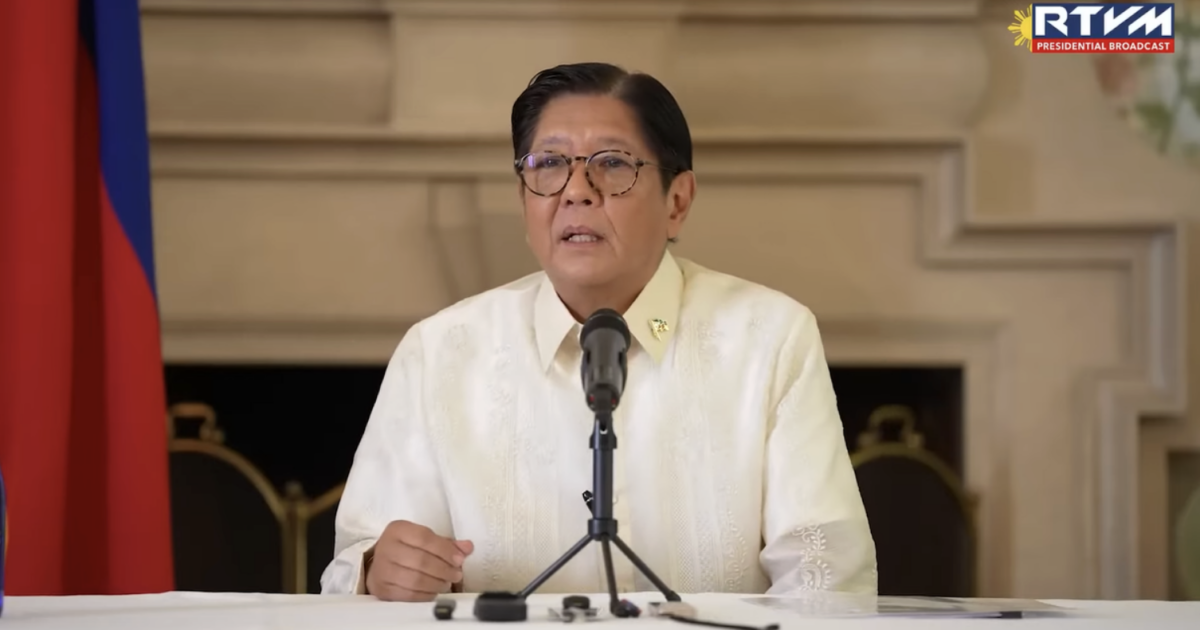
President Ferdinand Marcos Jr.’s fifth State of the Nation Address (SONA) offered a glimpse of where his administration hopes to steer the country over the next two years, placing technology, industrial growth, and public services alongside more familiar priorities such as healthcare, education, food security, and energy.
Rather than introducing an entirely new agenda, the President largely built on initiatives already underway, outlining how they could shape the country’s next phase of development. Artificial intelligence, digital infrastructure, and expanded online government services featured prominently, reflecting how technology is becoming increasingly intertwined with both economic policy and daily life.
“AI is here to stay; and so we adopt it to harness its potential to enhance critical sectors, from our educational system to our industries,” Marcos said in his speech, underscoring the administration’s intention to integrate AI across both the public and private sectors. He added that government-led AI readiness programs have already reached “at least 1.8 million individuals, students, parents, and teachers alike,” as part of efforts to strengthen the country’s digital competitiveness.
Whether those plans ultimately translate into measurable improvements will depend on implementation, investment, and legislation that still needs to move forward.
A technology hub with global ambitions
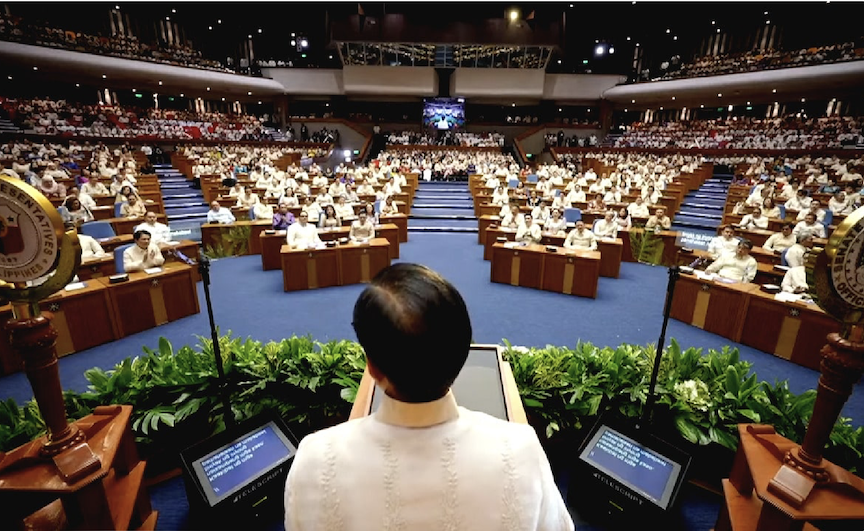
IMAGE CREDIT: RTVM
Among the SONA announcements that drew the most attention was the proposed Pax Silica Industrial Hub, a 1,620-hectare development in New Clark City, Tarlac.
As reported by Newsbytes, the project forms part of a broader initiative between the Philippines and the United States to strengthen supply chains for industries such as artificial intelligence, semiconductors, advanced manufacturing, and digital infrastructure.
“The Pax Silica Industrial Hub will create an ecosystem that will have AI at its core. It will bring quality jobs to our people, accelerate our industrial competitiveness, and revitalize our economy,” Marcos said during his address.
The President also described the project as a strategic component of the Luzon Economic Corridor that aims to position the Philippines within the global AI and technology value chain.
Government officials have said the development could create between 130,000 and 190,000 direct jobs, although those projections remain tied to future investments and the completion of supporting infrastructure.
The project has also attracted scrutiny from some lawmakers and advocacy groups, who have called for closer examination of its environmental impact, resource requirements, and broader implications before a framework agreement is finalized.
Beyond the industrial hub itself, Marcos pointed to ongoing investments in broadband connectivity, satellite technology, cybersecurity, and AI training as part of the country’s effort to prepare for a more technology-driven economy.
He also announced plans for the Philippines’ first liquid-fueled sounding rocket test launch in Cagayan next year, another sign of the government’s growing interest in science and space technology.
Making social protection work for a changing workforce

Digital payment options for contributions through My.SSS and Virtual Pag-IBIG
The President also turned his attention to a segment of the workforce that continues to grow: Filipinos earning a living outside traditional employment.
Drivers, delivery riders, online sellers, freelancers, and other gig workers were among those Marcos encouraged to enroll and contribute regularly to the Social Security System (SSS) and Pag-IBIG Fund.
According to the President, around 44 million Filipinos have been covered by the SSS since the start of his administration, including more than 80,000 workers from the informal sector.
Government agencies have already expanded digital payment options for contributions through services such as My.SSS and Virtual Pag-IBIG, allowing members to pay using GCash, Maya, bank accounts, and other electronic channels.
Even so, access is only part of the equation.
For workers whose income can vary from week to week, the bigger challenge is often setting aside money consistently rather than finding a way to make the payment. Industry observers have suggested that digital labour platforms could eventually help by offering voluntary contribution deductions linked to worker payouts, although any such arrangement would require clear safeguards, transparency, and worker consent.
Familiar priorities remain on the agenda

Alleged irregularities on flood control projects (IMAGE CREDIT: IG post of Ezra Acayan)
While technology featured strongly throughout the speech, much of the address focused on programs that have already been taking shape over the past four years.
Marcos reiterated commitments to improve healthcare, expand classroom construction, modernize agriculture, strengthen irrigation systems, support renewable and nuclear energy, and attract more investments into manufacturing and logistics.
He also devoted significant time to the government’s anti-corruption campaign, updating the public on investigations into alleged irregularities involving flood-control projects and emphasizing that recovered public funds would be redirected to programs such as education, healthcare, and food assistance.
“Lahat ng mababawi mula sa mga sangkot na tiwali ay agad ibabalik sa kaban ng bayan,” the President said. He added that funds recovered from corruption cases would instead be used “para sa tunay na kapakanan ng mamamayan,” including essential public services and social programs.
On foreign policy, the President reaffirmed the Philippines’ position on the West Philippine Sea, stressing that the country would continue to assert its sovereign rights through peaceful and lawful means.
The next test begins after the speech
State of the Nation Addresses often serve as a roadmap as much as they do a report card, and this year’s speech was no exception.
Many of the initiatives highlighted by Marcos — from the proposed technology hub and AI investments to expanded social protection and lower electricity costs — will still depend on legislation, funding, partnerships, and effective implementation before their impact can be measured.
The President also reiterated his call to amend the Electric Power Industry Reform Act (EPIRA), arguing that consumers should no longer bear system loss charges on their electricity bills. “We demand for the immediate amendment of the EPIRA… and to prohibit charging system loss against consumers including the value-added tax thereon,” he said.
With less than two years remaining in his term, the conversation now shifts from announcements to execution.
For many Filipinos, the significance of the President’s agenda will ultimately be judged not by the number of initiatives introduced, but by whether they lead to better jobs, more accessible public services, and tangible improvements in everyday life.
Marcos closed his address by urging Filipinos to remain focused on the work ahead, saying, “Let us continue the work that we have started. To make the Philippines the country that Filipinos deserve.”