Filipino wellness is increasingly about more than getting enough exercise, eating better or reaching a particular number on the weighing scale.
For many Filipinos, getting a decent night’s sleep and simply feeling less stressed may now be just as important.
A recent Herbalife APAC Wellness Culture Survey found that 91% of Filipino respondents considered holistic health very or extremely important. But when asked which parts of their well-being they wanted to improve, sleep quality topped the list at 47%, followed by mental well-being and stress management at 44%.
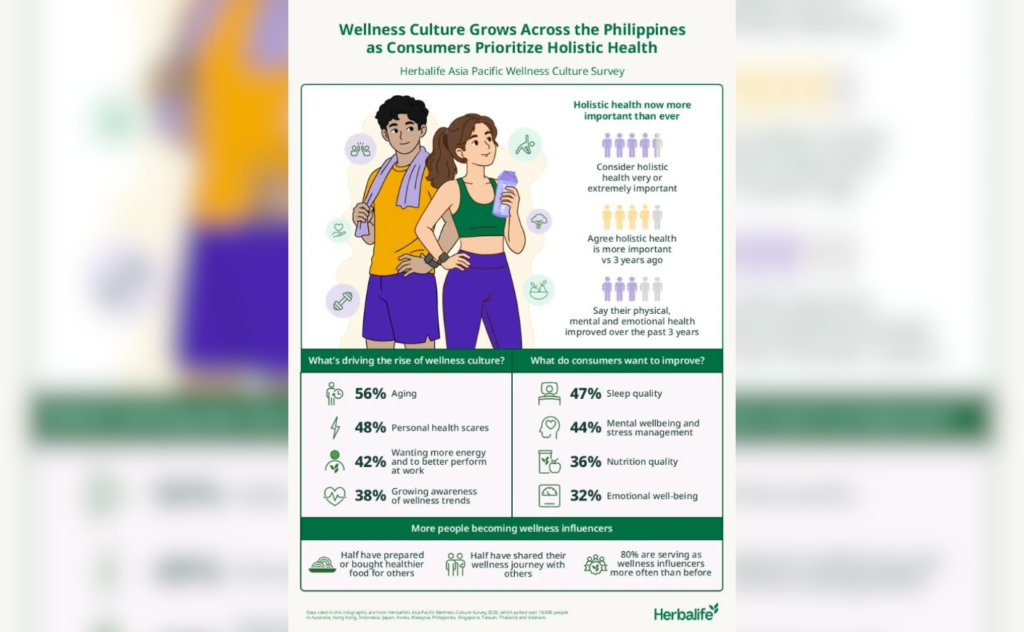
Nutrition quality came in lower at 36%, while 32% pointed to emotional well-being.
The findings come from Herbalife, a commercial health and wellness company, so they are best read as a snapshot of consumer attitudes rather than independent evidence about Filipinos’ health.
Still, the results point to a broader change in how people are thinking about what being “healthy” actually means.
Health is no longer just something you can see
For years, mainstream wellness messaging often focused on highly visible goals: losing weight, going to the gym, eating a certain way or changing how your body looks.
Those things can still be part of a healthy lifestyle. But sleep, stress, emotional health and the ability to recover from everyday demands are harder to photograph or measure with a bathroom scale.
They also affect how a person functions from one day to the next.
The Herbalife APAC Wellness Culture Survey 2026, conducted in May among more than 10,000 respondents across 11 Asia-Pacific markets, found a similar pattern regionally. Across APAC, 44% wanted to improve sleep quality and 38% identified mental well-being and stress management.
Among the Philippine respondents, improving sleep habits was also already one of the most common wellness activities, cited by 55%, just behind making healthier food choices at 56%.
That suggests wellness is increasingly being judged not only by what people do during a workout, but by how well they sleep afterward, how much energy they have the next day and how manageable everyday life feels.
Sleep is part of health, not time left after everything else
Sleep can easily become the part of the day people sacrifice when work, school, commuting, family responsibilities and entertainment compete for the same 24 hours.
But health authorities do not treat sleep as optional recovery time.
The U.S. Centers for Disease Control and Prevention says most adults need at least seven hours of sleep a night. Getting enough sleep is associated with better mood, attention and memory and can support heart health, metabolism and healthy weight.
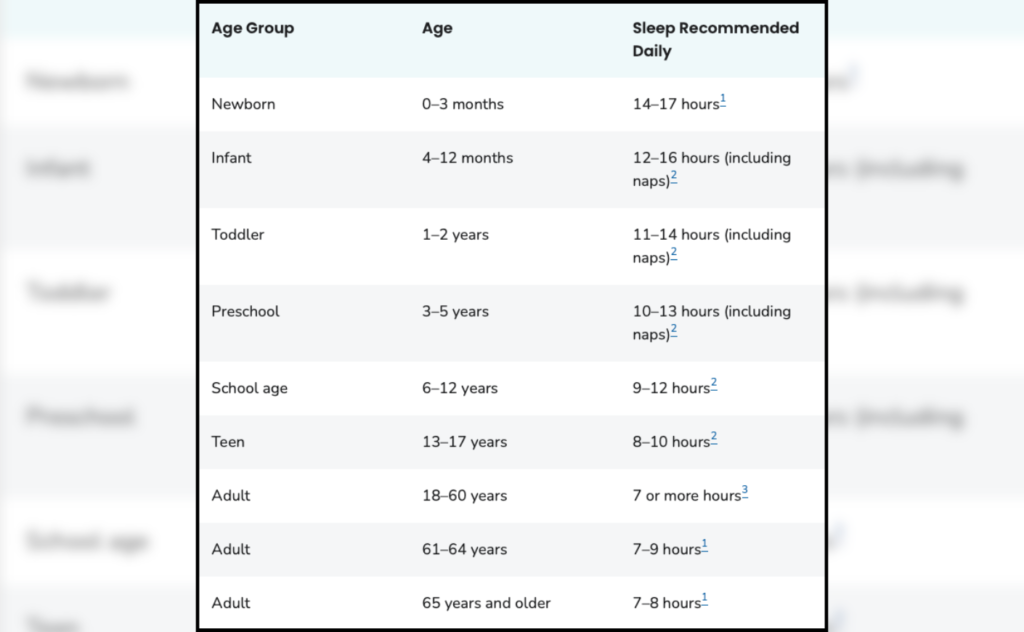
IMAGE CREDIT: CDC
Quality matters alongside the number of hours.
The CDC describes quality sleep as sleep that is uninterrupted and refreshing, meaning a person who spends enough time in bed but repeatedly wakes up or does not feel rested may still need to pay attention to their sleep quality.
Improving sleep does not necessarily require building an elaborate nighttime routine either.
The National Heart, Lung, and Blood Institute’s healthy sleep guidance recommends keeping sleep and wake times relatively consistent, making the bedroom quiet, cool and dark, reducing exposure to bright artificial light before bed and avoiding caffeine close to bedtime.
For people working night shifts or rotating schedules, those recommendations can be much harder to follow. The institute provides separate guidance for shift workers, including reducing light and sound during daytime sleep and limiting frequent shift changes when possible.
Sleep advice therefore also has to fit the realities of a person’s work and home life rather than assuming everyone has a conventional schedule.
Stress can show up physically too
Stress is similarly easy to dismiss as something people are simply expected to tolerate.
But the World Health Organization’s guidance on stress describes it as a state of worry or mental tension caused by difficult situations and notes that excessive stress can affect both physical and mental health.
It may show up as irritability, difficulty concentrating, headaches, body pain, stomach problems or trouble sleeping.

IMAGE CREDIT: Pexels
That last symptom also helps explain why sleep and stress frequently appear together in conversations about wellness.
A stressful day can make it harder to sleep. Poor sleep can then leave someone more tired and less equipped to deal with the following day’s pressures.
There is no single technique that removes stress from a person’s life, particularly when the source is something structural such as finances, caregiving or work demands.
But WHO recommends practical habits including maintaining a daily routine, regular physical activity, staying connected with people you trust, eating regularly and making enough room for sleep.
A healthier routine does not have to optimize everything
The expansion of wellness can create its own problem: suddenly there are more things to get “right.”
Exercise enough. Eat perfectly. Sleep eight hours. Meditate. Drink water. Track your steps. Limit your screen time. Manage your stress.
Trying to optimize every part of life can itself become exhausting.
A more useful interpretation of holistic health may be that these areas work together rather than compete with one another.

IMAGE CREDIT: Liz Martin
A walk can count as physical activity while helping someone decompress. An earlier bedtime may be more valuable on a particular day than squeezing in another task. Eating regular meals can support both physical health and the predictability of a daily routine.
WHO’s approach to self-care similarly includes a range of everyday health practices and lifestyle choices. WHO also emphasizes that self-care complements professional healthcare rather than replacing it.
And when poor sleep becomes persistent, stress becomes difficult to cope with or either begins interfering substantially with daily life, professional support may be more appropriate than simply trying another wellness habit. WHO advises seeking help from a trusted health-care provider or another trusted person when someone is struggling to cope with stress.
The bigger shift may therefore be less about discovering a new definition of health and more about recognizing parts of health that were easy to neglect.
Sometimes feeling healthier starts with a workout or a better meal.
Sometimes it starts with finally getting enough sleep.