For years, we romanticized the hustle and wore our exhaustion like it was a badge of honor.
Early meetings. Packed schedules. 3-hour daily commutes. The pressure to always be productive, always reachable, always moving. In a place as fast-moving and overstimulating as Metro Manila, slowing down often felt like something we had to earn.
But lately, something softer has been happening. More people are choosing to step outside and move at a gentler pace.
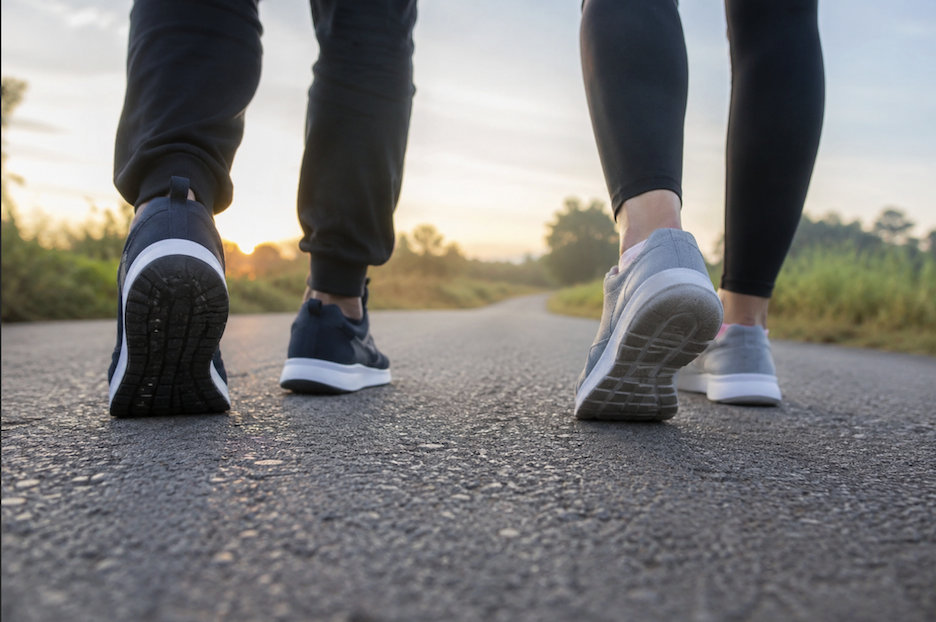
Walking, once considered an ordinary and even transactional activity — a means to get to the next place as quickly as possible — has started to feel different.
It has quietly become part of many people’s routines — not just as exercise, but as a way to decompress, reconnect, and experience their surroundings differently. In a culture that constantly asks us to move faster, walking has started to feel less like a task and more like a quiet form of self-care.
Somewhere between wellness culture, collective burnout, and the growing appeal of slower living, walking has quietly become one of Metro Manila’s favorite new rituals.
Why it feels different
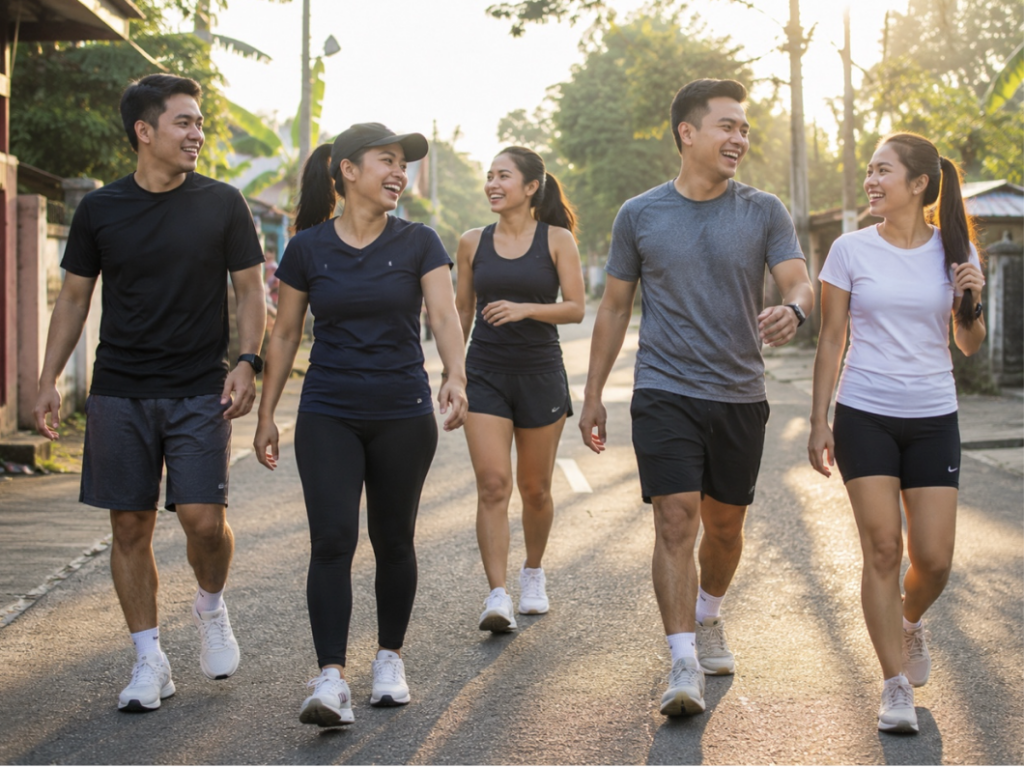
IMAGE CREDIT: Freepik
Walking does not demand much from us to begin with. Unlike fitness routines that can feel intimidating, expensive, or difficult to sustain, walking feels accessible in a way few wellness trends do. It can be done almost anywhere, at any pace, and without the pressure to constantly improve or perform.
This routine also changes how we experience our surroundings. It allows us to notice details we would normally miss while driving or scrolling through our phones — the sound of conversations spilling out of cafés, golden hour reflecting on glass buildings, familiar streets taking on a different mood at dusk.
In a fast-moving metropolis, walking creates small opportunities to feel present again.
And maybe that’s exactly why it resonates with so many of us right now.
But perhaps the most interesting part of walking culture is how social it has become.

IMAGE CREDIT: scmp.com
Across the metro, walking communities are steadily growing, turning casual strolls into shared experiences.
Unlike traditional fitness groups that can sometimes feel intimidating for beginners, these communities lean into a more welcoming, low-pressure energy. Some people walk quickly, others slowly. Some come with friends, while others arrive alone and leave having met new people.
The vibe is less “fitness challenge” and more “collective reset.”
In many ways, these communities are becoming modern-day third spaces — places outside work and home where we can connect without the pressure of networking, nightlife, or overly curated social settings.
Walking communities to check out
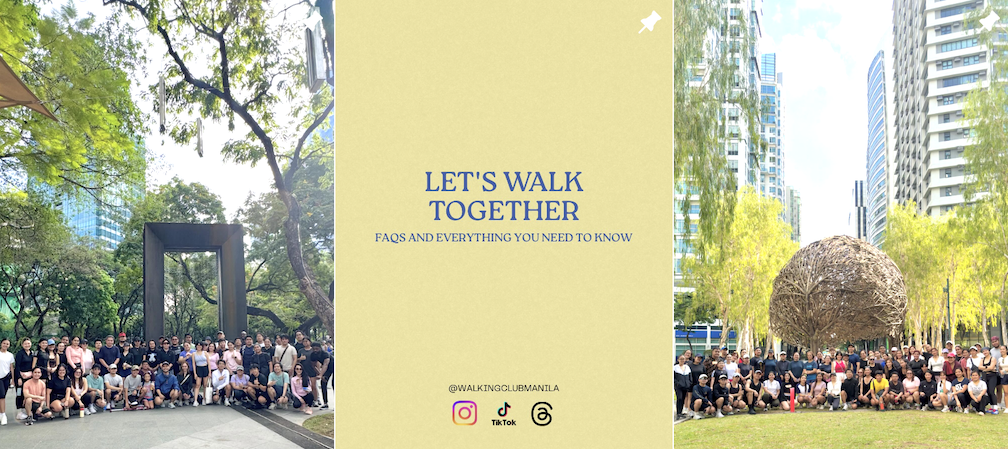
IMAGE CREDIT: Walking Club Manila
justwalkph
Built around the question, “Where will your walk take you?”, justwalkph turns walking into both a physical and social journey. The community has steadily grown through social media, word of mouth, and lifestyle collaborations, even earning features from Spot.ph.
itgirlwalk
For girls—and girls at heart—this community embraces movement at a gentler pace. Guided by the idea of going “at your own pace,” itgirlwalk creates walks that feel more like casual catch-ups than formal fitness sessions. It’s welcoming, beginner-friendly, and perfect for anyone easing into movement or simply looking for a softer way to spend time in the city.
Walking Club Manila
Positioning itself as “more than just a walking club,” Walking Club Manila brings together people looking for both movement and meaningful connection. The community embraces walking as a shared experience rather than simply a fitness activity, creating spaces where conversations, routines, and friendships can naturally form along the way. True to its identity as “a growing community in motion,” the group reflects how walking culture in the metro is becoming just as much about belonging as it is about wellness.
Tita Club PH
Built around the idea of “walk, run, chika, coffee,” Tita Club PH creates a welcoming space for women looking for movement without pressure or competition. What started as a simple walk — a way to breathe, move, and reconnect with oneself — has since grown into a community centered on connection, confidence, and support. Whether members are beginners, returning to fitness, or simply looking for their people, the club embraces movement at every pace, with equal importance placed on conversation, laughter, and the stories shared in between steps.
In a culture obsessed with moving faster, walking asks us to do the opposite: to slow down, to notice more, to be more present in our own lives while moving through them. And in a place that rarely slows down, choosing to walk may just be one of the simplest ways to reclaim a little softness for ourselves.