Modern Filipino comfort food is starting to look a little different.
Kare-kare can arrive with mushrooms instead of oxtail. Sisig can begin with tofu rather than pork face. Munggo can carry more greens and less meat, while the familiar sourness of sinigang can surround vegetables and fish instead of a fatty cut of pork.
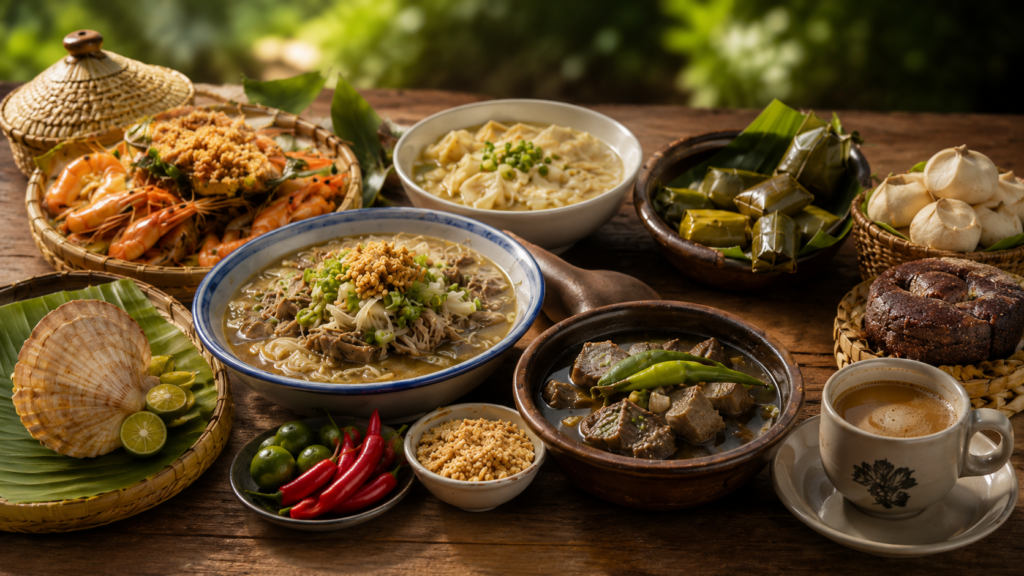
IMAGE CREDIT: Freepik
None of these changes necessarily mean Filipinos are ready to abandon the dishes they grew up eating. Instead, chefs and home cooks are testing how much a comfort dish can change while still tasting unmistakably Filipino.
The challenge is simple: make the plate lighter, more vegetable-forward or plant-based without removing the reason people wanted adobo, kare-kare or sisig in the first place.
Comfort food does not have to stay frozen in time
Unilever Food Solutions’ “Modernized Comfort Food” trend describes a shift away from comfort food being defined only by familiar, safe recipes. Instead, chefs are reworking classics through local ingredients, personal heritage and new techniques.
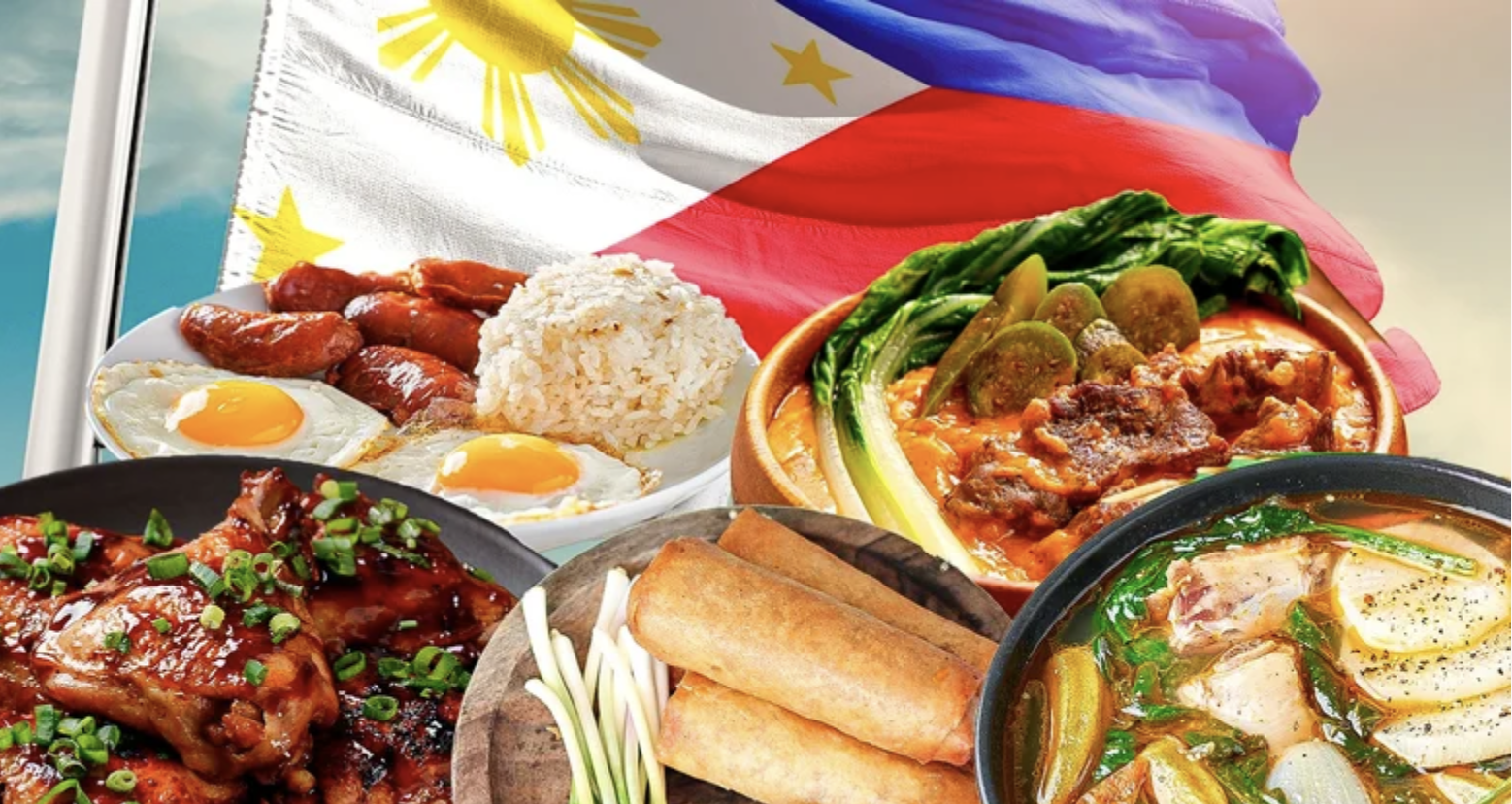
Its Philippine examples include crispy pancit topped with mixed seafood kare-kare, crunchy adobo beef short ribs and even bibingka waffles paired with sinigang fried chicken. The point is not necessarily to make the original obsolete, but to use something familiar as the starting point for something new.
Some reinventions are playful. Others respond to changing ideas around how people want to eat.
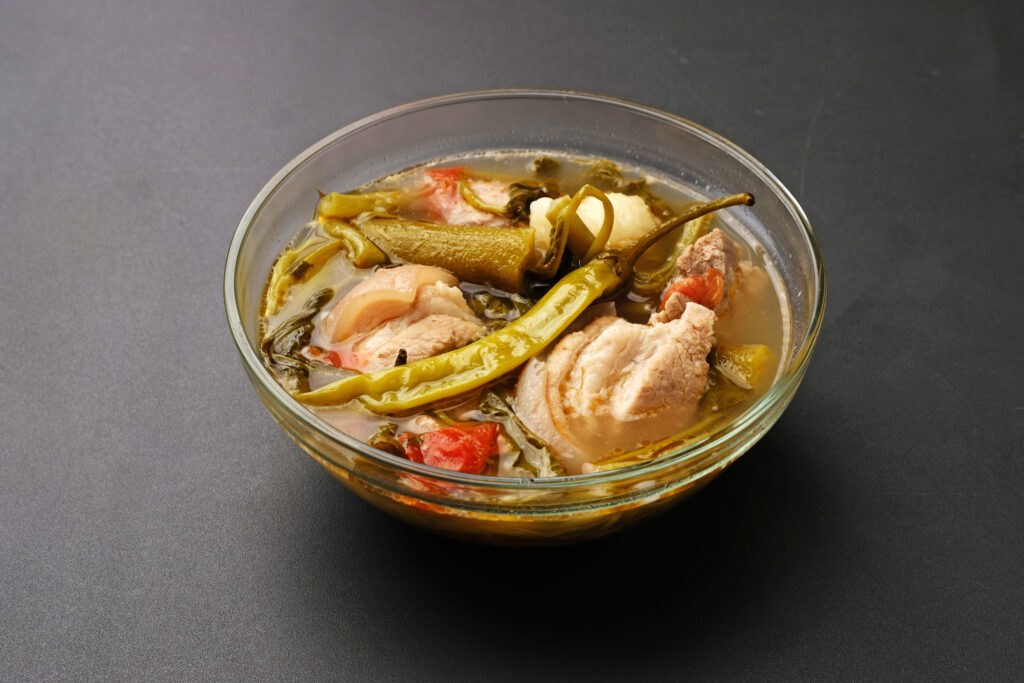
The National Nutrition Council has also encouraged Filipinos to rethink how classic dishes are prepared, noting that flavor does not have to depend heavily on oil, salt or sugar. Garlic, onion, ginger, local herbs, vegetables and different cooking techniques can do more of the work.
Sinigang, tinola and pinakbet were among the familiar dishes cited as examples where vegetables, lean protein and natural seasonings can already coexist comfortably.
That suggests the Filipino kitchen does not always need an entirely new recipe to produce a different plate.
Sometimes the makeover starts with proportions.
More kangkong in the sinigang. More malunggay in the munggo. Less pork in a vegetable dish that previously used meat as much more than a flavoring.
What happens when the meat disappears?
Other cooks are taking the transformation further.
Filipino classics can be surprisingly adaptable to plant-based cooking because much of their identity comes from something beyond the meat itself.
Adobo depends heavily on its salty, acidic and aromatic profile. Kare-kare is instantly associated with its thick peanut sauce and bagoong. Sisig gets much of its character from acidity, onion, chili and its sizzling presentation.
Change the protein and many of those reference points can remain.
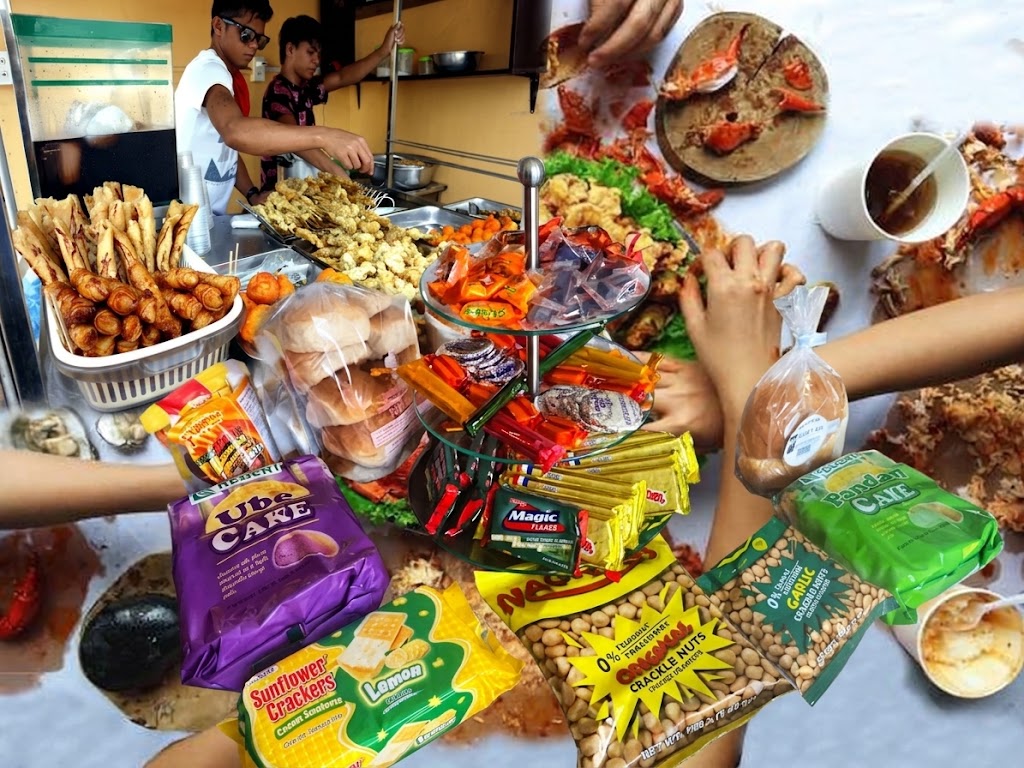
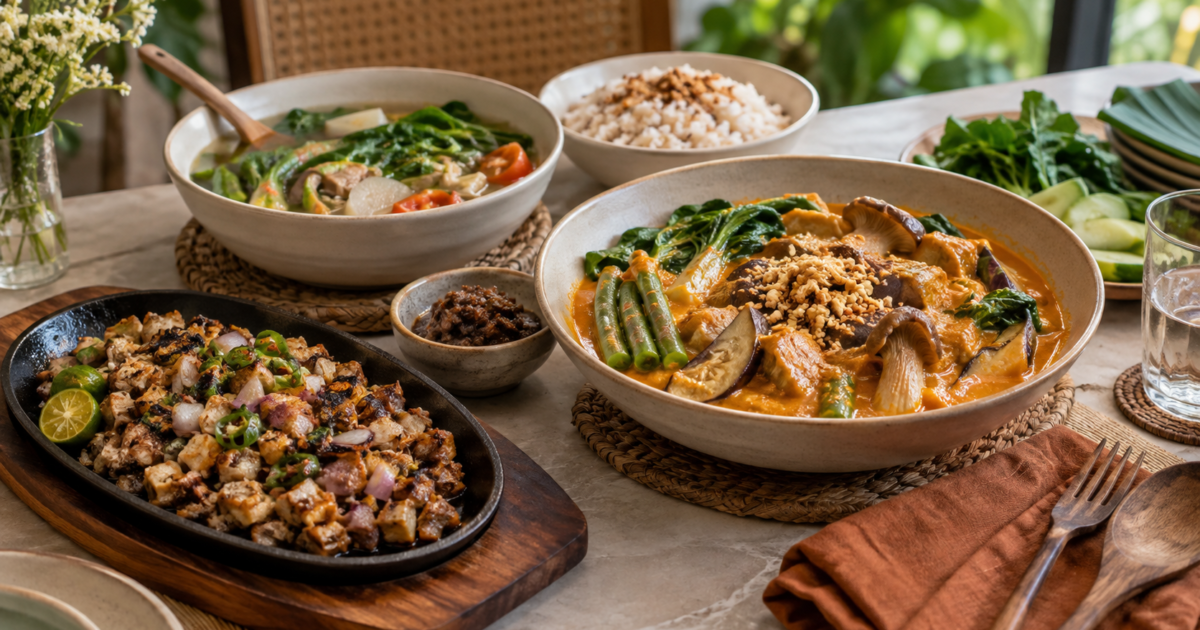
COMPOSITE IMAGE: PeoplePlacesPlates
Manila-based vegan restaurant Cosmic, for example, applies plant-based proteins to familiar Filipino dishes. Its current offerings include sisig made with seitan and tofu, kare-kare, and miso mushroom sinigang with vegetables and tofu.
The lesson is not that every Filipino dish should lose its meat.
It is that the flavor architecture of the dish may be more flexible than we assume.
Healthier is not the same as plant-based
There is an important catch.
Replacing pork with a meat substitute does not automatically make dinner healthier. A plant-based dish can still contain plenty of sodium, oil, sugar or highly processed ingredients.
Likewise, traditional Filipino cooking is not inherently unhealthy.
Ginisang munggo, vegetable soups, fish dishes and regional recipes built around leafy greens, legumes and local produce already offer a different side of Filipino food from the rich celebratory dishes that often dominate restaurant menus.
The more practical makeover at home may therefore be less dramatic.
Grill instead of deep-fry. Use fish or tofu in some meals. Increase the vegetables before reducing everything people enjoy about the dish. Build flavor with aromatics and souring agents rather than simply adding more salt.
The National Nutrition Council specifically recommends methods such as steaming and grilling to reduce reliance on oil, while ingredients like malunggay, kangkong, mung beans and gabi can add nutrients without requiring an entirely unfamiliar meal.
The dish still has to feel like home
That may ultimately be the test that matters most.
Filipino comfort food carries memory with it. Adobo can recall one household’s particular soy-and-vinegar ratio. Sinigang can spark an argument over whether sampalok, bayabas or another souring ingredient belongs in the pot. Kare-kare is not just peanut sauce but the expectation of vegetables, bagoong and rice beside it.
Modernizing those dishes works best when cooks understand which parts can be changed and which details carry the memory.
A mushroom sisig does not need to imitate pork perfectly. A vegetable-heavy sinigang does not need to apologize for having fewer pieces of meat.
If the acidity, aroma, texture and familiar satisfaction are still there, perhaps comfort food has not really been replaced.
It has simply learned another way to feel like home.