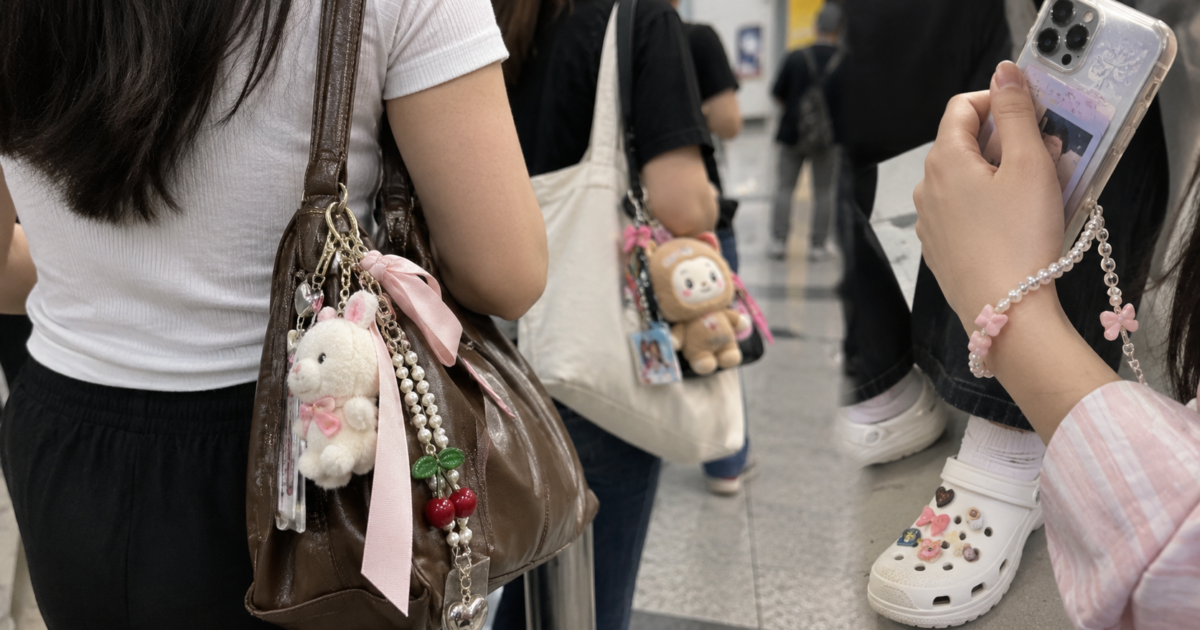
The bag charms trend is everywhere again. Plush characters hang from totes, colorful charms cover shoes, phone cases have dangling beads, and even beauty products are being designed to clip onto bags.
Look around during a commute and the evidence is everywhere.
A plush character swings from someone’s tote. Another bag has three keychains, a ribbon and something that looks suspiciously like a tiny piece of food. Crocs are dotted with colorful charms. Phones have dangling beads or miniature characters attached to their cases.
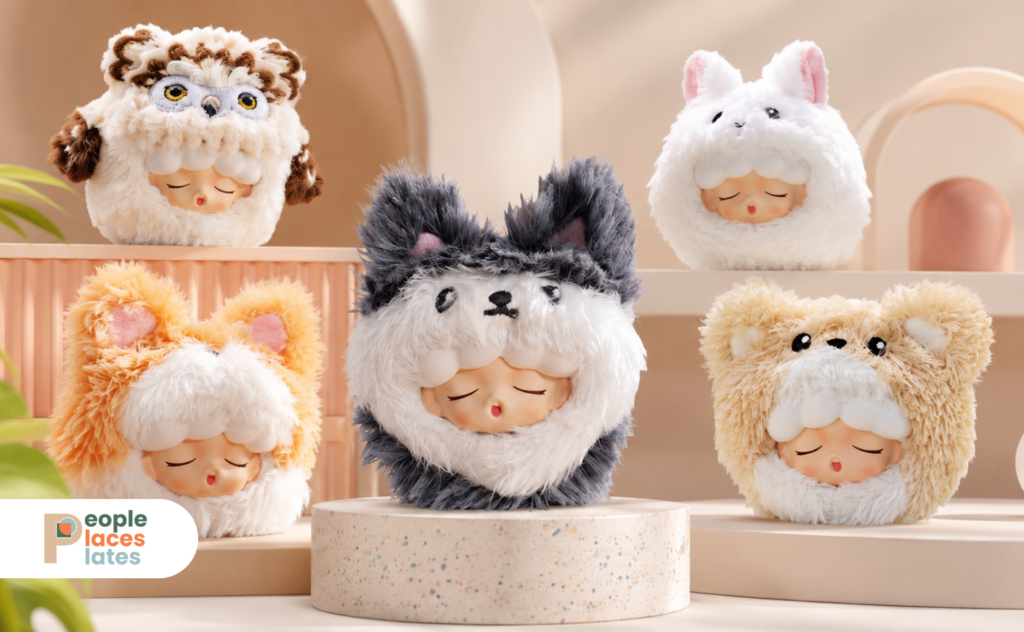
Even beauty products are getting loops, clips and cases designed specifically so they can hang outside a bag instead of disappearing inside it.
We appear to have collectively decided that our belongings need belongings of their own.
And while the current charm obsession feels very now, Filipinos already have a perfectly good word for this kind of thing: anik-anik.
Anik-anik was here before the trend had a name
When bag charms began dominating international fashion a few years ago, Philippine fashion publications quickly pointed out that decorating everyday possessions was hardly unfamiliar here.
Preview described the local version of the trend as “anik-anik” culture, connecting the return of charms with a shift away from the restrained “clean girl,” quiet-luxury and minimalist aesthetics that had dominated fashion.
That maximalism has only spread.
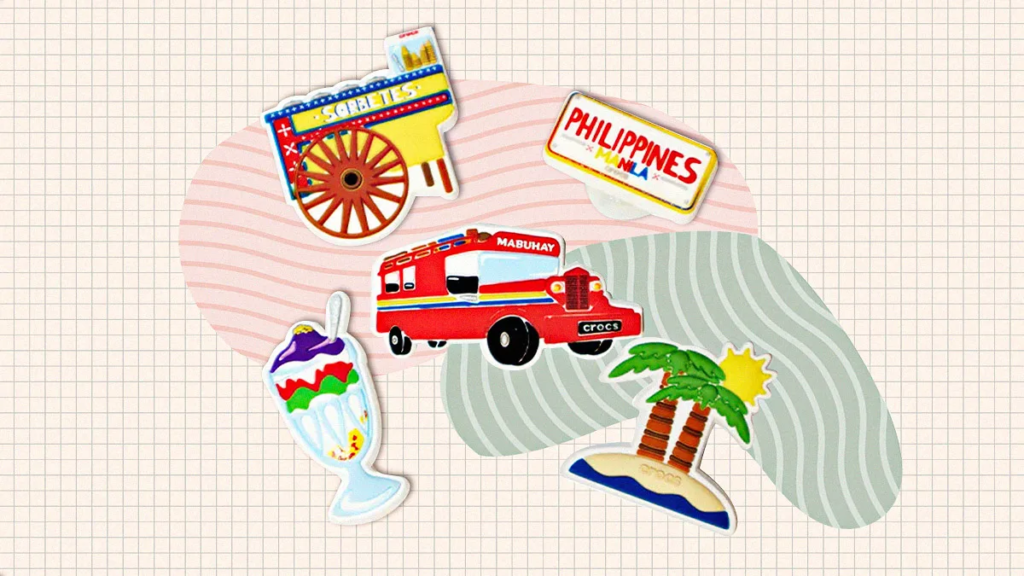
In January, Crocs Philippines released Philippine-exclusive Jibbitz charms. Local footwear label Mave, meanwhile, has built customization directly into its shoes through detachable charms inspired by vintage objects.
Phones have become another canvas. Decorative figures now stick to phone cases and laptops, while beads, straps and dangling charms can turn an otherwise identical device into something immediately recognizable as yours.
The charm has essentially escaped the handbag.
After years of looking polished, we want things to look personal
For a while, the ideal accessory seemed to be one that attracted as little attention as possible.
Neutral bag. Plain phone case. Clean sneakers. Tiny jewelry.
But fashion tends to swing between restraint and excess.
The broader direction in 2026 has increasingly emphasized personality pieces and individual styling rather than following one perfectly coordinated aesthetic. Vogue’s fall forecast, for example, points to expressive accessories, jeweled shoes and other “personality pieces” as a major direction.
Charms accomplish that without requiring an entirely new wardrobe.
Two people can carry the same black tote, own the same phone or wear the same pair of Crocs. Add a favorite character, souvenir, handmade keychain or random object collected years ago and suddenly they no longer look quite the same.
It is customization at its easiest.
They also let us carry our interests around
A charm can say considerably more than its size suggests.
It might reveal the character you grew up loving, the band you follow, the place you visited, the game you play or simply that you think miniature food is funny.
That partly explains why plush collectibles translated so easily into fashion. Once characters such as Labubu started appearing on bags, the line between toy, collectible and accessory became increasingly difficult to draw.
The idea has since spread into other industries. Beauty brands are now turning lip products and skincare into visible accessories, with ELLE noting the rise of beauty products designed as bag charms.
Instead of hiding what you like inside your bag, you display it.
There is one funny problem with personalizing everything
Eventually, everyone starts personalizing their belongings in roughly the same way.
A Labubu clipped to a bag may initially make that bag feel more individual. But when thousands of other bags have one too, the symbol of individuality can become another uniform.
That is already pushing the trend forward. Recent fashion coverage suggests the charm obsession is moving beyond the same viral plush characters toward more tactile, handmade, vintage-looking and personally meaningful objects.
And perhaps that is where anik-anik works best anyway.
Not as a checklist of things you have to buy to make your bag fashionable, but as a collection that gradually becomes yours.
The funny keychain from a friend. The souvenir that has survived three different bags. The random charm you refuse to remove even though nobody else understands it.
After years of trying to make everything look clean and coordinated, maybe we simply got bored of blank surfaces.
Now we want our things to look a little more like us.