What to wear in hot weather can be surprisingly difficult when you live in the Philippines.
An outfit may look perfectly polished when you leave home, only to feel heavy, clingy and uncomfortable after a short walk outside.
Add a commute, sudden rain, strong air-conditioning indoors and the country’s near-constant humidity, and getting dressed becomes less about following seasonal trends and more about choosing clothes that can actually handle the day.
PAGASA describes the Philippine climate as tropical and maritime, characterized by relatively high temperatures and humidity. For anyone building a wardrobe around Philippine weather, that means comfort needs to be considered from the moment you choose the fabric.
Fortunately, staying comfortable does not mean giving up on looking put together. The trick is to think about fabric, shape and layering before thinking about the outfit itself.
Start with how the fabric feels
When shopping for clothes, pay attention to the fabric before getting attached to the design.
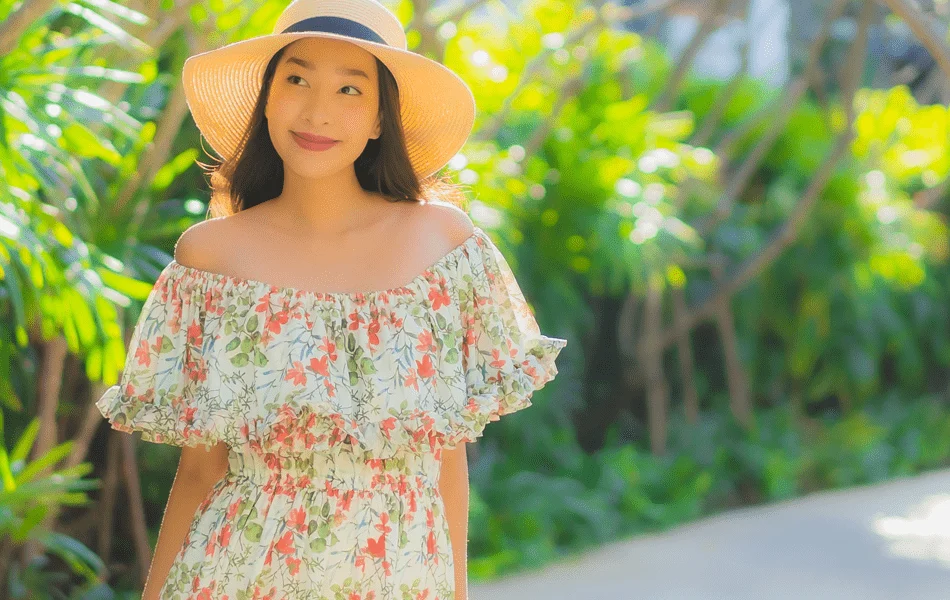
Lightweight cotton is one of the easiest choices for everyday wear. Think poplin shirts, loose cotton tops, simple dresses and trousers made from thinner weaves rather than thick jersey or heavy denim.
Linen also makes sense for the Philippine climate because it works particularly well in relaxed silhouettes. Linen shirts, trousers, shorts and dresses can look polished without feeling overly formal.
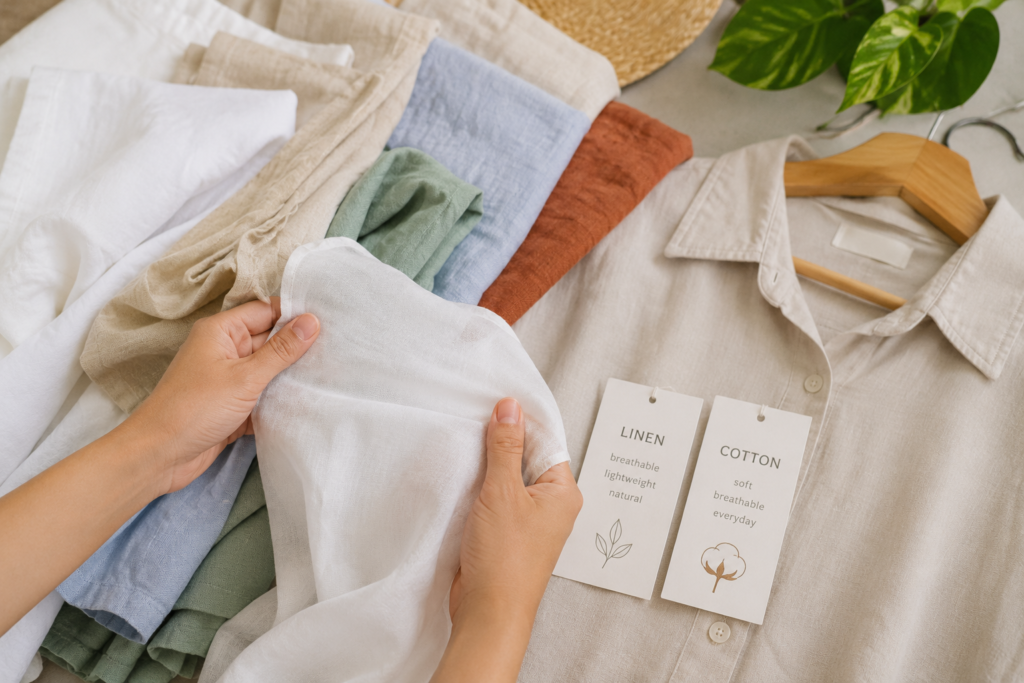
Yes, linen wrinkles. That is part of its character.
If you want something neater for work, a linen blend can give you the same relaxed appearance with slightly more structure.
Rayon, viscose and lyocell can also be useful for dresses, blouses and wide trousers because they tend to drape rather than sit stiffly against the body.
But do not rely entirely on the fabric label. A thick cotton shirt can still feel hotter than a lightweight garment made from another material.
When in doubt, hold the fabric up, feel its weight and ask yourself whether you would still want it touching your skin after standing outside at noon.
Choose silhouettes that leave some space
Hot-weather dressing becomes much easier once you stop expecting every piece to closely follow the body.
Wide-leg trousers, relaxed shirts, A-line skirts, loose dresses and sleeveless tops give heat somewhere to escape.
That does not mean everything needs to be oversized.
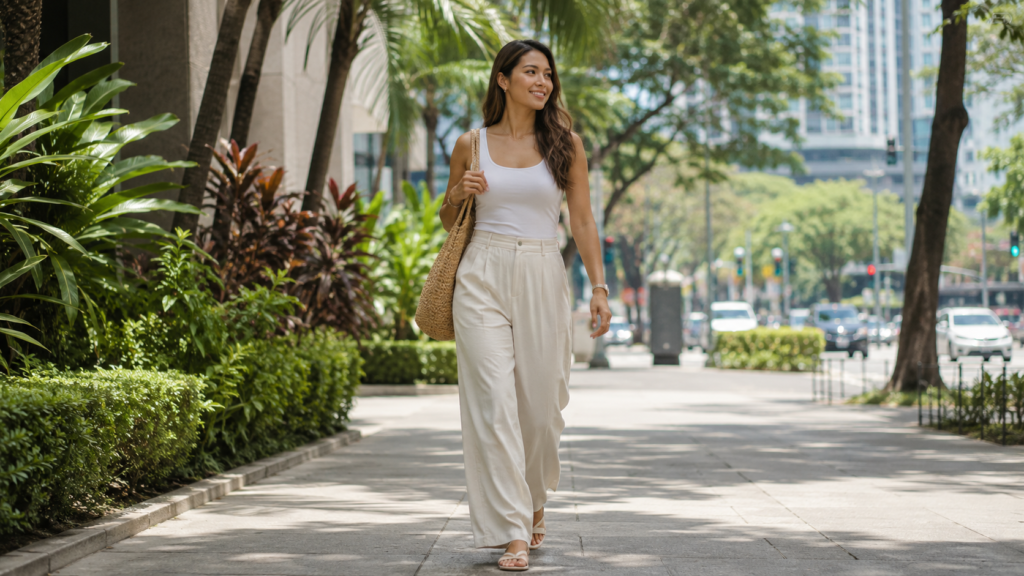
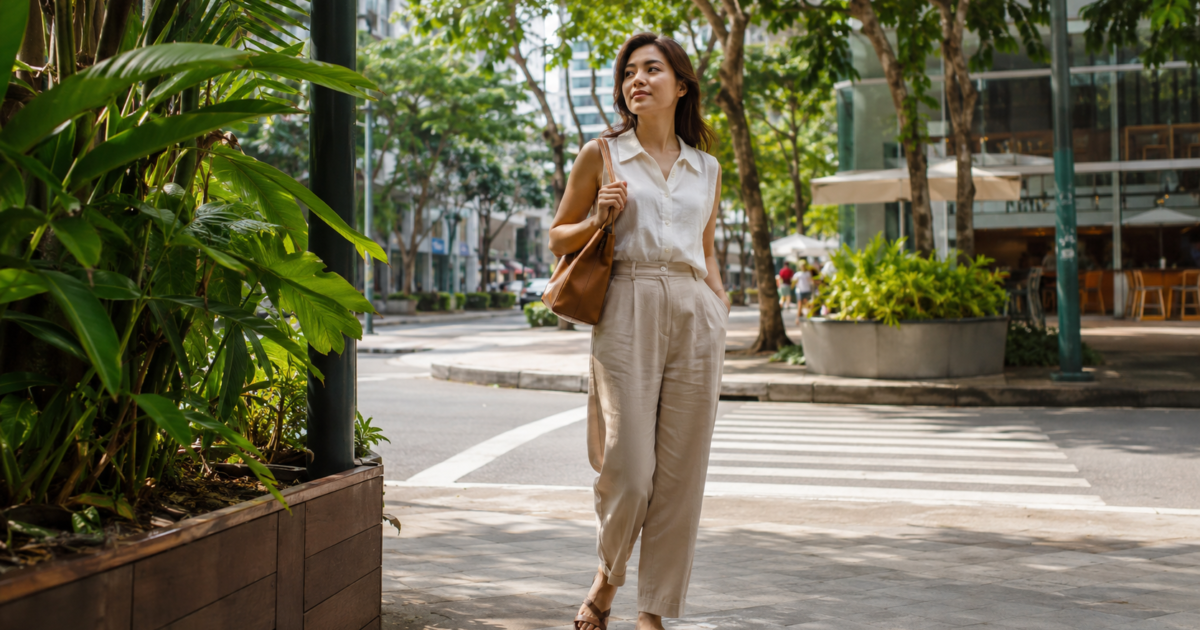
The easiest way to keep the outfit looking polished is to balance proportions. Pair a fitted tank with loose trousers. Wear a relaxed shirt with a straighter skirt. Match a breezy blouse with tailored shorts.
You still get shape, just without having fabric pressed against every part of your body.
This makes an especially noticeable difference if your day involves walking, commuting or spending time outdoors.
Keep the layers, lose the weight
Layering in Philippine weather sounds questionable until you redefine what a layer needs to be.
A blazer does not always need to be thick and lined. An outer layer does not always need to be a jacket.
An open cotton or linen button-down over a tank can add structure without much extra weight. A lightweight cardigan can stay folded inside your bag for cold offices and cinemas. An unlined jacket can work when the occasion calls for something slightly more formal.
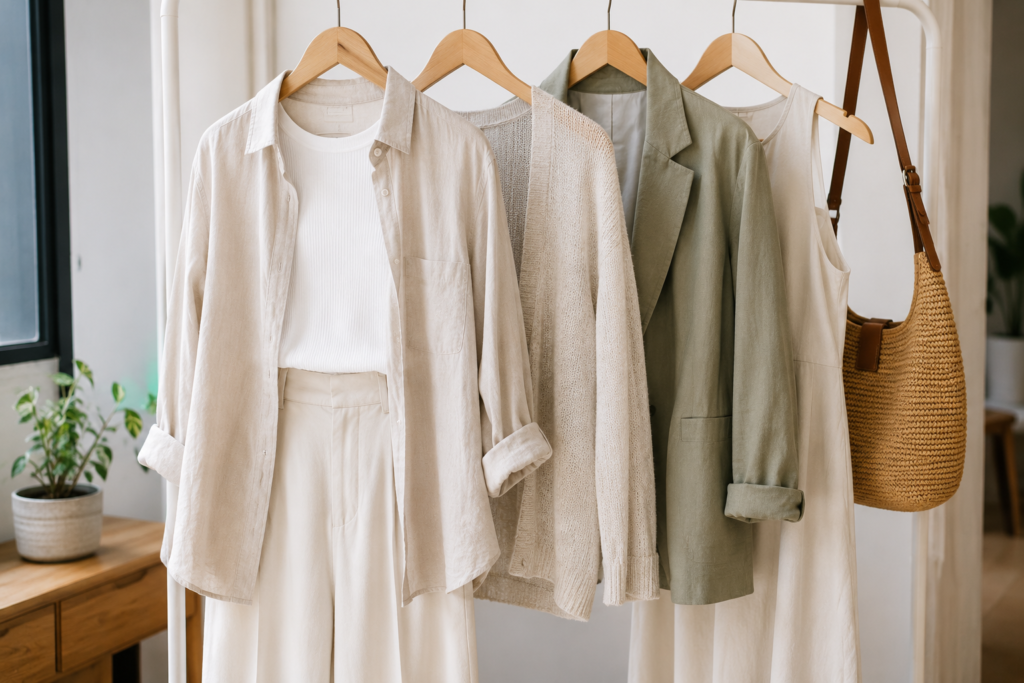
More importantly, not every outfit needs another piece of clothing to look complete.
Accessories can do some of that work instead.
A belt can define a simple dress. A structured bag can sharpen a basic shirt-and-trousers combination. A watch, simple jewelry or sunglasses can make an outfit feel considered without adding another warm layer.
Let one polished piece do the work
Looking put together does not mean every item has to look formal.
Usually, one polished element is enough.
A crisp button-down can elevate relaxed trousers. A structured handbag can make a basic tank and skirt look more intentional. Good loafers can sharpen an otherwise simple outfit.
Some easy combinations for Philippine weather include:
- A poplin shirt, relaxed trousers and sandals
- A fitted tank, wide-leg pants and a structured bag
- A midi dress with simple jewelry and flats
- A linen polo with straight trousers and loafers
- A plain T-shirt tucked into an A-line skirt
- A lightweight blouse with tailored shorts and slingbacks
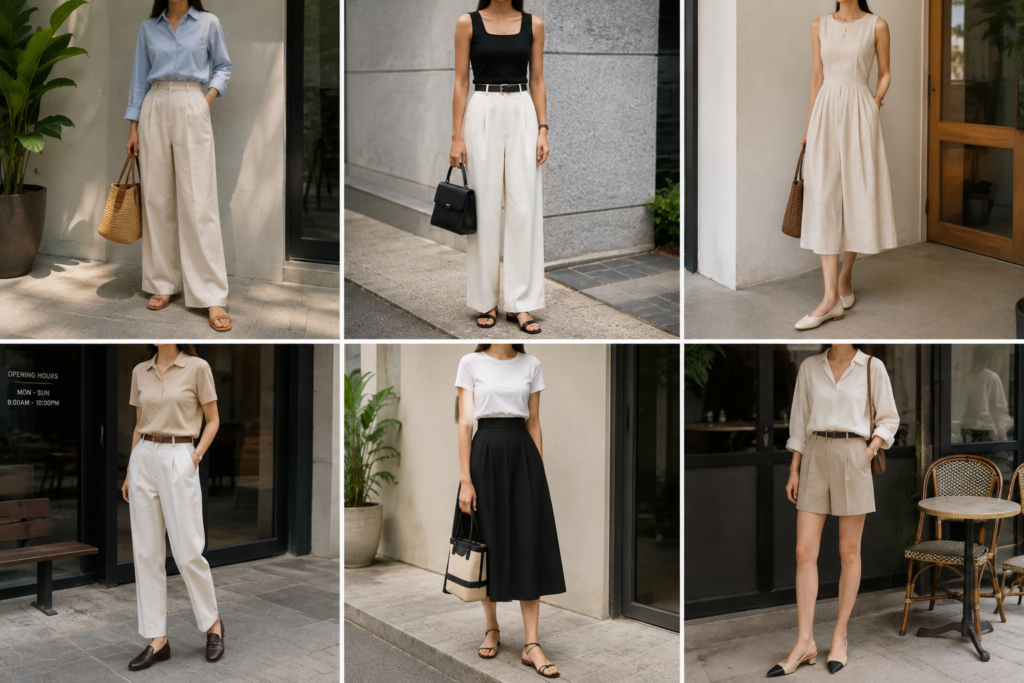
For work, focus more on clean lines and fit than piling on traditionally corporate clothing.
A lightweight outfit that fits properly will often look more polished than a heavy blazer you spend the entire day wanting to remove.
Dress knowing that you are probably going to sweat
There is no styling trick capable of removing humidity from the Philippines, so it helps to plan around it.
If sweat marks bother you, be selective about fabrics and colors that make moisture highly visible. Prints and textured materials can sometimes be more forgiving than very smooth, solid fabrics.
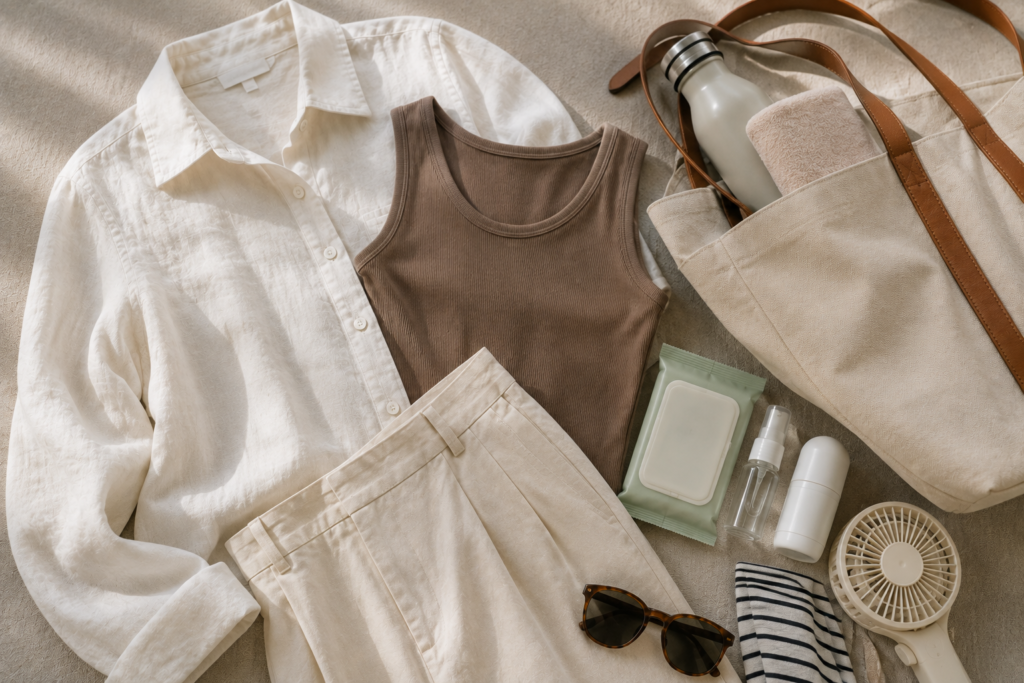
Fit matters here too. A little extra space around the underarms, back and torso can make an outfit more comfortable during a commute.
For particularly long outdoor days, quick-drying clothes can also be useful, especially if you will be walking extensively or moving between destinations.
And if your day involves commuting before entering an office, there is nothing wrong with keeping an extra shirt, small towel or other refresh essentials in your bag.
Practicality is part of dressing well.
Your shoes have to survive the day too
Shoes are easy to overlook when planning for hot weather, but uncomfortable footwear can ruin an otherwise sensible outfit.
If you know you will be walking, save the stiff new shoes for another day.
Clean sneakers, comfortable loafers, flats, slingbacks and sandals can all work depending on the dress code. What matters is whether you can actually wear them through your normal routine.
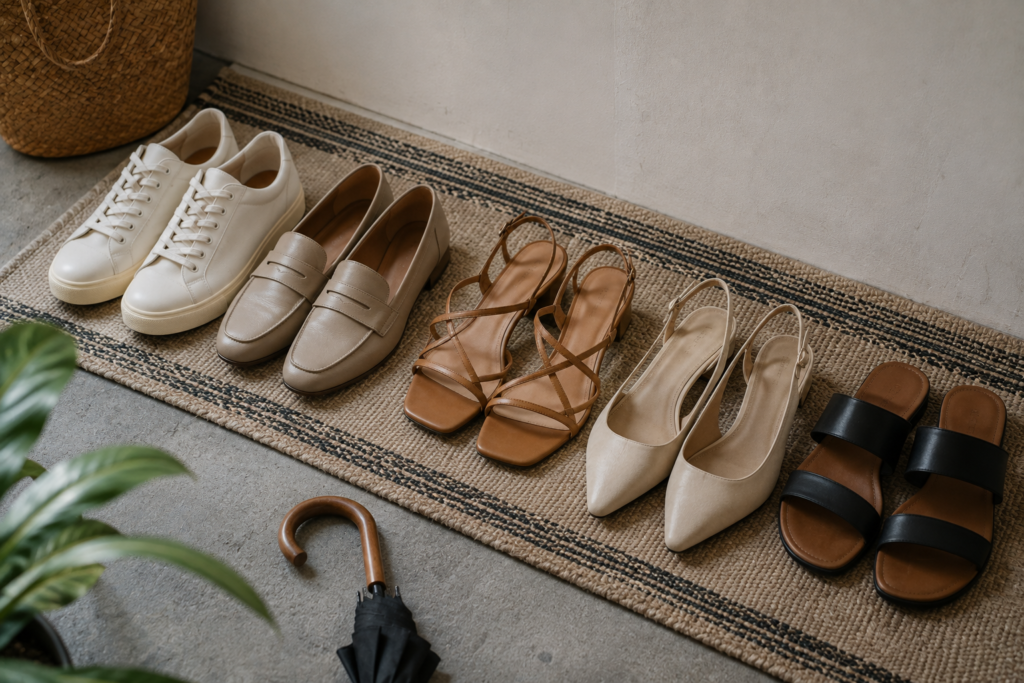
Rain should also factor into the decision.
During wet months, think twice before wearing footwear that cannot survive a puddle, slippery pavement or an unexpected downpour.
The prettiest shoe in your closet is not necessarily the best shoe for the day.
Build your own tropical uniform
One of the simplest ways to make getting dressed easier is to figure out which combinations already work for you.
Maybe that is a sleeveless top, loose trousers and sandals. Maybe it is a linen shirt, straight-cut pants and loafers. Maybe you feel best in midi dresses with a practical shoulder bag.
Once you find two or three formulas, repeat them.
Change the colors, accessories or individual pieces instead of reinventing your wardrobe every morning.
A good Philippine wardrobe does not need to be huge. It needs enough clothes that can handle the actual conditions you live in: heat outside, humidity during the commute, cold air-conditioning indoors and the occasional sudden downpour.
The goal is not to dress as though tropical weather does not exist.
It is to look put together while dressing like you know exactly where you live.