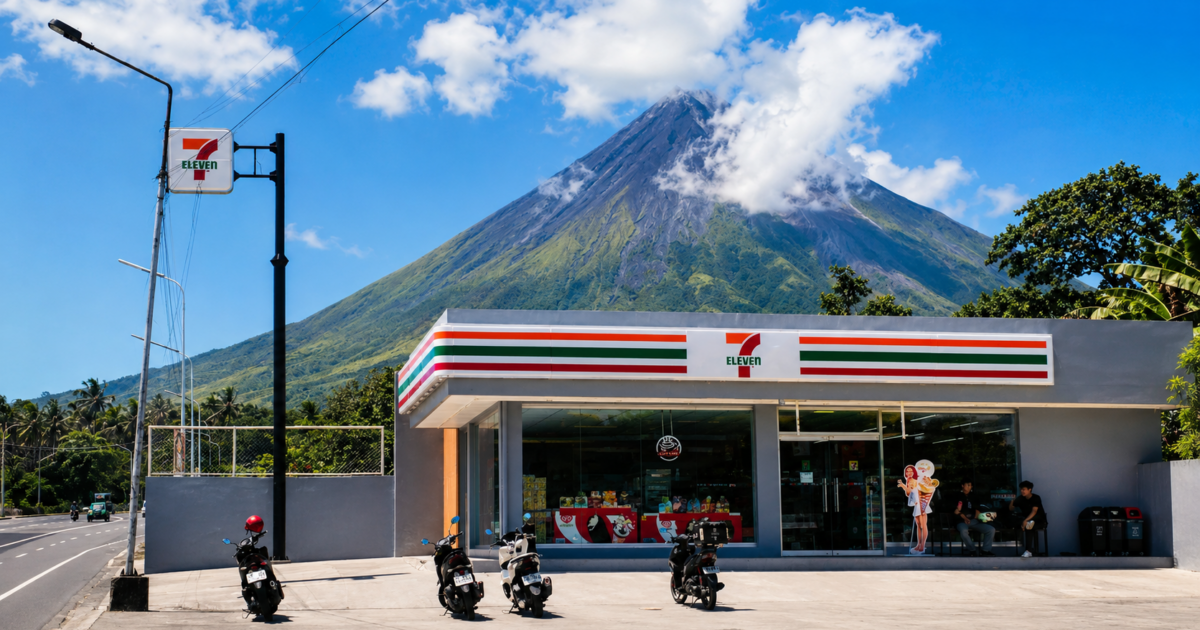
For many Filipinos, 7-Eleven is where the day begins, ends, or briefly pauses.
It is where commuters grab coffee before work, students buy snacks between classes, travelers stop for supplies, and night-shift workers find a hot meal when most establishments are already closed.
But the convenience store is also changing alongside the people who regularly walk through its doors.
At Philippine Seven Corporation’s 2026 annual stockholders’ meeting and media briefing, discussions went beyond store expansion and sales. Company leaders spoke about cashless payments, larger and more modern branches, products designed for younger consumers, digital services, and the challenges of reaching more islands and tourist destinations.
Taken together, these developments point to a broader shift: the neighborhood convenience store is becoming more than a place for emergency purchases.
A growing presence in Filipino neighborhoods
Philippine Seven Corporation, the exclusive licensor of 7-Eleven in the country, ended 2025 with 4,491 stores nationwide, up from 4,130 the year before.
Its system-wide sales reached a record ₱99.4 billion, while revenues increased to ₱95.1 billion. The company also reported ₱3.6 billion in net income despite what it described as a more challenging consumer and operating environment.
Those numbers show the scale of the business, but the company’s everyday value may be easier to understand at the neighborhood level.
During the media briefing, executives described the brand as a reliable presence that customers can count on. A store may not always offer the lowest price, but it can provide food, drinks, basic supplies, and a place to stop at almost any hour.
In communities with few late-night businesses, this access can be especially important.
A convenience store may serve as a breakfast stop, a quick dining space, a payment center, a meeting place, or a familiar landmark for people navigating an unfamiliar area.
Cashless payments are becoming part of convenience
The meaning of convenience has also changed.
For years, customers visiting some branches still needed cash, even as QR payments, cards, and e-wallets became common in restaurants, supermarkets, transport services, and online shopping.
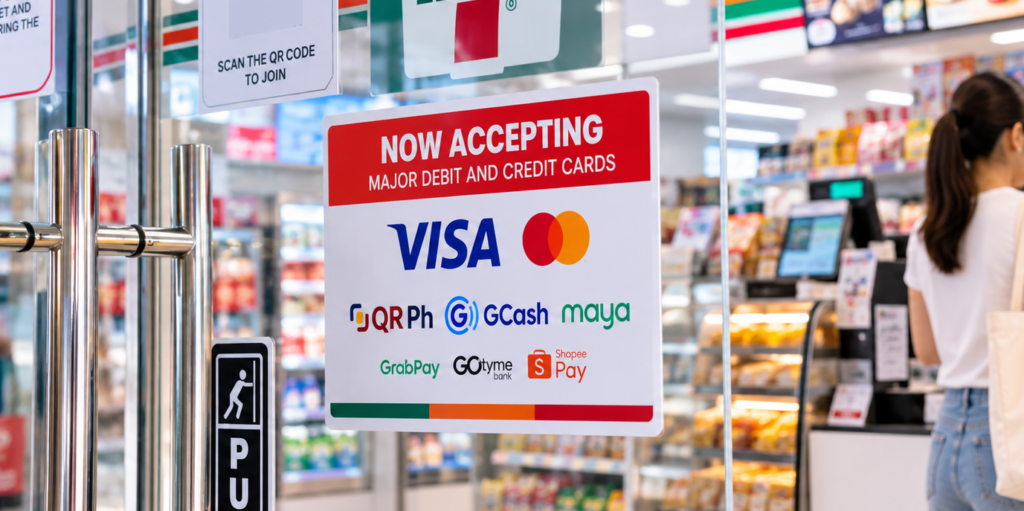
Philippine Seven Corporation accelerated the rollout of cashless payments in late 2025. By the end of that year, more than 1,000 stores accepted cashless transactions. By May 2026, the service had expanded to over 4,000 stores.
Customers can now use credit cards, debit cards, QR Ph, e-wallets, and other supported payment methods at most locations.
Company executives said the long-term objective is to bring digital payment acceptance to the entire network, including newly opened branches.
For customers, this can make a quick store visit genuinely quick. It removes the need to search for an ATM, count coins, or abandon a purchase because a branch cannot accept a preferred payment method.
It also reflects how convenience stores are becoming an increasingly important part of the country’s digital payments ecosystem.
Gen Z is influencing what appears on the shelves
Convenience stores are also paying closer attention to what younger consumers find interesting enough to buy, collect, photograph, and share.
During the media briefing, one discussion centered on the popularity of blind boxes and cute merchandise. These products have become common across malls, specialty stores, conventions, and social media, where customers post unboxing videos and try to complete entire collections.

Company leaders said that the blind box rollout was part of a broader effort to understand Gen Z preferences. They also indicated that more products designed around younger customers’ interests could follow.
This represents a noticeable change from the traditional convenience store model.
The shelves are no longer limited to practical items, snacks, drinks, and toiletries. Limited-edition merchandise, character collaborations, collectible products, and shareable food concepts can give customers another reason to visit.
The appeal can also cross generations. During the briefing, members of the media joked that while Gen Z consumers might buy one or two pieces, millennials with more spending power may be the ones trying to complete the entire collection.
That light exchange captured something familiar about today’s consumer culture: collecting is no longer only for children, and a convenience-store purchase can become part of an online trend.
Bigger stores could support longer visits
Some branches, especially older ones in dense urban areas, can become crowded during peak hours.
A question raised during the briefing described small stores where customers frequently form long lines and struggle to move comfortably inside.
Company representatives said remodeling remains part of the plan. Older and undersized locations may be renovated or transferred to larger nearby sites when suitable spaces and market conditions allow.
Larger formats can offer more than shorter queues.
Larger stores can also provide better seating, wider food selections, improved displays, more efficient checkout areas, and enough space for customers who want to dine in instead of leaving immediately.
That matters as convenience stores compete not only with one another, but also with cafés, fast-food restaurants, supermarkets, delivery platforms, and small neighborhood groceries.
A branch offering hot meals, coffee, digital payments, comfortable seating, and essential services begins to function less like a traditional convenience store and more like a neighborhood lifestyle hub.
Why some tourist destinations still have no branch
One of the more relatable questions during the event was why a popular tourist destination in the Philippines (Palawan) still did not have a 7-Eleven.
The answer revealed that opening a convenience store involves more than finding enough customers.
Branches need a reliable supply of products, including items that must be delivered daily. For distant islands, this can require a local distribution center supported by enough stores and demand to make the operation sustainable.
Bad weather, disrupted sea travel, and long distances can make it difficult to depend on a distribution center located on another island.
This helps explain why some tourism communities can have hotels, restaurants, and growing visitor numbers but still lack major convenience-store chains.
Expansion into these areas may eventually happen, but it depends on whether the logistics network can consistently keep shelves stocked.
The convenience store is becoming a digital and physical hub
Former Philippine Seven Corporation president and current board chairman Jose Victor Paterno also spoke about the future of physical convenience stores in an increasingly digital economy.
His view was that proximity-based businesses could be among the last retail models to be fully disrupted because they connect the digital and physical worlds.
Customers may use an app, digital wallet, loyalty account, ATM, or online service, but many transactions and everyday needs still require a nearby physical location.
The company is investing in technology, supply chains, customer platforms, and store modernization as it prepares for continued expansion.
Still, the most important part of the model remains simple: being close enough when someone needs food, coffee, cashless payment access, basic supplies, or a quick place to stop.
For Filipinos, convenience has never meant only speed.
It can also mean familiarity, accessibility, and knowing that there is a nearby place open when most of the neighborhood has gone quiet.
As 7-Eleven adds more digital tools, modernized stores, expanded food offerings, and new services, its role in everyday Filipino life continues to evolve. The neighborhood convenience store is no longer just a place to buy essentials — it is steadily becoming a digital and physical hub for the communities it serves.