Every overseas Filipino worker (OFW) knows what it costs to earn a dollar.
It means birthdays watched through a video call. Missed graduations. Christmases spent thousands of kilometers away from family. Long shifts, unfamiliar cultures, and the quiet hope that every sacrifice will someday lead to a better life back home.
But here’s a question that doesn’t get asked often enough: After working so hard to earn that money, are we giving the same amount of thought to how it’s exchanged?
For many families, the answer is probably no. Most of us pay attention to how much money is being sent. We compare remittance fees. We track exchange rates when they’re unusually high or unusually low.
But how often do we stop to ask whether we’re actually maximizing the value of every remittance?
The pesos that quietly disappears

IMAGE CREDIT: Magnific
Imagine receiving money from a loved one overseas every month. Would you drive across town to save ₱50?
Many people probably wouldn’t. But what if that same ₱50 — or ₱100, or even ₱200 — could quietly add up every month simply because of where you exchanged your foreign currency?
Over a year, those small differences might pay for school supplies, groceries, or part of a utility bill.
They’re rarely life-changing overnight. But they’re rarely meaningless either.
Every OFW family probably has a different strategy
Ask ten OFW families where they exchange foreign currency, and you’ll probably hear ten different answers.
Some choose whichever branch is closest. Others wait until exchange rates improve. Some rely on recommendations from relatives. Others simply continue using the same provider they’ve trusted for years.
None of these approaches is necessarily wrong. But they do raise an interesting question: What matters most when choosing where to exchange foreign currency?
Is it convenience? The exchange rate? Security? Speed? Or simply trust?
More than just numbers on a board

IMAGE CREDIT: Cebuana Lhuillier
Jean Henri Lhuillier, President and CEO of Cebuana Lhuillier, believes maximizing every remittance matters because OFW earnings represent years of sacrifice.
“OFW remittances remain one of the strongest drivers of household financial stability and economic growth in the Philippines. That’s why it’s important that families are able to maximize the full value of every hard-earned dollar, euro, yen, or other foreign currency they receive,” he said. “Through Cebuana Lhuillier Money XChange, we are making foreign exchange more accessible and efficient, helping Filipinos convert opportunity into greater financial value for both their immediate needs and future aspirations.”
For Cebuana Lhuillier, getting more value from every remittance goes beyond foreign exchange alone. Through Money XChange, customers can exchange major foreign currencies at branches nationwide, while Click & Connect allows them to begin a foreign exchange transaction online before completing it at their preferred branch.
Money XChange also complements Cebuana Lhuillier’s cross-border remittance services. While OFWs can send money home through the company’s global remittance partners, their families can conveniently exchange foreign currencies for everyday needs, travel, overseas transactions, and other financial requirements — all within the same financial ecosystem.
It’s a reminder that foreign exchange isn’t just about today’s conversion rate; it’s about how much value ultimately reaches the people waiting at home.
One family’s experience
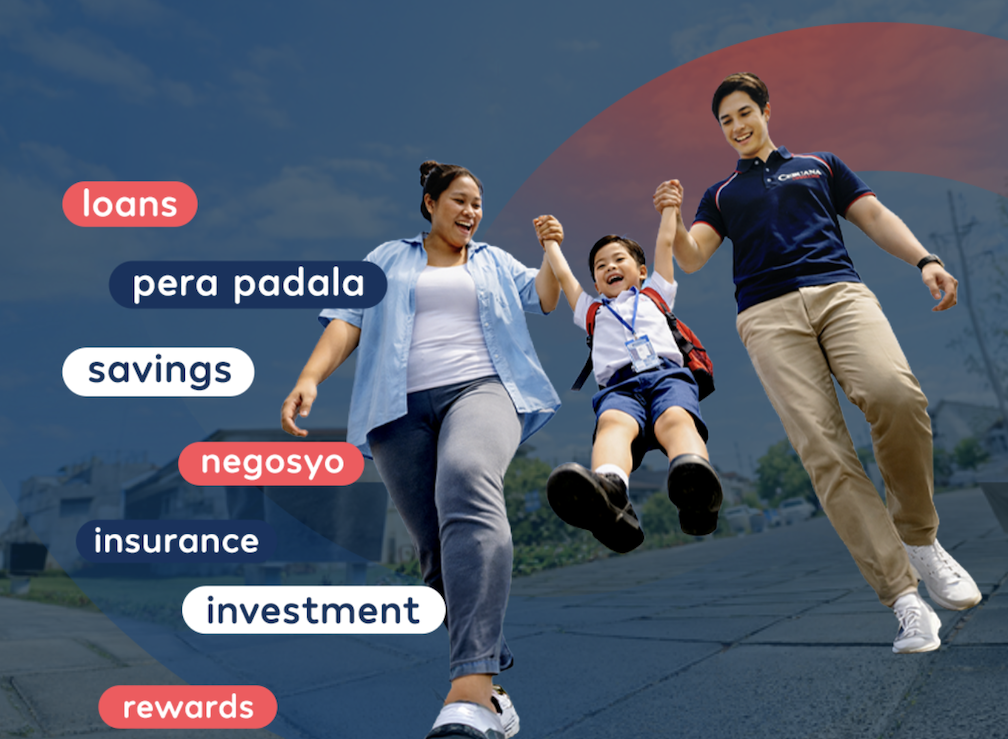
IMAGE CREDIT: Cebuana Lhuillier
For Lani and Derek, whose daughter has worked in Canada for six years, even small improvements in exchange rates help stretch their monthly budget.
“We choose Cebuana Lhuillier Money XChange because of its reliable rates and the convenience of having a branch near us. We know we’re getting good value for every remittance, and even the additional pesos we receive help us stretch our budget, manage rising expenses, and prepare for unexpected costs.”
It’s not a dramatic difference. But over time, they say, those extra pesos matter.
For students, every peso has another destination
Kevin, whose parents work in the Middle East, sees things differently.
For him, every exchange isn’t just about today’s spending. It’s about tuition, books, transportation, and the next semester.
“My parents always remind me that every dollar they send comes from years of hard work and sacrifice,” he shared. “By exchanging their remittances through Cebuana Lhuillier Money XChange, we’re able to maximize what they earn overseas. The additional amount helps cover my tuition, books, and other school expenses.”
Kevin also appreciates Cebuana Lhuillier’s Click & Connect service, which allows him to begin the transaction online before completing it at his preferred branch. He says it saves time, simplifies the process, and helps his family access better value without added hassle.
His story is a reminder that every additional peso can have a purpose — whether it’s paying for books today or easing the financial burden of the next semester.
Maybe the better question isn’t “Where?”
Perhaps the more interesting question isn’t where families exchange their money.
It’s whether they’re paying attention at all.
Financial advisers often remind people to compare loan interest rates, savings accounts, and investment returns.
Shouldn’t foreign exchange deserve the same level of attention — especially for households that receive remittances every month?
Sometimes improving your finances isn’t about earning more.
Sometimes it’s about keeping more of what you’ve already earned.
Ultimately, choosing where to exchange foreign currency is a personal decision, and every family’s priorities are different. Some may value the most competitive rates, while others prioritize convenience, accessibility, or the confidence of dealing with a Bangko Sentral ng Pilipinas-regulated financial institution.
As Philippe Andre Lhuillier, Senior Executive Vice President of Cebuana Lhuillier, explains:
“Our goal is to make foreign exchange simple, accessible, and rewarding for Filipino families. Through favorable rates, our nationwide network, and services like Click & Connect, we help customers access better value, greater convenience, and more flexibility in managing their finances. As part of Cebuana Lhuillier’s integrated financial ecosystem, Money XChange supports the seamless movement of money between OFWs and their families back home.”
We’d like to hear from OFWs
Every OFW family has developed its own routine. Some exchange money immediately. Others wait for favorable rates. Some prioritize convenience because they can’t afford to spend hours traveling between branches. Others are willing to shop around if it means getting better value.
There may not be one correct answer.
But there’s certainly value in sharing experiences.
If you’re an OFW — or part of an OFW family — what do you consider before exchanging foreign currency?
Is it the exchange rate? Convenience? Trust? Or something else entirely?
After all, every peso has a story behind it.
And perhaps the best financial decisions begin by talking about them.