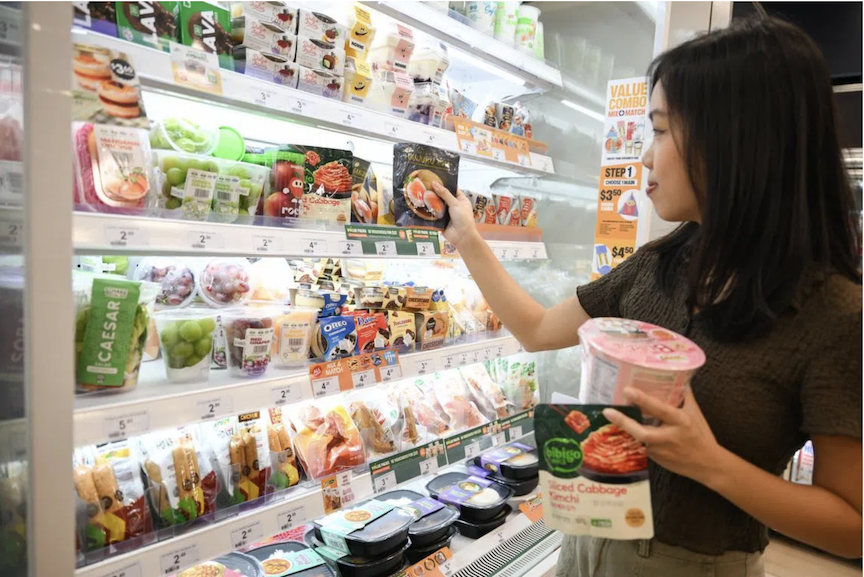
There was a time when going to a convenience store meant grabbing a bottle of water, a bag of chips and perhaps something quick to eat before heading home.
That is changing.
For many Filipinos, especially younger consumers, convenience stores have become food destinations in their own right. Instead of simply buying something to tide them over, shoppers are increasingly browsing shelves for onigiri, ramen, Korean snacks, egg sandwiches, Japanese desserts and other ready-to-eat products that feel a little different from the usual convenience-store fare.
The trend is part of a larger shift in Philippine food culture, where Korean and Japanese influences have moved from specialty restaurants into everyday eating.
From K-dramas to the convenience store

It is difficult to talk about Korean food’s popularity in the Philippines without mentioning the influence of Korean entertainment.
For years, Filipinos have watched characters in K-dramas eat ramyeon, convenience-store snacks, kimbap and other everyday Korean foods. K-pop, Korean beauty and Korean travel content have further made these products familiar to audiences who may never have visited South Korea.
Eventually, curiosity turns into consumption.
A food that once looked foreign on a television screen becomes something a Filipino shopper recognizes on a convenience-store shelf.
The same phenomenon exists with Japanese food, although its presence in the Philippines has a much longer history. Japanese restaurants, anime, manga, travel and pop culture have all helped make foods such as ramen, sushi, onigiri and matcha familiar to Filipino consumers.
Convenience stores simply make these foods easier to try.
The appeal of eating like a local
Part of the fascination is that convenience-store food feels more authentic than a heavily adapted restaurant version.
There is something appealing about buying an onigiri from a Japanese-style convenience store or trying a Korean cup of noodles because it feels like a small taste of everyday life in another country.
The experience is also easy.
You do not need to make a reservation, dress up or spend restaurant prices. You can walk into a store, pick something from the refrigerator, heat it up and eat it within minutes.
That combination of novelty and accessibility is a powerful one.
FamilyMart, for example, previously reported strong demand in the Philippines for ready-to-eat offerings including rice meals, noodles, sandwiches and salads, alongside Japanese favorites such as cha soba, donburi, maki, onigiri and ramen.
The appeal was not limited to imported novelty. Ready-to-eat food became an important part of the convenience-store experience itself.
Filipino convenience stores are learning from Asia
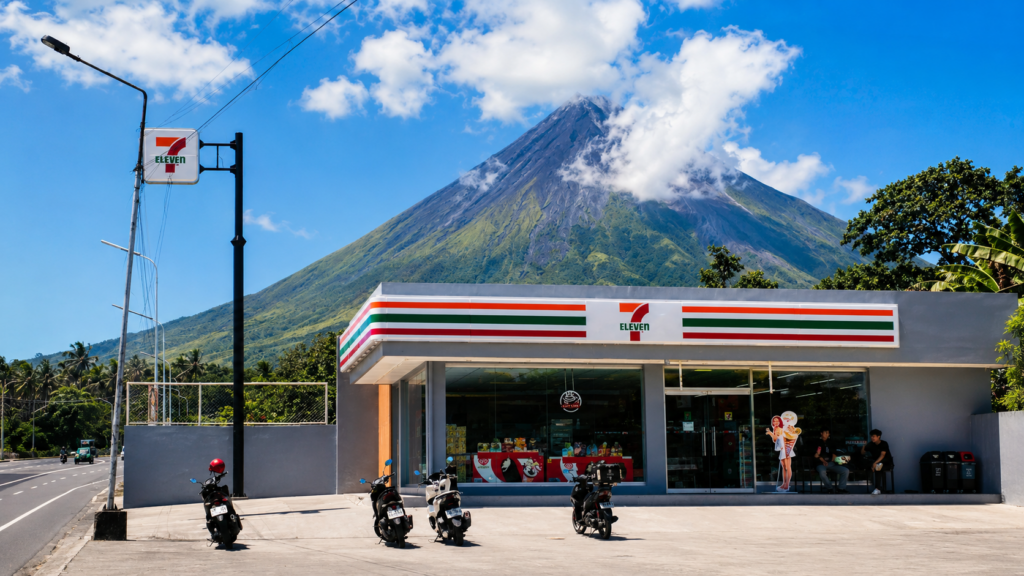
IMAGE CREDIT: 7-Eleven
The popularity of these products is also changing what convenience stores sell.
7-Eleven Philippines has experimented with Japanese and Korean-inspired products, including ramen kits, onigiri and Japanese rice snacks. Its 2022 annual report noted that Japanese snacks reached a 12% share during the launch period, up 242% from 2019, while the company also introduced Korean-inspired products in response to the growing Hallyu food trend.
This shows how food trends can move from culture to commerce.
Consumers develop an interest through entertainment or social media. Retailers notice the demand. New products appear on shelves. More people try them. The products become familiar, and eventually they become part of ordinary food choices.
What begins as a trend can become a habit.
Convenience is still the biggest ingredient
Of course, the popularity of Korean and Japanese convenience-store food is not only about culture.
It is also about timing.
Filipinos are increasingly living busy, mobile lives. Students need quick meals between classes. Employees want something they can eat before heading home. Young professionals may prefer a convenient dinner after a long day rather than spending more time in a restaurant.
Philippine convenience retail sales grew 16.8% in 2024, according to a report from Canada’s agriculture and agri-food department citing Euromonitor data. The report linked the growth partly to demand from busy young professionals and students looking for quick, ready-to-eat meals.
That makes Korean and Japanese convenience-store food particularly well positioned.
It is interesting enough to try but convenient enough to become an everyday purchase.
Social media makes the food more tempting
Then there is TikTok.
A cup of Korean noodles being prepared in a convenience store, an onigiri being opened to reveal its filling, or a Japanese dessert being cut in half can become content almost instantly.
The food does not just have to taste good anymore.
It has to be interesting enough to film.
This is one reason convenience-store food fits so naturally into social media culture. Products often come in colorful packaging, limited-edition flavors and visually distinctive formats. They are easy to photograph and easy to review.
A simple snack run can become a mini food trip.
And once people start sharing what they found, curiosity does the rest.
The fun of trying something new
There is also a sense of discovery involved.
Unlike ordering the same burger or fried chicken meal, browsing a Korean or Japanese convenience-store shelf can feel like a small adventure. There might be a snack you have never seen before, a seasonal flavor, a strange-looking drink or a noodle variety you recognize from a K-drama.
Not everything will be a hit.
Some products will be too salty, too sweet, too spicy or simply unfamiliar.
But that is part of the fun.
For younger consumers especially, food is increasingly something to explore and talk about rather than simply consume.
Affordable enough to experiment with
Price is another important factor.
Trying an unfamiliar dish at a restaurant can be expensive. Trying an unfamiliar snack at a convenience store usually carries much less risk.
That makes experimentation easier.
A shopper can buy an unfamiliar Japanese dessert or Korean snack on a whim without committing to the cost of a full restaurant meal. If they love it, they have discovered a new favorite. If they do not, the financial loss is relatively small.
This becomes particularly relevant as Filipino consumers remain conscious of their budgets.
Recent industry reporting has found that consumers are increasingly turning toward affordable, ready-to-eat options. Philippine Seven Corporation, for instance, said in 2026 that consumers were showing “down-trading behavior,” with some choosing convenience-store meals instead of casual or quick-service restaurants amid inflationary pressure.
The interesting part is that affordability does not necessarily mean sacrificing variety.
Convenience stores can offer both.
When convenience stores become food destinations
The evolution of the convenience store reflects a broader change in how Filipinos eat.
Convenience stores were originally valued primarily for accessibility. Now, food itself is becoming one of their biggest attractions.
A 2026 report on Asian convenience-store culture noted how stores in countries such as Japan, South Korea and Taiwan have increasingly evolved into food destinations rather than simple retail outlets.
The Philippines is developing its own version of that idea.
The result is not necessarily a complete replacement for restaurants or traditional Filipino food.
Instead, it adds another layer to the food landscape.
A Filipino can have breakfast at a carinderia, lunch at a fast-food restaurant and then stop by a convenience store for a Korean snack or Japanese dessert on the way home.
Food culture becomes more diverse without necessarily becoming more complicated.
A small taste of somewhere else
Perhaps that is ultimately why Korean and Japanese convenience-store food resonates so strongly.
It offers Filipinos a small taste of another culture without requiring them to travel.
You can experience a little bit of Tokyo through an onigiri, a little bit of Seoul through ramyeon, or simply recreate something you saw in a favorite show while sitting in a convenience store near home.
The experience is affordable, accessible and shareable.
And once something becomes part of the routine, it stops feeling foreign.
That may be the biggest sign that Korean and Japanese convenience-store food has moved beyond a passing trend.
It is no longer just something Filipinos see on TikTok or in K-dramas.
It is something they can pick up on the way home, eat with friends and, increasingly, call their own kind of comfort food.