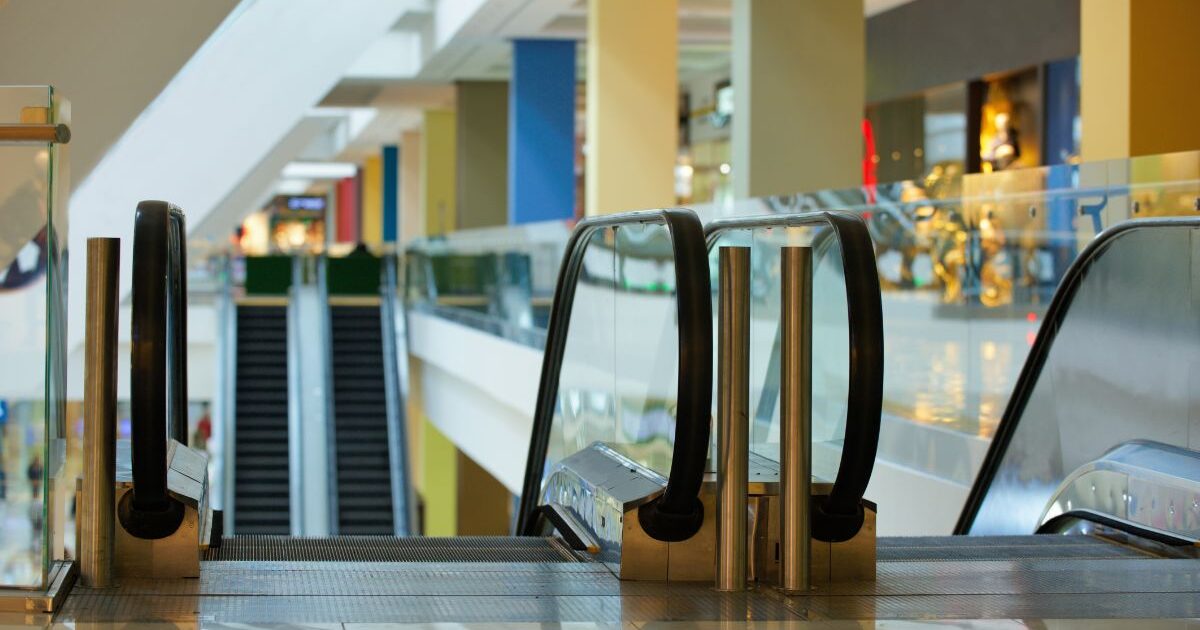
For most shoppers, entering a mall is something they rarely have to think about. You find the entrance, walk through the doors, take the elevator or escalator, visit the stores you want and eventually head home.
For people with disabilities, however, the same experience can depend on details that are easy for everyone else to overlook. They need malls that are disability-friendly.
Is there a safe ramp? Can someone using a wheelchair move easily through the building? Are restrooms properly designed? Is there tactile paving to help people navigate? Can a person move around independently without constantly needing assistance?
These questions put accessibility into a different perspective. It is not simply about whether a building technically follows a set of requirements. It is about whether people can actually use a public space with safety, independence and dignity.
That conversation is receiving renewed attention after Robinsons Las Piñas received national recognition for its accessibility infrastructure.
Robinsons Las Piñas receives national recognition
Robinsons Land Corp.’s retail development in southern Metro Manila recently received the Bronze Award in the Disability-Friendly Establishment category at the 31st Apolinario Mabini Awards.
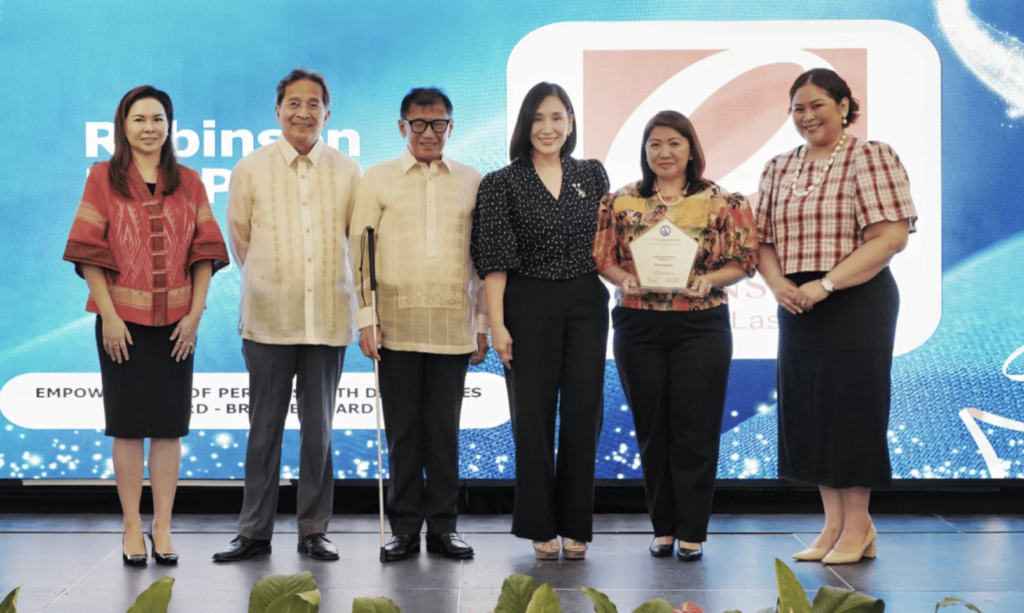
From left: Awards committee member Cristina Collantes-Garcia, PFRD President Edgardo Garcia, PFRD VP and Chairperson Ar. Jaime Silva, 31st Apolinario Mabini Awards Chairperson Mary Ann Arcega-Dy, Robinsons Malls Head of Operations Cathy S. Alejandro, and Robinsons Malls Sustainability Manager Krystel Marquez-Lim.
Organized by the Philippine Foundation for the Rehabilitation of the Disabled Inc., the awards recognize organizations and establishments that demonstrate efforts toward accessibility and inclusion.
The Disability-Friendly Establishment category goes beyond simply checking whether commercial buildings comply with basic building requirements. It considers physical facilities, specialized services and navigation safety that can help people with mobility and physical challenges access public spaces more independently.
For a mall, that distinction matters because accessibility is experienced throughout an entire visit, not just at the entrance.
Accessibility is more than just a ramp
When people talk about accessible infrastructure, ramps are often the first thing that comes to mind.
But universal design is much broader.
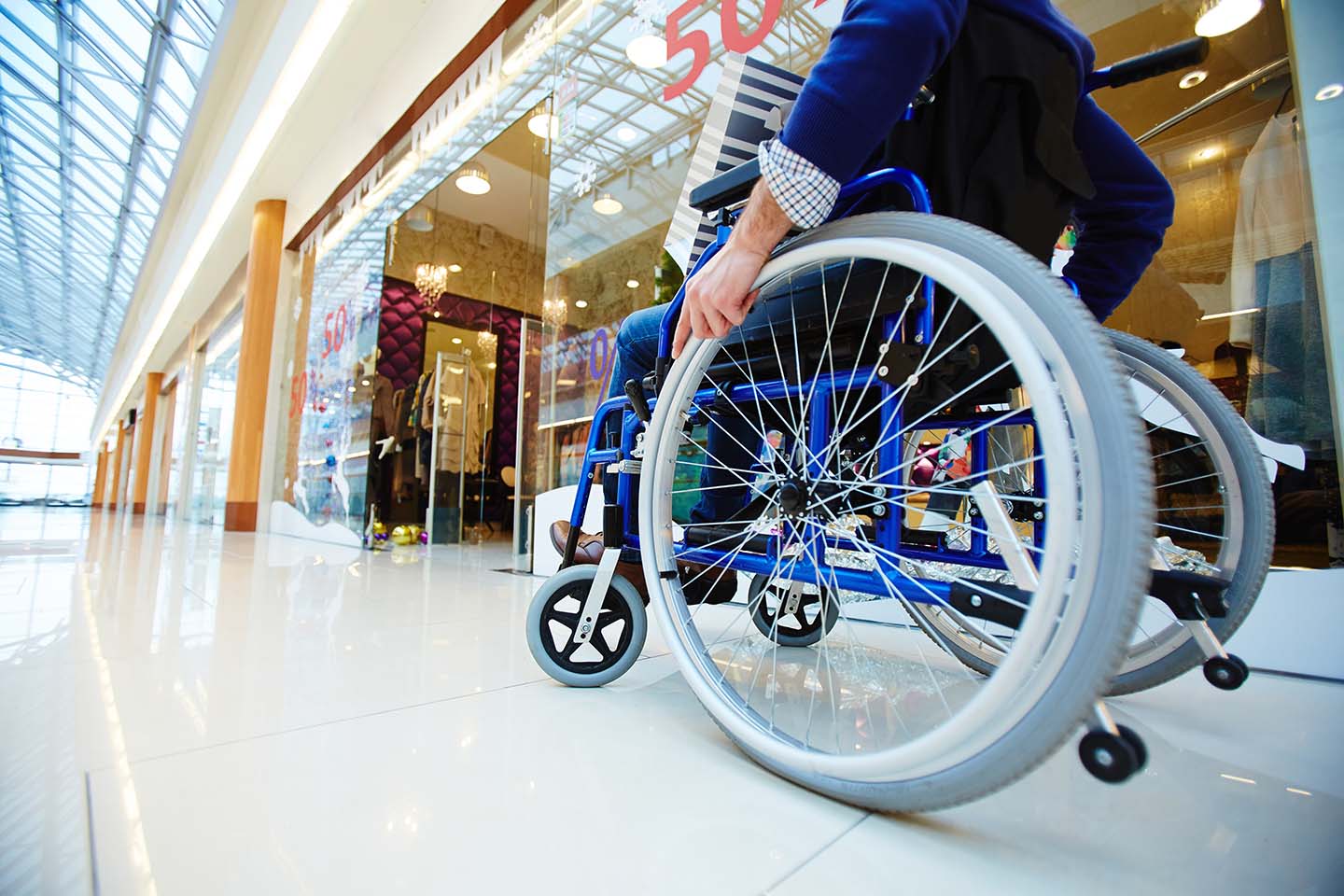
Creating accessibility in a shop or retail setting – GTK
A person using a wheelchair needs enough space to move through corridors and entrances. Someone with a mobility limitation may need ramps with appropriate gradients. People with visual impairments can benefit from continuous tactile paving that helps them navigate spaces.
Even something as ordinary as a restroom can determine whether a person feels comfortable spending time in a mall.
Robinsons Malls said its developments increasingly incorporate features such as continuous tactile paving, specialized restroom configurations and low-gradient ramp networks into its commercial properties.
These features may not attract as much attention as a new store opening or a redesigned food court, but they can significantly affect how accessible a place feels to the people who use it.
Designing for independence
One of the most important ideas behind accessibility is independence.
An accessible environment should ideally allow people with disabilities to move through it without constantly having to ask someone else for help.
That can be as simple as being able to enter a building without needing to be lifted over a step, find an accessible restroom without assistance or move between floors safely.
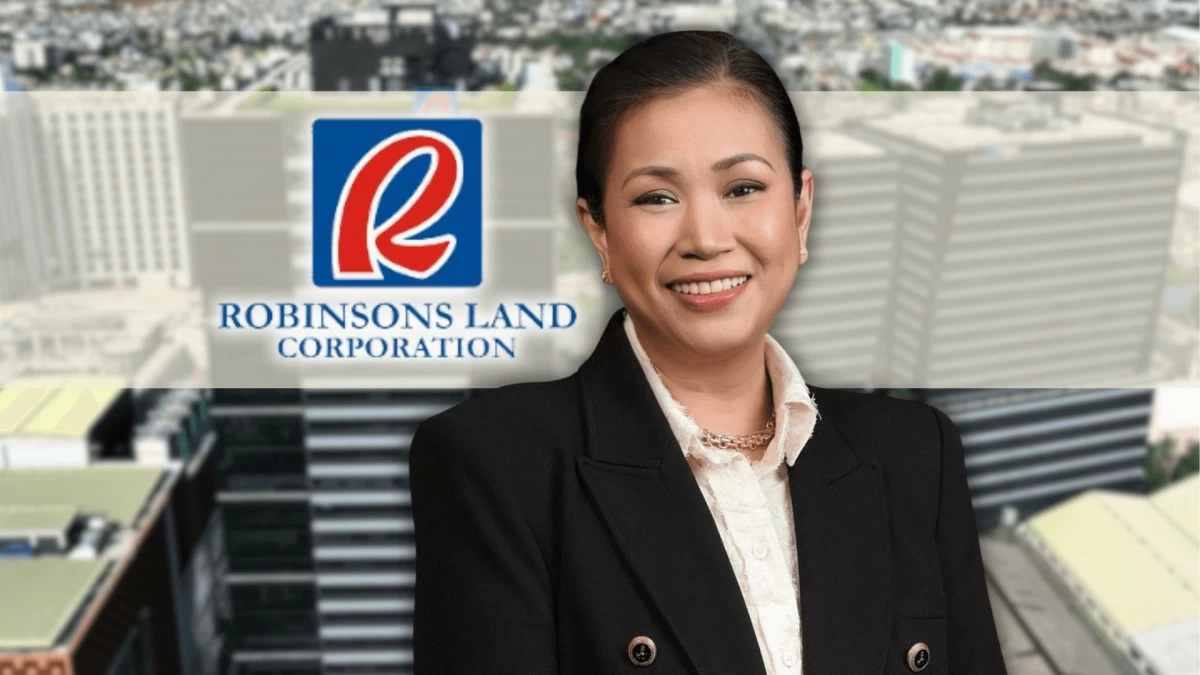
Maria Kristina Real-Lim, Robinsons Malls deputy business unit general manager
Robinsons Malls deputy business unit general manager Maria Kristina Real-Lim described the recognition as an affirmation of the company’s commitment to creating spaces that are accessible and inclusive.
“At Robinsons Malls, we believe every individual deserves to enjoy meaningful experiences in spaces designed with dignity, comfort, and accessibility in mind,” Real-Lim said.
The emphasis on dignity is important. Accessibility should not be treated as a special favor given to a particular group. It is part of designing public spaces in a way that recognizes different people’s needs.
Why accessible malls matter
Malls occupy an unusual place in Filipino life.
They are not simply places to shop. Families spend weekends there. Friends meet for coffee. People go to cinemas, restaurants, clinics, banks and government service centers located inside commercial developments.
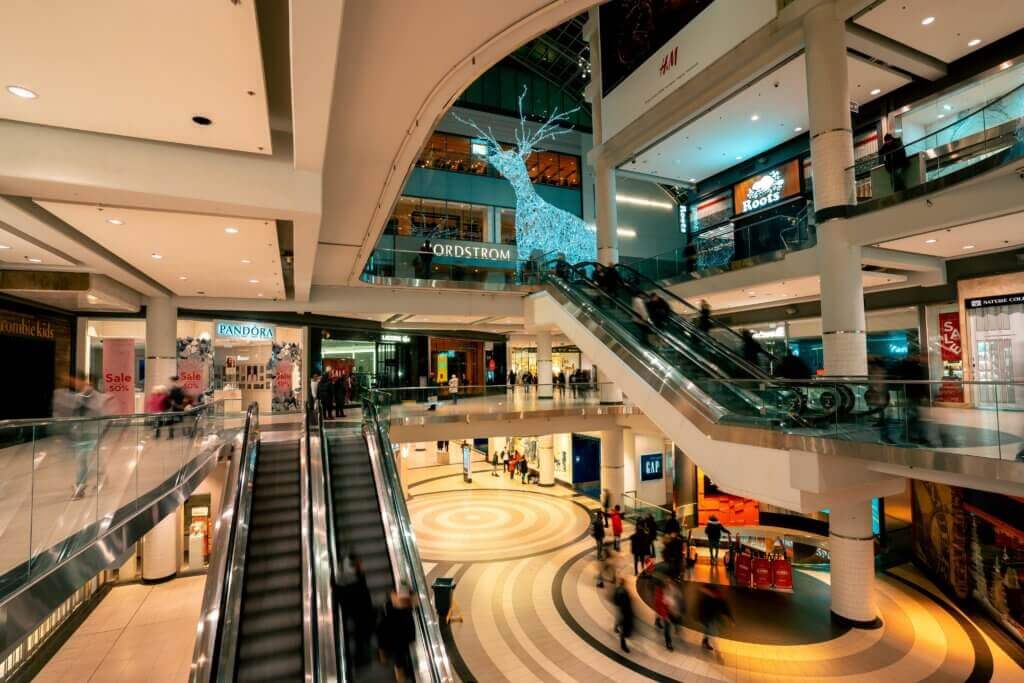
IMAGE CREDIT: Can we have accessibility for all in shopping malls?
For many Filipinos, malls are effectively extensions of their communities.
That means accessibility in these spaces can affect everyday participation.
A person with a disability who can comfortably navigate a mall has more opportunities to shop independently, meet friends, eat out, watch a movie, attend an event or simply spend time outside the home.
Accessibility therefore has an economic and social dimension.
It is about making sure people can participate in everyday life.
A recognition that goes beyond one property
The recognition for Robinsons Las Piñas is also part of a longer track record within Robinsons Malls.
Other properties in the company’s portfolio, including Robinsons Magnolia in Quezon City and Robinsons Galleria South in San Pedro, Laguna, have previously received Apolinario Mabini Awards recognition.
That suggests accessibility is becoming part of a broader approach rather than a feature limited to one location.
The company says it plans to continue expanding its inclusion initiatives through updated architectural designs, operational adjustments and partnerships with government and civic organizations.
That could become increasingly important as Philippine cities continue to grow.
Universal design is about everyone
There is another reason accessibility improvements are worth discussing: they rarely benefit only people with disabilities.

Accessible Shopping: Malls That Got It Right
A ramp can be useful to someone pushing a stroller. An elevator can help an elderly shopper who struggles with stairs. Clear pathways can make navigation easier for someone carrying shopping bags.
Tactile and visual navigation features can also make large public spaces easier to understand.
This is the basic idea behind universal design: creating environments that can be used by as many people as possible, regardless of age or ability.
When done properly, accessibility does not make a space feel separate.
It makes the space feel easier for everyone.
The Philippine accessibility conversation is growing
Accessibility in the Philippines is not a new issue. The country already has laws and standards addressing the rights of persons with disabilities and accessibility in public infrastructure.
The challenge is often implementation.
A building may have an accessible feature on paper, but the actual experience can be very different. A ramp may be too steep. An accessible parking space may be occupied by someone who does not need it. A pathway may be blocked. An elevator may be difficult to locate.
That is why recognition programs can have value when they encourage establishments to look beyond minimum compliance.
Accessibility should be evaluated based on how people actually experience a space.
What should shoppers look for?
For mall-goers, accessibility can be easier to appreciate when you know what to look for.
Look for step-free entrances, accessible parking, appropriately designed ramps, elevators that are easy to locate, accessible restrooms and clear pathways. Tactile paving and other navigation features can also be important.
But perhaps the biggest indicator is simpler:
Can a person with a disability move through the mall safely and independently?
If the answer is yes, then the infrastructure is doing what it is supposed to do.
Making inclusion part of the blueprint
Robinsons Land says it intends to standardize accessibility metrics across existing and future retail developments as its commercial footprint grows.
That could be one of the most significant parts of the company’s approach.
Accessibility is easier to achieve when it is considered during the design stage rather than added later as an afterthought.
Architects, engineers, property managers and retail operators can work together from the beginning to think about how different people will experience a building.
The result is not merely a building that complies with regulations.
It can become a place that feels genuinely welcoming.
The future of PH malls: Designed for more people
A mall should be a place where people can shop, eat, meet friends and create memories. Disability should not determine whether someone can comfortably participate in those ordinary experiences.
Robinsons Las Piñas’ recognition at the Apolinario Mabini Awards is therefore about more than one company’s Bronze Award. It highlights a broader question for Philippine urban development: Are the places we build actually designed for everyone who will use them?
As cities become denser and commercial spaces continue to expand, accessibility needs to be considered alongside aesthetics, convenience and profitability.
Because the best-designed public spaces are not necessarily the ones that look impressive in photographs.
They are the ones that allow the greatest number of people to enter, move around and enjoy them without unnecessary barriers.
A ramp may be where accessibility begins, but true inclusion is built into the entire experience.