
If you started watching “Our Sticky Love” for Jung Hae-in and , you may have found yourself wondering about something else entirely: what exactly is everyone making in that countryside village?
The Korean romantic comedy takes prosecutor Go Eun-sae (Ha Young), who wakes up with no memory of her past, out of Seoul and into a fictional rural community where taffy production is the main local industry. Netflix describes the setting as a village where seemingly everyone works in taffy shops.
The food is not just part of the scenery.

Jung Hae-in and Ha Young in “Our Sticky Love”
Director Kim Jang-han has described the series as a love story about two people becoming bound together like sticky Korean taffy, making the confection part of the metaphor behind “Our Sticky Love” itself.
The series has also found a sizeable audience. “Our Sticky Love” ranked No. 1 among shows on Netflix in the Philippines for August 10 to 16 and topped Netflix’s global non-English TV chart during its first full week, drawing 7.5 million views.
But while the village in the drama is fictional, the sweet at the center of it is very real.
So, what exactly is yeot?
Yeot, written 엿 in Korean, is a traditional Korean confection made by converting grains into a sweet malt mixture and cooking it down.
Depending on how it is prepared, yeot does not always resemble the soft, chewy taffy familiar to many people.
Korean cultural sources describe yeot as a sweet that can appear as syrup, chewy taffy or a harder candy. Rice is commonly used, but different grains and ingredients can create regional variations.
One traditional version is ssallyeot, or rice malt candy, from Changpyeong in Damyang, Jeollanam-do.
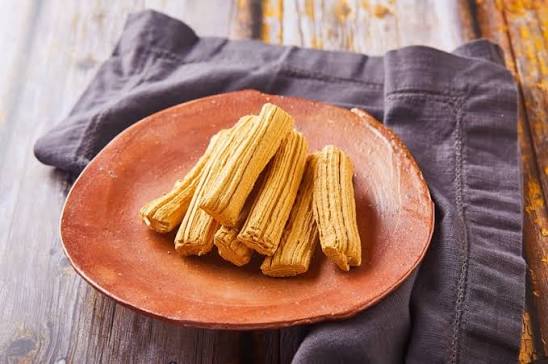
IMAGE CREDIT: Visit Korea
According to the Korea Tourism Organization, Changpyeong rice malt candy begins with rice that is soaked and steamed before being mixed with malt, fermented and strained.
The resulting liquid is simmered until it thickens. The candy is then divided and repeatedly pulled by hand, introducing air pockets that give this regional variety a lighter, crunchier texture.
So “Korean taffy” is really an umbrella description for something that can look and feel quite different depending on how and where it is made.
The “sticky” reference goes beyond texture
Yeot also carries cultural associations with the idea of something sticking.
One of the best-known traditions involves students preparing for an important examination. Sticky yeot and glutinous rice cakes have historically been given as good-luck foods, with the hope that a student will “stick” to the exam and pass.
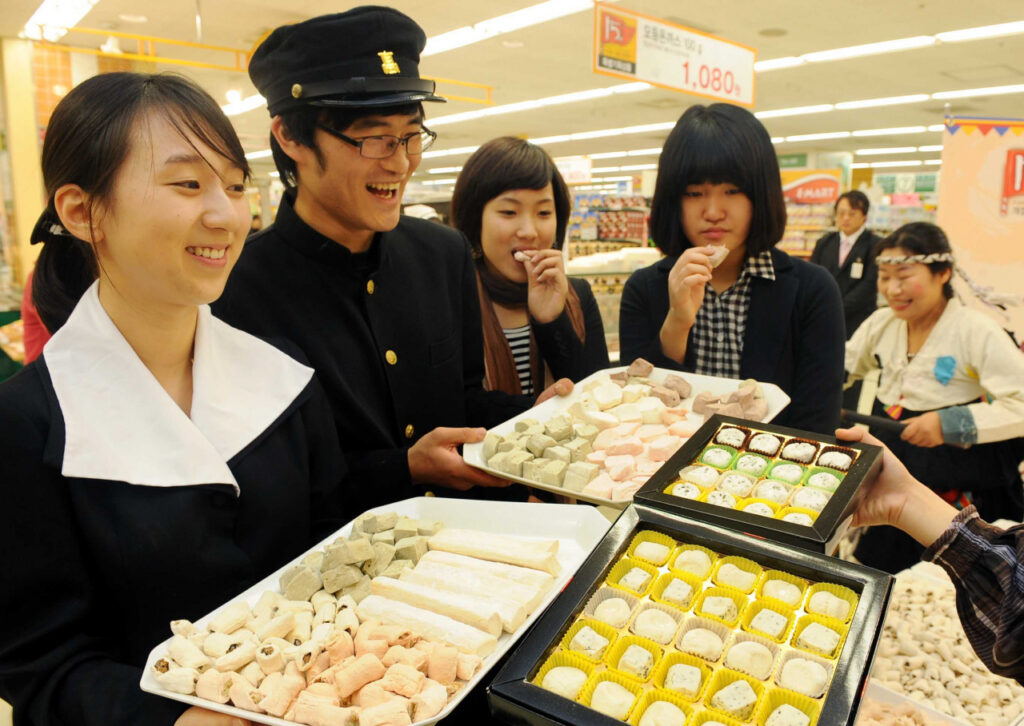
IMAGE CREDIT: The Korea Herald
Korea.net notes that yeot has traditionally been given to students before major tests, using the confection’s sticky texture as a play on successfully passing.
That same idea fits neatly into “Our Sticky Love.”
The title refers to the taffy shops surrounding Tae-ha and Eun-sae, but it also reflects the relationship gradually developing between them.
The setting, then, is doing more than giving the drama a picturesque countryside backdrop. The food itself reinforces the story’s central romantic metaphor.
Real communities in Korea known for traditional sweets
Gujin-gun, the setting of “Our Sticky Love,” is fictional.
Still, the idea of a Korean village developing an identity around one traditional food is not entirely invented.
Damyang is one example. Changpyeong rice yeot is recognized as a regional specialty, while other parts of Korea are similarly associated with long-standing confectionery traditions.
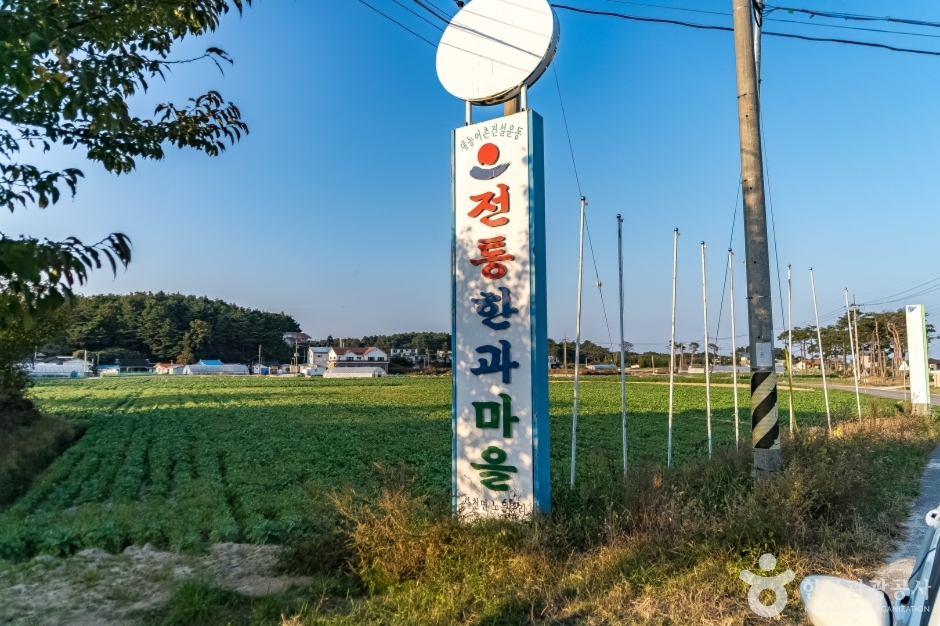
IMAGE CREDIT: Visit Korea
Gangneung Moraenae Hangwa Village in Gangwon Province is known for producing hangwa, a broad category of traditional Korean sweets. Families in the area continue to make confections using methods passed down through generations, and visitors can join sweet-making experiences with advance reservations.
For travelers, places like these offer a more grounded version of the food-centered village seen in the series.
Korean sweets go far beyond dalgona
For many international viewers, Korean candy became closely associated with dalgona after Squid Game.
Traditional Korean confectionery, however, covers a much wider range.
Many traditional sweets are grouped under the term hangwa.
According to Korea.net’s guide to Korean confectionery, hangwa can be made from ingredients such as rice, wheat, beans, fruits, roots, nuts and seeds and sweetened with honey, grain syrup or malt.
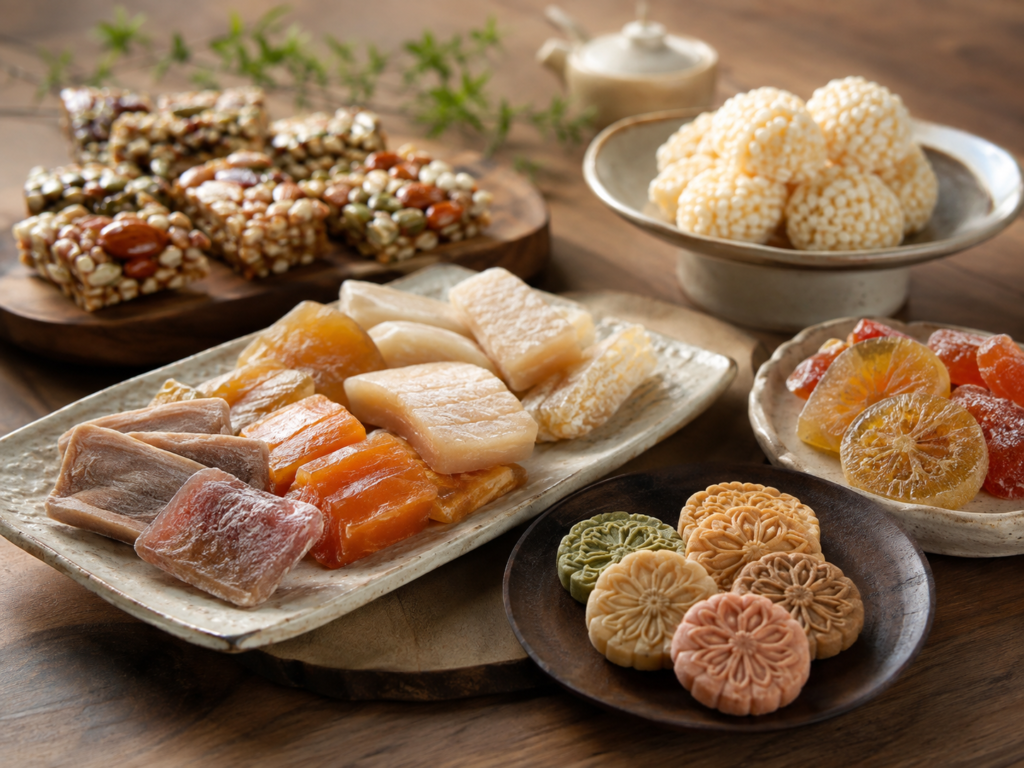
Yugwa, for example, is made from glutinous rice dough that is fermented, dried, fried until puffed and coated with syrup.
Gangjeong can combine grains, nuts or seeds into crisp sweets, while dasik are small pressed confections traditionally served with tea.
Jeonggwa uses fruits, roots or other ingredients cooked and preserved in sweet syrup.
Yeot sits within this broader landscape and can be eaten on its own or used as a sweetening ingredient in other traditional foods.
Where travelers can encounter yeot
Travelers curious about yeot can look beyond Seoul’s contemporary café scene.
Damyang in South Jeolla Province remains one destination associated with traditional rice yeot, particularly the Changpyeong variety.
Those interested in Korean confectionery more broadly can also visit places such as Gangneung Moraenae Hangwa Village, where traditional sweets are still produced and hands-on experiences are available.
Yeot has also appeared in Korean cultural events outside Korea, including activities organized by the Korean Cultural Center in the Philippines.
For viewers of “Our Sticky Love,” learning about yeot gives the fictional village another layer.
The confection connects the series to a real Korean food tradition built around malt, rice, craftsmanship and regional identity.
And in a romance about two people slowly becoming harder to separate, choosing one of Korea’s stickiest traditional sweets as the story’s central motif feels especially fitting.