Artificial intelligence may be advancing at breakneck speed, but according to global technology company ZTE, the real race is no longer about building bigger AI models — it’s about making them faster, more efficient, and more useful in everyday life.
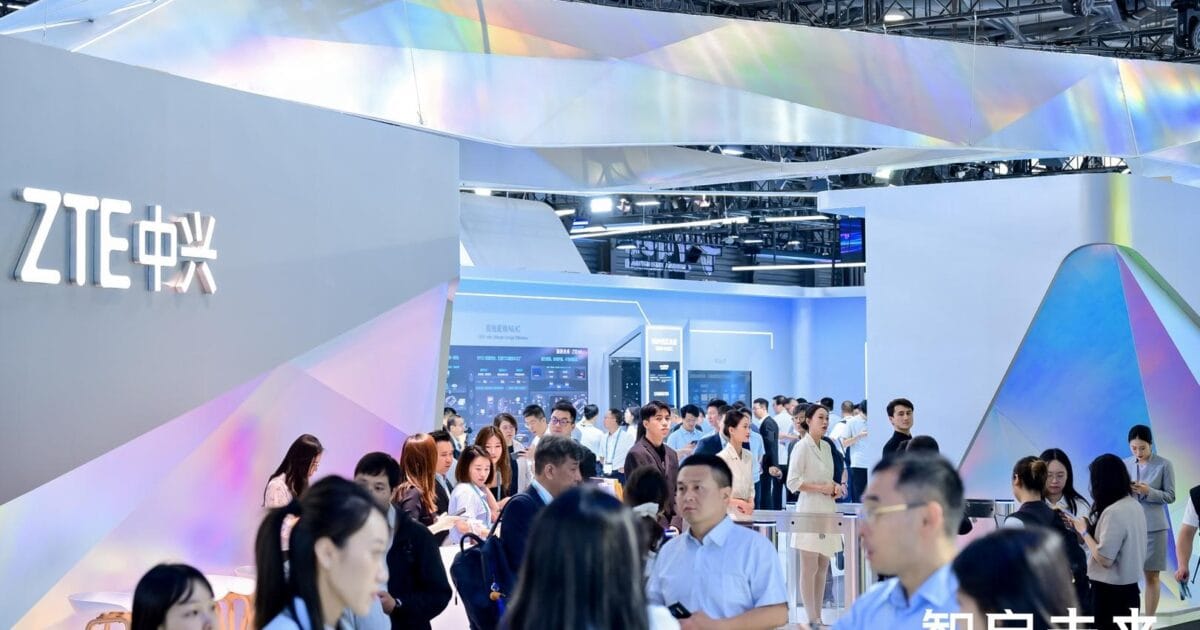
At this year’s Mobile World Congress (MWC) Shanghai 2026, ZTE unveiled a suite of AI-powered technologies designed to reshape how businesses, governments, and consumers interact with artificial intelligence, from smarter workplaces and connected homes to next-generation communications networks.
Rather than focusing solely on computing power, the company highlighted what it calls the “inference era” of AI, where success depends on how efficiently AI systems generate useful responses — or “tokens” — while consuming less computing resources and energy.
Smarter AI, lower costs
IMAGE CREDIT: Freepik
Central to ZTE’s showcase was its vision of an “AI factory” — an integrated platform that combines computing infrastructure, networking, energy management, and software to make artificial intelligence faster, more affordable, and more sustainable.
The company introduced its SuperPod computing platform, capable of supporting thousands of graphics processing units (GPUs), alongside energy-efficient data center technologies that use liquid cooling and intelligent power management to reduce operating costs while supporting large-scale AI workloads.
The goal, ZTE said, is to help organizations deploy AI without significantly increasing infrastructure costs or energy consumption.
Bringing AI closer to everyday life
Beyond the backend infrastructure, ZTE also demonstrated how artificial intelligence is becoming more deeply integrated into daily experiences.
At the heart of this ecosystem is NewStart AIOS, the company’s newly launched operating system designed specifically for the AI era.
Running on the platform is Co-Claw, an AI agent that enables personalized digital services across different devices.
For businesses, the system promises to improve workplace productivity by automating routine tasks, supporting research and development, and enabling smarter decision-making.
For households, AI-powered smart displays and connected devices are designed to function as digital assistants, entertainment companions, and home security monitors.
Meanwhile, consumers can expect AI experiences that extend across smartphones, cloud PCs, smart displays, and other connected devices, delivering more personalized recommendations and context-aware assistance throughout the day.
Preparing networks for the AI era
IMAGE CREDIT: Freepik
As AI applications become more data-intensive, telecommunications networks will also need to evolve.
To address this, ZTE showcased several technologies designed to support the transition toward 6G, including satellite communications, AI-native network architectures, and high-capacity wireless systems capable of handling future digital services.
The company also demonstrated solutions aimed at improving network security, reducing latency, and enabling faster connectivity for homes, businesses, campuses, and emerging industries.
According to ZTE, future communications networks will increasingly rely on artificial intelligence—not only to carry more data but also to manage and optimize themselves in real time.
Building the foundations for tomorrow
The technologies presented at MWC Shanghai reflect ZTE’s broader strategy of integrating computing, networking, software, and intelligent devices into a single AI ecosystem.
By combining efficient infrastructure with AI-powered services and next-generation connectivity, the company aims to help businesses and industries adopt artificial intelligence at scale while keeping costs manageable and operations sustainable.
As AI continues to evolve beyond experimental applications into everyday business and consumer use, ZTE believes the next stage of innovation will depend less on how much computing power organizations possess — and more on how intelligently they use it.