For decades, Filipinos knew where to find Manny Pacquiao.
In a boxing ring.
Under bright lights. With gloves raised. With millions of Filipinos watching every punch, every round and every improbable comeback.
Now, Pacquiao is stepping into a very different kind of fight.

President Ferdinand Marcos Jr. appointed Pacquiao as lead convenor and secretary of the National Anti-Poverty Commission
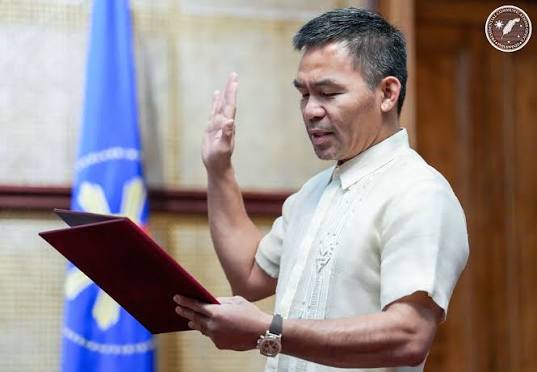
On September 8, President Ferdinand Marcos Jr. appointed the boxing legend as lead convenor and secretary of the National Anti-Poverty Commission, giving him a Cabinet-level role in government for the first time. He took his oath at Malacañang on Tuesday.
At 47, Pacquiao has already lived several lives in the public eye: impoverished child, teenage boxer, global sports icon, congressman, senator, presidential candidate and philanthropist.
His newest role brings him back to one of the earliest chapters of his story.
Poverty.
Before the championships, there was survival
The story of Manny Pacquiao’s rise has been told so many times that parts of it have almost become mythology.
But the difficult beginning is real.
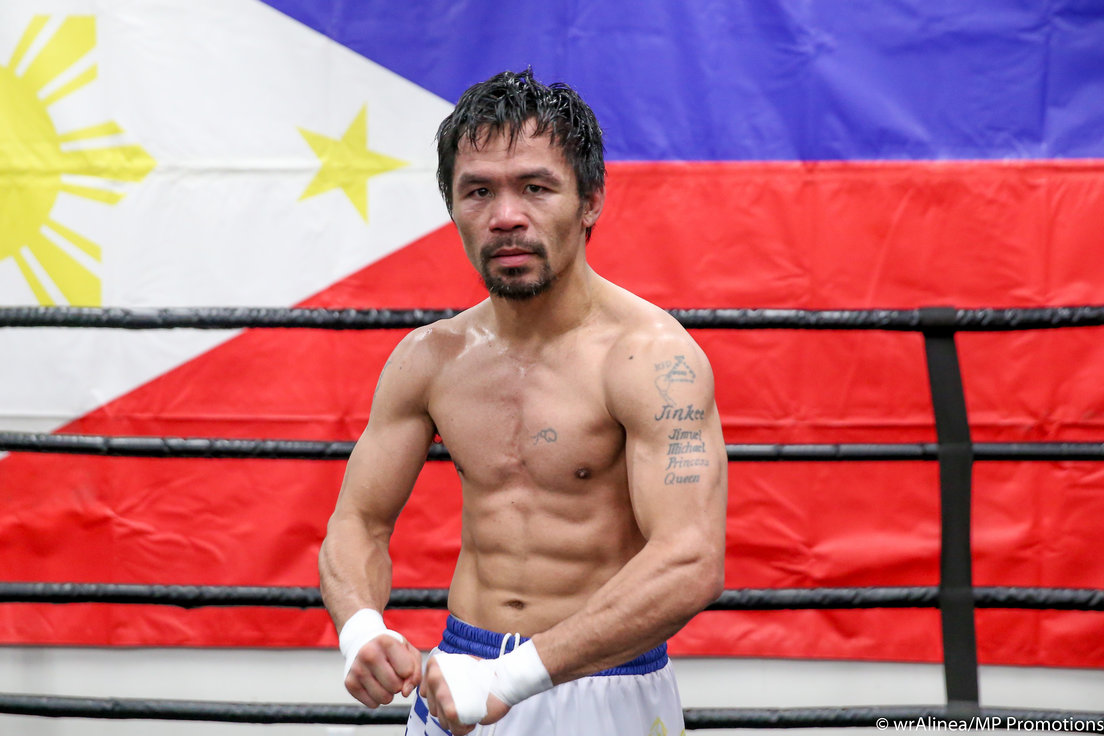
Boxing icon Manny Pacquiao
Pacquiao grew up in poverty in Mindanao and left home as a teenager in search of opportunities in Manila. He eventually lived on the streets, worked odd jobs and turned to boxing as a possible way to help his family. His own foundation describes his journey as beginning with a stowaway trip to Manila as he searched for a way out of poverty.
At one point, survival could come down to very basic decisions.
Eat, or send money home.
Work, or go to school.
Find somewhere to sleep, or keep moving. His story was never simply about discovering boxing.
Boxing happened to become the vehicle through which he changed his circumstances.
By the time the world knew his name, he had become the only boxer to win world titles in eight weight divisions, a distinction that helped transform him from a Filipino athlete into a global sporting figure.
But the person who emerged from that journey never completely separated himself from the circumstances he came from.
The boy who left home became someone Filipinos watched together
There is a particular place Pacquiao occupies in Filipino culture.
His biggest fights were not simply sporting events. They became communal experiences.
Homes filled with relatives. Neighbors gathered around televisions. Streets became quieter during the biggest rounds. Restaurants and public spaces adjusted their schedules around his matches.
For a generation of Filipinos, Pacquiao represented something larger than athletic success.
He was proof that someone from an extraordinarily difficult beginning could reach the highest levels of a global sport. That symbolism mattered because his story felt familiar in ways that international fame could not erase.
He came from a country where millions of families understand what it means to stretch a small income, leave home to find work or make difficult choices because there is simply not enough money.
His success therefore became part personal achievement, part national story.
Then the boxing career became a life in public service
Pacquiao eventually moved from the boxing ring into politics.
He served as representative of Sarangani from 2010 to 2016 before becoming a senator from 2016 to 2022. He later ran for president in 2022 and sought a return to the Senate in 2025, but did not win either campaign.
His political career has been considerably more complicated than his boxing record. There were elections he won and elections he lost, moments when he was embraced by supporters and periods when his political ambitions faced setbacks.
Yet his return to government now puts him in a role that connects directly to the story that made him famous in the first place. He is not being asked to fight for a championship belt.
He is being asked to help coordinate a national effort against poverty.
This time, the opponent does not have a face
That may be the most difficult part of Pacquiao’s new chapter.
A boxing match has an opponent.
Poverty does not.
There is no single person standing across the ring. There is no final bell that signals victory. And there is no knockout that can solve the problem.
Poverty is tied to employment, education, housing, health, food prices, access to services, geography and opportunity.

What Poverty is Like for Filipino Citizens
The National Anti-Poverty Commission itself is designed to coordinate poverty-reduction programs between national and local governments while ensuring that marginalized sectors participate in government decision-making. That makes Pacquiao’s role fundamentally different from being a spokesperson for a cause.
He is entering a system that has to deal with a problem affecting millions of people.
Government data cited by Reuters put the Philippines’ poverty incidence at 9.7% in 2025, equivalent to around 11.08 million people living below the poverty line. The Marcos administration has set a target of reducing the rate to between 8% and 9% by 2028.
The numbers make the scale of the challenge clear. Pacquiao’s personal story may give him an unusually direct connection to the issue. But personal experience alone cannot solve a structural problem.
What his story can bring to the table
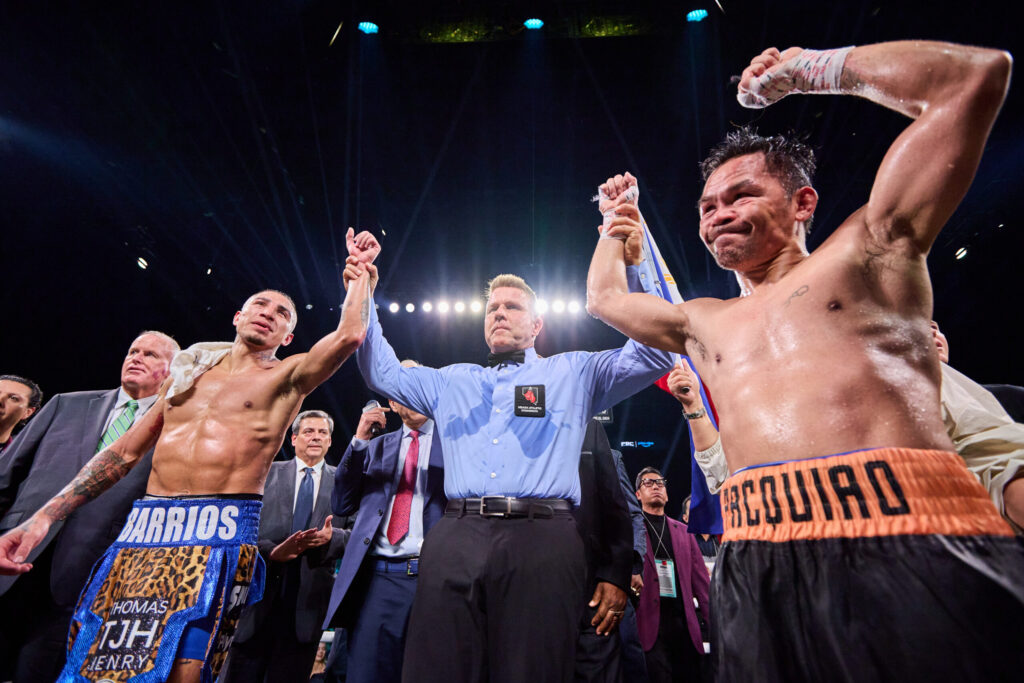
Pacquiao’s greatest advantage in this role may not be his fame.
It may be that he knows what government statistics can sometimes fail to capture.
He knows what it means to be hungry. He knows what it means to have very little money. He knows what it means to leave home because staying does not offer enough opportunity.
And on the day of his appointment, he returned to that part of his life himself.
“I came from poverty,” Pacquiao said, recalling experiences of sleeping on cardboard, drinking only water, having nothing to eat and saving loose coins to help his family.
That perspective can matter.
A policy discussion about poverty can easily become a discussion about percentages, beneficiaries and programs. But poverty is ultimately experienced one household at a time. It is the parent deciding which bill can wait.
The student wondering whether transportation money will last until Friday.
The family choosing which food to buy.
The worker taking another job because one income is not enough.
Pacquiao knows at least one version of that reality because he lived it.
But the story cannot end with “work hard and you can make it”
There is also a more complicated lesson in Pacquiao’s story.
His life is often presented as a classic triumph of determination: a poor boy works hard, finds his talent, becomes a champion and changes his family’s life.
It is an inspiring story.
But it is not a complete solution to poverty.
Not every Filipino who works hard will discover a once-in-a-generation boxing talent. Not every teenager who leaves home will become a world champion. And a society cannot build an anti-poverty strategy around exceptional individual success.
That may be one of the biggest tests of Pacquiao’s new role.
Can the man whose personal story represents extraordinary upward mobility help create conditions where Filipinos do not need extraordinary luck or extraordinary talent simply to escape poverty?
That is a much bigger challenge than winning a fight.
From giving back to changing systems
Pacquiao has long maintained a connection to charitable work.
His foundation says he has sought to support communities and individuals through charitable assistance and has devoted himself to giving back to people in need.
Charity can provide immediate help.
Government, however, has to think about something much larger: how to make opportunities more accessible before people reach the point where they need charity.
That means the new position could represent a shift from helping individual families to helping shape the systems that affect millions of them.
Whether Pacquiao can make that transition effectively will become part of his legacy.
His next fight will be measured differently
Pacquiao spent much of his life being judged by wins and losses.
How many titles? How many divisions? How many victories? How many rounds?
This time, the scoreboard is much harder to read.
It will be measured in whether families become less vulnerable. Whether marginalized communities have greater access to opportunities. Whether government programs reach the people they are intended to serve. Whether poverty declines not only as a statistic but as something people actually feel in their everyday lives.
There will be no championship belt waiting at the end.
And there probably will not be one defining moment when anyone can say the fight is over.
The meaning of Manny Pacquiao’s next chapter
Perhaps that is what makes this new chapter so interesting.
Pacquiao has already accomplished the thing most athletes spend their entire lives dreaming about. He became a champion, made history and became one of the most recognizable Filipinos in the world.
But his appointment gives his story a different ending to work toward.
The boy who once fought because he needed money is now being asked to help fight a problem that keeps millions of other Filipinos from getting the opportunities he eventually found.
That does not automatically make him the right person for the job.
It does, however, make his appointment deeply personal.
For Manny Pacquiao, poverty is not an abstract word from a government report.
It is part of the life he remembers before the fame, before the championships and before the millions of people began watching him fight.
Now, for perhaps the most consequential fight of his public life, he has been asked to do something far more difficult than winning a boxing match.
He has been asked to help make sure fewer Filipino children have to grow up believing that poverty is simply the life they were given.