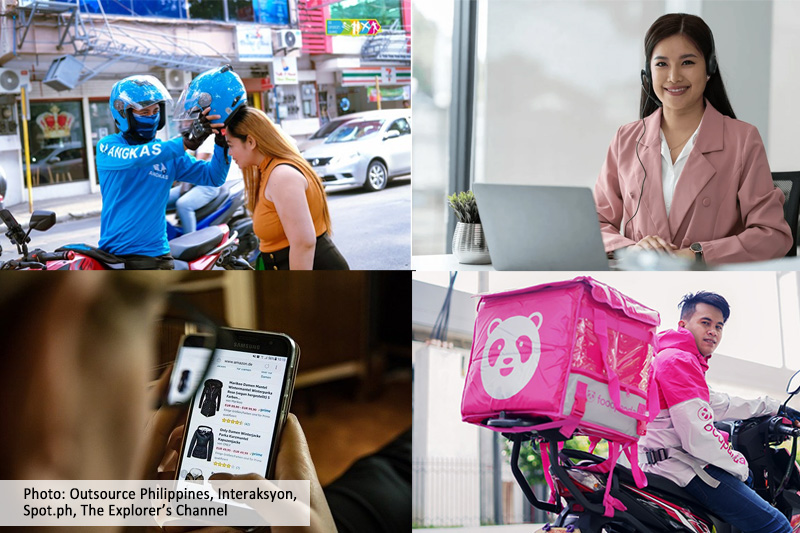
Manila wakes up to movement, especially for gig workers.
Motorcycles squeeze through traffic as delivery riders race to complete their first orders of the day. In apartments and cafés, freelancers open their laptops and check messages from clients who may be several time zones away. Somewhere else, a creator is setting up a phone, adjusting the light and preparing to film another video.
For most people, these workers are simply part of the background of everyday life.
We see the rider when our food arrives. We see the freelancer’s work when a business posts a polished graphic. We see the creator when a video appears on our feed. What we often don’t see is everything that happens before the final product reaches us.
The hours spent waiting for an order. The gasoline and maintenance costs. The unpaid time spent looking for clients. The late nights spent editing. The uncertainty of not knowing exactly how much will be earned next week.
This is the other side of Manila’s digital economy.
And it is increasingly being carried by people whose work rarely comes with the certainty of a traditional office job.
The appeal of being your own boss
Gig work is often described as unstable, but that is only part of the story.

The secret to being your own boss without leaving your job
For many Filipinos, the attraction is precisely the freedom that traditional employment may not offer. A rider can decide when to go online. A freelancer can take on another project when extra money is needed. A creator can build an income around an audience instead of reporting to a manager every morning.
According to Ipsos’ Gig Life PH study, 59% of Filipino gig workers primarily pursue gig work to earn extra income, while 47% value being able to control their working hours. Another 35% appreciate being able to work from different locations. The study surveyed 1,500 gig workers across Metro Manila, Cebu and Davao in 2025.
Christine Dugay, Principal at Ipsos Strategy3 Philippines, described the appeal and the problem at the same time.
“The gig economy is growing fast in the Philippines — platforms have reshaped how we work, granting autonomy and helping households stay financially resilient — but gig workers still face volatile earnings, pay discrepancies, and limited social protection.”
That tension explains much of the gig economy.
Workers want the freedom. They also want to know that freedom will not leave them financially vulnerable.
The rider behind the delivery
For a customer, a delivery can feel almost effortless.
Tap the app. Place the order. Wait.
For the rider, the same transaction can involve hours on the road, fuel expenses, traffic, weather and periods of waiting between bookings. The amount earned through a platform is also not necessarily the amount that goes home with the worker after expenses.
This distinction became particularly important in early 2026, when debate erupted over preliminary figures from an International Labour Organization study on platform work in the Philippines.
The ILO later issued a clarification stressing that the figures being circulated were from a draft study undergoing technical validation and were not a final or officially endorsed ILO report. It specifically warned that earnings assessments need to account for operating costs, unpaid waiting time, working intensity, overtime and income volatility.
That matters because gig work is ultimately measured not by how much money passes through a platform, but by what remains with the person doing the work.
A rider’s motorcycle is also a workplace.
Gasoline is a work expense. Maintenance is a work expense. Mobile data is a work expense. Time spent waiting for an order is time that could have been spent earning elsewhere.
The convenience experienced by the customer is therefore supported by a complicated economic calculation happening on the other side of the screen.
The freelancer who works while Manila sleeps
The gig economy looks different when the workplace is a bedroom, kitchen table or neighborhood café.
For Filipino freelancers and virtual assistants, the city can become strangely quiet while their working day is just beginning.

IMAGE CREDIT: A Day in the Life of a Virtual Assistant | VirtualStaff365
A client in New York, Los Angeles or London may be starting work when a freelancer in Manila is preparing to end the day. Meetings can happen late at night. Deadlines can arrive after midnight. A quick request from a client can turn into another several hours in front of a screen.
The Philippines has become an important source of online workers for global clients. An ILO study of Filipino online platform workers found that the overwhelming majority of clients were based overseas, with the United States cited by 79% of respondents.
That global connection creates opportunities that would have been difficult to imagine before digital platforms.
A designer in Manila can work for a company in California without ever boarding a plane. A virtual assistant can manage the calendar of an executive thousands of kilometers away. A developer can build software for a client they may never meet in person.
But the distance can also make the work invisible.
The client sees the finished output.
They may not see the electricity bill, the internet connection, the equipment or the family routine built around making that work possible.
When home becomes the office
Working from home has long been marketed as freedom.
For freelancers, it can be both freedom and complication.
There is no commute, but there may also be no clear moment when the workday ends. There is no office manager reminding someone to go home because home is already the office.

IMAGE CREDIT: What Is Freelancing? A Complete Guide to Freelance Jobs
The boundaries can become especially difficult for freelancers who live with family.
A meeting may require silence. A deadline may require staying awake. A child’s schedule may collide with a client’s schedule on the other side of the world.
The home becomes part workplace, part family space and part infrastructure for the global digital economy.
This is one reason the gig economy cannot be measured simply by the number of people working online.
It also has to account for the invisible support systems that allow that work to happen.
The creator economy is work, too!
Then there are the workers who have turned their own lives, personalities and creativity into businesses.
For creators, the office may be a smartphone.
The workplace might be a bedroom, a kitchen, a sidewalk or a café. Their clients can be brands, agencies or platforms, while their audience can number anywhere from a few hundred followers to millions.
But the finished video rarely shows the entire job.
There is scripting, filming, editing, captioning, replying to comments, negotiating with brands and tracking performance. A 30-second video can represent hours of work.

IMAGE CREDIT: How to become a Video Editor | Adobe Certified Professional
And income can be unpredictable.
One month may bring several brand collaborations. The next may bring almost none.
This uncertainty is not unique to creators. Ipsos found that most Filipino gig workers experience earnings fluctuations of between 10% and more than 30% from month to month. Yet despite those swings, 78% remain satisfied with the flexibility and potential gig work provides.
That contrast is perhaps the most revealing part of the study.
The workers are not necessarily asking for gig work to disappear.
They are asking for it to become more sustainable.
Freedom, but with a safety net
The idea that workers want both freedom and security runs throughout the Ipsos findings.
Six in 10 respondents consider gig work a strategic choice and a viable long-term career option, while 30% say they have no plans to stop doing gig work. At the same time, 64% prioritize retirement planning and 58% prioritize access to healthcare.
The message is clear.
Flexibility is valuable, but flexibility alone is not enough.
As Dugay explained, Filipino gig workers “value flexibility and the opportunity to increase their income,” but also want “fair pay standards and comprehensive, portable benefits.”
That phrase, portable benefits, may become increasingly important as more people build careers outside traditional employment.
A worker should not necessarily have to choose between being independent and being protected.
The digital economy is becoming a labor economy
IMAGE CREDIT: The Growing Digital Economy in the Philippines – Access Partnership
For years, conversations about the digital economy focused on technology.
Apps.
Platforms.
Online payments.
Artificial intelligence.
E-commerce.
But behind all of these systems are people. Someone has to drive the motorcycle. Someone has to answer the customer’s message. Someone has to edit the video. Someone has to design the website. Someone has to manage the online store.
The International Labour Organization describes digital labour platforms as systems that match demand for work with workers and create new pathways to income, while also noting that these opportunities exist alongside decent-work challenges.
That balance is becoming increasingly important.
Technology has made it possible for people to find work in ways that were previously impossible. But technology has also changed how workers experience uncertainty.
An algorithm can determine which jobs appear.
A platform can change its rules.
A client can disappear.
Demand can suddenly fall.
The worker has to adapt.
Manila’s invisible workforce
Walk through Manila and the gig economy is difficult to miss once you know where to look.
The rider waiting outside a restaurant.
The freelancer working from a café.
The creator filming beside a busy street.
The online seller answering messages late at night.
The photographer carrying equipment to a brand event.
The driver waiting for the next booking.
They are not a single type of worker.
They do not share the same income, education or working conditions.
What connects them is the way technology has changed how they find work and earn money.
Their workplaces may not have walls.
Their bosses may be algorithms, clients or audiences.
Their schedules may change from one day to the next.
Yet their labor has become deeply embedded in how Manila eats, shops, travels, communicates and does business.
A new kind of Filipino worker
The gig economy is still evolving.
In June 2026, the International Labour Conference adopted Convention No. 193, the first international labour standard dedicated specifically to the platform economy. The convention recognizes the need to protect workers while allowing the platform economy to continue creating new economic opportunities.
For the Philippines, that conversation is particularly relevant.
The country has built a strong reputation as a source of digital talent, from business-process workers and virtual assistants to designers, developers and content creators. At the same time, millions of Filipinos interact with platforms every day as riders, drivers, sellers and service providers.
The challenge now is ensuring that the people powering that economy can share in its growth.
That means fairer compensation, better access to social protection, skills development and clearer rules, without removing the flexibility that attracted many workers to gig work in the first place.
DICT’s Jhino B. Ilano said the data from the Gig Life PH study are important because they can help shape initiatives aimed at creating “digital and digitally-enabled jobs” and a “sustainable and future-ready gig ecosystem for all Filipinos.”
The people behind the convenience
There is something easy to forget about the digital economy.
Every time we tap a button, someone may be on the other side making that convenience possible.
A rider braves the rain.
A freelancer stays up late.
A creator records another take.
A virtual assistant answers another email.
Their work can feel almost invisible because technology has made the transaction so seamless.
But perhaps the next conversation about the gig economy should begin by making those workers visible again.
Not simply as riders, freelancers or creators.
But as people building careers, supporting families and trying to create a future in a labor market that is changing faster than ever.
Manila’s digital economy may be powered by platforms, apps and algorithms.
But behind every one of them is a person trying to make a living.