Remaking a beloved Korean movie for Filipino audiences comes with an awkward challenge.
Change too much and fans of the original may wonder why you bothered adapting it at all. Follow it too closely and the new version risks feeling like the same movie performed in another language.

IMAGE CREDIT: IMDB
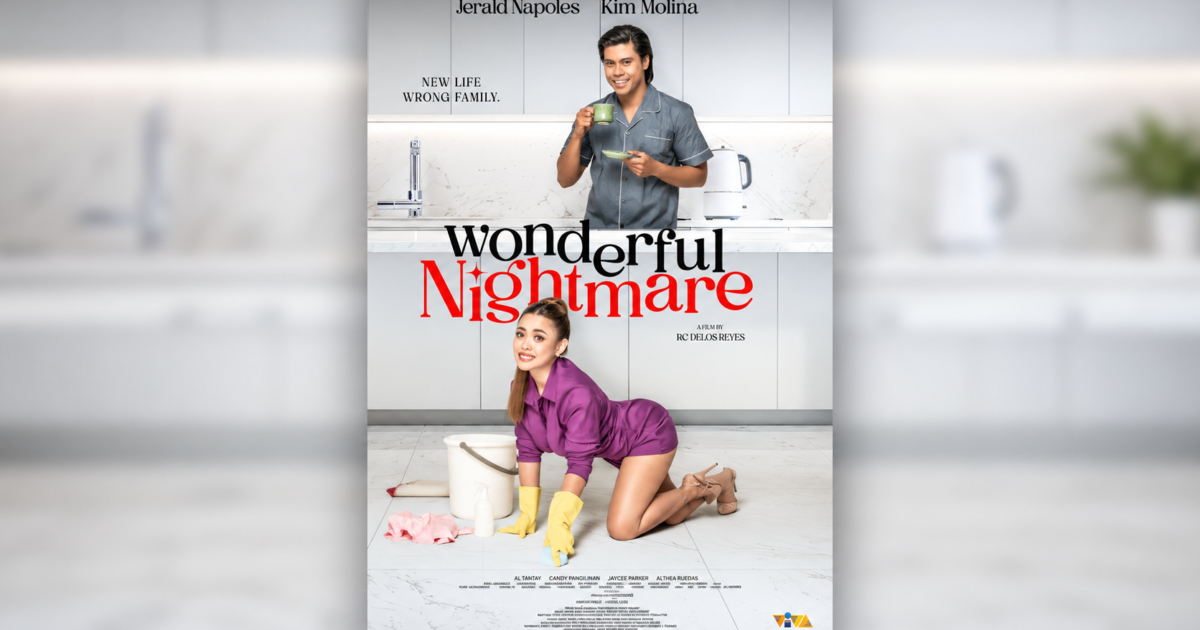
The Filipino Wonderful Nightmare, starring Kim Molina and Jerald Napoles, stays remarkably faithful to the 2015 Korean film. Many of its major story beats will be immediately recognizable to anyone who has seen the original.
But calling it merely a Filipino copy would undersell what the adaptation manages to do.
Because within that familiar story, Wonderful Nightmare finds opportunities to talk about a Philippines that feels very much like the one we are living in now.
And that may be one of the biggest reasons the remake works.
The story remains unmistakably Wonderful Nightmare
The basic premise is preserved almost intact.
In the 2015 Korean original, Uhm Jung-hwa plays Yeon-woo, an ambitious and emotionally detached lawyer who dies because of a mistake in the afterlife. To return to her old life, she must spend one month living as another woman, suddenly becoming a wife and mother of two.
The Philippine version gives that journey to Atty. Maria Luisa “Lui” Manuel, played by Kim Molina.
Lui has built the kind of existence she once believed would protect her: money, independence, professional success and nobody else to answer to. Then an accident lands her in the afterlife, where she discovers that her death was not supposed to happen.
Her way back is to temporarily become Jane Alcantara, wife to municipal employee Julian, played by Jerald Napoles, and mother to Jaja and Justin.
For Lui, it initially feels like a nightmare.
Everything she deliberately avoided is suddenly her reality.
It couldn’t completely reinvent the original
Anyone expecting the Philippine version to radically remix the Korean film may find just how faithful it is surprising.
Director RC Delos Reyes previously explained that adapting the property came with restrictions. The filmmakers could not simply alter scenes however they wanted without seeking permission from the Korean rights holders.

IMAGE CREDIT: Tempo Desk
That makes what the Filipino adaptation does within those limitations more interesting.
It doesn’t necessarily find its identity through huge changes to the plot.
It finds it in the world around the plot.
The family home, neighborhood personalities, side hustles, local government work, family banter and the constant arithmetic required to make an ordinary household budget work all feel familiar.
These details could have simply been cosmetic localization.
Instead, the movie goes further.
What makes it Filipino isn’t just the setting
One of the things Wonderful Nightmare gets particularly right is that it doesn’t treat “making it Filipino” as simply changing the characters’ names, moving the story to Manila and adding familiar jokes.
It uses the adaptation to bring contemporary Philippine issues into the story.
The movie touches on flood-control projects and questionable public infrastructure. It raises the issue of substandard projects and what happens when decisions made by people with power eventually affect ordinary communities.
For a Filipino audience watching in 2026, those references are difficult to separate from the conversations happening outside the movie theater.
And they don’t feel completely detached from Lui’s story either.
She begins the film looking at cases largely through the lens of winning. Becoming Jane forces her to see what policies, developments and decisions can look like from the perspective of the people who actually have to live with their consequences.
That gives the adaptation an additional layer the original premise naturally lends itself to: privilege looks very different depending on which side of the table you happen to occupy.
The film also takes on sexism.
Lui is successful, outspoken, financially independent and unwilling to mold herself into the kind of woman other people expect her to be. The movie gets to explore the assumptions made about career women, wives and mothers, and the very different standards society can apply to each.
That makes her transformation more interesting than simply watching a rich woman discover that being poor is difficult.
She’s navigating expectations placed specifically on women, too.
Kim Molina makes the entire thing work
For all those ideas to land, however, the audience first has to believe Lui.
And Kim Molina is arguably the biggest reason Wonderful Nightmare works as well as it does.
Lui could very easily become a caricature: the cold, successful career woman who needs to be taught that money isn’t everything.
Molina gives her more dimension.
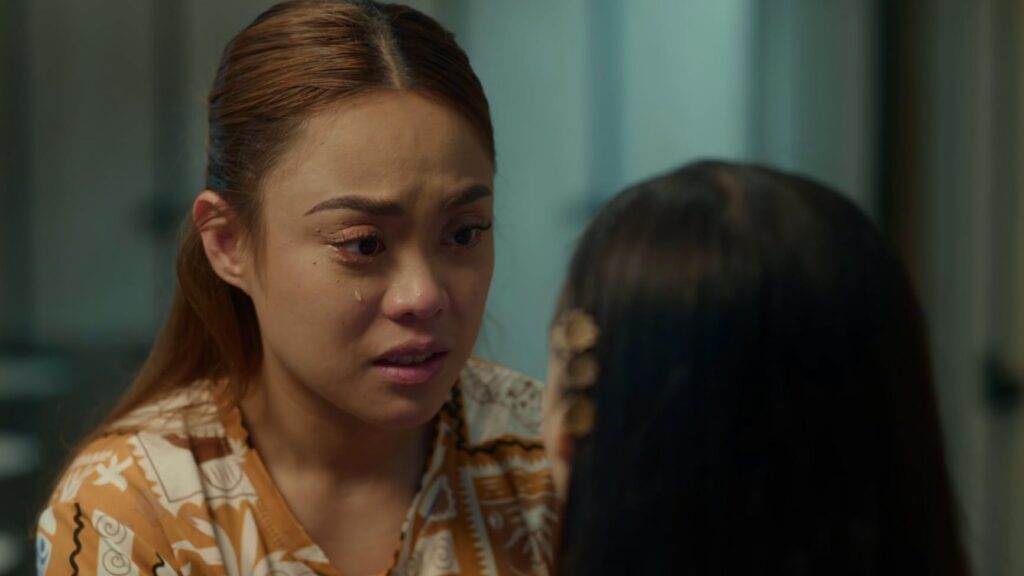
She is genuinely funny during the early fish-out-of-water stretch, when Lui suddenly has to deal with a husband, two children, household responsibilities and a completely different economic reality.
But Molina is even better when the comedy starts disappearing.
The emotional transformation doesn’t feel like somebody flipped a switch and told her character that it was time to appreciate her temporary family. Small moments accumulate. Annoyance becomes concern. Obligation becomes affection. Eventually, the life Lui desperately wanted to escape becomes one she isn’t ready to lose.
And when that realization arrives, Molina sells it.
Jerald Napoles is equally important to that equation.
As Julian, he doesn’t try to overpower Molina’s performance. His warmth and ordinariness are precisely what the role needs. The natural chemistry between the two makes the Alcantara household feel lived-in even when the story surrounding them is literally supernatural.
It’s easy to believe that Lui could become attached to this family because the film makes it equally easy for us to become attached to them.
A movie that complicates its own message about women
There is an uncomfortable interpretation of Wonderful Nightmare that is worth addressing.
Lui begins as a wealthy, independent, career-driven woman who doesn’t want marriage or children. She is then made to experience life as a wife and mother and emerges from it changed.

Read simplistically, that can sound dangerously close to: successful single woman discovers what she was missing all along.
But that isn’t the reading that makes the movie work.
Lui’s problem isn’t that she’s ambitious.
And the film doesn’t need us to conclude that every woman secretly wants a husband and children.
Her problem is how disconnected she has become from other people’s lives.
She understands cases. She understands clients. She understands contracts, winning and losing.
What she hasn’t had to understand are the people who live with the consequences after everyone in the boardroom goes home.
Becoming Jane doesn’t necessarily teach Lui that motherhood is superior to having a career. It teaches her what it feels like to depend on people, to be responsible for people and to exist in a world where money and influence cannot immediately solve every problem.
And given the sexism the movie itself acknowledges, that distinction matters.
It is sentimental. It knows it. And it works.
Wonderful Nightmare isn’t subtle about wanting an emotional reaction.
There are moments when you can see the tears coming well before the characters begin crying. The fantasy mechanics also become messier toward the latter part of the film, and some revelations ask the audience to stop interrogating the rules too closely.
Normally, those would be bigger problems.
Here, they aren’t enough to derail the experience.
By the time the movie reaches its emotional peak, it has done the more important job: it has made us care about Jane’s temporary family.
So yes, you know the movie is pulling at your heartstrings.
It pulls them anyway.
So, was it a good adaptation?
Absolutely.
And perhaps the best thing about the Filipino Wonderful Nightmare is that it demonstrates how an adaptation can remain faithful without becoming irrelevant.
It preserves the premise, emotional structure and much of the story audiences loved about the Korean original. But between those fixed points, it finds space for a recognizably Filipino household and recognizably Filipino problems.
Flood-control projects. Substandard public works. Sexism. Economic inequality. Families trying to stretch what they have. Ordinary people dealing with decisions made by people with far more power than they do.
Those references aren’t the entire movie, nor should they be.
But they prevent this Wonderful Nightmare from feeling like a Korean film simply reenacted by Filipino actors.
Then there is Kim Molina, whose performance holds its comedy, melodrama and social commentary together. Together with Jerald Napoles, she turns an already familiar premise into something warm enough that even viewers who know where the story is headed can still be caught by it.
Could the adaptation have taken even bigger swings if it had been given more freedom? Probably.
But judging the movie that actually exists, the Filipino Wonderful Nightmare does something more important than simply reproduce its source material.
It understands it, finds the parts that can speak to Filipino audiences now, and gives those parts a distinctly local heartbeat.
That’s what a good adaptation should do.
Verdict: 9/10