“To infinity and beyond?”
For many fans, the Toy Story franchise seemed to have reached its natural conclusion years ago.
Toy Story 3 felt like the perfect farewell, bringing Andy’s story full circle and leaving audiences with tear-streaked faces and a sense of closure. Then came Toy Story 4, which surprised viewers by giving Woody (Tom Hanks) a new path and what many believed was a fitting send-off.
So when Toy Story 5 was announced, it was fair to wonder: Did this beloved franchise really have another story left to tell?
Thankfully, the answer is yes.
Rather than revisiting familiar characters solely for nostalgia’s sake, Toy Story 5 finds a fresh and timely reason to bring the gang back together. In a world where screens increasingly compete for our attention, the film explores the challenge of forming genuine connections without reducing technology to a simple villain.
At the heart of the story is Bonnie, now eight years old and still devoted to imaginative play. Jessie (Joan Cusack), who has stepped into a leadership role following Woody’s departure, does her best to support Bonnie as she navigates childhood and the often difficult task of making friends.
The challenge is that the world around Bonnie has changed. The children next door are glued to their gadgets, and toys seem to have been pushed aside in favor of screens. Hoping to help their daughter connect with her peers, Bonnie’s parents buy her a Lilypad (Greta Lee), a device that instantly opens the door to digital friendships.
It is a well-intentioned solution that many parents today will recognize. Technology makes it easier than ever to meet people and stay connected. But as Toy Story 5 cleverly points out, convenience and connection are not always the same thing.
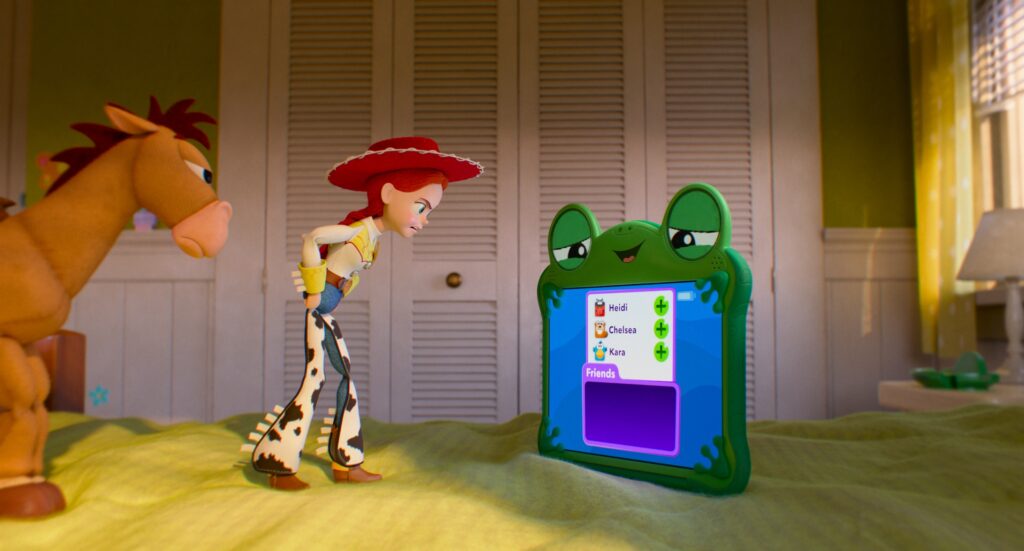
Photo shows (from L-R): Bullseye, Jessie, and Lilypad in Disney and Pixar’s TOY STORY 5. (IMAGE CREDIT: Pixar. © 2026 Disney/Pixar. All Rights Reserved.)
When Bonnie is invited to a sleepover by her new Lilypad friends, Jessie and Bullseye (Alan Cumming) eagerly tag along, hoping it will mark the beginning of meaningful friendships.
Instead, Bonnie discovers that the other children are more interested in their devices than in imaginative play. Embarrassed by her toys and eager to fit in, she leaves them behind.
It is one of the film’s most poignant moments because it captures something many children — and adults — experience. The desire to belong can sometimes make us hide the very things that make us unique.
What follows is a heartfelt journey as Jessie becomes determined to help Bonnie find what she is really looking for: not more connections, but a genuine friend. Someone who shares her imagination, understands her interests, and accepts her for who she is.
Finding friendship in a screen-filled world
That emotional core is what makes Toy Story 5 work. Beneath the colorful animation, humor, and adventure is a story about loneliness, belonging, and the courage to be yourself.
The film also deserves credit for avoiding a simplistic message about technology. While Jessie initially sees Lilypad as a threat, the story gradually reveals that both the traditional toys and the tech-based toys ultimately want the same thing: to help Bonnie and other children be happy.
Lilypad’s intentions are never malicious. In fact, it genuinely believes it is helping Bonnie find friendship. That nuance allows the film to present a more balanced perspective. Technology can help bring people together, but meaningful relationships still require presence, shared experiences, and genuine understanding.
The film likewise serves as a thoughtful defense of imaginative play.
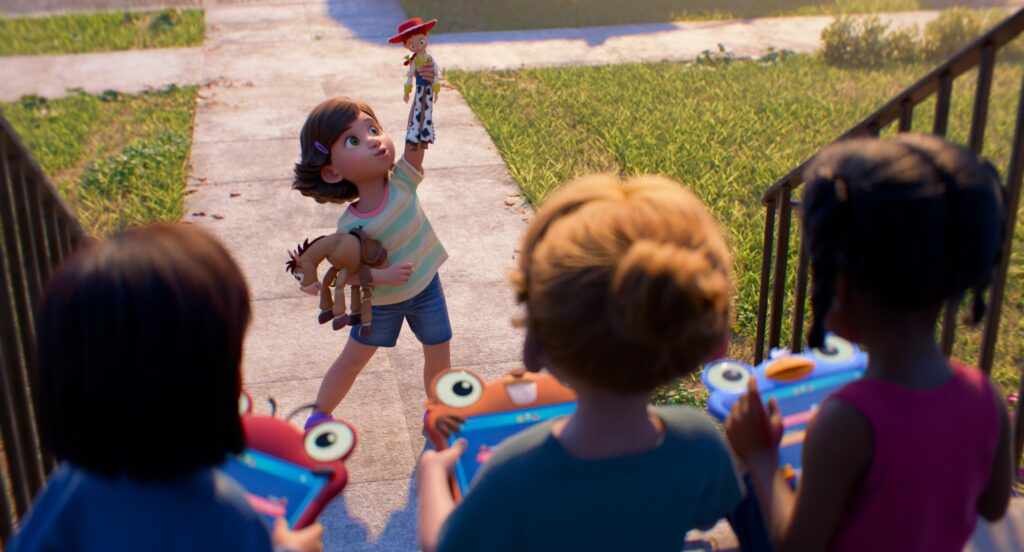
Photo shows Bonnie (center) in Disney and Pixar’s TOY STORY 5. (IMAGE CREDIT: Pixar. © 2026 Disney/Pixar. All Rights Reserved.)
Rather than framing the issue as a choice between toys and technology, Toy Story 5 argues that there is room for both. Gadgets can entertain and connect us, but they cannot fully replace the creativity, self-expression, and storytelling that emerge from imagination.
Thankfully, the movie does not forget to have fun along the way.
One standout sequence involves an army of high-tech Buzz Lightyears who finally get to do what the original Buzz (Tim Allen) spent much of the first Toy Story trying to prove he could do: actually fly.
It is a delightful full-circle moment for longtime fans and one of the film’s most entertaining action sequences, delivering laughs, excitement, and a healthy dose of nostalgia.
Filled with humor, adventure, emotional moments, and plenty of nods to longtime fans, Toy Story 5 proves that this franchise still has meaningful stories left to tell.
Bonnie’s search for friendship reminds us that while technology can help us connect, authentic relationships are built through shared experiences and by being accepted for who we truly are.

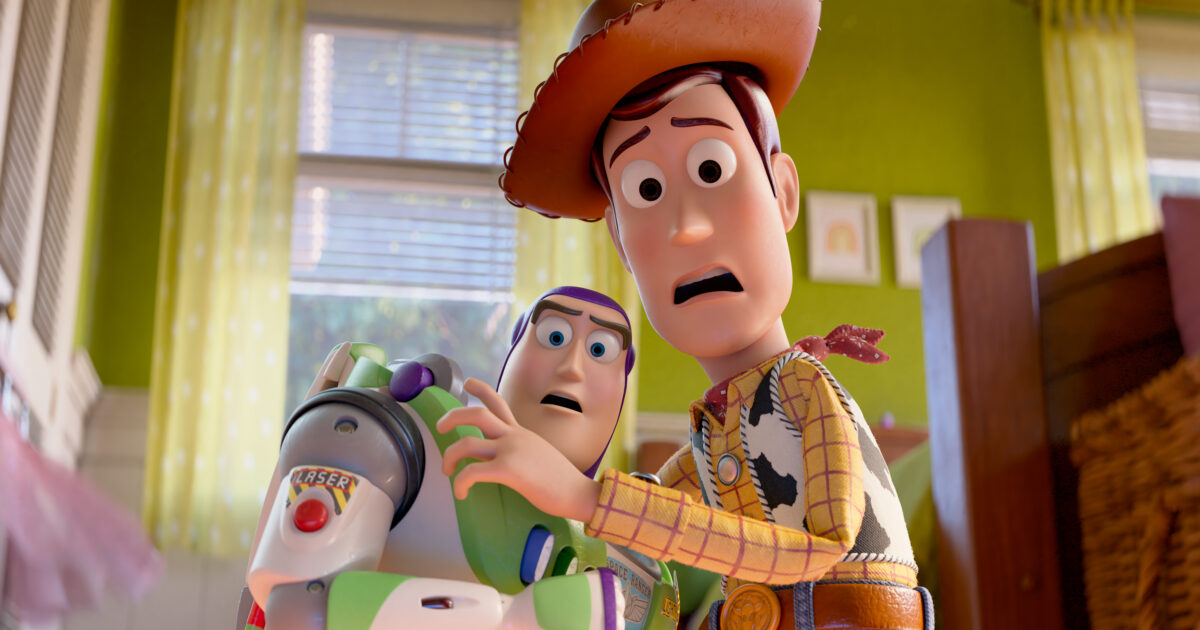
Buzz Lightyear, voiced by Tim Allen, in TOY STORY 5. (IMAGE CREDIT: Disney and Pixar’s “Toy Story 5″ © 2025 Disney/Pixar. All Rights Reserved).
Nearly three decades after Woody and Buzz first appeared on screen, Toy Story continues to evolve while staying true to the heart that made audiences fall in love with it in the first place.
“To infinity and beyond?”
As it turns out, there was still one more meaningful adventure waiting to be told.