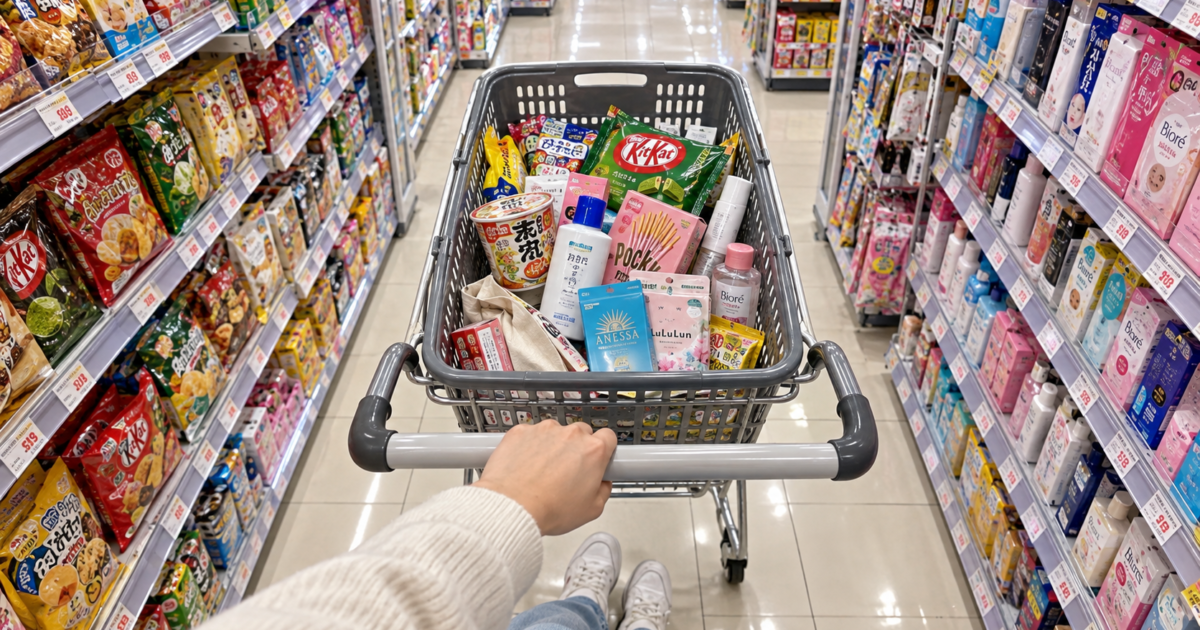
Tell your friends you are flying to Japan and there is a decent chance someone will eventually ask: “Pwede pasabuy?”
Maybe it is a specific sunscreen from a Japanese drugstore. A pair of sneakers unavailable in their size here. Snacks from Don Quijote. A regional delicacy. Or something technically available online, except they would rather have you buy it yourself.

IMAGE CREDIT: stock.adobe.com
Pasabuy should arguably have become less necessary as online shopping grew. Filipinos can now order products from overseas stores without leaving home, while major e-commerce platforms increasingly carry products from Japan, South Korea, China and the United States.
According to the Philippine Statistics Authority’s 2024 National Information and Communications Technology Household Survey, 36.7% of Filipino internet users aged 10 and above purchased goods or services online in 2024, up from 23.7% in 2019.
The country’s broader digital economy has grown as well. The PSA reported that it reached ₱2.74 trillion in 2025, with e-commerce accounting for 32.2% of the total.
Yet pasabuy remains.
That may be because it was never just a primitive version of online shopping.
Sometimes the thing you want simply isn’t online
Cross-border e-commerce has made foreign products much easier to obtain, but “available online” does not necessarily mean conveniently available in the Philippines.
Some products remain exclusive to particular countries, cities or stores. Others appear online with large markups, expensive international shipping or long delivery times.
Then there are the products people discover only after someone arrives somewhere.
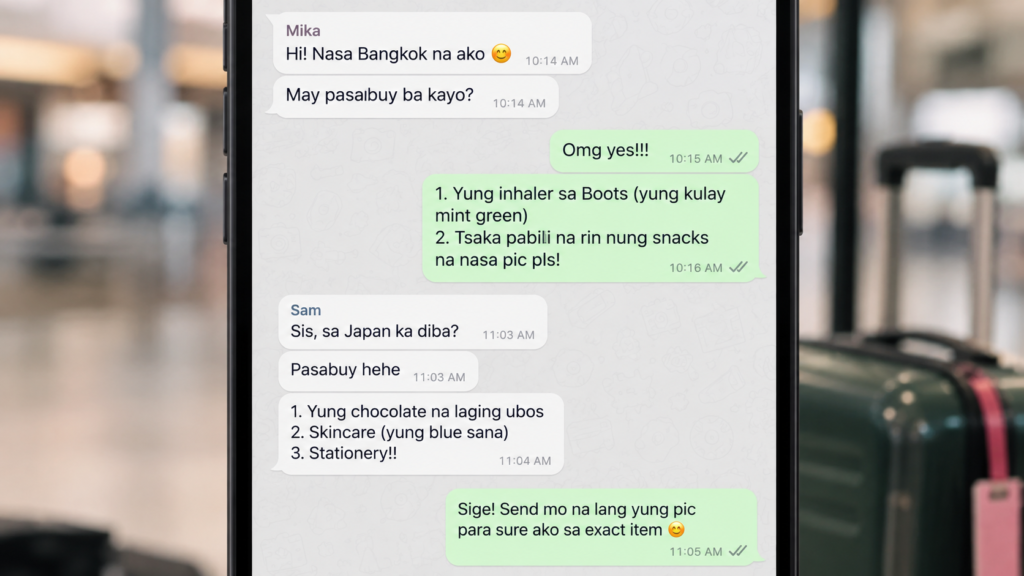
A friend posts a photo from Bangkok. Someone replies asking for inhalers. A relative visits Japan and suddenly has a shopping list of chocolates, skincare and stationery. Someone goes home to a province and gets requests for a delicacy that technically could be delivered but somehow feels better arriving in that person’s luggage.
Pasabuy fills these little gaps.
You are also borrowing someone else’s trust
There is another advantage that an unfamiliar online seller cannot easily replicate: you know the person doing the buying.
If you ask a friend traveling abroad to purchase a specific beauty product, they can check the packaging, look for the right shade, send you photos and buy directly from the store.
That matters in categories where buyers worry about counterfeits, questionable resellers or products arriving damaged.
So while online shopping asks you to trust a platform, merchant, courier and product listing, pasabuy can reduce the transaction to one reassuring sentence:
“Bilhan mo na lang ako habang nandiyan ka.”
The value is not always the lowest price. Sometimes it is certainty.
Pasabuy isn’t quite the same as pasalubong
The two traditions overlap, but the expectation is different.
Pasalubong is generally something a traveler brings home for other people. The giver chooses and usually pays for it.
Pasabuy reverses that relationship. Someone requests an item and typically expects to pay the traveler back. It turns spare luggage space into an informal shopping service between people who already know each other.
And increasingly, some people have turned that informal arrangement into an actual sideline, announcing overseas trips, accepting orders and charging service fees.
That distinction can matter at Customs.
Under the Bureau of Customs guidelines for arriving travelers, goods brought into the Philippines can be subject to duties and taxes unless they qualify for an exemption. The rules also distinguish personal and household goods from products brought in commercial quantities or intended for sale.
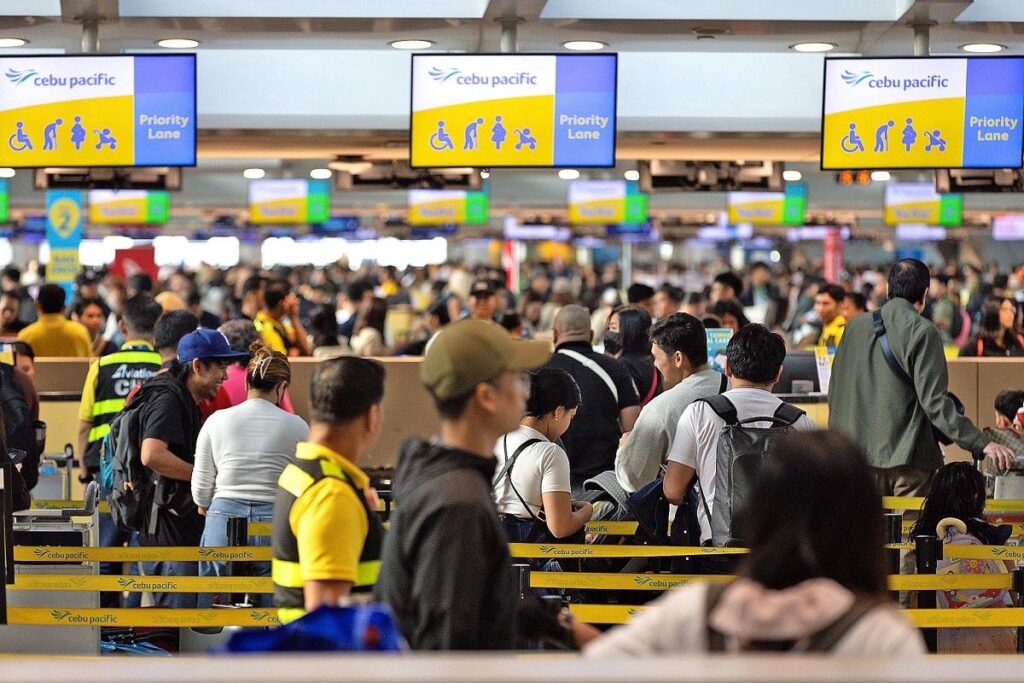
For example, Filipino citizens can avail of certain duty and tax privileges for personal and household goods, but the Bureau of Customs explicitly states that these should not be in commercial quantities or intended for barter, sale, or hire.
The bureau’s importation guidelines similarly distinguish goods of a commercial nature from personal and household effects when determining how imported products should be processed.
In other words, buying one requested item for a friend is very different from filling several suitcases with products for customers.
Pasabuy survived because shopping isn’t purely transactional
The internet solved much of pasabuy’s logistical problem.
What it could not completely replace was the human network around it.
Pasabuy combines access, trust, travel, favors and occasionally a little social pressure. It turns “I’m going somewhere” into “Is there anything you want from there?”
And that may explain why it remains familiar even in an age when almost anything can appear at our doorstep.
Sometimes the easiest way to buy something from thousands of kilometers away is still knowing someone who happens to be there.