As Asia’s AI infrastructure boom gathers pace, Johor has emerged as one of its biggest beneficiaries, drawing major investments that are reshaping the region’s digital future.
While much of the global conversation around artificial intelligence centers on large language models, generative AI, and the companies building them, an equally important race is unfolding behind the scenes — one focused on the data centers, power systems, and cooling technologies needed to support the next generation of computing.
Governments and technology companies across Asia are investing billions of dollars to build the physical infrastructure capable of supporting increasingly demanding AI workloads, with Malaysia positioning itself as a key regional hub.
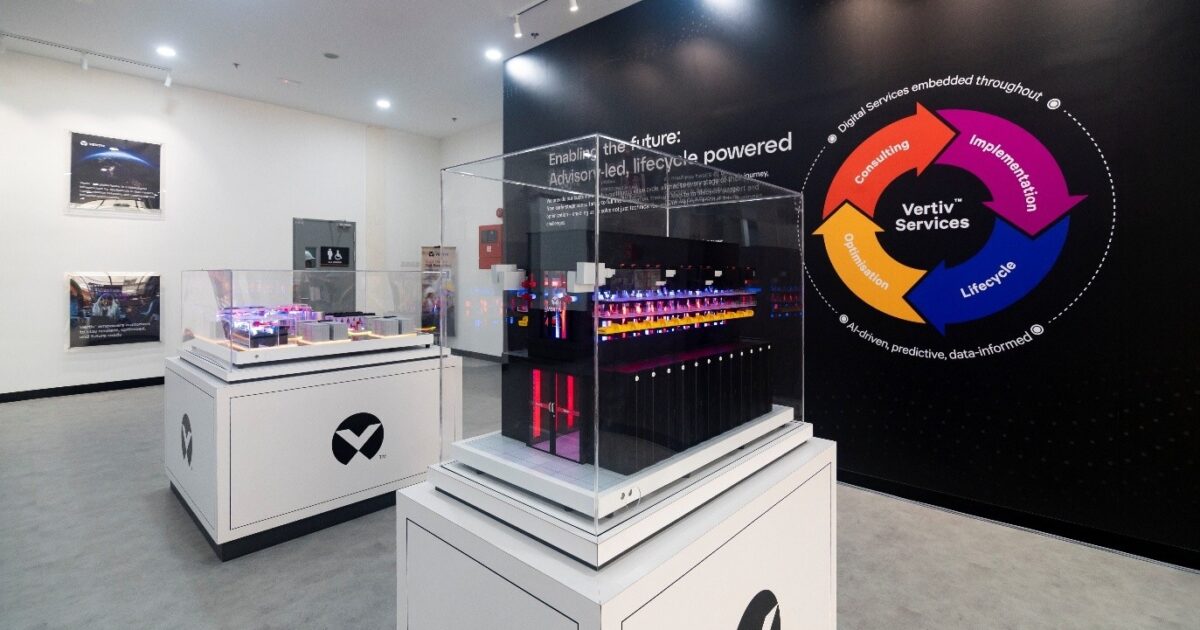
That momentum received another boost with the opening of Vertiv‘s newest manufacturing facility in Johor, underscoring both the company’s long-term confidence in Asia and the region’s growing role in the global AI value chain.
For the Philippines, where digital transformation continues to accelerate across banking, business process management, e-commerce, and government services, the development offers a glimpse into the kind of infrastructure ecosystem increasingly needed to support an AI-driven economy.
Beyond the AI headlines
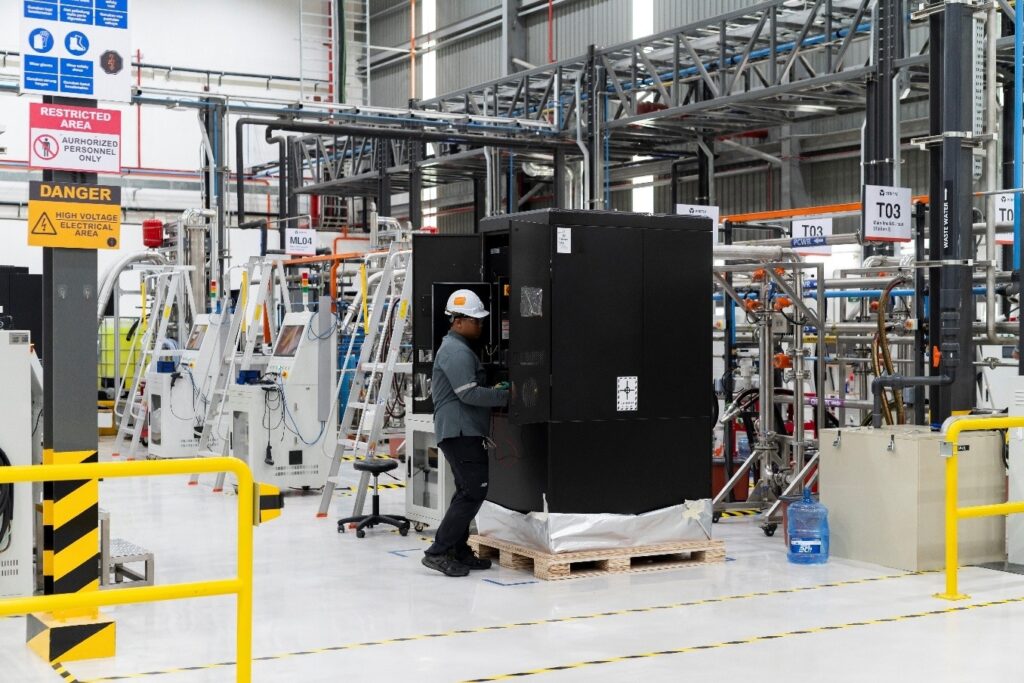
IMAGE CREDIT: Vertiv
AI may be grabbing headlines, but the technology cannot exist without the physical infrastructure that keeps it running.
Training and deploying AI models require significantly more computing power than traditional applications, placing immense demands on electricity, thermal management, and networking infrastructure inside data centers.
This has created a booming market for companies like Vertiv, which specializes in power, cooling, and critical digital infrastructure used by hyperscale cloud providers, enterprises, and colocation operators.
Its newly opened 236,000-square-foot facility in Senai, Johor, will manufacture and test technologies designed specifically for these environments, including liquid cooling systems, modular power infrastructure, and integrated deployment solutions that help customers build AI-ready facilities more quickly.
“Asia continues to be one of the fastest-growing regions for AI and digital infrastructure investment,” said Giordano Albertazzi.
According to Albertazzi, expanding manufacturing capacity in Malaysia enables Vertiv to deliver infrastructure solutions faster while helping customers meet rapidly evolving AI requirements across Southeast Asia, North Asia, Australia, and New Zealand.
Why Johor?
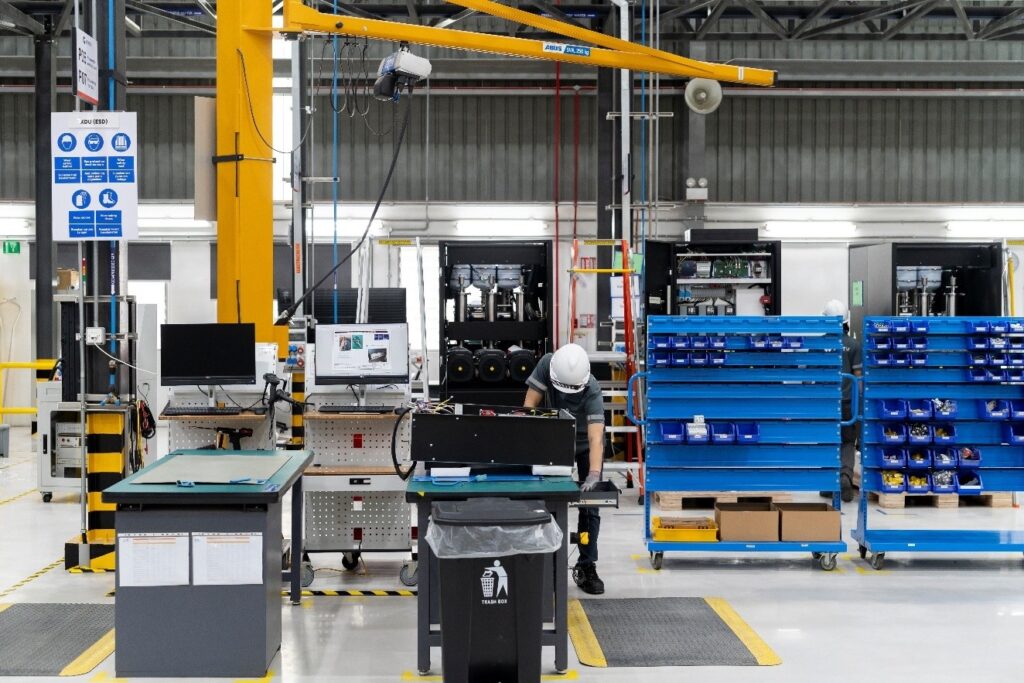
IMAGE CREDIT: Vertiv
Johor’s rise has been difficult to ignore.
Once known primarily as a manufacturing state neighboring Singapore, it has rapidly transformed into one of Asia’s fastest-growing digital infrastructure hubs, attracting investments from hyperscale cloud providers, semiconductor companies, and global technology firms.
Its strategic location, established industrial ecosystem, and strong regional connectivity have made it an increasingly attractive destination for companies supporting the AI economy.
The new Vertiv facility strengthens that position by bringing together manufacturing, engineering, logistics, and testing capabilities under one roof.
Beyond producing equipment, the facility will validate infrastructure before deployment, helping customers reduce project risks and accelerate the rollout of high-density AI environments.
A signal for the Philippines
Although the facility is located in Malaysia, its impact extends across the region — including the Philippines.
The country’s digital economy continues to expand rapidly, fueled by growing cloud adoption, fintech innovation, e-commerce, and one of the world’s largest business process management industries. As organizations increasingly adopt AI, demand for resilient digital infrastructure is expected to grow alongside it.
Industry observers have long noted that while the Philippines has become a leader in digital services and knowledge-based work, neighboring countries have accelerated investments in the physical infrastructure supporting those industries.
Facilities like Vertiv’s underscore how manufacturing, engineering expertise, and supply chain capabilities are becoming strategic advantages as AI reshapes regional competitiveness.
The company also expects the Johor site to generate up to 500 skilled jobs by 2027, highlighting another trend emerging across Asia: AI investments are creating opportunities not only for software developers and data scientists but also for engineers, technicians, manufacturing specialists, and infrastructure professionals.
Infrastructure as a competitive advantage
For Paul Churchill, proximity has become increasingly important as customers deploy more sophisticated AI infrastructure.
He said the Johor facility enables Vertiv to respond more quickly to customers across Asia while strengthening collaboration throughout the region.
That regional approach is becoming more relevant as Southeast Asia positions itself as a key destination for AI investments. Countries are no longer competing solely on talent or incentives—they are also racing to build the infrastructure ecosystems that global technology companies need.
Building the foundations of AI
Artificial intelligence may ultimately be defined by software, but its success depends on something far more tangible: reliable electricity, advanced cooling systems, resilient supply chains, and the facilities that bring them together.
Vertiv’s latest investment in Southeast Asia illustrates that shift. It is not simply expanding manufacturing capacity — it is investing in the physical foundations that will support Asia’s digital future.
For the Philippines, the development is a reminder that participating in the AI economy involves more than adopting new technologies. It also requires building the infrastructure, workforce, and industrial capabilities that allow innovation to scale.
As Southeast Asia’s AI race gathers pace, the countries that invest not only in intelligence but also in the infrastructure behind it may ultimately be the ones best positioned to shape the region’s digital future.