A routine ride home has turned into a wider conversation about respect, accountability, and the everyday realities women continue to face — both online and offline.
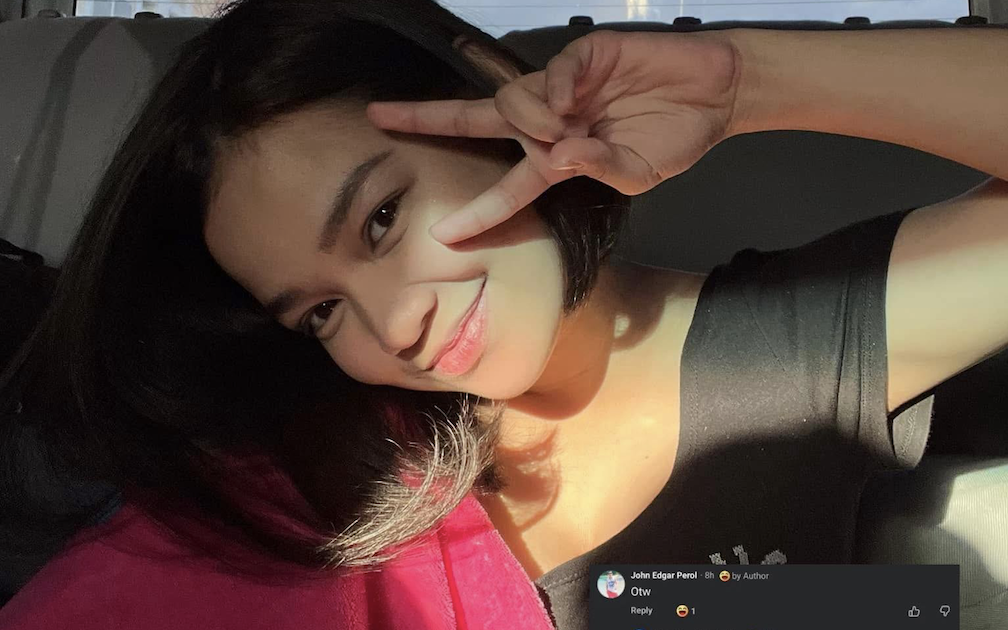
Young actress and former Pinoy Big Brother housemate Xyriel Manabat recently found herself at the center of controversy after a transport network vehicle service (TNVS) driver she booked on the way to work posted a photo of them together on social media, accompanied by lewd and sexualized remarks.
The post, which was shared by a Facebook user under the name “Boss Toyo Mansi,” has since been deleted — but not before screenshots spread widely across platforms.
A “kind” passenger, a troubling response

SCREEN GRAB from WittyMama
According to reports, the now-deactivated account uploaded a selfie with Manabat following a ride she had booked. While the interaction during the trip appeared cordial, the driver allegedly made inappropriate remarks in a separate conversation with a friend, including “ang laki ng bata na ’yan” and a vulgar comment referencing “ja***.”
The post quickly drew backlash, with netizens calling out the behavior as a clear violation of respect and boundaries. For Manabat, the situation was both personal and deeply frustrating.
In an interview, she shared that she was not immediately aware of the incident, noting she isn’t frequently on her phone. It was only after persistent messages from friends that she discovered what had happened. Upon seeing the screenshots, she made it clear she intends to pursue action.
Manabat stressed that the experience contradicts a long-standing advocacy she has long championed (even before returning to show business) that is centered on protecting women from harassment and sexualization.
She also underscored a point many women echo: simple acts of kindness, like agreeing to a photo or being polite to a service provider, should never be met with objectification.
Swift response from the platform
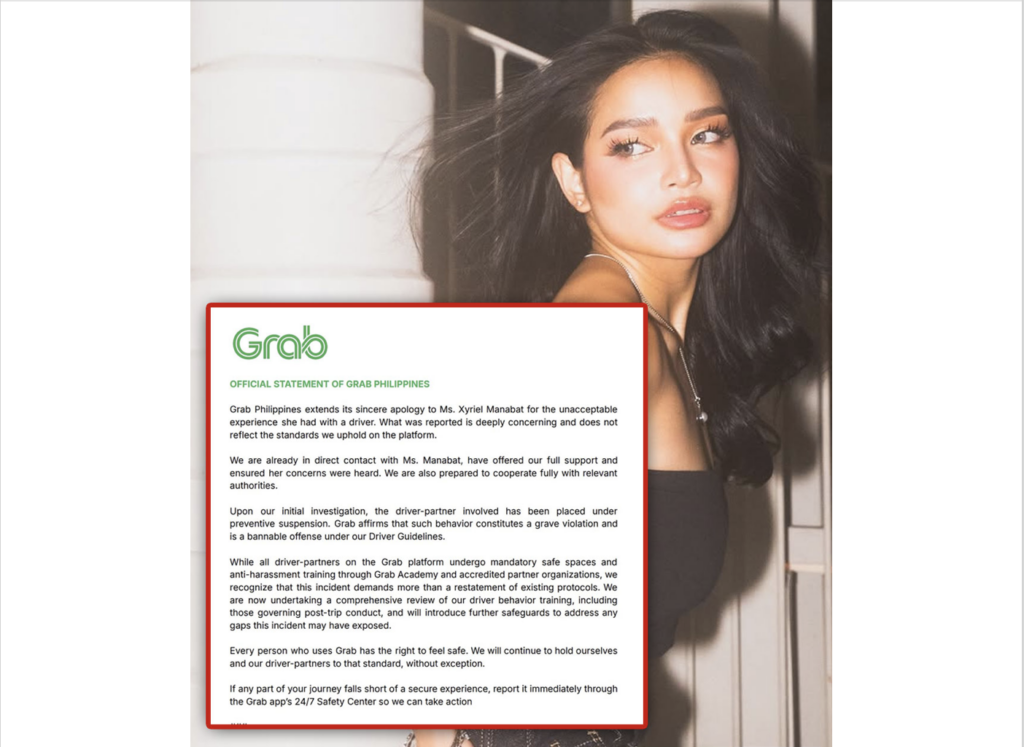
IMAGE CREDIT: Abante Radyo
Following the backlash, Grab Philippines issued a public apology to Manabat and confirmed that the driver involved has been placed under preventive suspension.
The company described the incident as “deeply concerning,” emphasizing that such behavior constitutes a grave violation of its guidelines and is a bannable offense. Grab also said it is prepared to cooperate with authorities as Manabat considers legal action.
Beyond immediate disciplinary measures, the platform acknowledged that the case exposes gaps that need to be addressed. It is now reviewing its driver behavior protocols, including post-trip conduct, and exploring additional safeguards to strengthen passenger protection.
While Grab noted that all driver-partners undergo mandatory safe spaces and anti-harassment training, it admitted that the incident calls for more than just reiterating existing policies.
A pattern that goes beyond one incident

Anne Curtis (left) and Cong. Bong Suntay (right).
Manabat’s experience is far from isolated.
In fact, one can say that it reflects a broader and more troubling pattern — one that extends beyond ride-hailing platforms and into positions of power.
Just weeks earlier, women’s rights advocates filed an ethics complaint against Quezon City Representative Bong Suntay over remarks he made involving actress Anne Curtis during a congressional hearing.
Suntay recounted seeing Curtis in a mall and described feeling a surge of desire — comments that were widely criticized as inappropriate, particularly in a formal government setting. While he has since apologized, advocacy groups, joined by Sarah Elago of the Gabriela party-list, have since moved forward with a formal complaint.
For Gabriela, both incidents point to a “widespread culture” of harassment that women continue to experience — even in ordinary, everyday situations like commuting to work.
Respect should not be seasonal

SCREEN GRAB from PBB Collab edition
Taken together, the two cases highlight a persistent issue: the normalization of behavior that objectifies women, often dismissed as jokes, compliments, or harmless commentary.
But as Manabat herself pointed out, these experiences are not isolated — they reflect what many women face on a daily basis.
The conversation feels especially relevant in the wake of International Women’s Month, when calls for respect and equality are amplified, only to fade shortly after.
Respect, advocates stress, should not be seasonal. It should not depend on awareness campaigns or trending hashtags. It should be constant — practiced in everyday interactions, upheld in professional spaces, and enforced through accountability.
From awareness to accountability
What these incidents ultimately underscore is the need to move beyond awareness and toward consistent action.
For platforms, that means ensuring safety policies translate into real protection. For public officials, it means recognizing the responsibility that comes with their words. And for society at large, it means rejecting the idea that disrespect can ever be dismissed as entertainment.
Because whether in a private ride or a public hearing, the principle remains the same: dignity is not optional — and respect should never be negotiable.