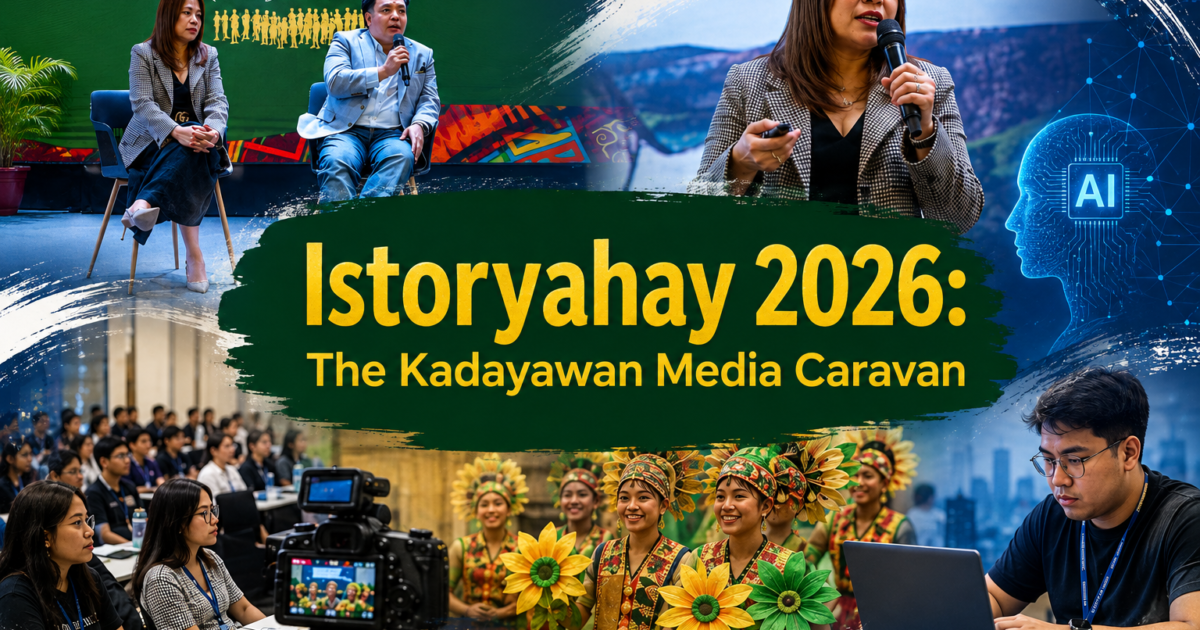
As artificial intelligence finds its way into newsrooms, classrooms, and everyday creative work, Mindanao’s storytellers are beginning to ask a more important question: How can technology help tell more stories without taking away what makes those stories uniquely human?
That question took center stage at “Istoryahay 2026: The Kadayawan Media Caravan,” a full-day gathering that brought nearly 200 journalists, media practitioners, communications professionals, campus editors, digital creators, and students to Holy Cross of Davao College during the Kadayawan Festival.
Organized by Ayala Corporation and Ayala Foundation in partnership with Holy Cross of Davao College, the event brought together representatives from the Philippine News Agency, Philippine Information Agency, ABS-CBN, MindaNews, Davao Today, local media organizations, digital creators, vloggers, and campus journalists from across Mindanao.
But beyond a discussion about the latest AI tools, Istoryahay offered a glimpse into how technology could change the way local communities discover, document, preserve, and share their own stories.
When AI meets cultural memory
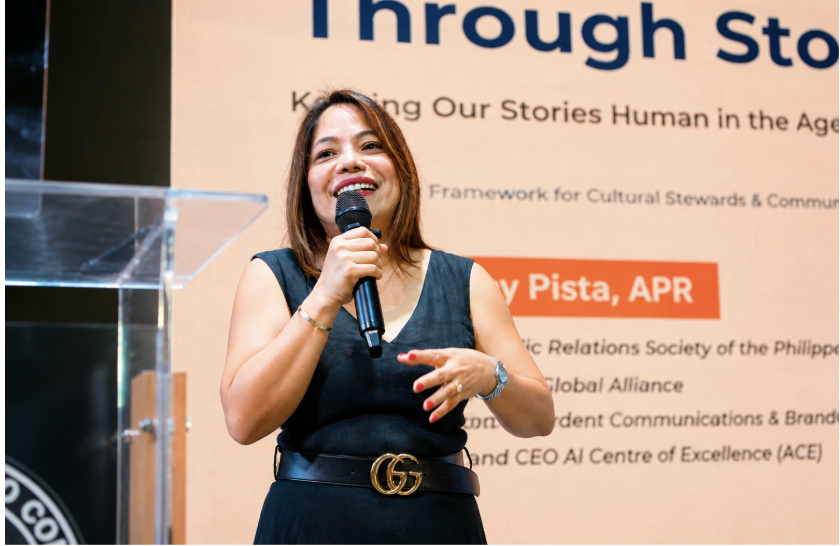
Ana Pista, APR, PRSP and founder and CEO of Ardent Communications
For Ana Pista, APR, president of the Public Relations Society of the Philippines (PRSP) and founder and CEO of Ardent Communications and the AI Centre of Excellence (ACE), the conversation about AI should not stop at productivity.
It should also include culture.
Pista discussed how generative AI and digital workflows could support cultural mapping, allowing communities to organize and document their heritage, arts, traditions, and local knowledge at a scale that would otherwise be difficult to achieve.
But she also stressed that technology cannot replace the people who give those stories meaning.
“Artificial intelligence can help us organize, map, and archive our cultural heritage at scale, but technology is merely the bridge,” explained Pista.
For communities whose traditions are passed down through people, places, memories, and lived experiences, that distinction matters.
According to Pista, the challenge is not simply how to digitize a culture, but how to make sure that the people who own and live those stories remain at the center of how they are told.
That becomes particularly relevant in Mindanao, where local identities and traditions are often shaped by distinct communities, histories, languages, and cultural practices.
Teaching the next generation to work with AI
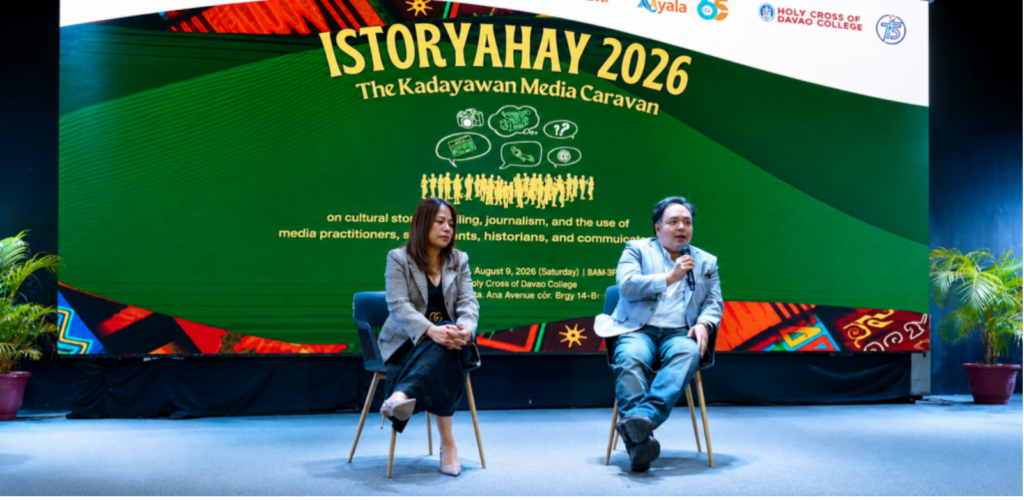
Media adviser Jaemark Tordecilla (right) with Ana Pista, APR during the panel discussion
The conversation then moved from cultural preservation to the practical realities of journalism.
Journalist and technologist Jaemark Tordecilla, a media adviser on digital transformation and generative AI and a Nieman Fellow at Harvard University, shared his experience developing AI newsroom tools for journalists across Southeast Asia, South Asia, Latin America, and the United States.
Rather than presenting AI as a replacement for journalists, Tordecilla demonstrated how journalists can combine data, AI tools, and effective prompting to find leads, examine information, and develop stories.
For the campus journalists and communications students attending Istoryahay, the message was particularly relevant.
The next generation of storytellers is entering a media environment where knowing how to ask the right questions of technology may become almost as important as knowing how to ask the right questions of people.
And yet, the fundamentals remain familiar: curiosity, verification, context, judgment, and the ability to understand why a story matters.
From storytelling to volunteering
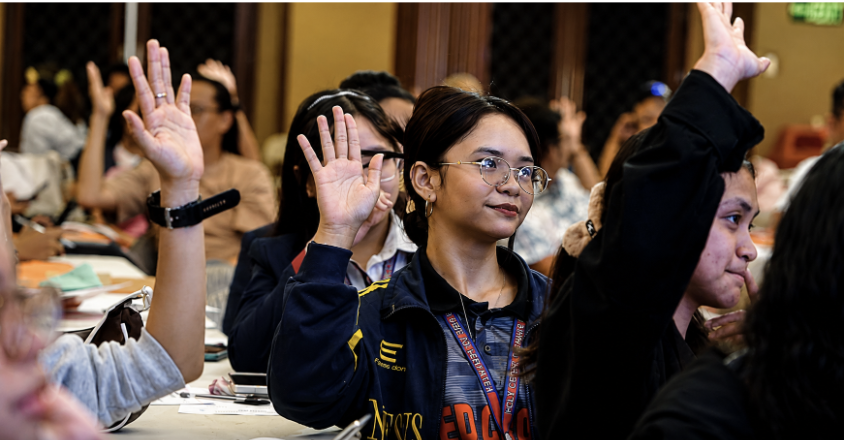
Some of the participants at the “Istoryahay 2026: The Kadayawan Media Caravan“
The event’s conversations also extended beyond journalism and technology.
The afternoon program included a PhilHealth Health Desk and Globe’s Digital Thumbprint initiative, which provided participants with opportunities to learn about health services, online verification, digital footprints, and responsible social media use.
The gathering also marked the Mindanao launch of the United Nations’ International Volunteer Year 2026.
As part of the launch, Ayala Foundation introduced access to the Brigadang Ayala V-App, a digital platform designed to connect individuals and organizations with volunteer opportunities across the region.
It was a fitting addition to a gathering centered on storytelling: technology was once again positioned not simply as an end in itself, but as a tool for connecting people with communities and causes.
Building a digital map of Mindanao’s stories
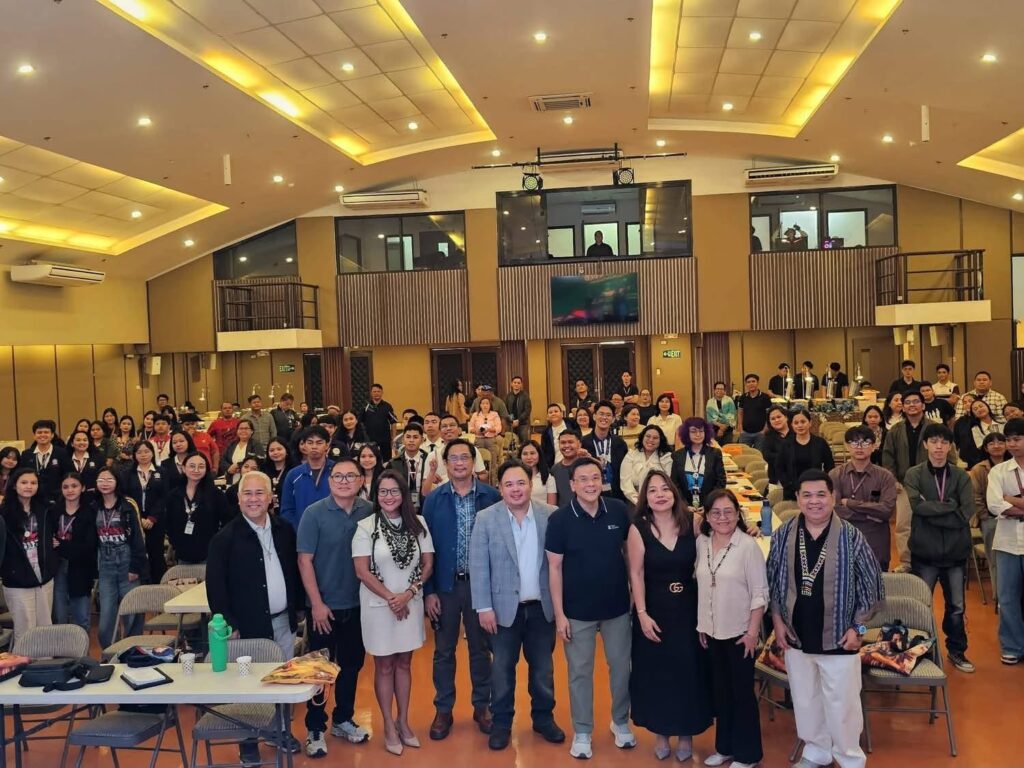
The story may not end with the closing of Istoryahay 2026.
Organizers are looking to develop a Mindanao Istoryahay 2026 Story Map, bringing together stories and contributions from participants and making them available through media organizations and social media platforms during Kadayawan and beyond.
The idea points to a broader possibility for digital storytelling in the region.
AI can help organize information. Digital platforms can help distribute it. Story maps can help connect people and places.
But the stories themselves still begin with people.
For Mindanao’s emerging generation of journalists, communicators, creators, and students, that may be the most important lesson from Istoryahay 2026: the arrival of AI does not make human storytelling less important.
If anything, it makes knowing what is worth telling — and why it matters — even more important.