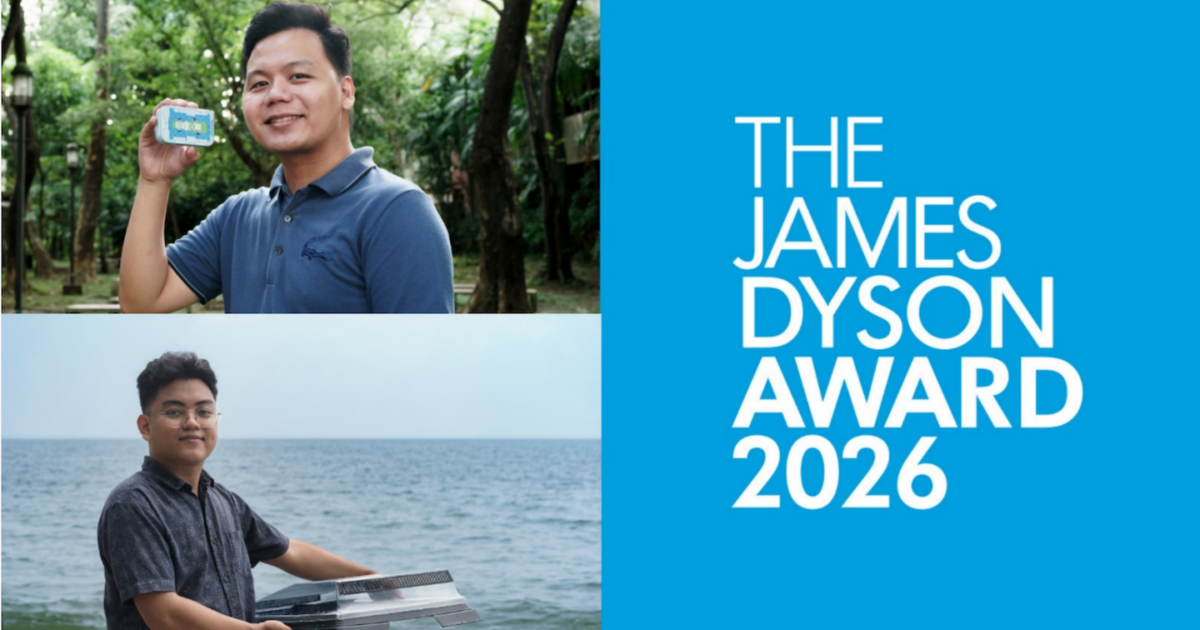
Some of the most impactful innovations do not begin in laboratories or corporate research centers. Sometimes, they start in classrooms, coastal communities, or in the minds of young people simply trying to solve a problem they see every day.
That spirit of practical problem-solving is once again taking center stage as the James Dyson Award (JDA) opens entries for its 2026 competition, inviting Filipino university students and recent graduates to submit inventions designed to address real-world challenges.
The international design and engineering competition, founded by inventor and entrepreneur Sir James Dyson, has become a global platform for young innovators whose ideas have the potential to improve lives, strengthen communities, and create meaningful social impact.
For aspiring Filipino inventors, the opportunity comes with both recognition and resources. National winners will receive ₱398,280 and advance to the international stage, where global winners selected by Dyson himself will receive ₱2.39 million to help bring their ideas closer to reality.
But beyond the prize money, past winners say the award has served as a catalyst for turning promising concepts into solutions that reach real people.
When a classroom challenge became a learning tool
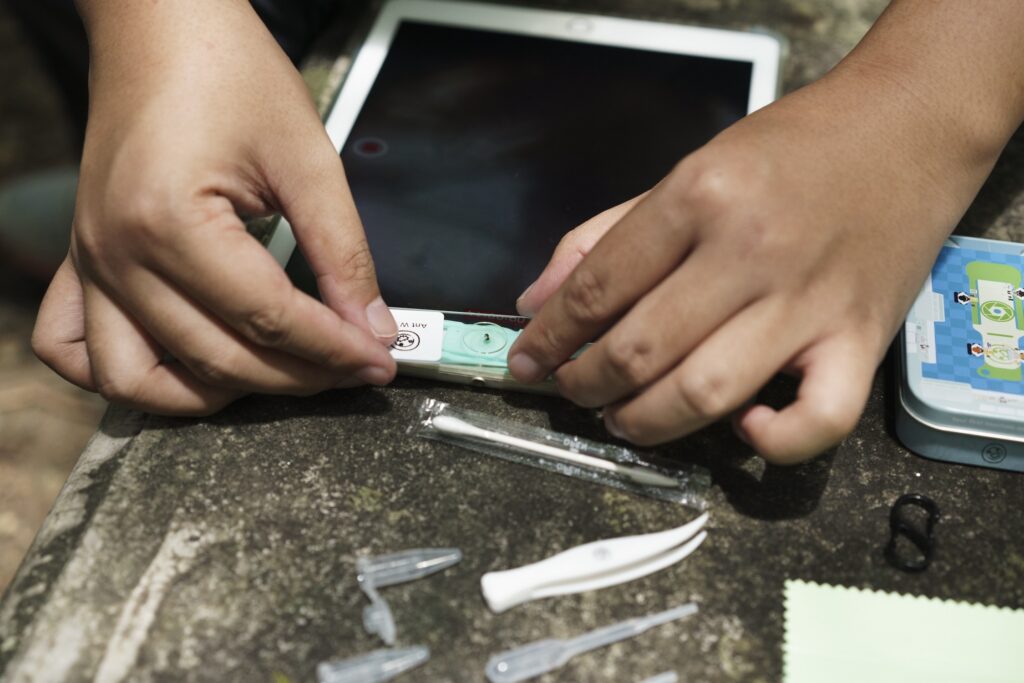
The Make-Roscope transforms a smartphone or tablet into a portable microscope
Among the Philippines’ most successful James Dyson Award stories is Make-Roscope, the country’s 2023 national winner created by inventor Jeremy De Leon.
The idea emerged from a challenge familiar to many schools across the country: limited access to laboratory equipment.
Rather than accepting the problem, De Leon designed a simple attachment that transforms a smartphone or tablet into a portable microscope, allowing students to explore the microscopic world using devices already within reach.
What began as a student project has since evolved into a growing educational technology venture.
Today, Make-Roscope has sold more than 10,000 units and is being used by students and educators across more than 70 schools and universities. Through his company, JereMAKE, De Leon has expanded the product’s reach beyond the Philippines, bringing affordable science learning tools to more classrooms.
“The James Dyson Award opened opportunities that helped Make-Roscope move beyond a prototype and be used in real classrooms by students in the Philippines and beyond,” De Leon shared.
His journey reflects what many young innovators hope to achieve: transforming an idea born from a local problem into a solution with broader impact.
Reinventing an age-old industry
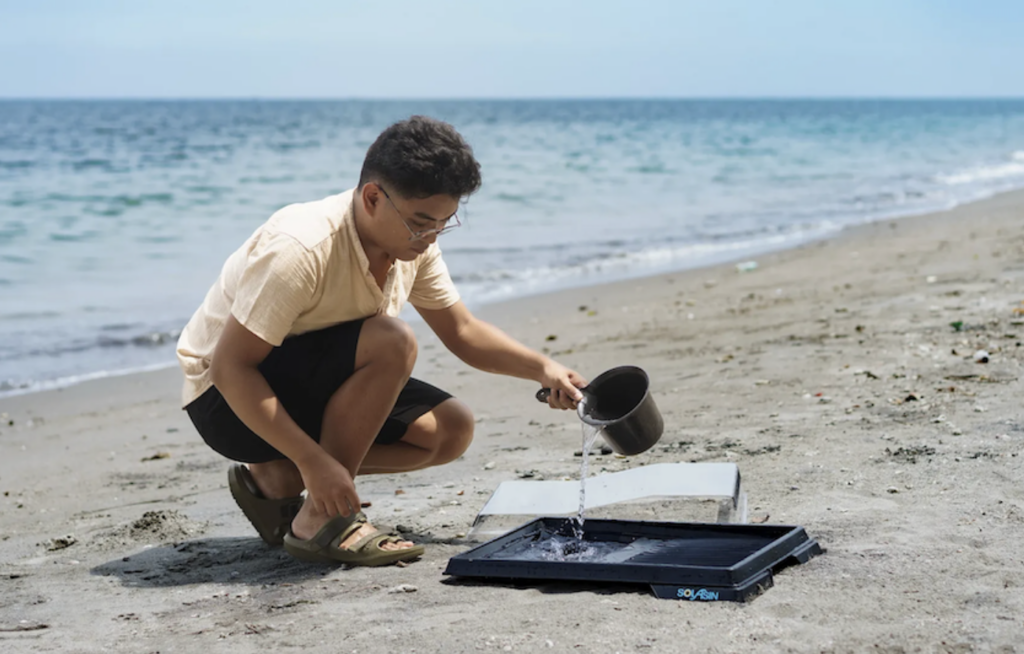
John Carlo Reyes’ SolAsin, a compact solar-powered evaporation system
The competition has also highlighted innovations rooted in traditional livelihoods.
In 2025, the Philippines’ national winner was SolAsin, a project developed by University of the Philippines Diliman graduate John Carlo Reyes.
Inspired by the challenges faced by small-scale salt farmers, Reyes designed a compact solar-powered evaporation system aimed at making salt production more efficient and predictable.
For communities that rely on salt farming, weather conditions can often determine productivity and income. SolAsin seeks to reduce that uncertainty by creating a controlled environment that helps farmers produce higher-quality flaky salt more consistently.
The project demonstrates how innovation does not always mean creating something entirely new. Sometimes, it means finding smarter ways to support existing industries and the people behind them.
“I saw the James Dyson Award as a great platform to showcase my work,” Reyes said. “Maybe it could inspire others to design with and for communities.”
A generation designing with purpose
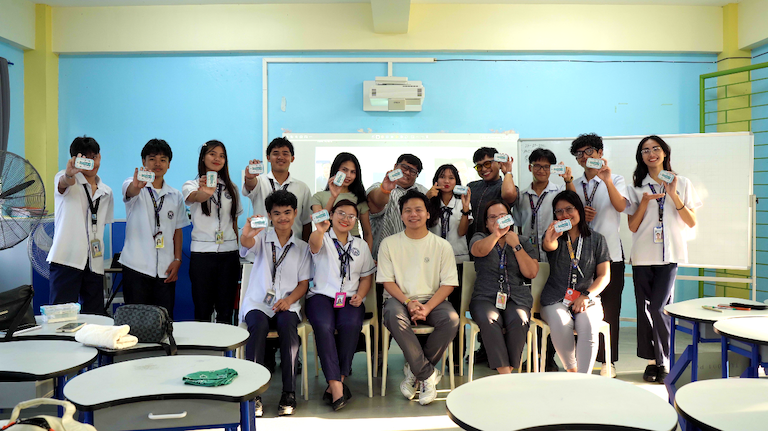
As the Philippines continues to navigate challenges related to education, food security, sustainability, and economic development, many young inventors are increasingly focusing on solutions with direct social relevance.
That trend is reflected in the kinds of projects that have gained recognition through the James Dyson Award over the years.
Globally, last year’s competition attracted more than 2,100 entries addressing issues ranging from healthcare access and disaster preparedness to waste management and environmental sustainability.
According to Dyson, the competition was created to encourage action-oriented thinkers.
“I established the James Dyson Award to encourage young ‘doers’ in life who are focused on solving the problems they see in the world,” he said.
For many participants, the award represents more than a competition. It offers a chance to test ideas, gain visibility, connect with industry experts, and potentially attract future collaborators or investors.
Looking for the next breakthrough
With entries now open, the search begins once again for the next Filipino innovation that could make a difference.
Whether it is a tool that improves learning, a solution that supports local livelihoods, or a technology that addresses an everyday challenge, the award continues to celebrate inventions grounded in purpose and practicality.
Applications are open to university students and recent graduates in engineering and design-related disciplines. Entries will be evaluated based on problem-solving ability, originality, technical feasibility, and the strength of the design process.
The deadline for submissions is July 15, 2026.
For the next generation of Filipino innovators, the question is simple: What problem do you want to solve — and how could your idea help change lives?