In a country where basketball courts outnumber tennis courts, it takes something special for a young tennis player to capture the hearts of an entire nation.
Yet Alexandra “Alex” Eala has done exactly that — not just with her wins, but with her composure in defeat, her humility under pressure, and her steady rise on the global stage.
Every match she plays now feels personal to Filipinos. When she wins, it’s a celebration. When she loses, it sparks debate, heartbreak, and fierce loyalty. For many fans, Eala is no longer just an athlete — she is a symbol of possibility.
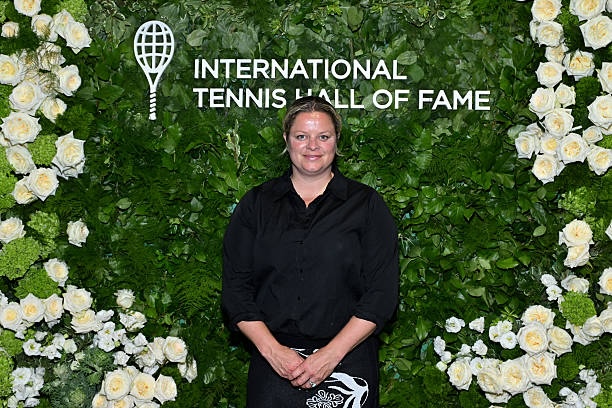
Kim Clijsters attends a Legends Ball benefitting the International Tennis Hall of Fame (Getty images)
That is why former world No. 1 and four-time Grand Slam champion Kim Clijsters believes Eala’s fame in the Philippines mirrors something far bigger than tennis.
In a recent podcast appearance, Clijsters made a striking comparison: Eala’s status in the Philippines, she said, is similar to that of Michael Jordan in basketball-crazed nations — a superstar whose presence alone can define the sport for an entire generation.
“She has to deal with life as someone like Michael Jordan in the Philippines,” Clijsters said, noting that the attention Eala receives goes far beyond headlines and social media. “It’s not easy to deal with changes like that.”
For Filipino fans, the comparison makes perfect sense. Just as Jordan elevated basketball into a cultural obsession, Eala is pulling tennis into the national conversation — especially among young Filipinos who now see a path beyond the usual sporting dreams.
Winning hearts, even in loss

Eala’s recent first-round exit at the Australian Open showed how deeply invested Filipinos have become. Support poured in — but so did criticism. What impressed Clijsters was not the result, but how Eala handled the noise.
“She’s still very young, but we see the mental growth,” Clijsters said. “She’s been around an environment that demands hard work and respect, and that’s no coincidence with the results she has.”
Eala has trained in Spain since her early teens, absorbing a culture of discipline and resilience. That background has helped her withstand the pressure of carrying a nation’s expectations — a burden rarely placed on a 20-year-old athlete.
On court, Clijsters praised Eala’s aggressive backhand, heavy spin, and stamina — weapons that already unsettle seasoned opponents. Off court, it is her calm demeanor and willingness to learn that continue to win admiration.
Standing on the shoulders of pioneers
Eala’s rise did not happen in a vacuum.

Maricris Fernandez after winning the SEA Games women’s singles gold medal in 1999 (IMAGE CREDIT: bridgemanimages.com)
Before her came Maricris Fernandez, the trailblazer who dominated Philippine tennis in the 1990s. Fernandez, best known as the 1999 SEA Games women’s singles gold medalist and a four-time PCA Open champion, reached a career-high WTA ranking of 284 — the highest ever for a Filipina at the time.
For more than two decades, Fernandez’s ranking stood as the benchmark for Philippine women’s tennis. It was only in 2022 that Eala surpassed it, marking a symbolic passing of the torch from pioneer to prodigy.
Where Fernandez proved that a Filipina could compete internationally, Eala is showing that one can belong among the sport’s global elite. Together, they represent two eras of the same dream: one that started with grit and is now fueled by global training, technology, and belief.
A new kind of sports hero
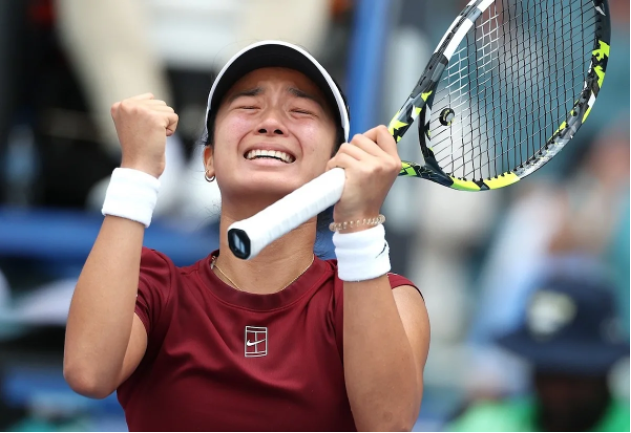
What makes Eala different from many modern stars is that her appeal goes beyond trophies. She speaks with humility. She credits her team. She acknowledges her flaws. And when she stumbles, she stands back up in public view.
Clijsters believes that growth — technical and mental — is the real story.
“Consistency is going to be very important,” she said. “Players know her strengths and weaknesses now. She has to make her strengths stronger and keep working on what she needs to improve.”
It is the kind of challenge Jordan once faced when the world learned how to defend him — and it is the challenge Eala now carries as opponents study her game and fans study her every move.
More than tennis
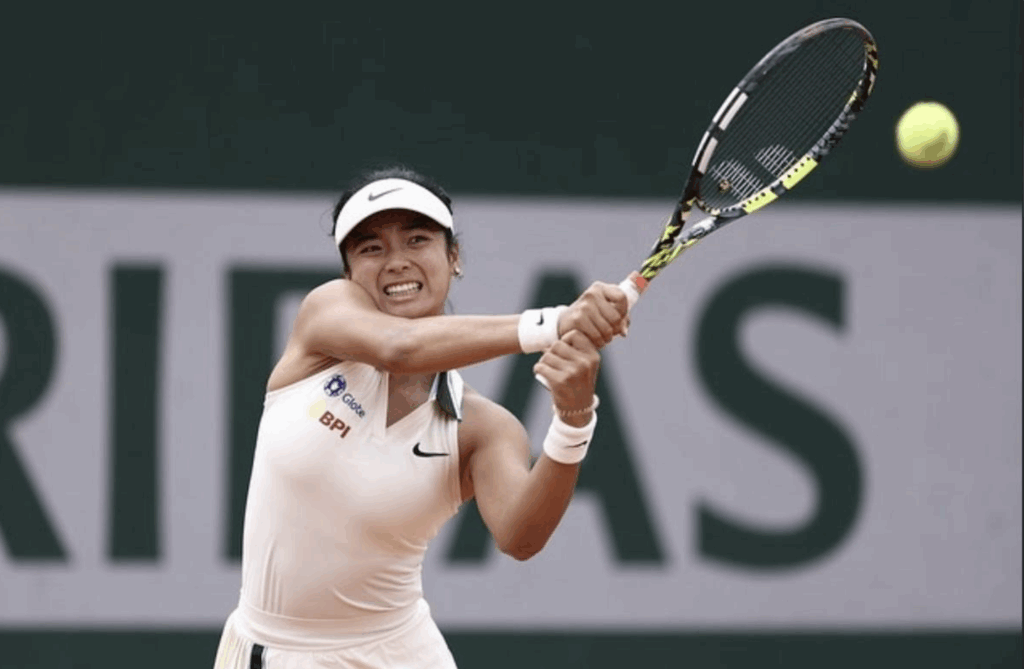
Eala has recently drawn crowds larger than established global stars, underscoring Clijsters’ point: in the Philippines, she is not just a tennis player — she is a national figure.
Like Jordan, she has become a reference point. Children copy her strokes. Families plan viewing schedules around her matches. Social media lights up when her name appears on the draw sheet.
In a nation long defined by boxing champions and basketball legends, Alex Eala is quietly rewriting the script.
She is not simply climbing rankings. She is changing what Filipinos believe is possible in tennis.
And if Kim Clijsters is right, then the Philippines may already be watching the birth of its Michael Jordan — not in sneakers, but in tennis shoes.