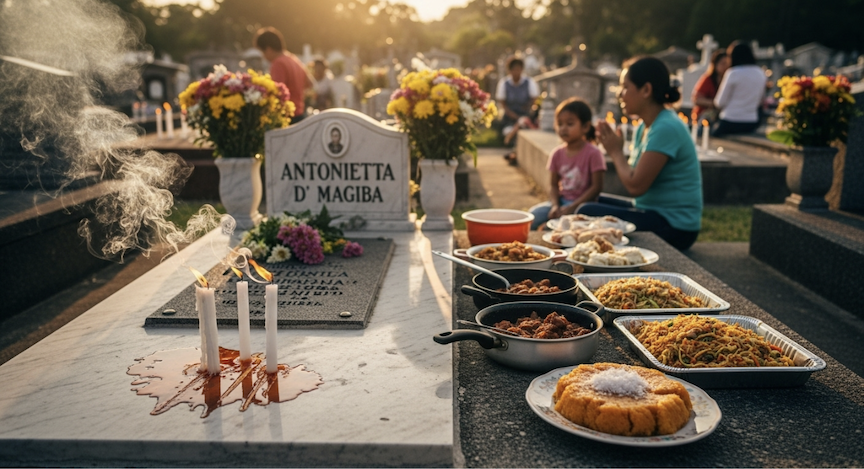
Every November 1, the country’s cemeteries awaken — not in mourning, but in memory. Candles flicker like stars on the ground, laughter ripples through rows of marble and stone, and the air carries the mingling scents of flowers, melted wax, and home-cooked food.
To a stranger, Undas (All Saints Day) might seem somber — a day meant for grief. But for us Filipinos, it’s something else entirely. It’s a reunion. A homecoming. A feast of love and remembrance held in the company of the departed.
When I was a child, my mother would wake me before dawn, her voice soft yet sure, as if the morning itself was waiting for us. We’d pack pans of adobo and trays of pancit into worn plastic containers, their lids secured with rubber bands.
The walk to the cemetery was quiet but never lonely — just the sound of slippers on dewy pavement, the rustle of flowers, the murmur of families doing the same.
Her prized dish was always biko, that golden-brown, sticky rice cake cooked slowly in coconut milk and brown sugar. “Walang Undas kung walang biko,” she’d say. The scent of gata would fill our small kitchen long before sunrise — sweet, warm, and comforting — a promise of the day ahead. By the time we reached our nitso, the air would already be thick with smoke and stories.
We’d spread our food across the cold concrete, light the candles, and settle in. And there, between prayers and plates, we’d talk as though our departed were simply sitting among us — listening, smiling, full. Undas taught me early on that memory and celebration are not opposites; they are one and the same.
Why we feast among the graves

To eat beside a grave might sound strange to outsiders. But for Filipinos, it’s a gesture of devotion — a tender way of saying, You are still here. You still belong to us.
Come November, cemeteries transform into living neighborhoods. Children chase each other between tombstones. Radios hum old love songs. Grandmothers unwrap kakanin from banana leaves, while uncles argue over who makes the best adobo.
The salo-salo isn’t just about food. It’s an offering — a ritual of remembrance where each bite becomes a bridge between generations. Through recipes, we recall the people who once cooked them. Through flavor, we remember the laughter that once filled our kitchens.
The dishes that bind us

No Undas feast is complete without the familiar dishes that have carried our stories from one year to the next — flavors that, somehow, taste better beneath the open sky.
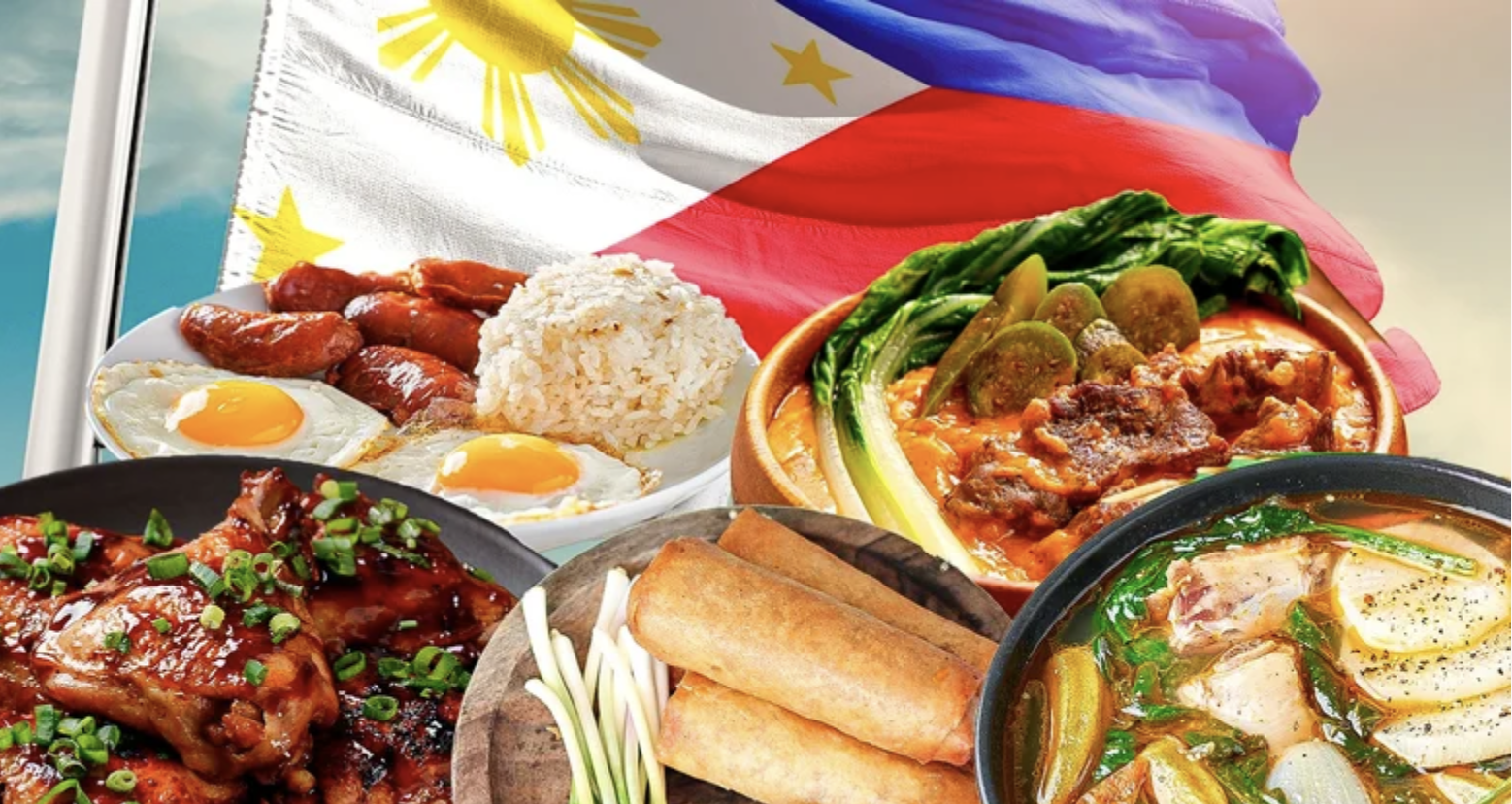
Pancit (Canton or Bihon) — A thread between lives
Long noodles for long life — a symbol that our stories never truly end. Pancit is the practical heart of the spread, easy to share, delicious even when cold, its savory scent weaving through candle smoke and laughter alike.
Filipino Spaghetti — Sweetness in remembrance
Bright red, sweet, and unapologetically ours. Filipino spaghetti is childhood in a bowl — cheerful, comforting, and beloved by everyone from toddlers to titos. It reminds us that even amid remembrance, there is joy.
Adobo — The flavor that lasts
No dish travels better than adobo. Rich, tangy, and timeless, it’s the quiet star of every Filipino gathering. Each family has its secret — more vinegar here, a pinch of sugar there — but the aroma that fills the morning air on Undas is unmistakable: the scent of love preserved in soy and laurel.

Kakanin (puto, bibingka, suman) — The sweetness of staying close
Puto, bibingka, suman — sweet, sticky symbols of togetherness. Sharing them beside the graves feels sacred, like passing a memory hand to hand. Each bite is soft, nostalgic, and deeply Filipino — proof that sweetness endures.
Lumpiang Shanghai — The joy that always returns
Golden and crisp, Lumpiang Shanghai vanishes almost as quickly as it’s served. It brings crunch to quiet moments, laughter to solemn spaces — reminding us that remembrance doesn’t have to be heavy. It can smile, too.
Keeping the feast fresh
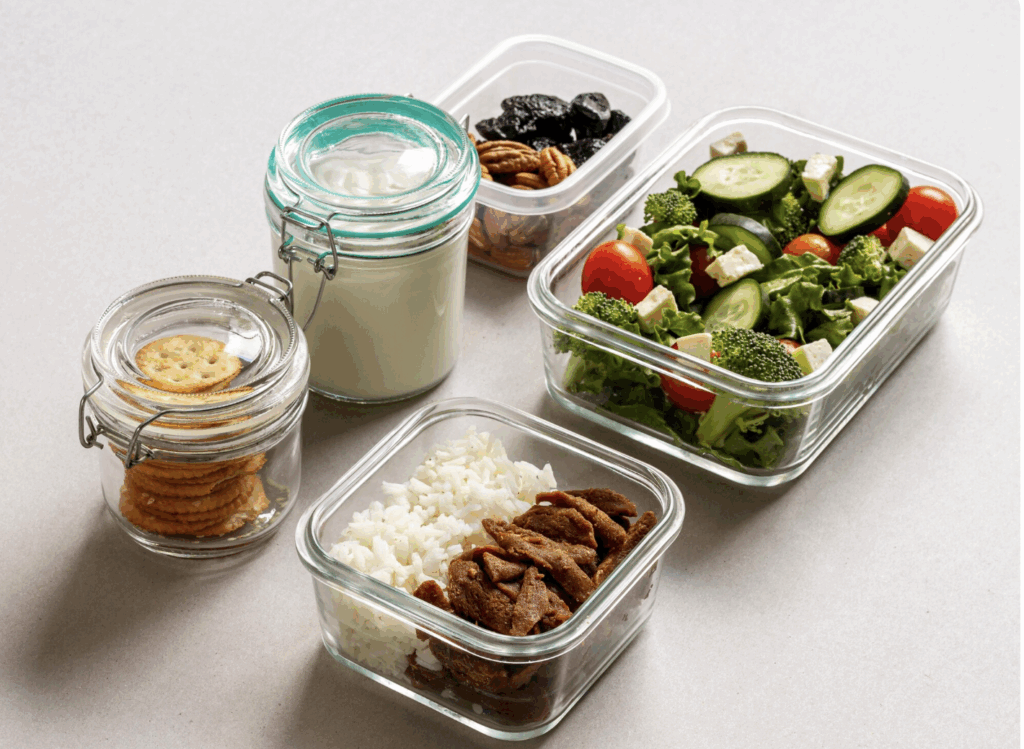
Undas food travels long distances, sits for hours under the sun, and yet still manages to taste like home. Through generations, families have perfected the art of the cemetery picnic.
Here’s how they keep every dish worthy of the occasion:
- Pack food in sealed containers to avoid spills and spoilage.
- Keep perishables cool with ice packs or insulated bags.
- Stick to dishes that endure — adobo, pancit, lumpia.
- Skip creamy salads or anything that spoils fast.
- Bring reusable utensils or banana leaves for that rustic touch.
- Label shared dishes — your cousin with a shrimp allergy will thank you.
- And above all, clean as you go. Respect for the resting place is part of the ritual.
The taste of memory
As dusk settles, candles shrink to glowing embers. Families begin to pack up — mats folded, food wrapped, prayers whispered one last time. Someone always says it: “Kita-kits ulit next year.”
The food we share on Undas does more than feed us. It nourishes something invisible — a bond that refuses to fade. Every recipe passed down, every laugh echoed between graves, every bite shared in silence keeps our departed close.
They live on — in our stories, in our kitchens, in the way we gather. Because Undas isn’t just about remembering the dead. It’s about remembering that love never leaves the table.
Pancit Bihon

(Pancit recipe courtesy of “Panlasang Pinoy‘)
Ingredients:
- 1 lb pancit bihon (rice noodles)
- ½ lb pork, thinly sliced
- ½ lb chicken, cooked, deboned, and sliced
- ⅛ lb snow peas
- 1 cup carrots, julienned
- ½ small cabbage, chopped
- 1 cup celery leaves, finely chopped
- 1 onion, chopped
- ½ tbsp minced garlic
- 2 tsp chicken powder (or bouillon)
- 5 tbsp soy sauce
- 3–4 cups water
- 3 tbsp cooking oil
Instructions:
- Sauté the aromatics: Heat oil in a large wok over medium heat. Add garlic and onion; cook until fragrant and golden.
- Cook the meats: Add pork and chicken. Stir-fry for about 2 minutes until lightly browned.
- Simmer for flavor: Pour in the water and stir in the chicken powder. Let it simmer gently for 10–15 minutes.
- Add the vegetables: Add carrots, snow peas, cabbage, and celery leaves. Simmer until just tender. Remove all solid ingredients and set aside, leaving the broth in the wok.
- Flavor the broth: Stir in the soy sauce.
- Cook the noodles: Add the soaked pancit bihon (soak for 10 minutes beforehand). Stir until the noodles absorb the broth and the liquid evaporates.
- Combine and serve: Return the cooked meat and vegetables to the wok. Toss everything together until evenly mixed.
Serve warm — best enjoyed with calamansi on the side, and a table full of stories.