A leading health policy advocate is urging government officials, doctors, and pharmaceutical stakeholders to listen more closely to cancer patients — not only in the clinic, but also in the systems that decide which treatments are funded and prioritized.
In a recent presentation at the Philippine National Cancer Summit (PNCS) 2026, Dr. Madeline Valera, president of the International Society for Health Economics and Outcomes Research (ISPOR), emphasized that while the Philippines has made strides in institutionalizing Health Technology Assessment (HTA), the country must go further in integrating the voices of patients — especially those battling cancer — into the decision-making process.
“For years, we focused on numbers — clinical trials, cost-effectiveness, incremental cost-effectiveness ratios,” she said. “But have we truly asked patients what matters to them?”
This perspective was echoed by the other speakers invited to share their views on cancer care during the event, which brought together medical oncologist Dr. Frederic Ivan Ting, ICanServe Foundation co-founder Kara Magsanoc-Alikpala, and Dr. Alfonso G. Nunez III of the Philippine Cancer Center.

Kara Magsanoc-Alikpala, co-founder of ICanServe Foundation
From the patient’s point of view, Alikpala emphasized that access decisions must reflect lived
realities, not just survival rates. She noted that patients value treatments that allow them to
remain active in their families and communities, and that reduce the emotional and financial
strain on caregivers.
“Patients don’t just measure outcomes in months of life, but in moments of normalcy,” Alikpala said, underscoring the importance of dignity and continuity in daily living.
She added that patient organizations consistently hear concerns about travel time, waiting hours, and out-of-pocket expenses — factors that directly affect treatment adherence and outcomes. These, she said, should be recognized alongside clinical efficacy.
HTA and health reforms
The Philippines has formally adopted HTA as part of its health reform efforts.
HTA evaluates medicines and medical technologies based on evidence, safety, effectiveness, and cost-efficiency before they are included in government programs or insurance benefits.
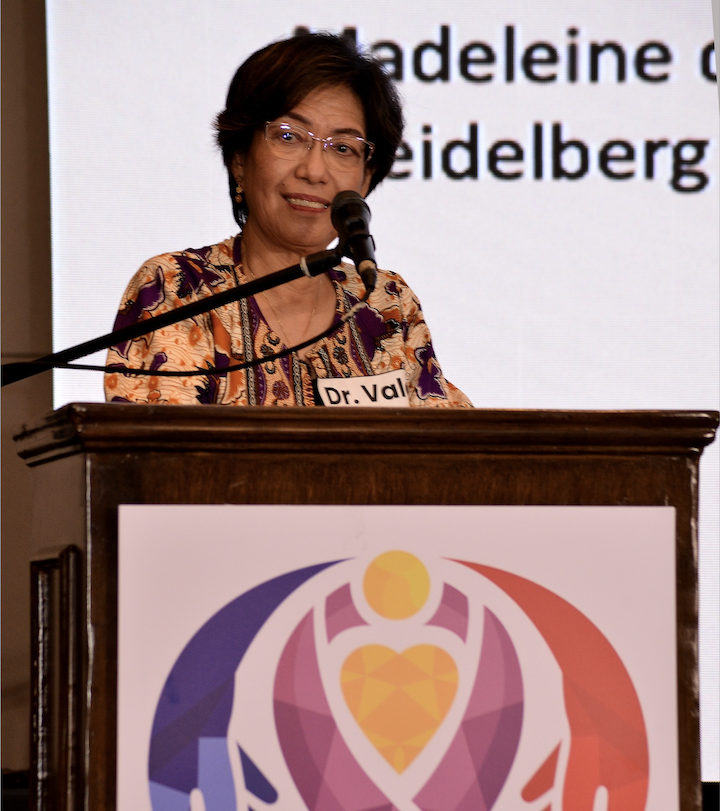
Dr. Madeline Valera, president of International Society for Health Economics & Outcomes Research
Dr. Valera, who helped pioneer HTA discussions in the country as early as the mid-2000s, explained that the traditional framework often centers on cost-effectiveness: How many patients benefit? How much does a treatment cost per life-year saved?
“But cancer patients are asking different questions,” she said. “Will I live longer? Will I live better? Can I go back to work? Will I spend less time in the hospital? Will I have less pain?”
These concerns, Dr. Valera stressed, cannot be fully captured by spreadsheets alone.
The financial challenge
Drawing from personal experience, Dr. Valera also shared the emotional and financial toll cancer takes on families. She recounted how treatment costs can reach hundreds of thousands — even millions — of pesos, forcing families into impossible decisions.

Dr. Valera (left) together with Dr. Alfonso G. Nunez III (right) of the Philippine Cancer Center
“When a doctor tells you treatment will cost ₱750,000 or more, what goes through your mind?” she asked. “It’s not just about survival. It’s about dignity. It’s about whether the treatment will allow you to live meaningfully.”
She argued that the burden of high costs should not rest solely on patients. Instead, stronger price negotiations with pharmaceutical companies should be pursued, particularly for high-cost cancer drugs such as biologics.
Dr. Nunez, for his part, stressed that broader value must be embedded in national cancer strategy. He said treatment choices must be assessed not only for clinical effectiveness but also for their impact on hospital capacity, workforce productivity, and health system sustainability.
Quantifying the patient voice
One of the central challenges, Dr. Valera acknowledged, is how to measure patient experiences in a system that relies heavily on numerical data.
“Clinical trials have numbers. Cost-effectiveness has formulas. But how do you quantify hope? How do you quantify quality of life?” she asked.
Internationally, progress has been made. During global discussions, frameworks were developed to formally incorporate patient perspectives into HTA processes. Reports from recent conferences emphasized methods to quantify patient-reported outcomes and lived experiences as part of evaluation criteria.
The Philippines has begun including patient representatives in HTA committees. Dr. Valera, however, said involvement must go deeper. “It’s not enough to have a patient sitting in a committee. We must truly listen — and integrate their input into the evaluation itself.”

Dr. Frederic Ivan Ting, a medical oncologist, explaining the broader value view
The PNCS 2026 discussion also highlighted how innovations in cancer care generate benefits that extend beyond the patient.
Dr. Ting, for his part, explained that while traditional metrics focus on drug efficacy and direct costs, a broader value view recognizes indirect societal effects such as patient productivity and “informal care health spillovers,” or the toll illness takes on family caregivers.
Innovations in cancer care, he said, bring wider system-level value. He cited oncologic drugs with subcutaneous formulations as an example of how new delivery methods can improve quality of life while easing pressure on hospitals.
“Subcutaneous formulation and administration may contribute to improved health-related quality
of life, optimize oncology healthcare utilization, and minimize cost of cancer treatment,” Dr. Ting
said. These advances return time to patients and caregivers, allow healthcare providers to treat
more patients efficiently, and help institutions allocate resources more effectively.
Learning from other countries
Dr. Valera pointed to Spain as an example of a system that combines public subsidy, price negotiation, and patient participation.
In some cases, governments negotiate directly with pharmaceutical firms while discussing options transparently with patients, particularly when innovative but expensive treatments are involved.
“We have the legal tools. We have the Cheaper Medicines Law. We can negotiate. But we must understand the value of what we are negotiating for — not just cost, but quality of life.”
A call to leadership

In her closing message, Dr. Valera appealed to national leaders to “think out of the box” and institutionalize mechanisms that amplify patient voices in policy decisions.
“If there is a will, there is a way,” she said. “Start by listening.”
She also called on patient organizations, doctors, and civil society groups to push for deeper reforms. While legislation may not be immediately necessary, she said formal recognition of patient-centered valuation tools within the HTA framework would be a significant step forward.
Ultimately, she underscored that cancer care is not merely a clinical issue — it is a human one.
“At the end of the day,” she said, “health policy is about people. And if we do not listen to the patient, then we are missing the very reason the system exists.”