For years, international stories about Manila seemed to follow a familiar script. There was the traffic. A brief acknowledgment of the city’s energy and chaos. Then came Intramuros, perhaps a reference to Rizal, followed by the usual caveat about navigating the capital.
National Geographic’s Best of the World 2026 takes a noticeably different approach.
It starts with food.
The global travel publication named Manila among its destinations to watch in 2026, putting the spotlight on the capital’s surprisingly diverse and dynamic culinary scene. Rather than treating food as a side attraction to Manila’s history and landmarks, National Geographic makes it one of the reasons travelers should take a closer look at the city.
The recognition puts Manila on the global travel radar at a time when the city is increasingly presenting itself as more than a gateway to the Philippines’ beaches and islands.
And while its food scene takes center stage, there is considerably more to discover.
A food culture shaped by history
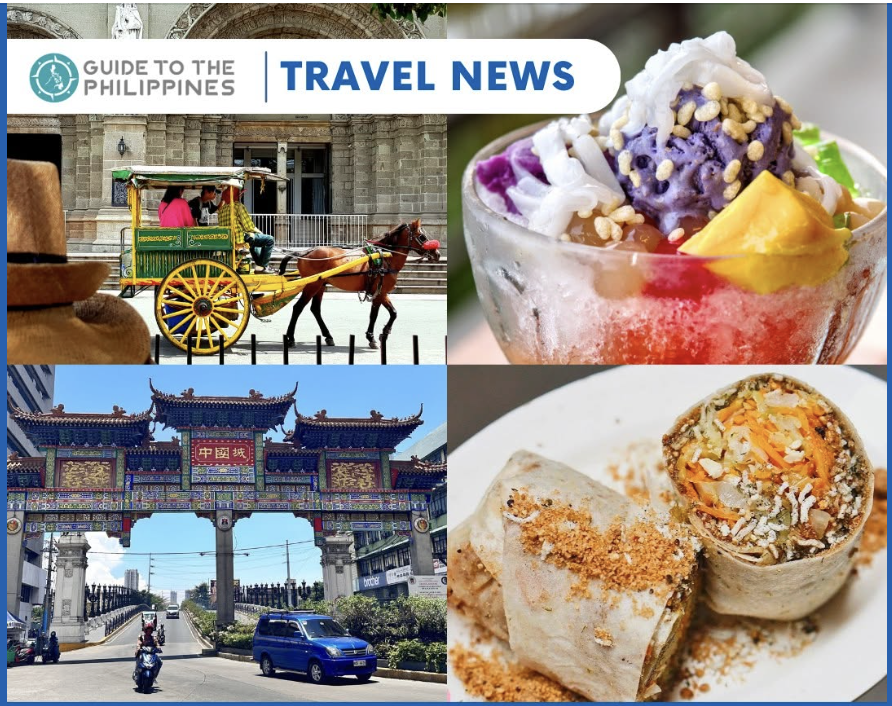
IMAGE CREDIT: Guide to the Philippines
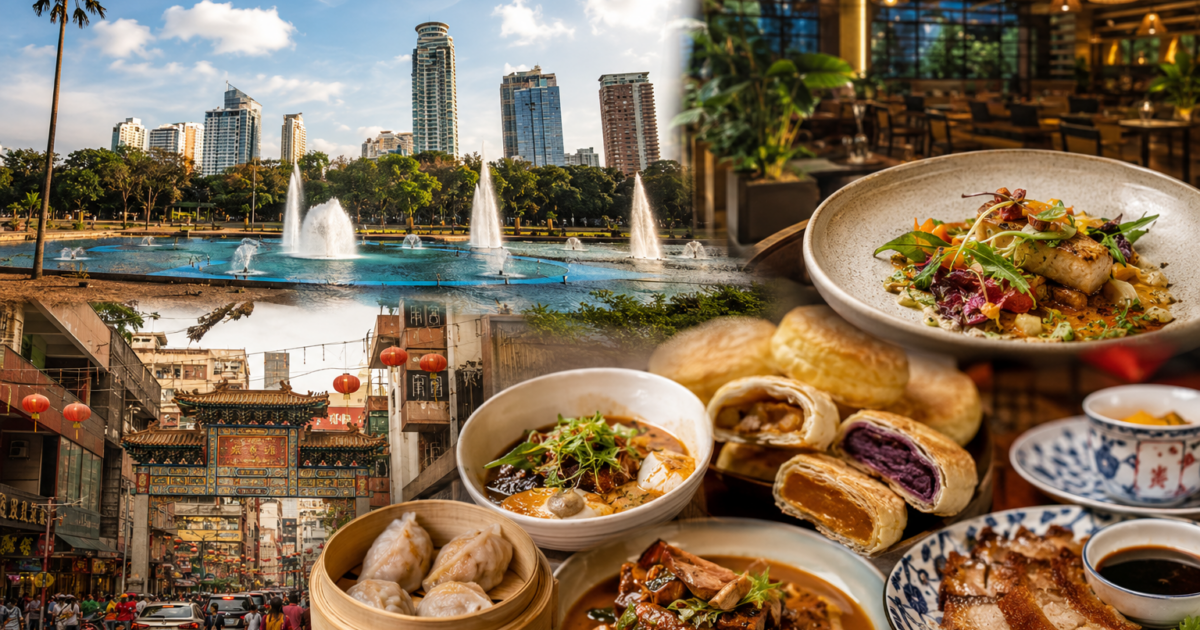
National Geographic highlights Metro Manila as a melting pot of Spanish, Chinese and Malay influences, with those layers of history reflected in the city’s restaurants, markets and neighborhoods.
Among the culinary destinations highlighted are Toyo Eatery, Manam, Kondwi and Alba, representing different sides of Manila’s evolving dining scene.
Toyo Eatery, in particular, reflects a growing movement among Filipino chefs to examine local ingredients, regional cuisines and traditional techniques through a contemporary lens.
Manam takes a more casual approach, bringing familiar Filipino dishes into a modern restaurant setting, while Kondwi explores Filipino flavors through a more experimental dining experience. Alba, meanwhile, reflects Manila’s longstanding Spanish influence.
Then there is Binondo, where the city’s Chinese-Filipino heritage can be experienced through food.
National Geographic points to establishments such as Eng Bee Tin and Ho-Land, bringing attention to the bakeries and food traditions that have helped make Manila’s Chinatown one of the city’s essential culinary destinations.
For travelers, that means a Manila food itinerary can move from carefully composed dishes in contemporary restaurants to hopia, dim sum, noodles and other Chinatown staples within the same day.
That diversity is perhaps what makes the recognition particularly significant.
Manila beyond the dining table
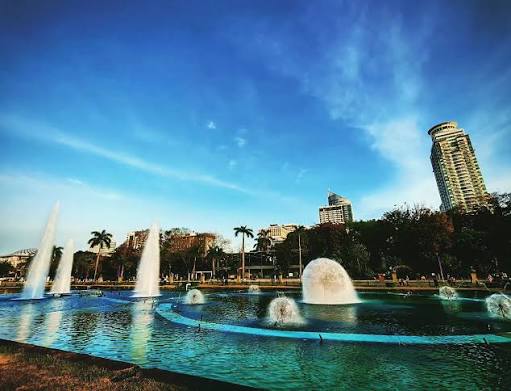
Dancing fountain at the Luneta Park (IMAGE CREDIT: Guide to the Philippines)
Food may be the headline, but Manila’s appeal does not end at the restaurant door.
The city’s cultural and historical attractions provide another layer to the experience.
Visitors can walk through the cobblestone streets of Intramuros, explore the collections of the National Museum of the Philippines, check out the dancing fountain in Luneta at night, and visit San Agustin Church, one of the country’s most important historical landmarks and a UNESCO World Heritage Site.
These destinations offer a reminder that Manila’s modern identity is built on centuries of history.
The city is also increasingly defined by a more contemporary urban culture.
From lifestyle parks and weekend markets at Circuit Makati to the galleries and cultural programming around Ayala Museum, Metro Manila offers travelers experiences that sit far removed from the traditional postcard image of the capital.
Bonifacio Global City adds another dimension, with its restaurants, shopping destinations, public art, nightlife and increasingly international character.
Together, these places present a city that is constantly shifting between old and new.
Binondo, Intramuros and everything in between
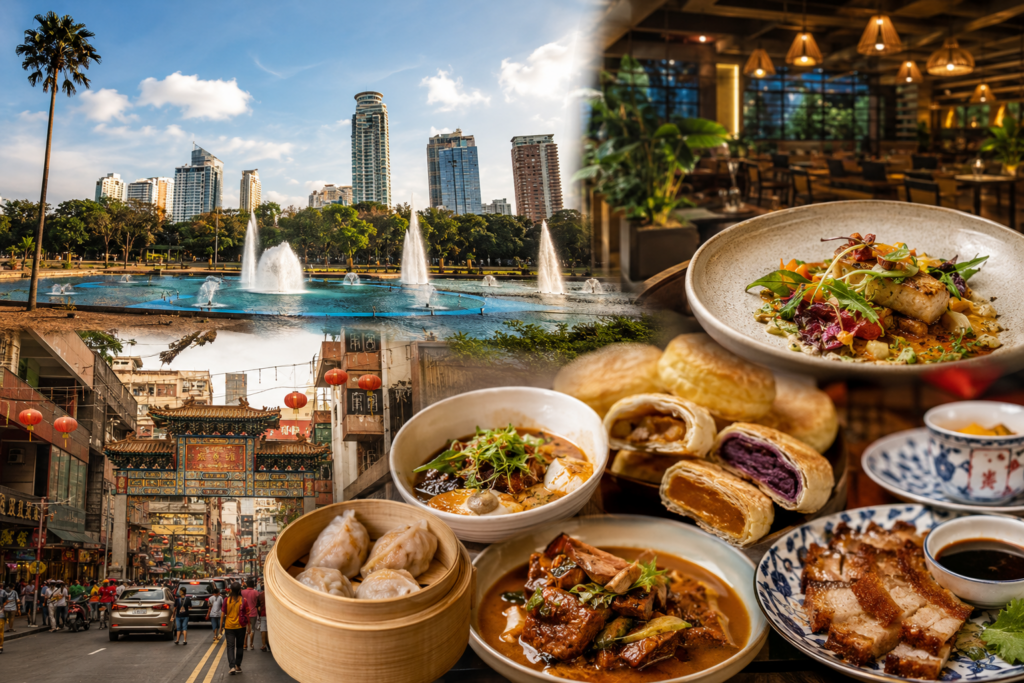
For travelers, perhaps the most interesting thing about Manila is the proximity of these contrasting experiences.
A day can begin with a food crawl through Binondo, move to the historic streets of Intramuros, continue with a visit to the National Museum and end with dinner and drinks in one of the capital’s modern business and lifestyle districts.
There is also Manila Bay, where seafood restaurants and waterfront destinations provide opportunities to experience one of the city’s most recognizable settings, particularly around sunset.
For a more everyday perspective, markets such as Quiapo offer another side of the capital — one that is considerably less polished but arguably closer to how the city actually lives and eats.
That contrast is central to understanding Manila.
But there is another Manila
There is, however, a limitation to celebrating the city’s culinary renaissance through the restaurants and destinations that international publications tend to feature: cost.
The restaurants anchoring international travel coverage are often priced for visitors and a relatively narrow segment of local diners. They represent an important part of Manila’s food culture, but they do not represent how most Filipinos eat.
For many residents, the city’s food economy is built around carinderias, neighborhood eateries, market stalls, bakeries, street vendors and fast-food counters.
That everyday food culture can easily become background color in international travel writing when it should arguably be part of the main story.
National Geographic does go beyond fine dining by highlighting markets, bakeries and street food in its Manila coverage. But the city’s food story remains much larger than any international guide can capture.
Manila is not the whole Philippine food story
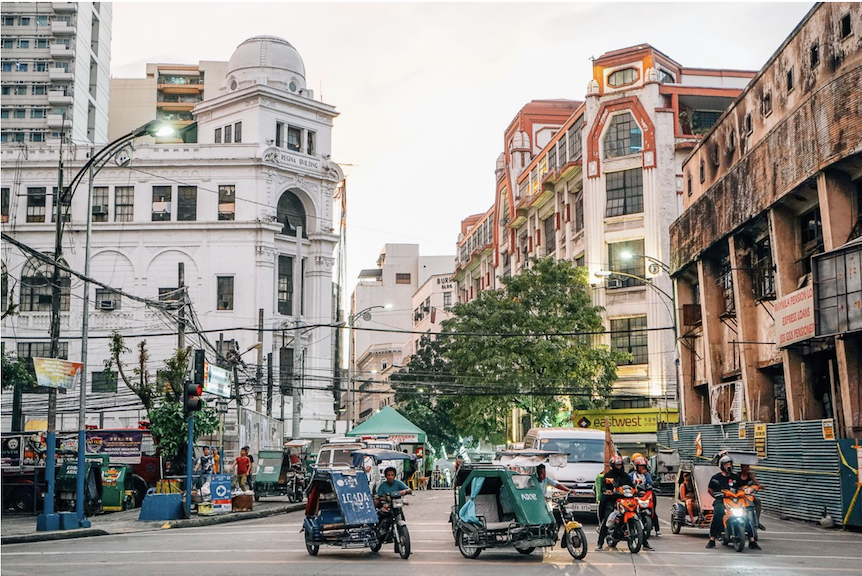
Escolta in Manila (IMAGE CREDIT: Guide to the Philippines)
There is another point worth making: Manila is not Philippine food.
It is where much of Philippine food gets concentrated, commercialized and introduced to international audiences.
The country’s culinary identity extends far beyond the capital.
Iloilo has built a distinct food culture and has received UNESCO recognition as a Creative City of Gastronomy. Cebu has its own culinary traditions and food identity shaped by its history, geography and Visayan culture.
Then there are the cuisines of Bicol, Pampanga, Ilocos, Negros and Mindanao, among countless communities whose food traditions rarely receive the same international attention.
National Geographic’s recognition should therefore be viewed less as a definitive statement about Philippine cuisine and more as an invitation to start exploring it.
And Manila is a useful place to begin.
A city worth experiencing beyond the checklist
For visitors planning a Manila trip in 2026, the National Geographic recognition provides a useful starting point — but following a list of recommended restaurants and attractions should not be the end goal.
Start with the food.
Explore Binondo. Try the bakeries. Look beyond the restaurants that make international lists. Visit a market. Sample local dishes. Then move through the city’s historical districts and museums before experiencing its modern lifestyle and nightlife.
The contrast is what makes Manila interesting.
One moment, you’re walking through the centuries-old streets of Intramuros. Hours later, you could be looking at contemporary art, dining in a modern restaurant or exploring the nightlife of Bonifacio Global City.
That combination of history, food, culture and urban energy is what makes Manila increasingly difficult to reduce to the old stereotypes.
Travelers looking to experience the city can also explore organized tours and itineraries through Visit Manila tours.
A recognition worth taking seriously — but not literally
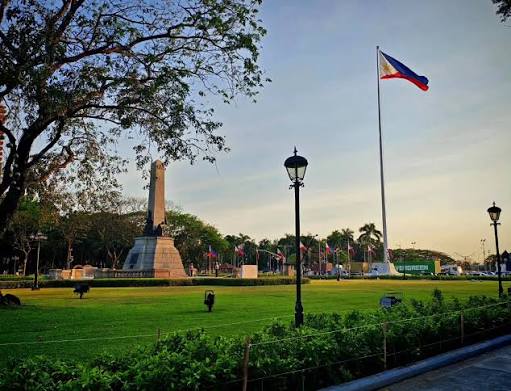
The Luneta Park in Manila (IMAGE CREDIT: Guide to the Philippines)
National Geographic’s Best of the World 2026 recognition is deserved, particularly because it puts Manila’s food scene at the center of the conversation rather than treating it as an afterthought.
More importantly, it recognizes a change that has been taking place beneath the surface.
Manila is no longer simply a stopover between beaches and other Philippine destinations. Its food scene, cultural heritage and evolving urban landscape are becoming attractions in their own right.
But the best response to the recognition is not to reproduce another list of places to visit.
It is to use it as an invitation to look deeper.
The celebrated restaurants show what Filipino cuisine can become when chefs have the resources, confidence and creative freedom to reinterpret it. The markets, bakeries, street stalls and neighborhood eateries show where that cuisine comes from—and where most people continue to experience it.
The museums and historic districts tell the story of the city that came before. Its galleries, lifestyle destinations and modern business districts show the Manila that is emerging today.
That is the Manila worth discovering in 2026: ambitious but accessible, contemporary but deeply rooted, and far too diverse to fit neatly into a single international best-of list.