What started as a routine traffic violation on the Skyway just days before Christmas has since taken several sharp turns — some expected, others deeply unsettling — ending in a rare moment where public scrutiny forced a long-overdue pause for self-correction.
The incident occurred in mid-December, when 19-year-old Daniel Deakin was flagged for crossing a double yellow line.
The violation happened only days before the holiday shutdown of government offices. His father, automotive journalist and road safety advocate James Deakin, was unequivocal from the start: there would be no contesting the violation, no favors pulled, no shortcuts taken.
Daniel accepted the ticket. The fine was paid. By any reasonable definition, the case should have been closed. Instead, it became a case study in how bureaucracy can turn compliance into liability.
15 “calendar” days: The rule that punished good faith

At the heart of the issue was the Land Transportation Office’s requirement that traffic violations be settled within 15 calendar days.
Because the violation occurred just before a long stretch of holidays — when the LTO’s offices and payment channels were effectively inaccessible — those days still counted against Daniel.
When offices reopened, his license was flagged as suspended.
The penalty was not due to defiance or neglect, but because compliance had been rendered impossible by the government’s own closure. As Deakin later pointed out, this was never about denying wrongdoing. It was about questioning a system that penalized citizens for days when the state itself was unavailable.
For James Deakin, who has spent years urging motorists to respect traffic laws, the irony was hard to miss. The system had penalized diligence and good faith, while offering no realistic path to resolution.
December 20: trying to resolve it quietly

Deakin initially tried to resolve the issue quietly.
Two days after the violation, on December 20, Deakin sought clarification through proper channels. Knowing it was impossible to physically appear at East Avenue before the holidays, he reached out to lawyer and motoring enthusiast Robby Consunji — not for favors, but for clarity.
Specifically, he wanted to understand how “reckless driving” is defined and whether such a charge would permanently mark his son’s driving record.
In his message, Deakin explicitly stated he was not asking for special treatment.
The response he received — citing a “no padrino policy”— missed the question entirely. Still, Deakin did not go public. He waited.
That context made the later criticism sting more. When Consunji publicly suggested that social media was not the proper venue to resolve such issues, Deakin pushed back, noting that he had gone to him first.
From silence to spectacle
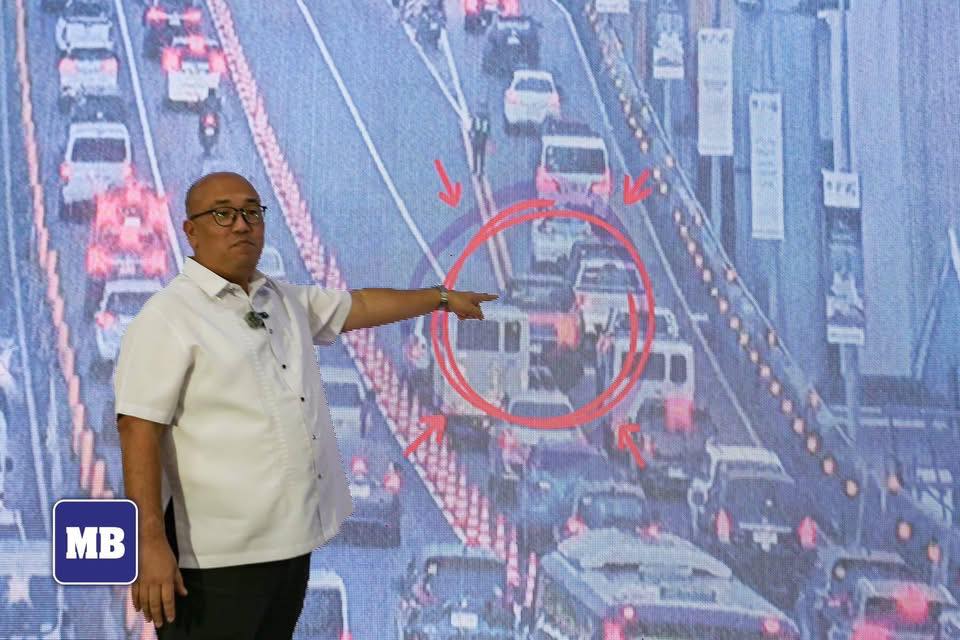
An LTO official showing the alleged traffic violation. IMAGE CREDIT: Manila Bulletin
On January 6, 2026, a day after Deakin shared his experience online — by then already gaining traction —the LTO issued a statement saying it would investigate the matter. The response was encouraging.
What followed was not.
Instead of presenting evidence directly to the Deakins as part of due process, the LTO held a press conference. There, officials reiterated what no one disputed — that Daniel had committed a traffic violation — and introduced a new allegation: that the vehicle he was driving was unregistered.
For Deakin, this was the first time he heard of it.
The vehicle, he explained, was a loaner, accepted in good faith. It carried a conduction sticker and temporary plate. He acknowledged responsibility for not double-checking its registration status and made no attempt to evade accountability. Ignorance, he said, is not an excuse.
What troubled him was something else entirely.
If the violation was as serious as later portrayed, why was it not cited at the time of apprehension? Why did the traffic enforcer miss it? Why was no penalty imposed on the spot? And how did the issue pass through multiple layers at the LTO during settlement without being flagged — only to surface later in a nationally televised briefing?
To Deakin, it felt less like due process and more like trial by publicity.
A question of double standards
The deeper issue, he argued, was consistency.
When motorists wait months — or even years — for license plates or plastic cards, delays are brushed off as administrative challenges.
But when a citizen misses a deadline because offices are closed, the response is swift: automatic suspension and public shaming.
That disparity, Deakin said, reveals a troubling double standard.
“Everyone makes mistakes,” he noted. “You literally have an entire department dedicated to addressing and penalizing people for that. So stop acting shocked and personally offended when it happens.”
He and his son, he stressed, had already accepted their shortcomings and penalties. What remained unanswered were the questions that mattered to the public:
Why do calendar days apply to citizens, but working days apply to government offices?
Why require printed documents not listed in the Citizens Charter?
Why does the administrative definition of reckless driving appear to contradict statutory standards?
And why present evidence to the media before presenting it to the accused?
When scrutiny leads to reform

Public pressure eventually prompted action.
The Department of Transportation (DOTr) and the LTO announced reforms that extended well beyond this single case. The 15-day settlement period was clarified as 15 working days, ensuring holidays and weekends no longer count against motorists.
The physical confiscation of driver’s licenses during apprehensions was suspended, replaced by electronic tagging.
Processes and documentation requirements are now under review to align with the “Ease of Doing Business” standards.
What some initially dismissed as unnecessary escalation ended in reforms that now benefit every Filipino driver.
A lesson bigger than one citation
Viewed in full, the episode is a quiet case of poetic justice.
A road safety advocate insisted his son be held accountable — even when the system made that choice costly. By refusing to quietly work around a broken process, he exposed a policy gap that punished honesty rather than misconduct.
More importantly, it reaffirmed a basic truth: laws command respect only when they are enforced fairly, consistently, and with reason.
In standing his ground — not as a vlogger, but as a father and a citizen — James Deakin helped force a conversation the system had long avoided. One that, for once, ended not with deflection, but with correction.
And for Filipino motorists navigating the same roads and rules, that may be the most meaningful destination of all.