For decades, getting a credit card in the Philippines felt like entering an exclusive club.
You needed multiple valid IDs, proof of billing, proof of employment, and a financial paper trail that many ordinary Filipinos simply did not have. Access to credit was often reserved for people who already belonged inside the traditional banking system.
But fintech platforms like Luvit are trying to change that.
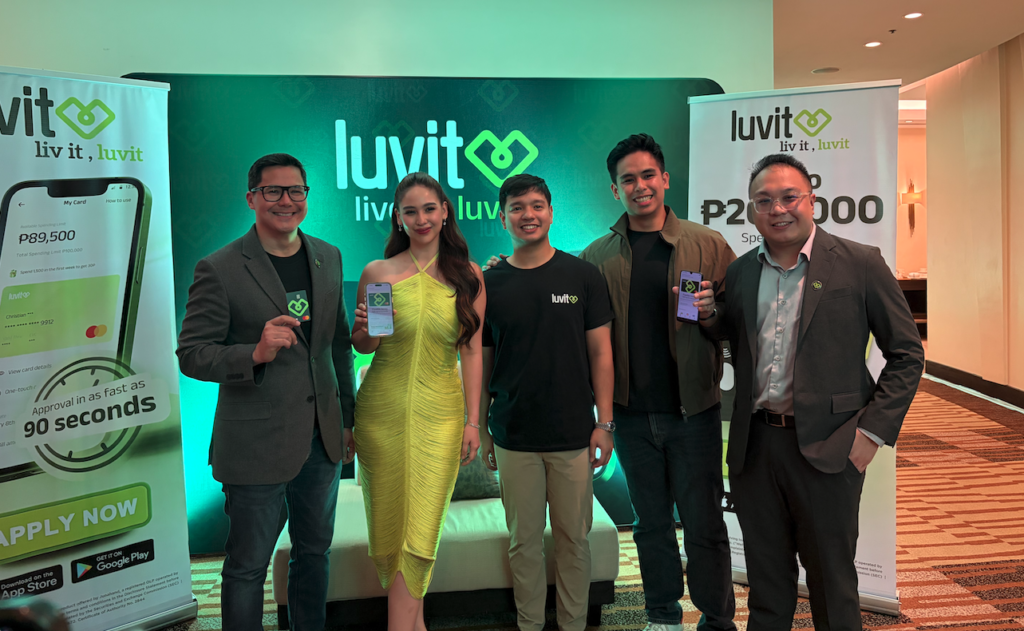
Executives of Luvit at the Manila launch
At its recent launch in Manila, Luvit positioned itself not merely as a payment platform, but as a tool for financial flexibility — one designed for Filipinos who want access without the intimidating barriers of traditional banking.
“Filipinos actually want to live the life they deserve,” one executive said during the launch presentation.
That message reflects a growing shift in how younger Filipinos think about money, borrowing, and modern life.
The rise of “deserve culture”
Across social media, “deserve ko ’to” has become a familiar phrase.

IMAGE CREDIT: Freepik
Whether it’s concert tickets, travel, coffee, gadgets, or spontaneous weekend trips, younger consumers increasingly frame spending as a reward for surviving the pressures of everyday life.
Luvit’s launch leaned directly into that mindset.
Executives highlighted scenarios where consumers might need extra flexibility — from travel and shopping to “must-spend moments” like concerts or limited-time sales.
The company repeatedly framed borrowing not as desperation, but as empowerment.
“You no longer have to choose between enjoying today and managing tomorrow,” hosts said during the event.
It is a major shift from how debt was traditionally viewed in many Filipino households, where borrowing was often associated with hardship or financial struggle.
Today’s fintech companies are rebranding credit as flexibility — a way to participate in experiences without waiting for the next payday.
Making credit more accessible
Part of Luvit’s appeal lies in accessibility.
The company says users can apply with as little as one valid ID, with approvals happening in as fast as 90 seconds.
For many Filipinos who remain “credit invisible,” meaning they lack formal credit histories, that accessibility could be significant.
Executives at the launch claimed that more than 20 million Filipino adults still do not have a formal credit footprint.
Traditional financial institutions often reject these consumers because they cannot provide sufficient documentation or banking history. Fintech companies, however, are increasingly using alternative data and artificial intelligence to assess creditworthiness.
According to Luvit, its AI system analyzes more than a thousand data points per customer. The company even revealed that typing behavior and hesitation while answering application questions can influence approval decisions.
In many ways, digital behavior is becoming a new form of financial identity.
Financial inclusion or overspending?
Still, the rise of AI-powered lending raises larger questions about modern consumer culture.
When borrowing becomes faster and easier, does financial inclusion also improve — or does spending become just easier to justify?
Luvit insists its systems are designed responsibly. Executives emphasized that their AI is built to identify borrowers capable of repayment, not simply approve everyone who applies.
But beyond the technology, the cultural shift is already happening.
Fintech platforms today are not just selling loans or installment plans. They are selling convenience, flexibility, and access to experiences once considered financially out of reach.
For many Filipinos, the modern credit dream is no longer about prestige.
It is about participation.
About Luvit
Luvit is an AI-powered flexible payment platform launched in the Philippines under Finvolution’s fintech ecosystem. The platform offers virtual and physical payment cards designed to provide users with faster access to credit and flexible payment options.
According to company executives, Luvit uses artificial intelligence and alternative data analysis to assess creditworthiness, aiming to serve Filipinos who may not qualify under traditional banking requirements. The platform offers spending limits of up to ₱200,000 and approval times as fast as 90 seconds.