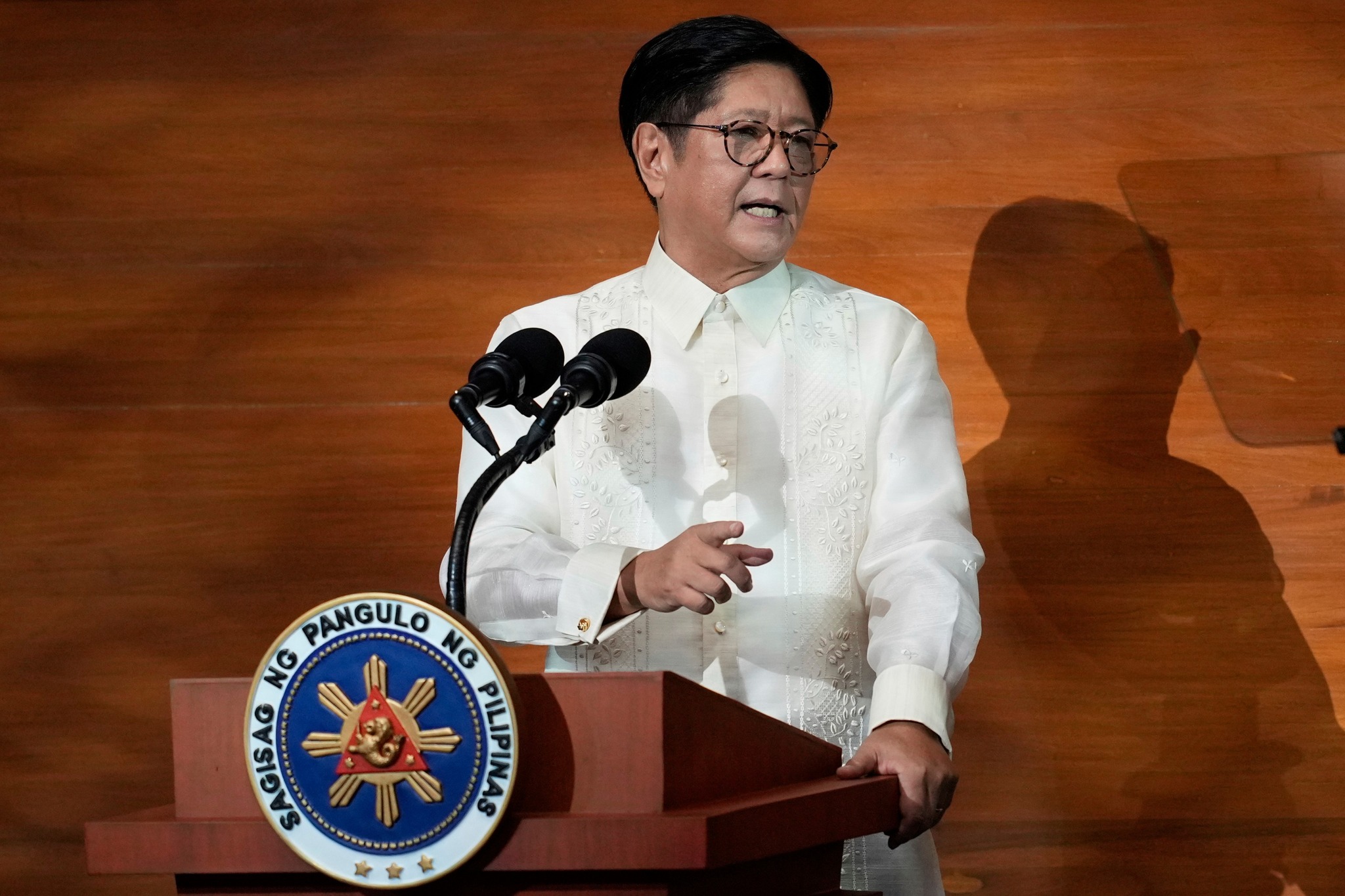
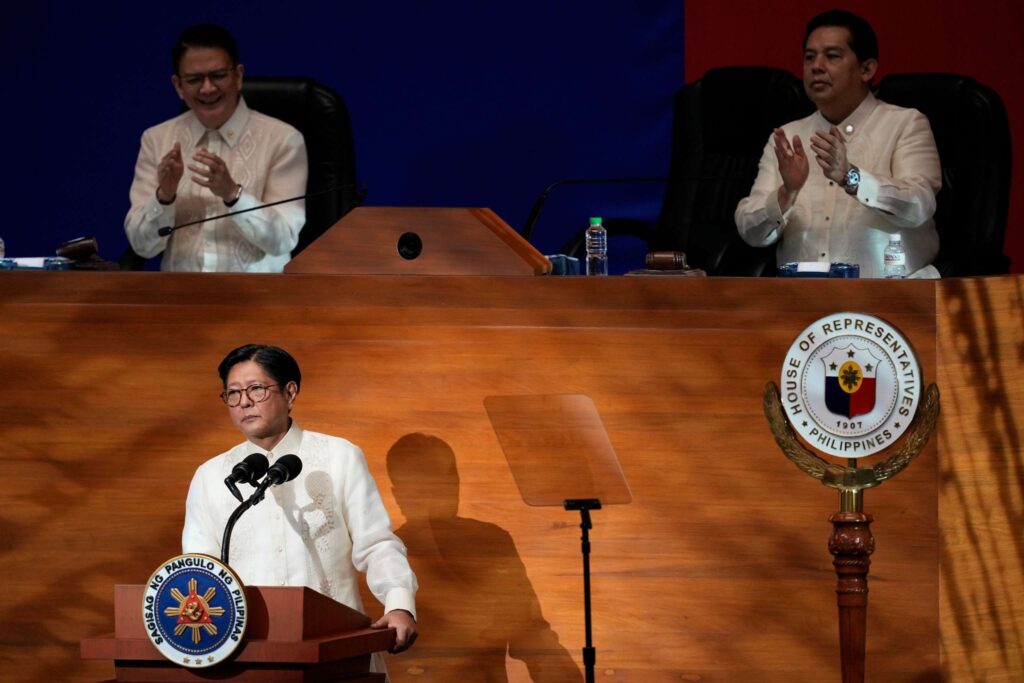
Three years into his presidency, Ferdinand Marcos Jr. delivered his fourth State of the Nation Address (SONA), giving a speech that painted an ambitious blueprint for a reimagined Philippines.
From the halls of the Batasang Pambansa, the President laid out not just policies and numbers but a vision of place — how and where Filipinos live, work, learn, and thrive in a shifting national landscape.
This year’s SONA presented a roadmap toward transformation, shaped by economic recovery, infrastructure expansion, social support systems, and global diplomacy.
But as with any roadmap, the direction is as important as the terrain. The journey forward will depend not only on ambition, but on implementation, public trust, and resilience against persistent headwinds.
A map of everyday life: Inflation, health, and the cost of living
Central to Marcos Jr.’s address was the pledge to “bring government closer to the people” — not merely through presence, but through tangible benefits. For many Filipinos, this translates to one overriding concern: the cost of living.
In his speech, Marcos Jr. touted inflation control as a major achievement, pointing to the administration’s efforts to stabilize food prices and subsidize agricultural production. He cited the expanded rollout of Kadiwa stores, which offer farm-to-market goods at subsidized prices, as a tool to combat rising expenses.
These stores, which now number in the thousands across regions, are designed to reduce middleman costs and provide affordable staples directly to consumers.
At the same time, the President promised expanded free dialysis access for indigent patients through PhilHealth, a move that directly addresses chronic healthcare affordability for working-class Filipinos. Health, in this framing, is not a luxury — but a public good embedded into daily life.
While these programs are meaningful for millions, economists warn that they exist within a larger ecosystem. Temporary relief must be supported by structural reforms — particularly in agriculture, logistics, and health funding — if the goal is to make affordability sustainable, not cyclical.
Infrastructure as part of nation-building

Another major pillar of the President’s SONA was infrastructure — an area he inherited with momentum from the Duterte administration’s “Build, Build, Build” program. Under Marcos Jr., it has evolved into “Build Better More”, now encompassing over 100 flagship infrastructure projects.
These include regional airports, power plants, flood control systems, road networks, and water infrastructure, all aimed at linking remote communities to economic hubs and reducing regional inequality.
In particular, the focus on energy development — including the commissioning of new power generation facilities and exploration of renewable sources — reflects an attempt to modernize the energy matrix amid rising demand and unstable global fuel prices.
For water access, the administration is pushing for expanded water treatment and distribution systems in underserved provinces, potentially addressing the long-standing “water poverty” in both rural and urban fringe areas.
This investment-heavy direction is clearly intended to reshape the literal geography of opportunity in the Philippines. By building infrastructure not just in Metro Manila but across regions, the administration seeks to redefine how and where prosperity can take root.
Yet large-scale development raises inevitable questions: Will these projects be climate-resilient? Will they respect indigenous land rights and environmental limits? And most importantly, will they be delivered on time, free of corruption, and with long-term maintenance in mind?
Redrawing educational map at the 4th SONA

Education received one of the boldest commitments in Marcos Jr.’s SONA: the promise to build 40,000 new classrooms and improve support for teachers, including professional development and increased hiring.
This is a significant declaration in a country where crowded classrooms and underfunded public schools remain chronic issues.
The move responds to years of outcry from educators and parents alike. Post-pandemic learning loss and an outdated curriculum have placed Filipino students among the lowest performers in global assessments. If followed through, these investments could transform the landscape of opportunity for a generation.
However, quantity must meet quality. Education experts have underscored that infrastructure alone cannot compensate for gaps in teacher training, curriculum relevance, and technological access. Addressing rural education disparities, in particular, requires an integrated strategy that includes transportation, internet access, and community involvement.
Climate resilience: A country on the edge

Few nations are as vulnerable to climate change as the Philippines. In his address, President Marcos Jr. acknowledged this urgency, framing climate resilience as a central concern. He highlighted the National Adaptation Plan, the construction of disaster-resilient housing, and the ongoing greening of public infrastructure.
Part of this effort includes early warning systems, coastal defense projects, and urban greening initiatives. These are crucial as typhoons, flooding, and heatwaves grow more extreme and frequent. But climate advocates note that adaptation must also be accompanied by mitigation—and on this, the SONA was more reserved.
There was little elaboration on the country’s emissions reduction targets or transition away from coal. The Philippines’ climate future, they argue, hinges not only on building walls but on transforming systems — especially energy and transport — toward sustainability.
Governance, corruption, and trust
Marcos Jr. also used the SONA to underline his administration’s anti-corruption stance, claiming to have reinforced transparency and improved procurement processes across agencies. He mentioned digitization of government services as a deterrent against bureaucratic abuse.
While these efforts are welcome, watchdog groups note that anti-corruption success is measured not by rhetoric, but by prosecutions, reforms, and whistleblower protections. The true test will be whether public trust in institutions—particularly law enforcement, the judiciary, and tax authorities—recovers in the face of historical skepticism.
Marcos’ foreign policy: “Friend to all, enemy to none”

On the international front, Marcos reiterated his administration’s guiding principle of being a “friend to all, enemy to none.” This doctrine has so far attempted to balance relations between China, the United States, and ASEAN, especially amid tensions in the South China Sea.
Under his leadership, the Philippines has reasserted its rights under the 2016 arbitral ruling, while simultaneously strengthening security ties with the U.S. through expanded military access agreements. At the same time, economic cooperation with China has continued in selected sectors, such as trade and infrastructure financing.
This diplomatic tightrope reflects a broader strategy of non-alignment with strong national interest at the center. But navigating great power rivalry, while protecting sovereignty and economic autonomy, will require more than declarations — it will need deft diplomacy, internal unity, and regional solidarity.
Unspoken realities: The gaps between vision and ground
Marcos Jr.’s midterm SONA was filled with forward-looking metrics.
Yet certain issues — press freedom, human rights, labor contractualization, and historical justice — were notably absent or downplayed.
The “Filipino place” envisioned by the administration is one of progress, infrastructure, and unity. But for many, “place” also means inclusion. A sustainable future must confront the tensions and contradictions of modern Filipino life: urban sprawl versus housing rights, modernization versus displacement, ambition versus accountability.
Conclusion: A landscape in the making
President Marcos Jr.’s 2025 SONA was more than a policy speech—it was a midterm map, tracing the physical and political contours of a nation in flux. It offered a glimpse of what the Philippines could look like if promises are kept, programs scaled, and principles upheld.
Whether that vision is realized will depend on execution, transparency, and the government’s capacity to listen, especially to those in the margins of the map. The transformation of the Filipino place is not only about roads and schools—it is about lives, layered with complexity, shaped by history, and moved by hope.
As the country enters the second half of his term, the President has set the coordinates.
The nation now watches to see where the road truly leads.