It’s been just a few days since the elections, and the city is humming with the familiar tension of anticipation. In Manila, the streets are littered with campaign flyers – faces of old families and new hopefuls, some with the practiced smile of the “artista,” others with the stoic gaze of political legacy.
But as the dust settles, the question lingers: Did the 2025 midterm elections mark a turning point for the Philippines’ enduring political dynasties and celebrity politicians, or did the old order simply find new ways to endure?
The artista politicians: A mixed bag of results
The allure of celebrity remains potent in Philippine politics, but results of the 2025 elections reveal a more nuanced story.
Actor-turned-mayoral aspirant Raymond Bagatsing entered the Manila race with a mix of idealism and nostalgia. His campaign, though earnest, was ultimately drowned out by the political machinery and name recall of more established figures in the elections. Bagatsing finished with just 0.69% of the vote – 6,206 ballots in a city of nearly a million voters.

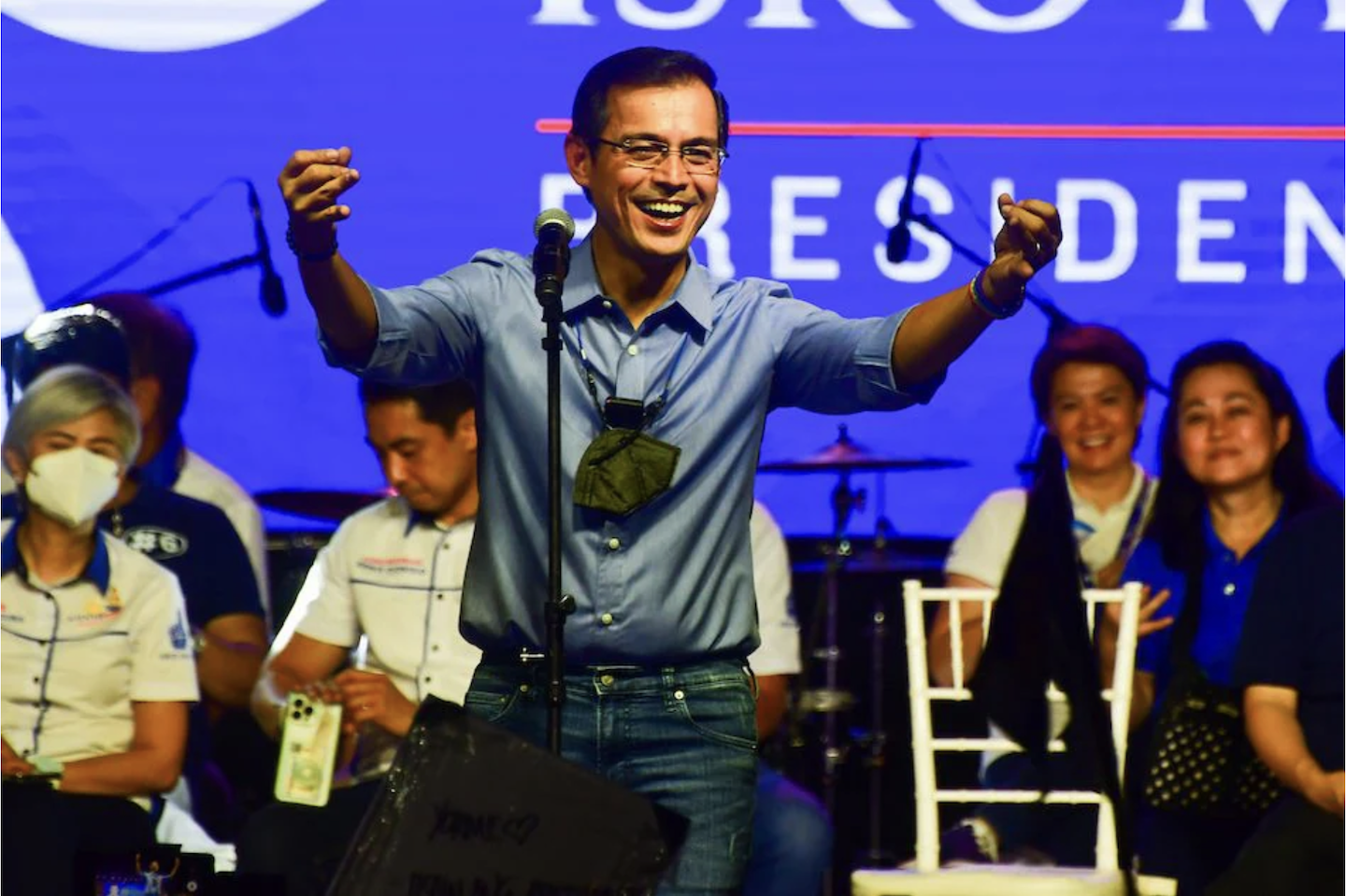
In the end, it was Isko Moreno, himself a former actor but now a seasoned politician, who reclaimed the mayoralty with a decisive 58.98%. The result of this year’s elections was clear: star power alone, without the backing of a robust political network, was not enough.
Elsewhere, however, the artista brand still proved potent –- at least at the local level.
Alfred Vargas, Aiko Melendez, and Joaquin Domagoso (son of Isko Moreno) all secured council seats in Quezon City and Manila, while Vilma Santos-Recto returned as Batangas governor, and her son Ryan Christian Recto clinched a congressional seat. The Revilla family, too, maintained its hold in Cavite: Jolo Revilla is poised to remain vice governor, while Lani Mercado is set to keep her congressional seat.
But at the national level, the story was different.
Senator Ramon “Bong” Revilla Jr., the quintessential artista-politician, failed in his reelection bid, placing 15th and missing the Senate’s “magic 12”. In his concession, Revilla spoke of unity and gratitude, but his loss in the elections was telling: the public appetite for familiar faces may be waning, or at least becoming more discerning.
Dynasties: Still strong, but cracks are showing
Camille Villar and Abby Binay, scions of two of the country’s most powerful political families, both ran for Senate.
Villar, of the Nacionalista Party, garnered over 13.3 million votes, while Binay, running under the Nationalist People’s Coalition, received 11.5 million. Their strong showings suggest that dynastic muscle remains formidable, especially when paired with deep resources and national visibility.
Yet, the broader narrative is more nuanced. A recent WR Numero survey found that 57% of Filipinos now disapprove of multiple candidates from the same dynasty running in the same Senate race, and 55% oppose family members simultaneously seeking local office.
While 51% still find it acceptable for relatives to run in different cycles, the overall tolerance for dynastic politics is slipping from 56% in late 2024 to 44% in early 2025. The perception that dynasties are more prone to corruption persists, and the youth vote, in particular, is showing signs of restlessness.

IMAGE CREDIT: PIA
Analysts point to the role of Gen Z and millennial voters, whose anxiety about dynastic candidates was reflected in their choices at the ballot box. Mainstream media, too, played a part, demystifying the functions of senators and urging voters to reconsider the wisdom of electing the same old names.
In the Senate race, effective ground campaigns and clear messaging on social issues helped propel non-dynastic candidates like Aquino and Pangilinan to the top the elections, signaling a desire for change.
The youth factor: Gen Z and the demand for change
If there’s a force reshaping the political landscape, it’s the youth. Generation Z, now nearly 20 million strong, is emerging as a decisive voting bloc. Young voters in today’s elections are more idealistic and discerning, shaped by the information they consume online and less swayed by name recall or celebrity alone.
Many openly express a desire to end the concentration of power among entrenched families, seeing dynasties as obstacles to real reform and progress.
Their influence was felt in the 2025 polls, with analysts noting that Gen Z’s votes played a major role in several upsets in the elections and in the overall tightening of races involving dynastic candidates.
Social media, for all its pitfalls, has given these voters a platform to scrutinize, debate, and mobilize – often in ways that challenge the old machinery of patronage and personality politics.
Party-list system: Dynasties find new avenues

IMAGE CREDIT: PCIJ
Even the party-list system, once envisioned as a safeguard for marginalized voices, has not escaped the reach of political dynasties.
In 2025, several leading party-list groups were linked to established political families, including those of Bong Revilla and the Tulfo brothers.
According to a recent Pulse Asia survey, four out of five leading party-list groups have ties to political dynasties, and all five are currently represented in the lower chamber of Congress.
Watchdog group Kontra Daya flagged 40 out of 156 party-list groups as dynasty-linked, confirming the Philippine Center for Investigative Journalism (PCIJ)’s findings.
Public sentiment: Fatigue, frustration, and a search for authenticity
If there’s a thread running through these results, it’s a growing fatigue with the status quo. Voters, especially the young, are increasingly skeptical of both dynasties and celebrity politicians-unless they can demonstrate substance beyond their surnames or screen personas.
The defeat of Bong Revilla and the poor showing of Raymond Bagatsing are emblematic: charisma and legacy are no longer guarantees.
Yet, the victories of Camille Villar, Abby Binay, and local-level artistas suggest that the old formulas still work-when combined with effective campaigning, party backing, and a genuine connection to local concerns.
In Batangas, for example, Vilma Santos-Recto’s return was less about celebrity and more about a track record of governance.
Are the dynasties losing their grip?

IMAGE CREDIT: REUTERS_Eloisa Lopez
The answer, as always in Philippine politics, is complicated.
The 2025 elections did not spell the end of dynasties or artista politicians, but they did reveal an electorate that is more questioning, more willing to look past the surface. The cracks are there: a growing segment of voters is demanding more, and some of the most entrenched names are beginning to feel the strain.
But the machinery of the dynasty is resilient. Where one branch falters, another often rises.
The Dutertes, despite international controversy and legal troubles, managed a comeback in Davao, with Rodrigo Duterte and his son Sebastian winning mayoral and vice-mayoral seats. The Villars and Binays remain fixtures in national politics, even as public sentiment shifts.
Over 86% of governors and 80% of congressional representatives still hail from political families, and even party-list seats are being captured by the same names.
“Families that used to be defensive about being identified as political dynasties are now openly embracing it, branding themselves as legacy brands akin to Colgate.”
A reckoning for traditional politics
The 2025 midterms were not a revolution, but they were a reckoning. Filipino voters sent a message: tradition and celebrity are no longer enough. The path to power is narrowing for those who rely solely on name recall, and the space for new voices-grounded in authenticity and real solutions–is slowly widening.
As the sun sets on another election cycle, the challenge for both dynasties and artistas is clear: adapt, or risk irrelevance.
The Filipino public, it seems, is finally ready to turn the page — one careful vote at a time.