

In an era where international law seeks to transcend borders to uphold justice, the tension between sovereignty and global accountability remains a defining issue.
In recent news, the balance between sovereignty and international law became the center of discussion among Filipinos. The recent arrest of former Philippine President Rodrigo Duterte, ordered by the International Criminal Court (ICC), has reignited debates about sovereignty and highlighted the complexities of international law’s reach.
Defining sovereignty in international law

Sovereignty denotes a state’s supreme authority over its territory and governance. It indicates that states control what happens within their borders and cannot interfere with others. Rooted in principles like territorial integrity and equality among states, sovereignty grants nations the right to self-determination while requiring adherence to global norms such as human rights protections. Further, sovereignty ensures states can enact laws, manage resources, and govern without foreign imposition—yet this power is not absolute.
The ICC’s role: Complementarity and accountability
Under the Rome Statute, the International Criminal Court (ICC) was established. The organization investigates and when warranted, tries individuals charged with the gravest crimes of concern to the international community: genocide, war crimes, crimes against humanity, and the crime of aggression.
Its mandate embodies the law maxim “Fiat justitia ruat caelum” (let justice be done though the heavens fall), prioritizing accountability over political expediency.
While critics argue the ICC undermines sovereignty, others view it as a safeguard against impunity for atrocities that affect the global conscience.
The Philippines and the ICC: A jurisdictional tightrope
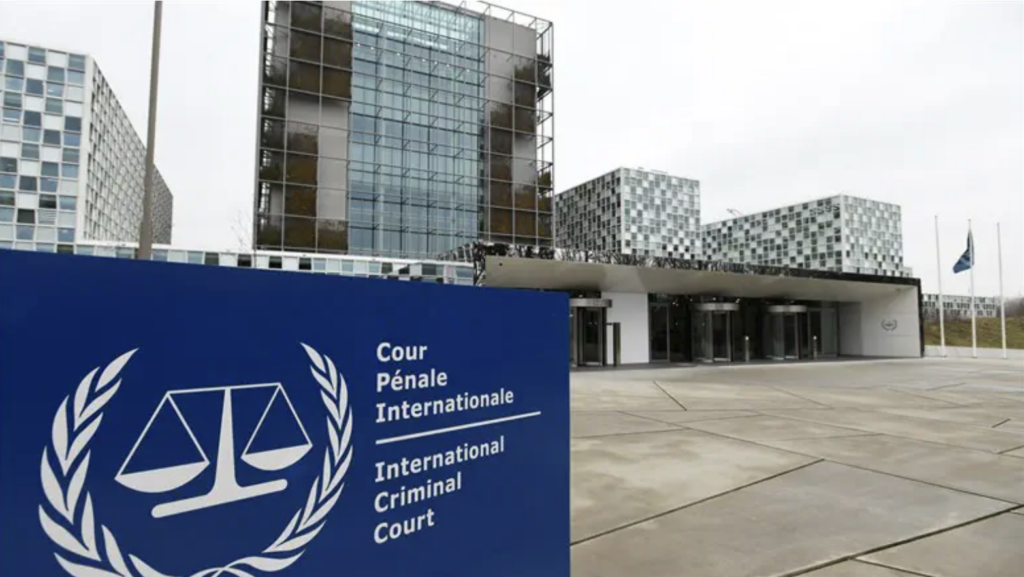
The Philippines’ relationship with the ICC highlights the tension between sovereignty and international accountability. In 2011, the Philippines became the 117th member of the ICC with its ratification of the Rome Statute.
However, in 2018, the Philippines deposited a written notification of withdrawal from the Statute. While the state withdrawal took effect in 2019, the ICC retains jurisdiction over the alleged crimes that occurred in the Philippine territory while it was a State Party from 2011 to 2019.
The Philippine Supreme Court ruled in 2023 that the ICC retains jurisdiction over crimes committed before the withdrawal took effect, stating: “Withdrawal does not affect liabilities for acts committed up to March 17, 2019”.
With this, in spite of the fact that relevant crimes appear to have continued after this date, the authorized investigations were limited only to the period when the Philippines was a State Party to the Statute as noted in the Pre-Trial Chamber I. The full investigation was authorized as the ICC cited insufficient domestic efforts to address extrajudicial killings.
The case of the Philippines exemplifies how international law navigates sovereignty—neither dismissing national authority nor excusing inaction. It highlights the principle “Dura lex, sed lex” (the law is harsh, but it is the law), affirming that legal obligations endure even after treaty withdrawal.
The strengths and limitations of international law
International law’s efficacy lies in its dual nature: it is neither as weak as critics claim nor as strong as advocates hope.
While enforcement relies on state cooperation, the ICC’s persistence in the Philippines case demonstrates its capacity to challenge impunity. Also, landmark rulings — such as the 2016 arbitral decision favoring the Philippines in its South China Sea dispute—demonstrate its capacity to uphold justice when states adhere to agreed norms.
Conversely, debates over the UN Security Council’s influence on ICC jurisdiction reveal systemic inequities, as powerful states often evade scrutiny.
The ICC’s ability to prosecute individuals for crimes against humanity further illustrates that while sovereignty may shield governments, it cannot always protect individuals from accountability. This balance between strength and limitation is reflected in the principle “Ubi jus ibi remedium” (where there is a right, there is a remedy).
International law provides mechanisms for redress even when domestic systems falter, ensuring that victims have access to justice regardless of jurisdictional boundaries.
The interplay between sovereignty and international law remains fraught but necessary. As the ICC’s probe into the Philippines advances, it tests the balance between respecting state autonomy and upholding universal justice. Through the lens of legal principles, this case serves as a reminder that accountability transcends borders, even when sovereignty complicates the path.